SIDS Prevention Checklist
Check your baby's sleep practices against evidence-based recommendations. See what you're doing well and what you need to improve.
Your Safe Sleep Score
Check your practices to see your score.
Recommendations to improve:
Every year, around 2,500 babies in the United States die from Sudden Infant Death Syndrome (SIDS). That’s about one in every 1,000 live births. And while no one knows exactly what causes it, we do know what reduces SIDS the most. It’s not a high-tech baby monitor, not a special mattress, and not a wearable tracker. It’s something far simpler - and far more powerful - than most parents realize.
Back to Sleep: The Single Most Effective Step
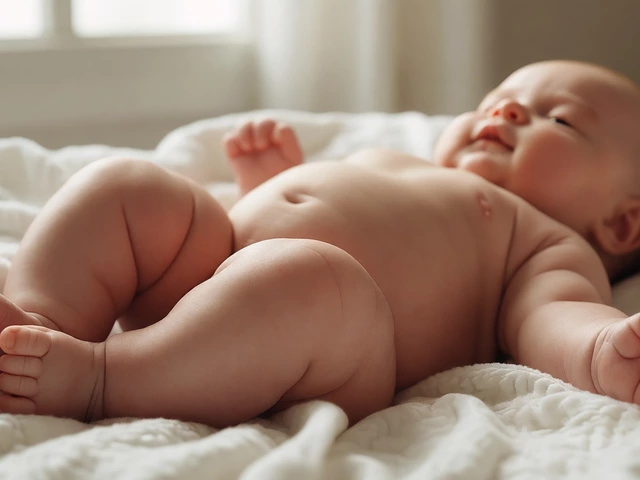
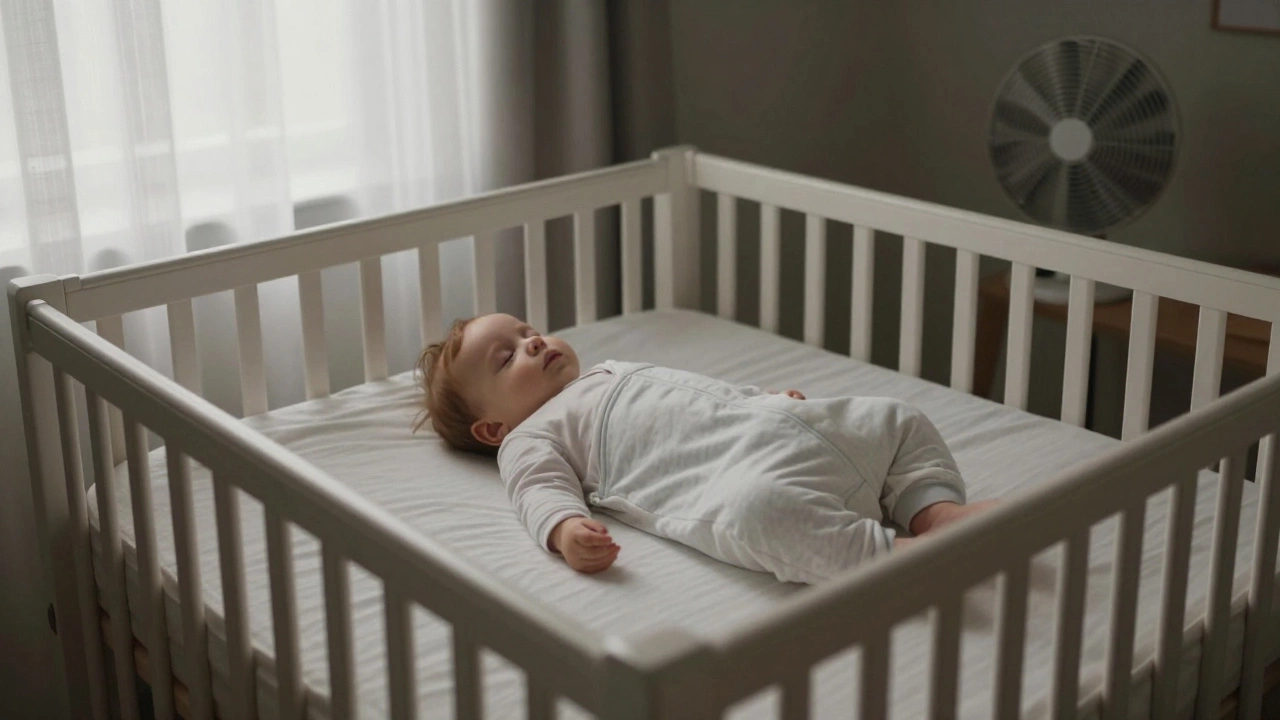
The number one thing that reduces SIDS? Placing your baby on their back to sleep. Every time. For naps and for nighttime.
This isn’t a suggestion. It’s a rule backed by decades of research. Since the American Academy of Pediatrics launched the "Back to Sleep" campaign in 1992, SIDS rates have dropped by more than 50%. That’s not a coincidence. Babies who sleep on their stomachs or sides are at higher risk because they can’t move their heads easily, may rebreathe exhaled air, or have their airways blocked by bedding.
Even if your baby rolls over on their own after 4 to 6 months, you still start them on their back. You don’t need to reposition them if they roll during sleep - but always begin with them on their back. This simple habit is the most powerful tool we have.
A Bare Crib Is a Safe Crib
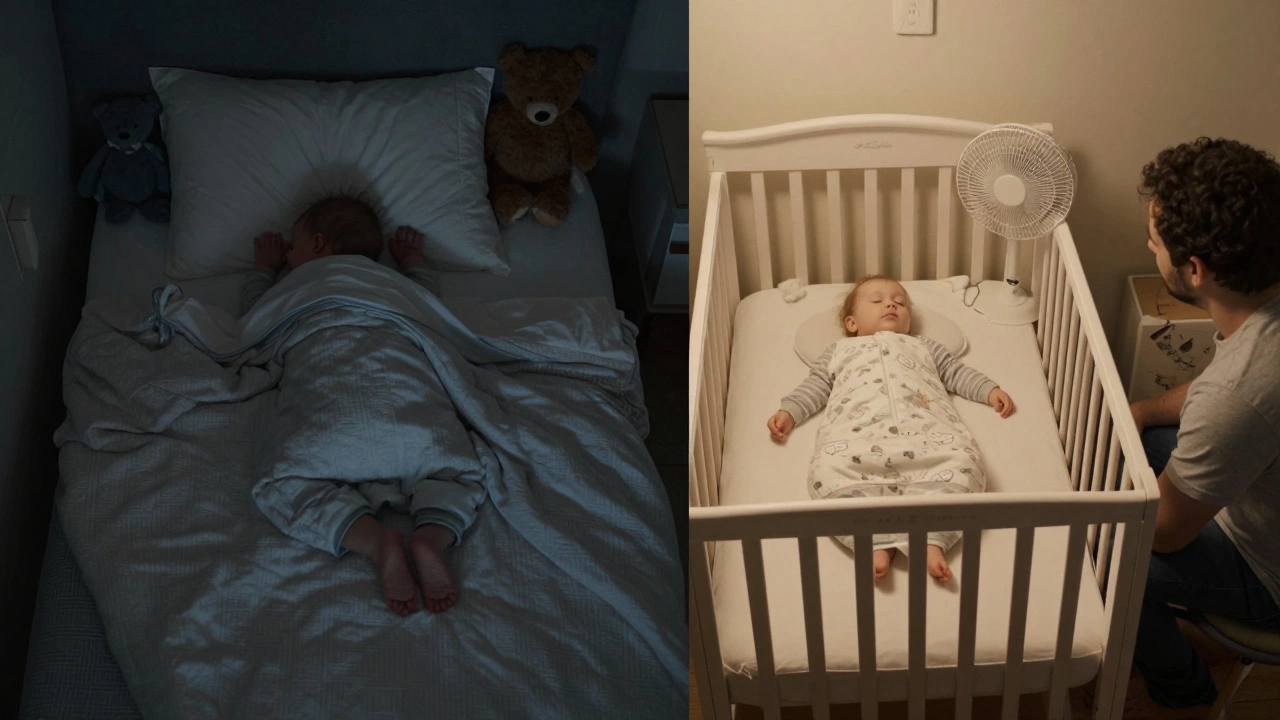
Think of your baby’s sleep space like a clean slate. No blankets, no pillows, no stuffed animals, no bumper pads. Not even a lovey or a small blanket tucked under the mattress.
Soft bedding is one of the leading contributors to SIDS. Babies can’t push it away. They don’t have the strength or coordination. A loose blanket can cover their face. A pillow can press against their nose. Even a quilt or a thick mattress topper can trap heat and reduce airflow.
Instead, use a firm, flat mattress covered with a fitted sheet. Dress your baby in a sleep sack or wearable blanket. That’s it. No need to overheat them - room temperature is fine. If you’re worried they’re cold, add a long-sleeved onesie under the sleep sack. But keep the crib empty. That’s the rule.
Room Sharing Without Bed Sharing
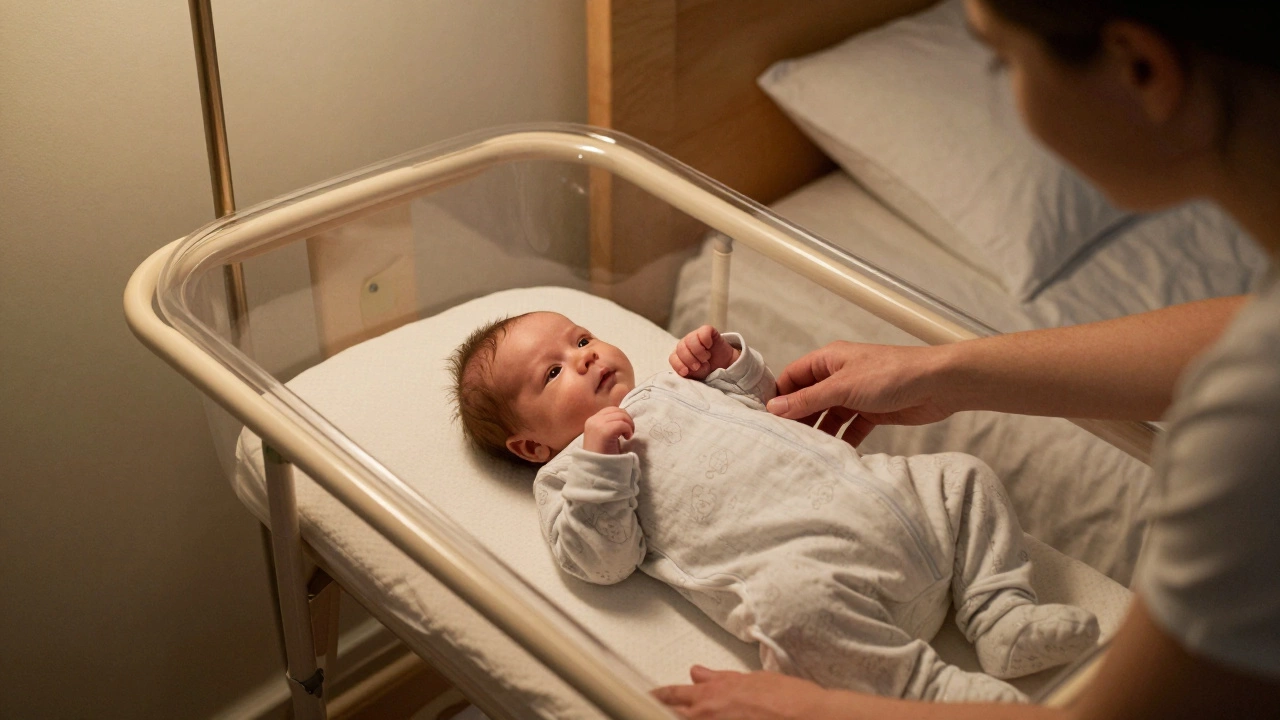
Many parents worry about leaving their baby alone in another room. That’s why room sharing - having your baby sleep in the same room as you, but not in the same bed - is so important.
Studies show that babies who sleep in the same room as their parents have a 50% lower risk of SIDS. Why? Because parents are more likely to hear subtle sounds, check on them, and respond quickly. The proximity helps regulate breathing and heart rate.
Use a bassinet, crib, or play yard right next to your bed. No need to buy an expensive "co-sleeper." A simple, sturdy crib with a firm mattress works perfectly. Keep it at least 12 inches away from walls, nightstands, or anything that could tip or fall.
But never, ever sleep with your baby on a couch, armchair, or adult bed. Even if you’re breastfeeding. Even if you’re tired. Even if you’ve heard "everyone does it." Adult beds have pillows, sheets, and gaps between the mattress and frame - all of which can trap or suffocate a baby. The risk is real. And it’s not worth it.
Avoid Smoke, Alcohol, and Drugs
If you’re pregnant, don’t smoke. If you’re postpartum, don’t smoke around your baby. Secondhand smoke increases SIDS risk by up to 200%. That’s not a small number. It’s a doubling.
And it’s not just cigarettes. Vaping, marijuana, and alcohol also raise the risk. Babies exposed to smoke or substances before or after birth have weaker respiratory systems and less ability to wake up when they’re in danger.
If you’re struggling to quit, talk to your doctor. There are safe, proven programs. Your baby’s life depends on it.
Pacifiers Help - But Don’t Force Them
Yes, pacifiers reduce SIDS risk. Multiple studies confirm it. One 2016 meta-analysis found that babies who used pacifiers during sleep had a 90% lower chance of SIDS compared to those who didn’t.
But here’s the catch: don’t force it. If your baby refuses the pacifier, don’t keep trying. Don’t tie it to their clothing or attach it to a string. That’s a choking hazard.
Offer it when you put them down to sleep. If it falls out and they don’t cry for it, leave it. Don’t reinsert it. If they’re breastfeeding, wait until nursing is well established - usually around 3 to 4 weeks - before introducing a pacifier.
Don’t Rely on Baby Monitors to Prevent SIDS
Here’s the hard truth: baby monitors, even the smart ones with heart rate and breathing sensors, do not prevent SIDS.
They can alert you if your baby stops breathing. But they don’t stop it from happening. And they often give false alarms - beeping because the baby moved, the sheet shifted, or the sensor lost signal. That causes stress, not safety.
The American Academy of Pediatrics says there’s no evidence that home monitors reduce SIDS in healthy babies. They’re only recommended for babies with specific medical conditions, like severe reflux or apnea.
So if you’re buying a monitor because you think it’ll protect your baby from SIDS - you’re misinformed. It won’t. What will? The five things above: back to sleep, bare crib, room sharing, no smoke, and pacifiers if they’ll take it.
Other Myths That Don’t Help
- White noise machines? Fine for sleep, but not a SIDS prevention tool.
- Special mattresses? No evidence they reduce risk. Stick with firm, flat, and fitted.
- Positioners or wedges? Banned by the FDA. They can shift and block airways.
- Swaddling? Only if done correctly. Stop swaddling once your baby shows signs of rolling - usually around 2 months. Loose swaddles can cover the face.
What About Tummy Time?
Tummy time is great - but only when your baby is awake and supervised. It helps build neck and shoulder strength, prevents flat head syndrome, and prepares them for rolling and crawling.
But never put your baby on their tummy to sleep. Ever. Tummy time is for play. Sleep is for the back.
Final Checklist: What Actually Works
Here’s what you need to do - and what you can skip:
- Do: Always place baby on their back to sleep.
- Do: Use a firm mattress with a fitted sheet only.
- Do: Keep the crib empty - no toys, blankets, or bumpers.
- Do: Share the room, not the bed.
- Do: Avoid all smoke, alcohol, and drugs around your baby.
- Do: Offer a pacifier at sleep time - if they’ll take it.
- Don’t: Buy a monitor thinking it’ll prevent SIDS.
- Don’t: Use pillows, quilts, or sleep positioners.
- Don’t: Co-sleep on sofas, chairs, or adult beds.
These steps aren’t complicated. They’re not expensive. And they’re not new. But they work - better than any gadget ever could.
Why This Matters
SIDS doesn’t happen because parents didn’t love their babies enough. It doesn’t happen because they didn’t try hard enough. It happens because we don’t always know what the science says - and we’re sold products that promise safety but don’t deliver.
The truth? The safest sleep environment for your baby is the simplest one. No screens. No wires. No noise. Just a quiet room, a firm mattress, and a baby on their back.
That’s not boring. It’s brilliant.
Can a baby monitor prevent SIDS?
No. Baby monitors, even those that track breathing and heart rate, cannot prevent SIDS. They may alert you to changes in your baby’s condition, but they don’t stop the events that lead to SIDS. The American Academy of Pediatrics states there is no evidence that home monitors reduce SIDS in healthy infants. Relying on them can create a false sense of security. The proven methods - back to sleep, bare crib, room sharing, and no smoke - are far more effective.
Is it safe to use a sleep sack instead of a blanket?
Yes, and it’s actually safer. Sleep sacks are designed to keep babies warm without the risk of loose fabric covering their face. Choose one that fits snugly around the neck and arms, with no hood. Avoid oversized or quilted versions. The goal is warmth without suffocation risk. Always follow the manufacturer’s size chart - a sleep sack that’s too big can be dangerous.
What if my baby only sleeps on their side or stomach?
If your baby is under 1 year old, you must place them on their back for every sleep. Side sleeping is just as risky as stomach sleeping. If they roll over on their own after 4-6 months, you don’t need to reposition them. But always start them on their back. If your baby consistently refuses to sleep on their back and you’re struggling, talk to your pediatrician. There may be an underlying medical issue like reflux or a neurological concern that needs attention.
Does breastfeeding reduce SIDS risk?
Yes. Breastfeeding reduces SIDS risk by about 50%. It helps protect against infections, supports healthy brain development, and may improve arousal from sleep. Even partial breastfeeding offers protection. If you’re unable to breastfeed, formula-fed babies are still safe as long as you follow the other guidelines: back to sleep, bare crib, no smoke. The key is consistency - not perfection.
Is it safe to use a fan in the baby’s room?
Yes. Studies have shown that using a fan during sleep can reduce SIDS risk by up to 70%. The theory is that better air circulation prevents rebreathing of carbon dioxide and keeps the sleep environment cooler. A simple, low-speed fan placed across the room, not pointed directly at the baby, is fine. It’s not a substitute for back sleeping or a bare crib, but it’s a helpful addition.