Nursery Safety & Placement Calculator
Room Configuration
Safety Score
Identified Hazards:
It’s tempting to place your baby’s crib right next to that big, sun-drenched window. The natural light is beautiful, and it feels like a cozy spot for those early morning checks. But if you’ve ever heard someone say, "Don’t put the crib by the window," they weren’t just being difficult. They were likely pointing out a very real safety hazard.
Placing a crib near a window isn't just about comfort; it’s a critical decision regarding infant safety. From the risk of climbing escapes to hidden dangers from cords and temperature swings, the space around a window is one of the most dangerous zones in a nursery. Let’s break down exactly why this common setup can go wrong and where your baby actually belongs.
The Climbing Hazard: It Happens Sooner Than You Think
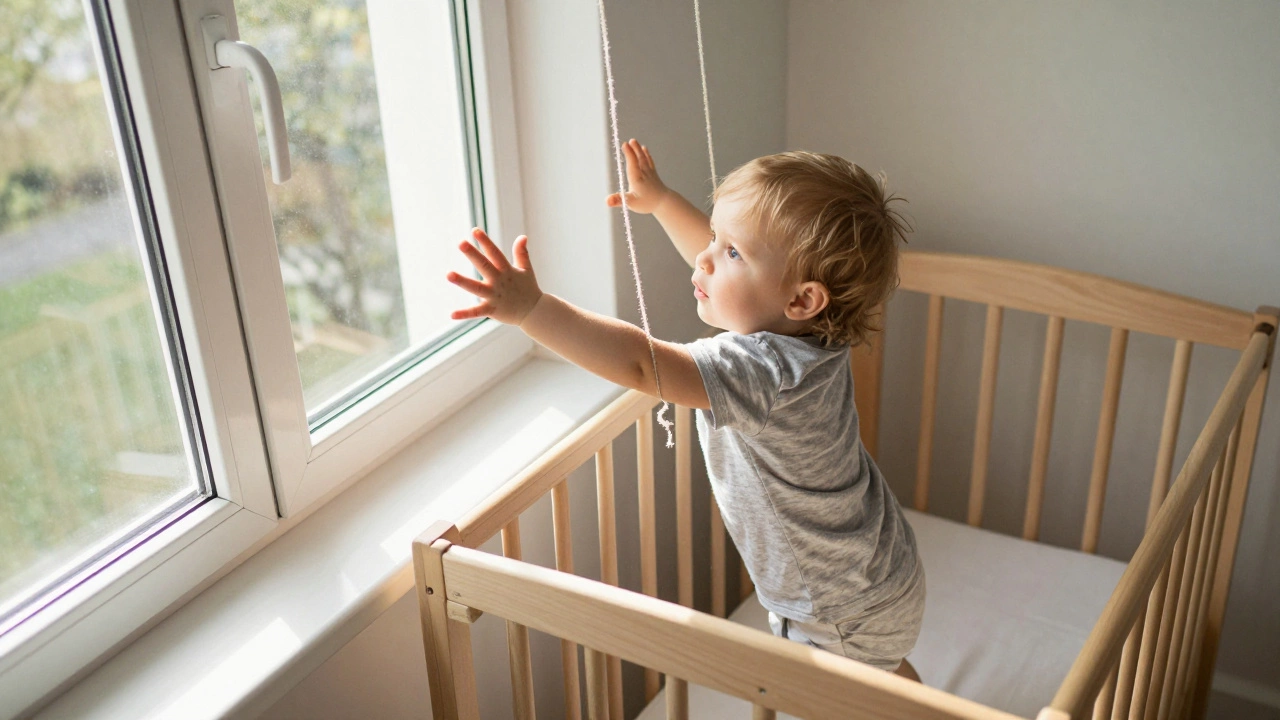
The biggest reason experts advise against placing a crib by a window is the escape route. Babies grow fast. One day they are sleeping peacefully, and six months later, they are standing up, pulling themselves along the rails, and looking for ways out.
If the crib is pushed directly against the window wall, your child has a direct path to the glass. Here is how the danger unfolds:
- Step 1: Your toddler learns to climb out of the crib (usually between 8 and 10 months).
- Step 2: Instead of landing on a soft rug, they step onto the windowsill or land dangerously close to the glass.
- Step 3: If the window is open, even slightly, there is a risk of falling. If it’s closed, they might bang their head against the hard surface or try to push the sash open.
You might think, "My baby is too small to climb." That’s true today. But cribs last for years. A crib placed by the window for a newborn becomes a major liability once that child starts walking. Moving heavy furniture every few months is exhausting, so it makes more sense to get the placement right from the start.
Corded Blinds and Strangulation Risks
This is perhaps the most immediate and silent danger. Most windows have blinds, curtains, or shades. If these have operational cords, they are a severe strangulation hazard.
A curious baby who manages to stand in the crib-or climb out-can grab hold of a dangling cord. Even lightweight fabric cords can tighten around a neck quickly enough to cause injury or death. The U.S. Consumer Product Safety Commission (CPSC) has issued strict warnings about this. In many cases, parents don’t realize the risk until it’s too late because the cords look harmless.
If you must keep window treatments, ensure they are cordless. However, even cordless blinds can be pulled down by a determined toddler. Placing the crib away from the window eliminates the chance of your baby interacting with these mechanisms entirely.
Temperature Swings and Drafts
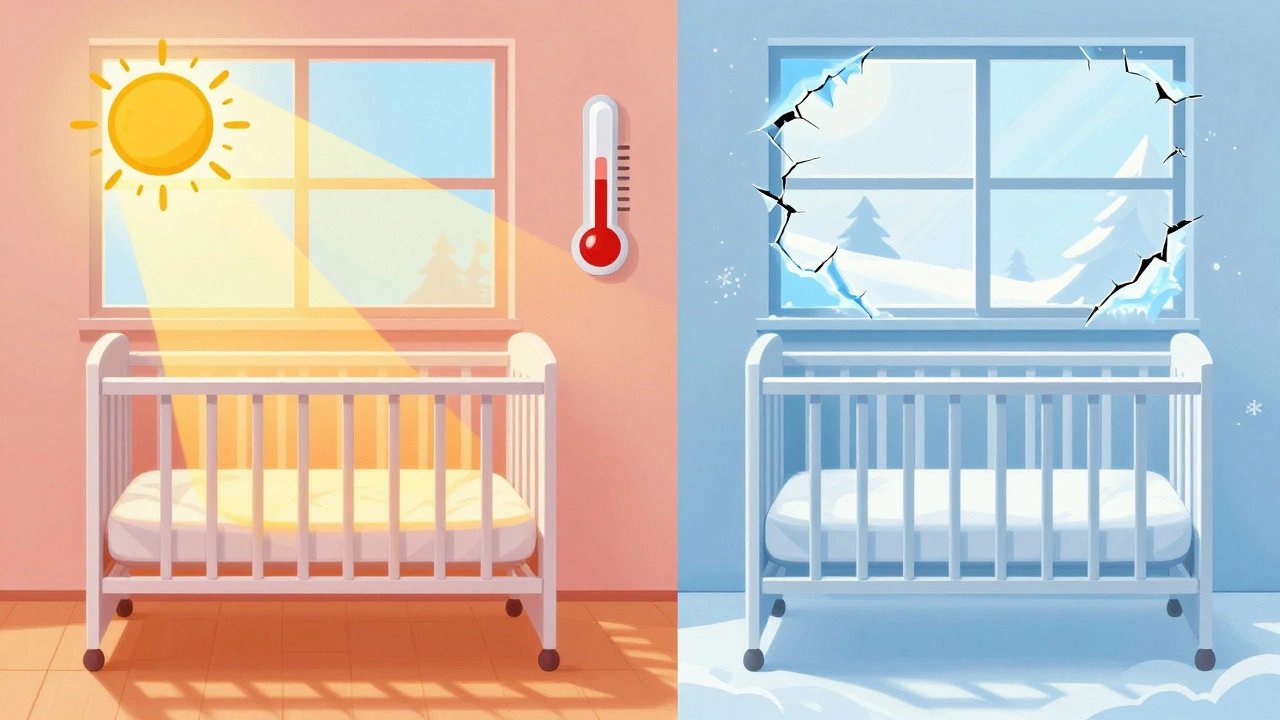
Windows are the weakest link in your home’s insulation. Glass allows heat to escape in winter and lets cold air seep in during storms. Conversely, in summer, direct sunlight can turn a room into an oven.
Babies cannot regulate their body temperature as efficiently as adults. Their skin is thinner, and their metabolic processes are different. Placing a crib right next to a drafty window exposes your baby to:
- Cold drafts: Which can lead to discomfort, disrupted sleep, and potentially lower respiratory issues if the baby gets chilled.
- Overheating: Direct sunlight hitting the crib can raise the ambient temperature significantly. Overheating is a known risk factor for Sudden Infant Death Syndrome (SIDS). The American Academy of Pediatrics (AAP) recommends keeping the nursery at a comfortable temperature for a lightly dressed adult, usually between 68°F and 72°F (20°C - 22°C).
By moving the crib to an interior wall, you create a buffer zone. The rest of the room acts as insulation, keeping the air around the crib more stable and safer for your baby’s delicate system.
Noise Disruption and Sleep Quality
Windows are also portals for noise. Traffic, neighbors, barking dogs, or sirens all come through the glass. While white noise machines help mask some sounds, having the crib right next to the source of external noise can still disrupt your baby’s sleep cycles.
Babies need deep, uninterrupted sleep for brain development. Every time a loud truck drives by or a conversation happens outside, your baby might stir. An interior wall provides better sound dampening. The drywall and studs act as a barrier, giving your baby a quieter environment to drift off and stay asleep longer.
The Best Place for a Crib: Interior Walls
So, if not the window, where should the crib go? The gold standard for nursery safety is an interior wall.
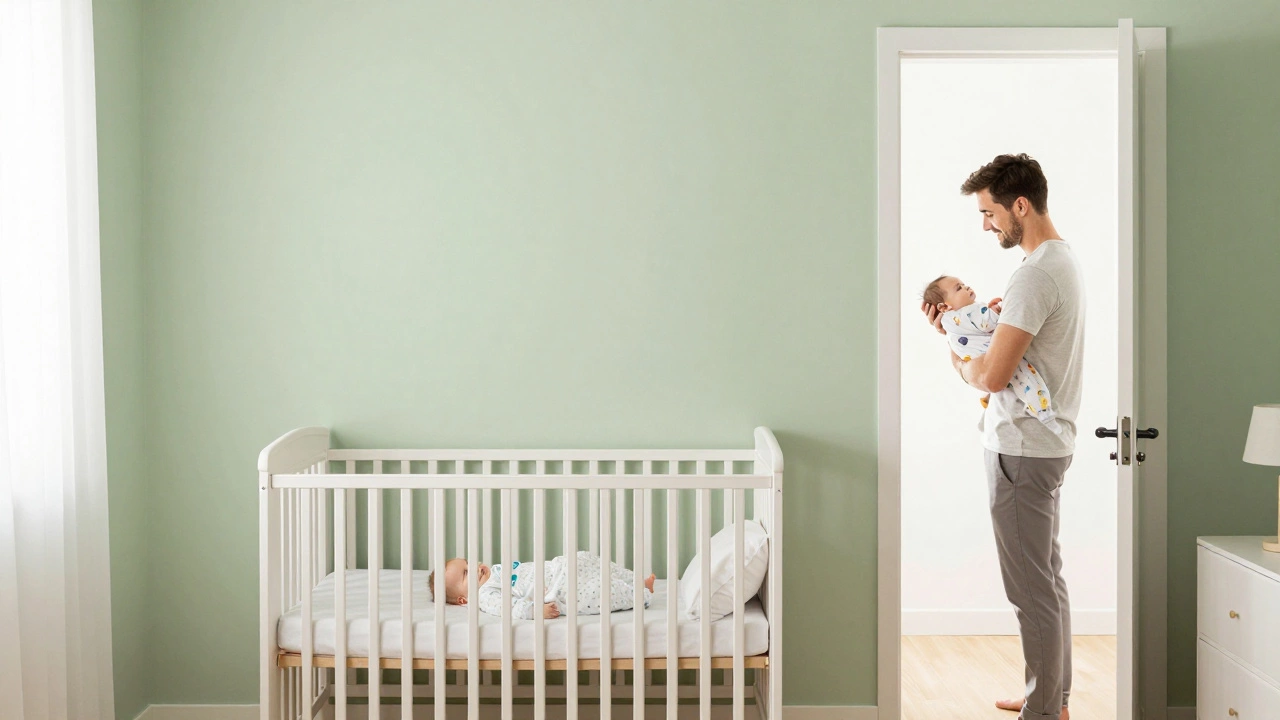
An interior wall is typically solid, insulated, and quiet. It doesn’t have windows, outlets, or heating vents nearby. When you place the crib against an interior wall, you maximize the distance from all potential hazards.
Here is a quick checklist for ideal crib placement:
- Distance from windows: At least 3 feet away to prevent climbing access.
- Distance from cords: No blind or curtain cords within reach.
- Distance from electronics: Away from TVs, monitors, and charging cables.
- Visibility: Positioned so you can see the baby easily from the door or changing table, but not necessarily staring at them 24/7 (which can increase parental anxiety).
If your room is small and you feel forced to use a window wall, consider using a mini-crib or a bassinet that sits further back in the corner, ensuring no part of the bed touches the sill. But generally, avoiding the window wall altogether is the safest bet.
| Location | Safety Risk Level | Key Hazards | Recommendation |
|---|---|---|---|
| Next to Window | High | Falls, cords, temperature swings, noise | Avoid completely |
| Interior Wall | Low | Minimal if area is clear | Best option |
| Corner of Room | Medium | Depends on adjacent walls | Good if away from windows/outlets |
What About Airflow?
Some parents worry that an interior wall will make the room stuffy. This is a myth if you have proper ventilation elsewhere. As long as the room has a working HVAC system or another window across the room, airflow will circulate fine. The goal is to avoid *direct* drafts on the baby, not to stop air movement entirely. Stale air is bad, but a freezing draft is worse. Balance is key, and an interior wall offers the best balance.
Final Thoughts on Nursery Layout
Setting up a nursery is emotional. You want it to look good, feel cozy, and function well. But safety always trumps aesthetics. The view from the crib isn’t as important as the safety of the space around it. By choosing an interior wall, you’re investing in peace of mind. You’ll spend less time worrying about climbing toddlers and more time enjoying those precious moments with your little one.
Can I put my crib under the window if I install safety locks?
While safety locks reduce the risk of falls, they do not eliminate other hazards like cord strangulation, temperature fluctuations, and noise. Additionally, once a child climbs out, they are still in a high-risk zone near the glass. Experts recommend keeping the crib at least 3 feet away from any window, regardless of locks.
Is it okay to have a crib near a heater or vent?
No. Just like windows, heaters and vents cause uneven temperatures. Direct heat can lead to overheating, a risk factor for SIDS, while cold drafts from AC vents can chill the baby. Keep the crib away from all direct sources of heat and cold.
How far should the crib be from the wall?
The crib should be flush against the wall or have minimal gap to prevent a baby from getting trapped between the crib and the wall. However, ensure the wall itself is free of hazards like outlets, cords, or shelves that could be climbed upon.
Do blackout curtains solve the window problem?
Blackout curtains help with light control, which is great for sleep. However, they often have tie-backs or cords that pose strangulation risks. Unless they are completely cordless and secured high up, they do not mitigate the primary safety concerns of placing a crib near a window.
When should I move the crib away from the window?
Ideally, before the baby is born. If the crib is already by the window, move it as soon as you notice signs of mobility, such as rolling over or sitting up. Don’t wait until they start standing or climbing; prevention is much easier than reaction.