
Montessori vs. Regular Toy Analyzer
Select a Toy
Wooden Block Set
Natural wood, various shapes/sizes.
Color Tablets
Graduated shades for visual matching.
Real Wooden Knife & Fruit
Safe knife with soft fruits (bananas/carrots).
Beaded Stringing Kit
Large wooden beads and string.
Select a Toy
Battery Operated Train
Plastic, moves itself, plays music.
Digital Flashcard Reader
Electronic voice says colors/words.
Plastic Kitchen Set
Buttons make sizzling sounds.
Remote Control Car
Plastic, driven by remote buttons.
Montessori Approach
Regular Approach
Developmental Impact Analysis
You’ve probably seen them in every boutique toy store and on countless parenting blogs. They look simple-sometimes almost boring compared to the flashing lights and loud noises of mainstream options. But there is a reason parents are swapping out plastic dinosaurs for wooden blocks. The question isn’t just about aesthetics; it’s about how your child learns.
When you ask what is the difference between Montessori toys and regular toys, you are really asking how different materials shape brain development. One approach prioritizes independent exploration and real-world skills, while the other often focuses on entertainment and passive consumption. Understanding this distinction helps you build an environment that actually supports your child’s growth rather than just distracting them.
What makes a toy "Montessori"?
A Montessori toy is defined by its simplicity and purpose. It is usually made from natural materials like wood, metal, or fabric, has no electronic components, and encourages open-ended play. Unlike regular toys that often have a single function or outcome, Montessori toys allow children to explore multiple uses and develop problem-solving skills through hands-on interaction with their environment.
The Core Philosophy: Real vs. Representational
The biggest difference lies in the philosophy behind the design. Montessori education is an educational method developed by Maria Montessori that emphasizes self-directed activity, hands-on learning, and collaborative play. In this framework, toys are not just for fun; they are tools for learning. They are designed to isolate specific skills, such as hand-eye coordination, color recognition, or fine motor control.
Regular toys, often referred to as traditional or commercial toys, frequently rely on representational play. A plastic doll represents a person; a toy car represents a vehicle. While imaginative play is valuable, Montessori advocates argue that young children (especially under age six) benefit more from concrete, real-life objects. Instead of a plastic apple that never rots, a Montessori classroom offers a real apple they can smell, touch, and eventually eat. This connection to reality grounds their understanding of the world.
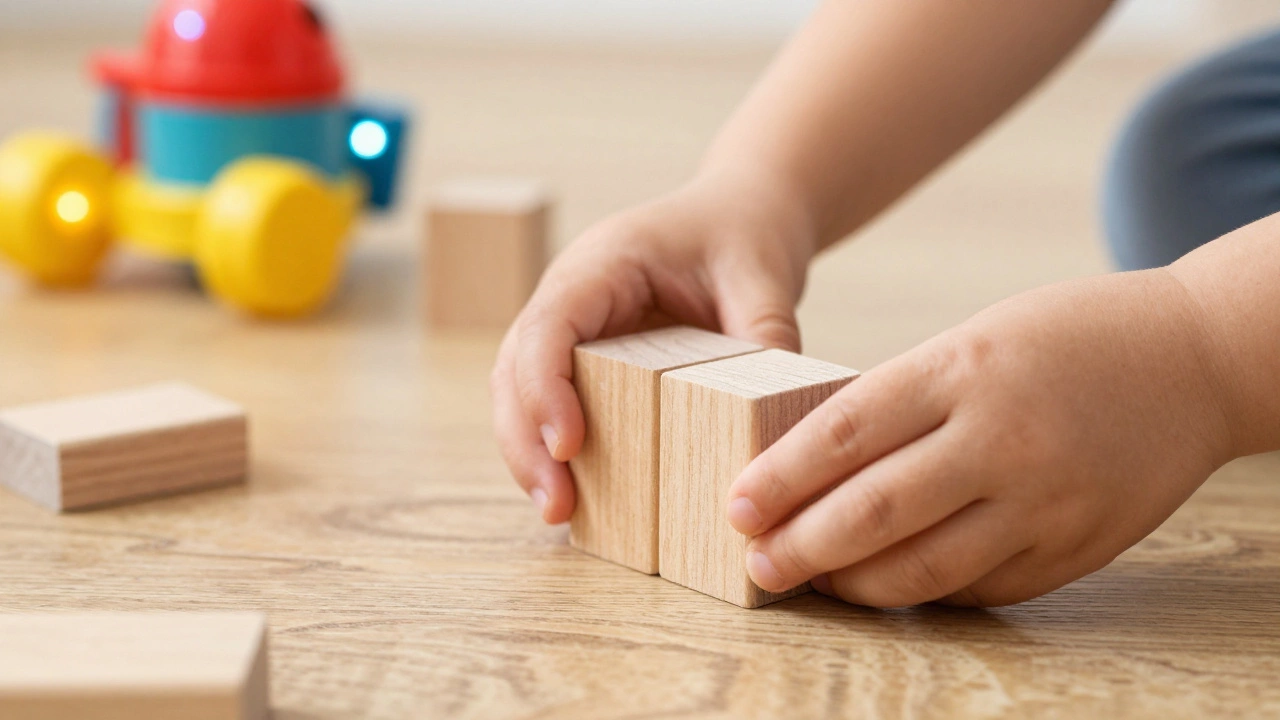
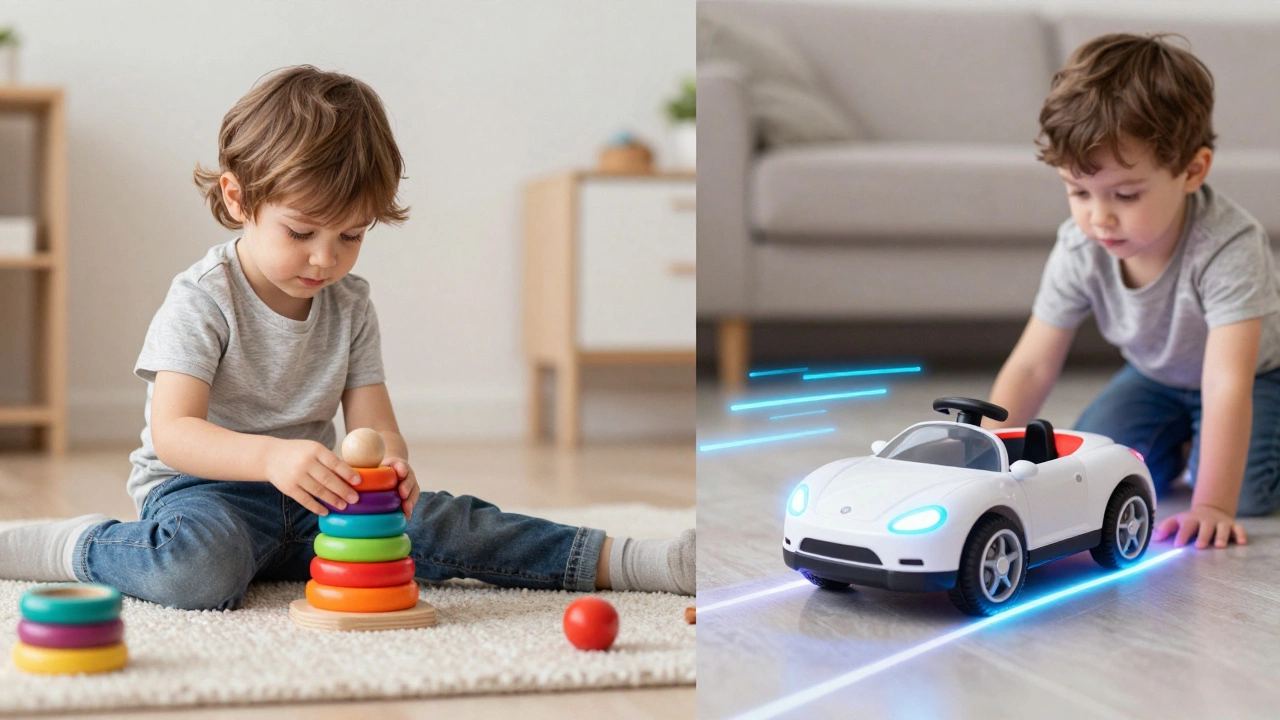
Consider the difference in engagement. A battery-operated train moves itself and plays music. The child watches. A wooden block set requires the child to build, balance, and imagine. The child acts. This shift from passive observer to active participant is the cornerstone of the Montessori approach.
Materials Matter: Natural vs. Synthetic
If you pick up a typical toy from a big-box store, it is likely made of plastic. Plastic is cheap to manufacture, durable, and allows for bright, artificial colors. However, plastic is also a poor conductor of temperature and lacks texture. It feels cold and smooth, offering little sensory feedback.
Montessori materials prioritize natural elements like wood, glass, metal, cotton, and wool. Wood, for instance, has weight and warmth. It feels substantial in a child’s hands. Glass cups are used instead of plastic ones because they require care and attention, teaching responsibility and consequence. If a glass cup breaks, the child learns about fragility and safety in a way that plastic does not teach.
This focus on natural materials also ties into environmental awareness. Children raised with wooden toys are less likely to view plastic waste as normal. They learn to appreciate the grain of wood or the coolness of metal, which stimulates their senses more effectively than uniform synthetic surfaces.
Open-Ended Play vs. Directed Play
Think about a puzzle. A standard jigsaw puzzle has one correct solution. You fit the pieces together until the picture matches the box. Once solved, the activity ends. Now think about a set of wooden rings. They can be stacked, sorted by size, used as pretend coins, or arranged in patterns. There is no wrong way to use them.
This is what we call open-ended play, which is play that has no predetermined outcome, allowing children to create their own rules and scenarios. Montessori toys excel here. They do not dictate how they should be played with. A wooden spoon is a utensil, but it can also be a drumstick, a microphone, or a tool for stirring pretend soup. This flexibility fosters creativity and critical thinking.
Regular toys often come with instructions or built-in functions. A remote-control car goes forward, backward, and turns left and right. That is it. The child’s role is limited to pressing buttons. Over time, this can lead to shorter attention spans because the stimulation is provided by the toy, not generated by the child’s imagination.
The Role of Electronics and Noise
Walk into any department store toy aisle, and you will hear it: the constant beeping, singing, and talking of electronic toys. These toys are designed to grab attention immediately. They provide instant gratification. Press a button, get a sound. Press another, get a light.
In a Montessori environment, silence is valued. Electronic toys are generally avoided because they interfere with concentration. When a toy talks for the child, the child stops talking. When a toy moves for the child, the child stops moving. This dependency on external stimulation can hinder the development of inner focus.
Without electronics, children must generate their own entertainment. They might spend twenty minutes arranging colored beads on a tray. To an adult, this looks repetitive. To the child, it is a complex exercise in pattern recognition, patience, and precision. This deep work is impossible when a toy is constantly shouting for attention.
Safety and Simplicity
Simplicity is not just a stylistic choice; it is a safety feature. Regular toys often have small parts, sharp edges, or complex mechanisms that can break. Batteries pose a choking hazard and an environmental risk. Montessori toys are designed to be robust and safe without needing constant supervision.
A wooden ring stacker has no small parts to lose. It cannot run out of batteries. It does not need charging. This simplicity reduces stress for parents and allows children to engage independently. Independence is a key goal in Montessori education. By removing barriers like broken batteries or confusing instructions, you empower the child to take charge of their play.
Furthermore, simpler toys tend to last longer. A well-made wooden block set can be passed down through generations. A plastic electronic toy often breaks within months and ends up in a landfill. This durability aligns with the Montessori value of respecting resources.
Comparison Table: Montessori vs. Regular Toys
| Feature | Montessori Toys | Regular Toys |
|---|---|---|
| Material | Natural (wood, metal, fabric) | Synthetic (plastic, rubber) |
| Power Source | None (child-powered) | Batteries or electricity |
| Play Style | Open-ended, creative | Directed, functional |
| Sensory Input | Tactile, realistic textures | Visual, auditory stimulation |
| Goal | Skill development, independence | Entertainment, distraction |
| Longevity | High (grows with child) | Low (often outgrown quickly) |
Real-Life Examples: Seeing the Difference
Let’s look at two common scenarios to see how these differences play out in daily life.
Scenario 1: Learning Colors
- Regular Toy: A digital flashcard reader that says "Red!" when you press a red button. The child memorizes the association through repetition and audio cues.
- Montessori Toy: A set of color tablets. The child matches shades by eye, developing visual discrimination. They learn to distinguish between similar hues without relying on verbal labels initially.
Scenario 2: Pretend Play
- Regular Toy: A plastic kitchen set with buttons that make sizzling sounds. The child pushes buttons to mimic cooking actions.
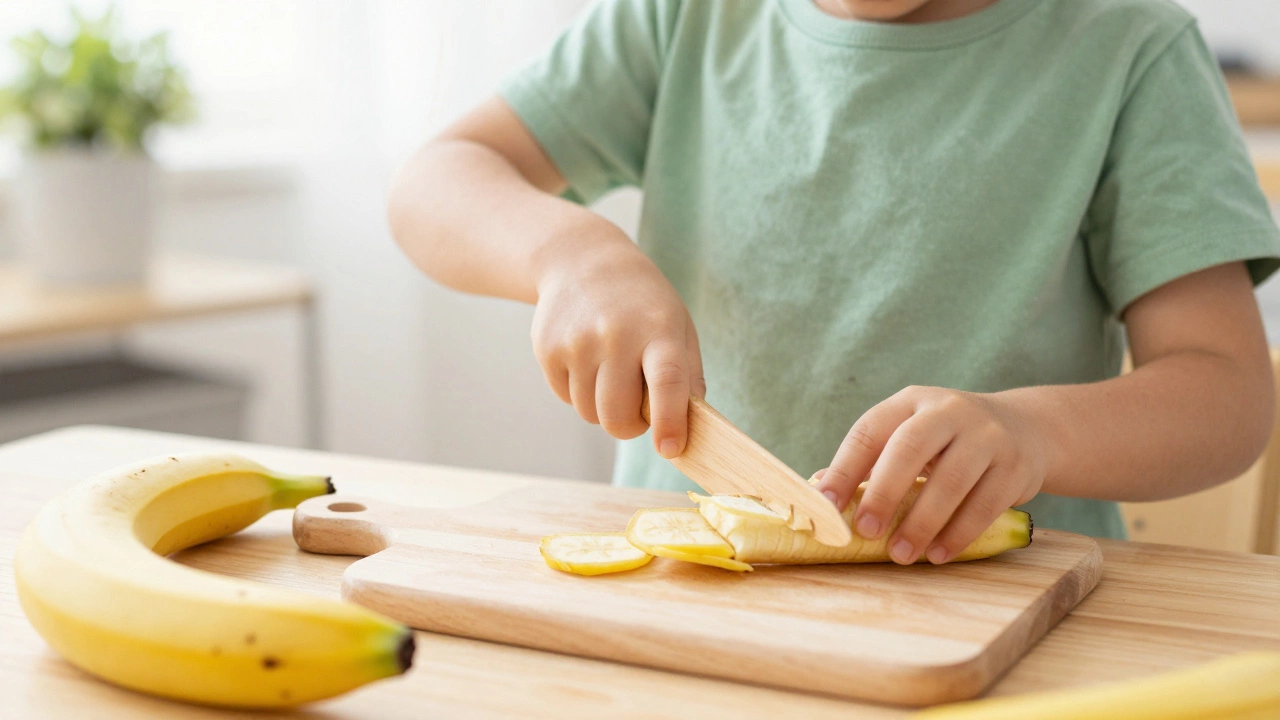
- Montessori Toy: A real wooden knife and soft fruits (like bananas or cooked carrots). The child practices actual cutting skills, building confidence and fine motor strength while engaging in realistic role-play.
In both cases, the Montessori option requires more effort from the child. But that effort is where the learning happens. The brain builds neural pathways through physical action and problem-solving, not just through observation.
Addressing Common Misconceptions
Many parents worry that Montessori toys are too expensive or that they lack the "fun" factor. Let’s clear that up.
Cost: Yes, high-quality wooden toys cost more upfront than plastic alternatives. However, they last longer and grow with the child. A wooden truck can be pushed across the floor at age two, used for sorting games at age three, and incorporated into complex narratives at age five. You buy it once, not repeatedly.
Fun: Fun is subjective. For adults, fun might mean excitement and novelty. For children, fun often means mastery and discovery. The satisfaction of stacking ten rings without them falling is immense to a toddler. It provides a sense of accomplishment that a flashing light cannot replicate.
Imagination: Critics argue that realistic toys limit imagination. Actually, it’s the opposite. Abstract toys (like a stick) require the child to imagine it is a sword. Realistic toys (like a real broom) allow the child to understand the function first, then expand from there. Montessori doesn’t ban imagination; it grounds it in reality.
How to Choose the Right Mix
You don’t have to throw away all your plastic toys tomorrow. Balance is key. Use Montessori principles to curate your child’s environment. Focus on quality over quantity. Rotate toys to keep them fresh. Ask yourself: Does this toy require the child to do something, or does it do something for the child?
If you are looking to start, begin with basics. Wooden blocks, nesting cups, shape sorters, and puzzles. Observe how your child interacts with them. Notice if they engage deeply or move on quickly. Trust your instincts. Your child will tell you what works for them.
Are Montessori toys better for all ages?
Montessori principles are most impactful during early childhood (ages 0-6), when brain development is rapid. However, the emphasis on independence, practical life skills, and open-ended play benefits children of all ages. Older children can still benefit from Montessori-inspired materials that encourage deep focus and creativity.
Can I mix Montessori and regular toys?
Yes, many families choose a hybrid approach. The key is to ensure that Montessori-style toys form the core of the play environment. Limit electronic and highly stimulating toys to occasional use, ensuring they do not dominate the child's daily routine or replace hands-on activities.
Why are Montessori toys so expensive?
The higher cost reflects the quality of materials and craftsmanship. Wood, metal, and natural fabrics are more expensive than plastic. Additionally, Montessori toys are designed to last for years, often becoming heirlooms. Investing in fewer, higher-quality items is often more economical in the long run than buying multiple cheap toys that break or are outgrown quickly.
Do Montessori toys help with speech development?
Indirectly, yes. Because Montessori toys do not talk for the child, children are encouraged to narrate their own play. They describe what they are doing, creating stories and explaining processes. This self-talk promotes language acquisition and vocabulary expansion more effectively than passive listening to electronic voices.
Where can I find authentic Montessori toys?
Look for brands that specialize in educational materials and use natural materials. Avoid toys with excessive branding, loud packaging, or electronic features. Many online retailers and local educational stores offer curated selections. Always check for safety certifications and durable construction.