
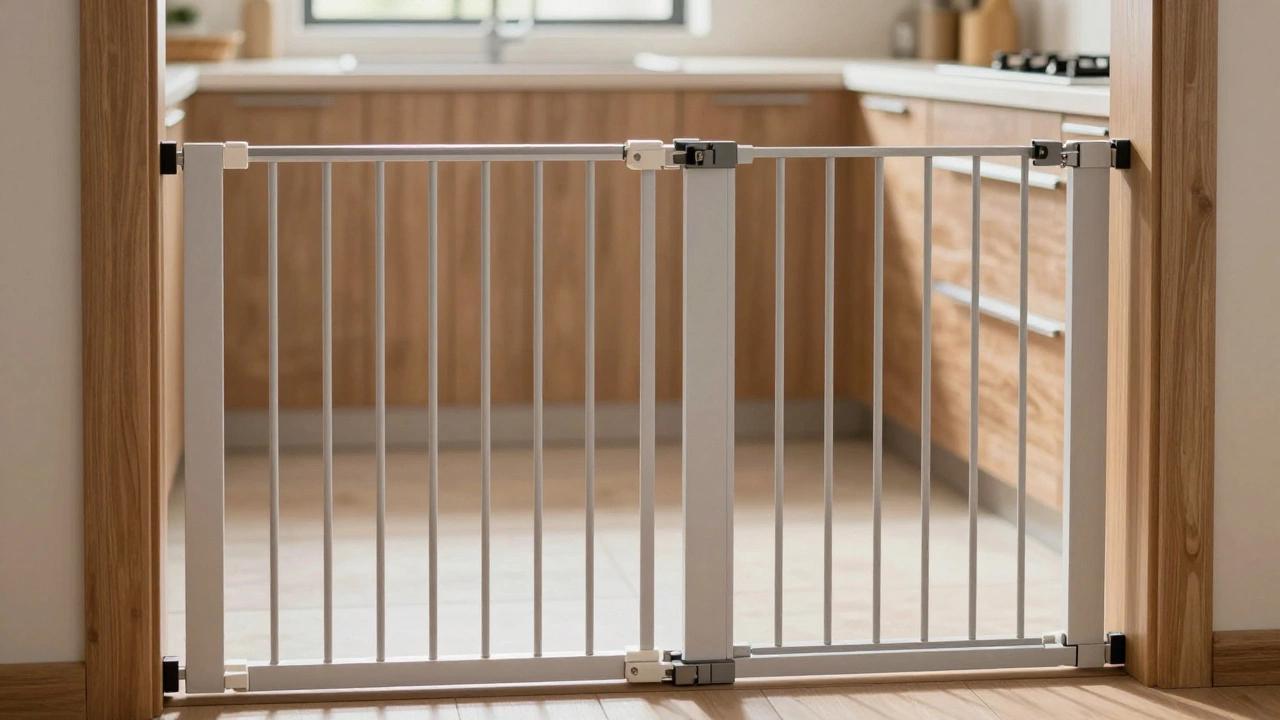
Pet Gate vs Baby Gate Safety Checker
Find Your Ideal Gate Type
Current Gate Safety Assessment
Check each item that applies to your current gate setup:
Feature Comparison
| Feature | Pet Gate | Baby Gate |
|---|---|---|
| Primary Purpose | Containment | Life Safety |
| Bar Spacing | Variable (often wider) | <10cm (strictly regulated) |
| Locking Mechanism | Simple (single action) | Complex (double action) |
| Material Strength | Lightweight plastic/mesh | Heavy-gauge steel/wood |
| Stair Use | ❌ Never recommended | ✅ Hardware-mounted only |
| Climb Resistance | Low (may have footholds) | High (vertical bars only) |
| Safety Certification | Rarely required | Required (ASTM/BS EN) |
| Typical Cost | £10-£30 | £30-£100+ |
Imagine you just bought a sturdy-looking gate to block off the kitchen. You install it, step away for two minutes, and come back to find your toddler has somehow squeezed through the slats, or perhaps your energetic Labrador has jumped right over it. It’s a frustrating scenario that many parents face when they assume all gates are created equal. They aren’t.
The confusion between pet gates and baby gates designed for child safety is common because they look similar on the surface. Both are barriers. Both keep things separated. But underneath that similarity lies a critical difference in engineering, safety standards, and intended use. Using a pet gate for a baby can be dangerous, while using a heavy-duty baby gate for a small dog might be overkill-or worse, create a tripping hazard.
Understanding the Core Purpose: Containment vs. Protection
To understand why these gates differ, we first need to look at what each one is trying to achieve. A pet gate is primarily a containment tool. Its job is to stop an animal from entering a specific room, chewing on furniture, or getting into food. The force required to break through is usually low; most pets will simply turn around if they encounter a solid barrier.
In contrast, a baby gate is a life-safety device. Babies and toddlers are unpredictable. They climb, crawl, push, pull, and explore with surprising strength. A baby gate must withstand significant force without collapsing or detaching from the wall. More importantly, it must prevent strangulation hazards and ensure that a curious little finger cannot trigger the release mechanism.
This fundamental difference in purpose dictates every aspect of the design, from the width of the bars to the type of locking system used.
Design Differences: Bar Spacing and Climbability
One of the most visible differences between the two types of gates is the spacing between the vertical bars or mesh panels.
- Pet Gates: Often have wider gaps between bars to allow visibility and airflow. Some designs even feature horizontal rails that act as steps for agile dogs like Border Collies or Huskies to jump over. If your goal is to keep a cat out, a mesh screen works fine. But those same wide gaps or horizontal rungs are a major risk for a toddler.
- Baby Gates: Are strictly regulated regarding bar spacing. In the UK and EU, standards dictate that openings must be less than 10cm (about 4 inches) to prevent a child’s head from getting stuck. Vertical bars are preferred because they discourage climbing. Horizontal bars are generally avoided in high-quality baby gates because they invite children to scale them like a ladder.
If you look closely at a cheap pet gate, you might see decorative cutouts or large diamond-shaped holes. These are fine for keeping a Golden Retriever out of the laundry room. However, if a toddler pushes against such a gate, the structural integrity might fail, or worse, their limbs could get trapped in the larger openings.
Locking Mechanisms: Simplicity vs. Security
The way a gate opens is where safety really comes into play.
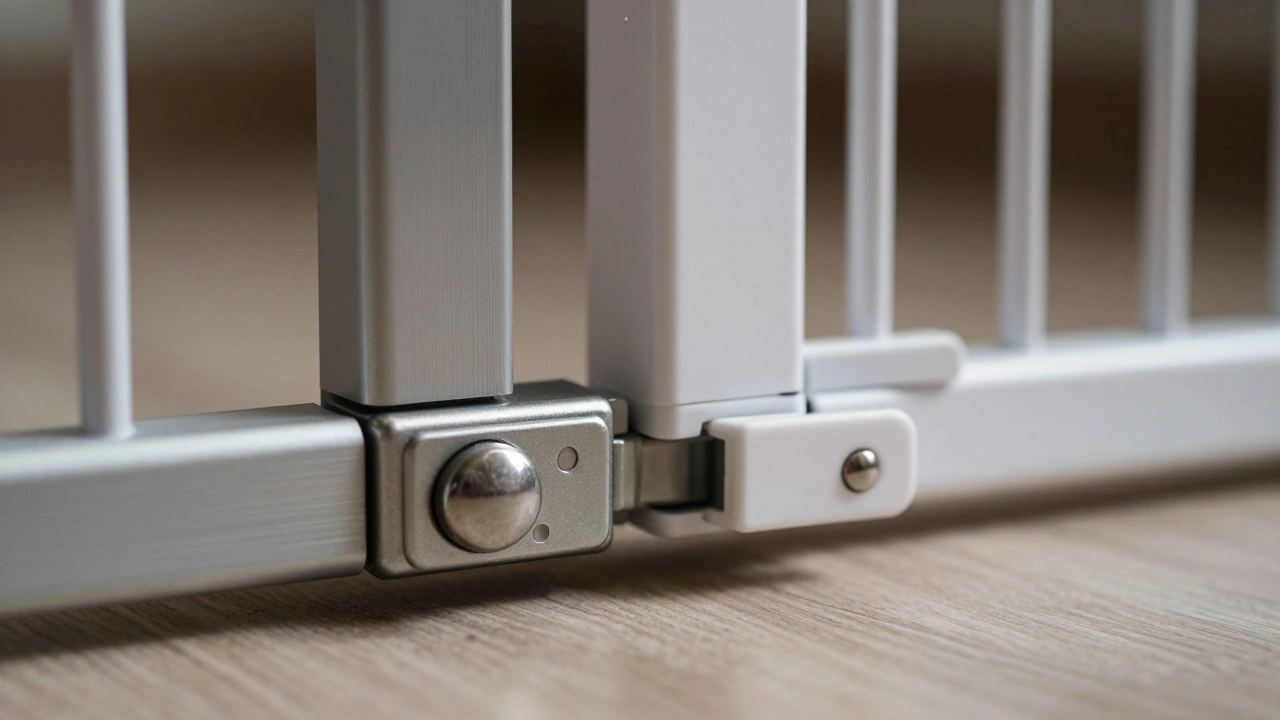
Pet gate latches are often simple hooks, magnetic catches, or single-button releases. They are designed for quick access by adults who are carrying groceries or walking a dog. Many pet gates rely on friction or light tension to stay closed. A determined dog can sometimes nudge them open with their nose.
Baby gate locks, however, require deliberate action to open. Look for double-action mechanisms. This means you have to press a button and lift a lever, or slide a bolt and then push the gate. This complexity ensures that a toddler cannot accidentally unlatch the gate while playing near it. High-end baby gates also feature self-closing hinges that automatically swing the gate shut after you pass through, preventing it from being left ajar.
A key safety feature in baby gates is the placement of the latch. It should always be positioned on the side away from the child, typically at least 50cm above the floor. This keeps little hands from reaching the release mechanism. Pet gates rarely consider this factor, often placing latches at convenient but accessible heights for both humans and animals.
Installation Methods: Pressure Mount vs. Hardware Mount
How the gate attaches to your home is another critical distinction. There are two main installation methods: pressure mount and hardware mount.
| Feature | Pressure Mount | Hardware Mount |
|---|---|---|
| Installation Difficulty | Easy (no tools) | Moderate (drilling required) |
| Safety Level | Lower (can be pushed down) | High (securely fixed) |
| Best For | Pets, adult supervision areas | Toddlers, stairs, high-traffic zones |
| Damage to Walls | Minimal (scuff marks possible) | Small screw holes |
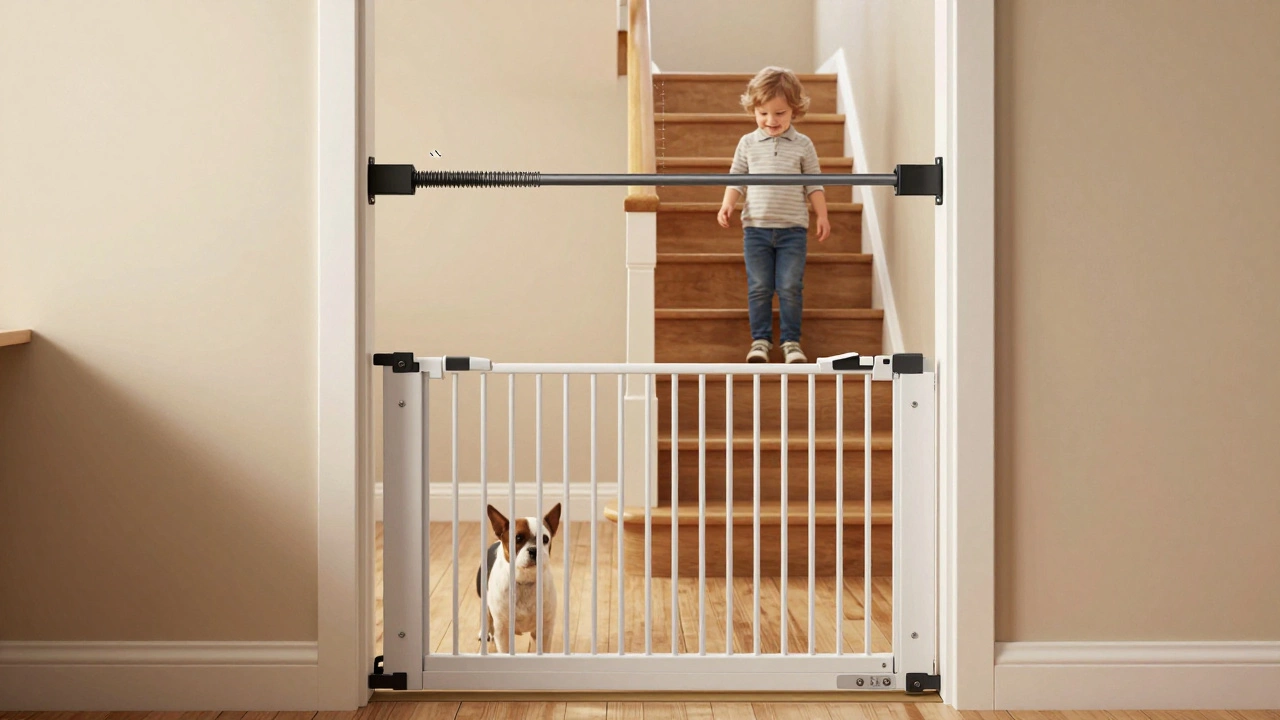
Pressure mount gates squeeze between two walls using a spring-loaded rod. They are easy to install and remove, making them popular for renters. However, they can shift if leaned on heavily. While some pressure-mount baby gates are safe for non-stairway locations, they are never recommended for the top of stairs. A falling pressure-mount gate can cause serious injury.
Hardware mount gates are screwed directly into the wall or door frame. They are immovable and provide the highest level of security. Any gate used at the top of a staircase must be hardware-mounted. Most pet gates are only pressure-mounted because the force exerted by an animal is not enough to dislodge them under normal circumstances. But a toddler climbing on a pressure-mounted gate at the top of the stairs creates a tipping hazard that no amount of pressure can safely counteract.
Material Strength and Durability
The materials used reflect the expected abuse. Pet gates are often made from lightweight plastic, thin metal wire, or flexible mesh. They prioritize portability and ease of cleaning. Scratches from claws or drool are expected, so durability against corrosion matters more than structural rigidity.
Baby gates are constructed from heavier-gauge steel, reinforced aluminum, or thick hardwood. They are built to resist impact. When a toddler runs into a gate, or leans their full body weight against it, the structure must not bend or buckle. The joints are reinforced, and the finish is non-toxic and smooth to prevent splinters or chemical exposure. Brands like North States, Safety 1st, and Childlock invest heavily in crash testing their products to meet rigorous safety certifications like ASTM F1004 in the US or BS EN 1930 in Europe.
When Can You Use a Pet Gate for a Baby?
The short answer is: almost never. There is a gray area for very young infants who are not yet mobile. If your baby is still in a crib and does not roll over, sit up, or crawl, a sturdy pet gate might temporarily block a doorway. However, babies develop quickly. What works today may be a hazard next month.
As soon as your child begins to cruise along furniture or pull themselves up, you need a certified baby gate. The risk of entrapment, climbing, or gate failure becomes too high. Conversely, can you use a baby gate for a pet? Absolutely. In fact, it’s often better. A baby gate is stronger and more secure. The downside is cost and bulk. Baby gates are expensive and harder to install/remove frequently. If you just need to keep your cat out of the bedroom while you sleep, a heavy-duty baby gate is overkill. But if you have a large, strong dog, a baby gate provides peace of mind that a flimsy pet gate cannot.
Choosing the Right Gate for Your Home
To make the right choice, ask yourself three questions:
- Who is the gate for? If it’s for a human under 5 years old, buy a baby gate. If it’s for an animal, a pet gate is sufficient unless the animal is extremely large or aggressive.
- Where is it going? At the top of stairs? Only a hardware-mounted baby gate is acceptable. In a hallway or doorway? A pressure-mounted baby gate or a sturdy pet gate might work, depending on the user.
- What is the behavior? Is your child a climber? Avoid horizontal bars. Is your dog a jumper? Ensure the gate is tall enough (at least 60cm for most dogs) and has no footholds.
Don’t compromise on safety for convenience. The extra £20-£50 for a certified baby gate is worth it if you’re protecting a child. Check for certification labels. In the UK, look for the British Standards Kitemark. In the US, look for JPMA certification. These symbols indicate that the product has been independently tested for safety.
Maintenance and Inspection
Regardless of which gate you choose, regular maintenance is crucial. Over time, pressure mounts lose tension. Hinges can loosen. Latches can wear out. Inspect your gate monthly. Tighten screws, check for rust, and ensure the closing mechanism works smoothly. If a gate sticks or doesn’t close fully, replace it immediately. A malfunctioning gate is worse than no gate at all because it gives a false sense of security.
For pet gates, clean regularly to remove hair and dander, which can jam moving parts. For baby gates, wipe down surfaces to remove germs and sticky fingerprints. Keep the area around the gate clear of toys or furniture that could be used to climb over it.
Can I use a pet gate at the top of the stairs?
No, you should never use a pet gate at the top of the stairs. Pet gates are typically pressure-mounted and lack the structural integrity to withstand a fall. If a child or pet pushes against it, the gate can tip forward, causing serious injury. Always use a hardware-mounted baby gate specifically rated for stairways.
Are mesh gates safe for babies?
Yes, mesh gates can be safe for babies if they are certified as baby gates. Look for models with a rigid frame and a tight, durable mesh that cannot be chewed through or torn. Avoid flimsy mesh screens designed only for pets, as they can collapse under pressure. Ensure the mesh is securely attached to the frame to prevent entanglement.
What is the best height for a dog gate?
The ideal height depends on your dog’s size and jumping ability. For small breeds, a gate at least 60cm (2 feet) high is usually sufficient. For medium to large breeds, especially athletic ones like Retrievers or Shepherds, aim for 75cm to 90cm (3 feet). If your dog is a high jumper, consider adding a top rail or choosing a taller model.
Do baby gates expire?
While baby gates don’t have a strict expiration date, they do wear out. Plastic components can become brittle, springs can lose tension, and screws can strip. If your gate is more than 5-7 years old, inspect it thoroughly. Replace any gate that shows signs of damage, rust, or mechanical failure. Safety standards also evolve, so newer models may offer better protection.
Is a pressure mount gate safe for a crawling baby?
Pressure mount gates can be safe for crawling babies in doorways or hallways, provided they are installed correctly and the walls are flat and sturdy. However, they are not suitable for the top of stairs. Always test the gate by pushing against it with significant force to ensure it doesn’t budge. If it shifts, reinforce it or switch to a hardware-mounted option.