US Crib Safety & Naming Checker
Confused by terms like "cot," "crib," or "playpen"? This tool helps you identify the correct US terminology and flags potential safety risks based on your product's features.
--
UK Equivalent: --
--
You walk into an American baby store, or browse Amazon US, looking for that essential piece of furniture where your newborn will spend half their day. You ask the clerk for a "cot," and they stare at you blankly. Or worse, you buy a "crib" from a UK brand expecting it to fit American bedding, only to find the mattress is three inches too small. The confusion isn't just about semantics; it’s about safety standards, sizing, and legal regulations that differ significantly across the Atlantic.
The short answer? In the United States, the standard enclosed bed for infants is called a crib. It is distinct from a cot, which in the US usually refers to a portable, foldable playpen (often branded as a Pack 'n Play) or a military-style folding bed for adults. Understanding this distinction saves you money, prevents frustration, and ensures your baby sleeps on a surface that meets Consumer Product Safety Commission (CPSC) regulations.
Crib vs. Cot: Clearing Up the Transatlantic Confusion
If you are moving to the US, buying online from international retailers, or just curious about linguistic quirks, knowing the difference between a crib and a cot is step one. In British English, a "cot" is the stationary wooden or metal bed with bars. In American English, that same object is exclusively a "crib." So what do Americans call a cot? Usually, nothing specific unless they are referring to the portable variety.
American parents use the term "playpen" or "travel system" for the portable fabric-and-mesh enclosures babies nap in during travel or visits to grandma's house. These are not considered primary sleeping furniture for daily use because the mattresses are often thinner and less supportive than a full-size crib mattress. If you see "cot" in an American product listing, double-check the description. It might be a vintage term used by niche brands, a typo, or a reference to a bassinet stand. Don't assume it fits standard US crib sheets.
This naming gap creates real-world problems. A parent in London buys a beautiful heirloom cot for a trip to New York. They pack it up, ship it over, and then realize the slat spacing doesn't meet current US federal safety laws. In the UK, older cots might have wider gaps between bars. In the US, since 2011, the CPSC mandated that slats must be no more than 2 3/8 inches apart to prevent head entrapment. If you're importing furniture, check the specs against US standards, not just the name on the box.
Why Terminology Matters for Safety Standards
It’s not just about vocabulary. The word "crib" triggers a specific set of regulatory expectations in the US market. When manufacturers label a product a crib, they certify it complies with ASTM F1169-19, the Standard Consumer Safety Specification for Full-Size Baby Cribs. This covers everything from lead paint limits to structural integrity under stress tests.
Portable cribs, often called "non-full-size cribs," fall under different rules (ASTM F406). These include cradles, bassinets, and those foldable playpens we mentioned earlier. The risk here is mixing them up. A non-full-size crib might look like a regular crib but lacks the side-drop mechanism or the sturdy base required for long-term nightly use. Always look for the certification sticker. If it says "meets ASTM F1169," it’s a full-size crib. If it says "ASTM F406," it’s likely a portable or convertible unit meant for shorter durations or supervised naps.
Here’s a quick breakdown of how these terms map to actual products:
| US Term | UK Equivalent | Primary Use | Safety Standard |
|---|---|---|---|
| Crib | Cot | Daily sleep, birth to ~3 years | ASTM F1169 (Full-size) |
| Bassinet | Moses Basket / Stand-up Bassinet | Newborns, bedside sleeping | ASTM F2906 |
| Playpen / Pack 'n Play | Travel Cot | Travel, daytime naps, play | ASTM F406 (Non-full-size) |
| Toddler Bed | Junior Bed | Transition after crib (~3+ years) | General Furniture Safety |
Anatomy of an American Crib: What You’re Actually Buying
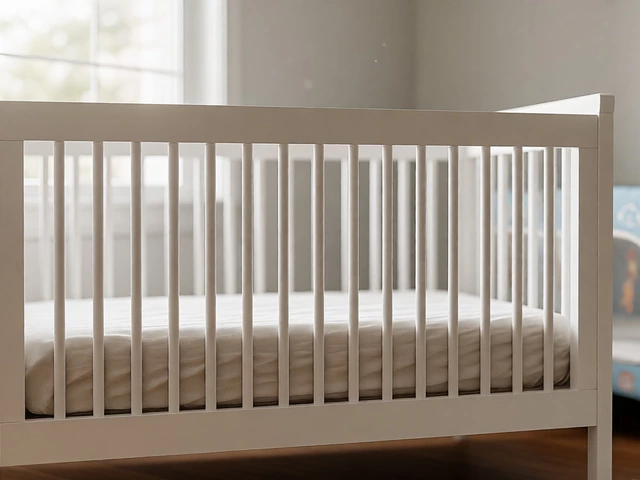
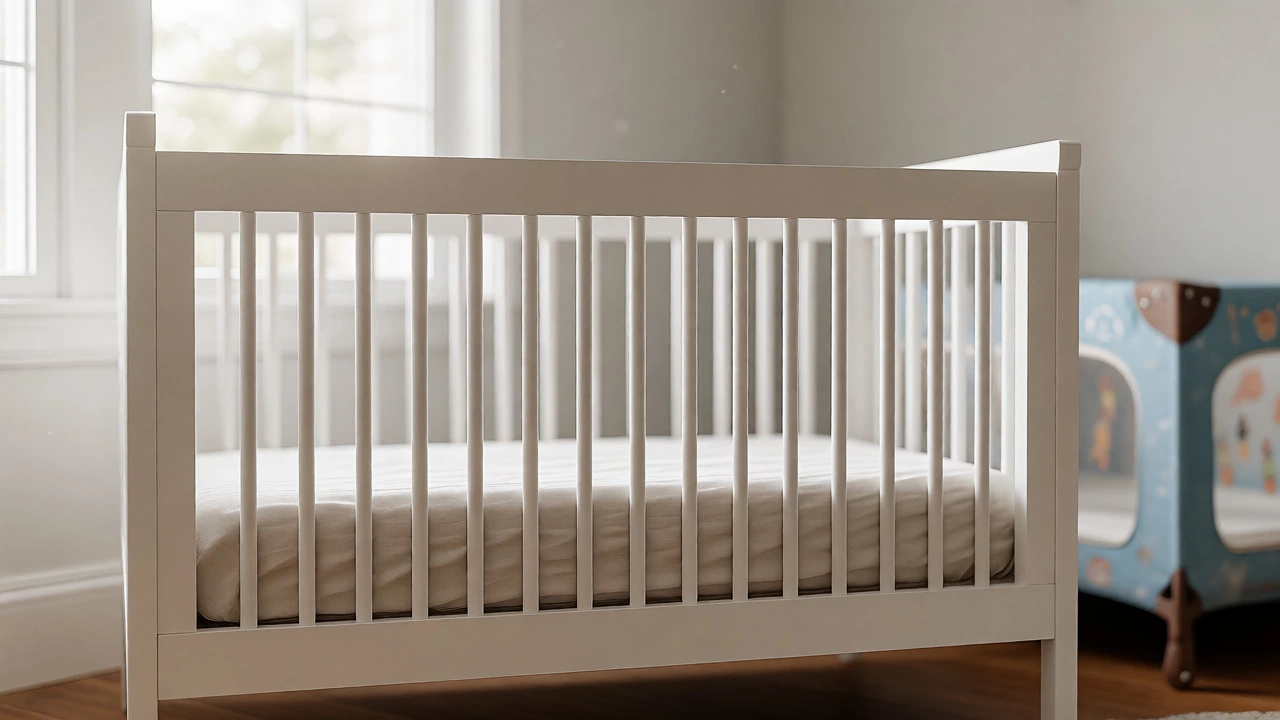
Once you’ve settled on buying a crib, you’ll encounter another layer of jargon. American cribs come in several configurations, each designed for different room sizes and budget horizons. The most common type is the standard crib. It has fixed sides and four legs. Simple, sturdy, and generally the safest bet for pure sleep.
Then there’s the convertible crib. This is the bestseller in the US for good reason. It transforms from a crib into a toddler bed, and sometimes even a twin-size daybed, using conversion kits sold separately. Brands like Pottery Barn Kids, West Elm, and IKEA dominate this space. The catch? You need to buy the rails later, and the finish quality can vary if the crib was built primarily as a crib and retrofitted for conversion. Check reviews specifically for the "toddler bed mode" stability.
You might also see mini cribs. These are smaller, perfect for apartments or shared rooms. But beware: mini cribs use unique mattress sizes. You cannot use standard crib sheets. You must buy "mini crib sheets," which are harder to find and often more expensive per unit. If you plan to move frequently, a mini crib is great. If you plan to keep the baby in the same room for two years, the limited sheet availability might become a hassle.
Finally, there are drop-side cribs. Unless you are buying a vintage piece from before 2011, avoid these. The drop-side mechanism was banned in the US due to suffocation and entrapment hazards involving broken hardware. Modern "fixed-side" cribs are the only safe option. If you’re shopping secondhand on Facebook Marketplace or Craigslist, inspect every hinge and screw. If the side drops, walk away.
Sizing and Mattress Compatibility
One of the biggest headaches for expats or online shoppers is mattress sizing. In the US, a full-size crib mattress measures exactly 27 1/4 inches by 51 5/8 inches (approx. 69 cm x 131 cm). This is slightly larger than the UK standard cot mattress, which is typically 60 cm x 120 cm. That 3-inch length difference means UK fitted sheets will be loose and bunched up in an American crib-a suffocation risk for infants.
Always buy American-sized sheets if you’re using an American crib. Look for "fitted crib sheets" labeled for "full-size cribs." Avoid waterproof plastic covers that feel like shower curtains; opt for breathable cotton or bamboo blends. The mattress itself should be firm. Press your hand into it; if it leaves an indentation that doesn’t spring back quickly, it’s too soft. Soft mattresses increase the risk of SIDS (Sudden Infant Death Syndrome).
Shopping Smart: Where to Buy and What to Watch For
You don’t need to go to a high-end boutique to get a safe crib. Big-box retailers like Target, Walmart, and Amazon carry CPSC-certified options starting around $150. However, cheapness can mean flimsy wood or particleboard that warps over time. Mid-range ($300-$600) offers solid pine or birch construction, better finishes, and longer warranties.
When reading reviews, ignore star ratings alone. Search for keywords like "slat breakage," "finish peeling," or "assembly difficulty." Assembly is rarely fun. Many cribs require you to be a part-time carpenter. If you aren’t handy, factor in $50-$100 for professional assembly via TaskRabbit or similar services. Also, check return policies. Once a crib is assembled, many stores won’t take it back unless it’s defective. Measure your doorways and stairwells before ordering. An oversized crib box might not fit through your apartment front door.
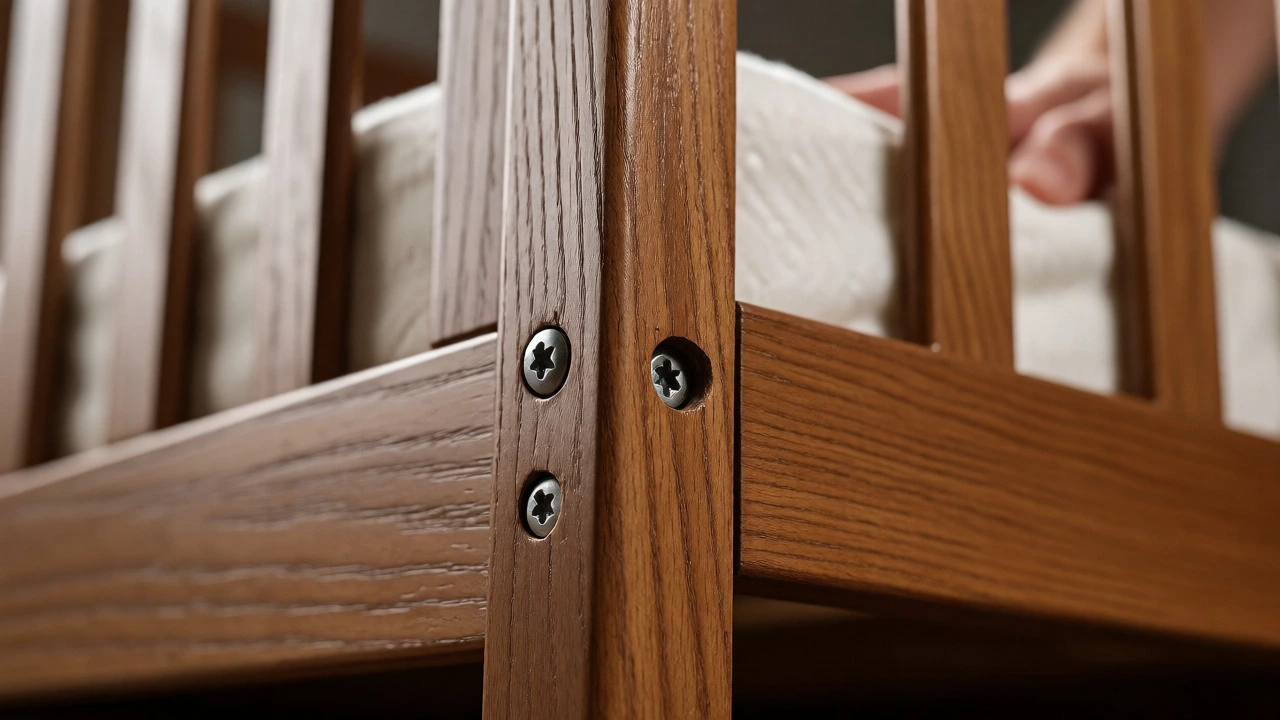
Secondhand shopping is popular in the US, but risky. Cribs recall frequently. Before buying used, check the CPSC website for recalls on that specific model and manufacture date. Inspect the wood for cracks, especially near the corners where screws anchor. Test the mattress support height adjustment; it should click firmly into place. Never buy a crib with missing hardware-replacement parts might not match the original strength specifications.

Related Concepts: Bassinets and Swaddlers
While the crib is the main event, newborns often start in smaller spaces. Americans commonly use bassinets for the first 3-6 months. These sit next to the adult bed, allowing easy nighttime feeding without getting up. Unlike cribs, bassinets have weight limits (usually 15-20 lbs) and age limits (when the baby starts rolling over). Popular brands include Halo, DockATot, and Snuggle Me Organic.
Note the FDA warning: some "loungers" and "swaddlers" are marketed as sleep surfaces but are technically classified as loungers. The AAP (American Academy of Pediatrics) recommends flat, firm surfaces for unsupervised sleep. If you use a lounger, watch the baby closely. If you want hands-free sleep, stick to the crib or a certified bassinet.
Frequently Asked Questions
Can I use a UK cot in America?
Physically, yes, but practically, it’s difficult. UK cots are often smaller (120cm length vs 131cm in the US), meaning US mattresses won't fit, and US sheets will be too big. Additionally, older UK cots may not meet current US CPSC slat spacing regulations (max 2 3/8 inches). Always verify the dimensions and safety certifications before importing.
Is a Pack 'n Play the same as a crib?
No. A Pack 'n Play is a portable playpen/travel system. While safe for naps and travel, it is not recommended as a primary crib for long-term daily use. The mattress is usually thinner and less supportive than a full-size crib mattress, and the structure is less durable for constant nightly use.
What size is a standard American crib mattress?
A standard full-size crib mattress in the US measures 27 1/4 inches wide by 51 5/8 inches long (approximately 69 cm x 131 cm). Always ensure the mattress fits snugly with no gaps greater than two fingers between the mattress and the crib frame.
Are drop-side cribs still sold in the US?
New drop-side cribs are banned from sale in the US. You may find them secondhand, but they pose significant safety risks due to potential hardware failure leading to entrapment. Most modern cribs are fixed-side models, which are safer and easier to assemble.
How long can a baby use a crib?
Most children transition out of a crib between ages 2 and 3. The key indicator is when they climb out of the crib or reach the maximum weight limit specified by the manufacturer (typically 50 lbs). Convertible cribs allow you to remove the front rail to create a toddler bed, extending the furniture's life.