
Baby Formula Concentration Checker
Enter the amount of water and scoops of formula you used to check if the concentration is safe for your baby. Most standard formulas require 1 scoop per 2 oz (60 ml) of water. Check your tin for specific instructions.
You’re tired. It’s 3 AM. You grab the scoop, dump in two heaps instead of one because you want to make sure your little one gets a full meal, and top it up with water. It seems harmless, right? More powder means more food, which means a happier baby. But here is the harsh reality: over-concentrated formula is not just "extra strong" milk; it is a medical risk. When you mess up the powder-to-water ratio, you change the osmolarity of the feed. In plain English, you make the liquid too salty and dense for a tiny kidney to handle.
The Science Behind the Scoop
Why does this matter so much? Because babies are not small adults. Their organs are still learning how to work. Specifically, their kidneys are immature. An adult can drink a protein shake that’s thick as sludge and be fine. A six-week-old infant cannot. Infant kidneys have limited ability to concentrate urine. If you give them formula that has too high a solute load (too much sodium, potassium, and protein per milliliter), their bodies try to pull water from their own tissues to dilute that salt inside the gut. This process is called osmosis. Instead of hydrating the baby, the feed actually pulls moisture out of their bloodstream and into the intestine.
This leads to a paradoxical effect: you feed them, but they get dehydrated. The National Health Service (NHS) and the American Academy of Pediatrics (AAP) both stress that precision isn't just about nutrition; it's about safety. Standard infant formula is designed to mimic breast milk, which has a specific osmolality of around 280-300 mOsm/kg. Over-concentrating it pushes this number higher, stressing the system.
Immediate Physical Reactions
If you accidentally gave your baby an over-concentrated bottle once, don’t panic immediately, but watch closely. Most healthy term infants will likely spit it up or refuse the next feed. However, if the error was significant or repeated, you might see these signs:
- Excessive Thirst: Your baby might seem unsettled and demand more feeds shortly after finishing, because their body is screaming for water to balance the salts.
- Constipation: High-protein, low-water content makes stools hard and difficult to pass. You might notice straining or pellet-like poop.
- Vomiting: Not just normal spit-up, but forceful vomiting as the stomach struggles to digest the heavy load.
- Lethargy: In severe cases, electrolyte imbalances can make a baby unusually sleepy or weak.
It’s rare for a single mistake to cause long-term damage in a healthy baby, but the discomfort is real. Imagine eating a spoonful of pure salt followed by a cup of water versus drinking a glass of lemonade. The first feels rough on the system. That’s what happens in the gut.
Long-Term Risks of Chronic Over-Concentration
What if this becomes a habit? Maybe you think you’re being generous, adding half a scoop extra to every bottle to help your baby sleep through the night. This is where the risks escalate. Research published in pediatric journals suggests that early exposure to high-protein loads can program the metabolism differently. Some studies indicate a link between rapid weight gain in infancy-often driven by overfeeding or concentrated formula-and obesity later in childhood.
More critically, there is the risk of hypernatremia. This is a condition where blood sodium levels rise dangerously high. While mostly seen in very young infants or those with underlying health issues, chronic over-concentration increases the workload on the kidneys. Over time, this can impact renal function. You don’t want to turn your baby’s kidneys into overworked machines before they’ve even learned to walk properly.

Common Mixing Mistakes Parents Make
So, why do we keep getting it wrong? It’s usually down to three things: fatigue, misunderstanding instructions, or using the wrong tool. Let’s break down the usual suspects.
| Error Type | What Happens | Correct Action |
|---|---|---|
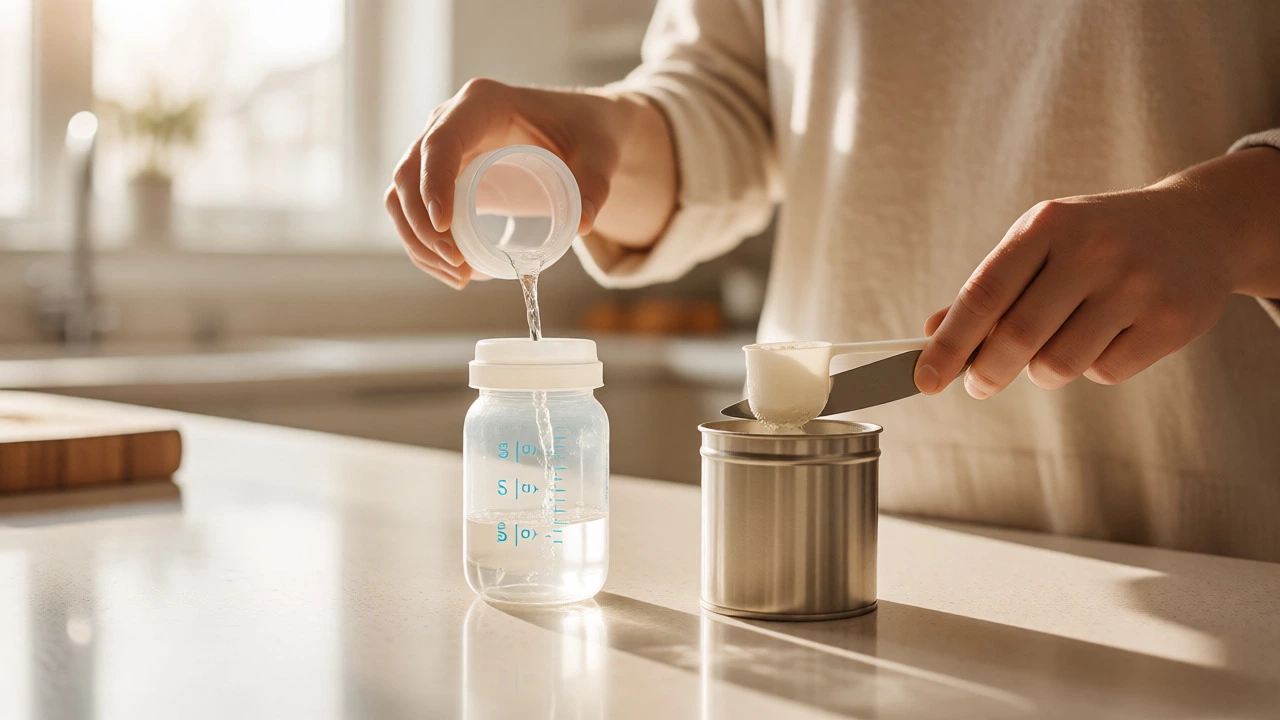
| Scooping loosely | Powder settles unevenly; you might add less than intended, or pack it tight and add too much. | Use the back of a clean knife to level the scoop against the rim of the tin. |
| Adding powder first | The final volume is inaccurate. Two scoops plus 4oz water doesn't equal 6oz of ready-to-feed formula. | Always measure water first, then add powder. |
| Using household spoons | A teaspoon is not a tablespoon. Dosage varies wildly. | Only use the scoop provided in the formula tin. |
| "Rounding up" | Thinking 1.5 scoops is safer than 1 scoop. | Follow the exact ratio stated on the tin (usually 1 scoop per 2oz/60ml). |
The most common error I see in Bristol parenting groups is the "water-first" rule violation. People pour water into the bottle, look at it, think "that looks like enough," and then dump powder in. Then they top it up with more water to reach the line. This dilutes the nutrients. Or worse, they dump powder in first, fill to the line with water, and end up with less total fluid than the baby needs. Always put the measured water in the bottle first. Then add the leveled scoops. Shake. Done.
What To Do If You Already Made the Mistake
Breath. Take a breath. If you realize you added too much powder before the baby drinks it, throw it away. Don’t try to fix it by adding more water unless you are certain of the math, and even then, it’s safer to start fresh. Formula isn’t cheap, but peace of mind is worth more.
If the baby has already drunk it, observe them. Offer smaller amounts of water between feeds if your pediatrician agrees (note: under 6 months, water should generally be avoided unless advised by a doctor). Watch for wet diapers. A baby having fewer than six wet diapers a day might be showing signs of dehydration. If your baby seems unusually fussy, vomits repeatedly, or refuses feeds, call your GP or health visitor. In the UK, you can also dial 111 for non-emergency medical advice.
The "Sleep Through the Night" Myth
Many parents thicken the formula hoping it will keep the baby fuller for longer. Does it work? Sometimes. A denser calorie count might delay hunger pangs slightly. But does it improve sleep quality? Not necessarily. Often, the discomfort from digestion or thirst wakes the baby up anyway. Plus, you risk creating a cycle where the baby gains weight too quickly, leading to larger birth weights and potential delivery complications in future pregnancies if you’re planning siblings!
Instead of altering the concentration, check other factors. Is the room temperature right? Are they over-swaddled? Are they going through a growth spurt? These are often better levers to pull than tampering with the chemistry of their food.
Special Cases: Preemies and Medical Conditions
If your baby was born prematurely, the rules tighten. Preterm infants have even less mature kidneys. For them, precision is non-negotiable. Doctors often prescribe specialized high-calorie formulas with specific mixing instructions. Never adjust these ratios without explicit instruction from your neonatal team. Similarly, babies with reflux or cow’s milk protein allergy may be on hydrolyzed formulas. These powders behave differently-they foam more, dissolve slower. Stick strictly to the manufacturer’s guidelines for these sensitive blends.
Final Thoughts on Precision
Parenting is messy. Spills happen. Sleep deprivation makes us clumsy. But when it comes to formula, treat the scoop like a lab instrument. Level it off. Measure the water. Check the temperature. It takes ten extra seconds during a chaotic evening, but it saves you hours of worrying later. Your baby’s tiny body relies on you to get the chemistry right. You’ve got this.
Can I just add more water to fix over-concentrated formula?
Technically yes, if you know exactly how much extra powder you added, you can calculate the necessary water adjustment. However, it is rarely precise enough to guarantee safety. The safest option is to discard the mixture and prepare a new bottle correctly. Guessing can lead to inconsistent nutrient intake.
How soon do symptoms appear after drinking too much formula powder?
Symptoms like fussiness, thirst, or vomiting can appear within 30 minutes to a few hours. Signs of dehydration, such as fewer wet diapers, may take 12 to 24 hours to become noticeable. Monitor your baby closely during this window.
Does over-concentrated formula cause constipation?
Yes, frequently. Higher concentrations of protein and minerals draw water into the intestines via osmosis, leaving less moisture available to soften stools. This results in harder, drier bowel movements that can be painful for the infant.
Is it safe to give water to a baby who drank too much formula?
For babies under six months, giving plain water is generally discouraged as it can interfere with nutrient absorption and electrolyte balance. However, if a baby shows signs of mild dehydration after an over-concentrated feed, a healthcare provider might advise offering small sips of sterile water. Always consult a doctor first.
Why does my formula scoop have different sizes?
Different brands formulate their powder with varying densities and nutritional targets. One brand’s scoop might deliver 4.3g of powder, while another delivers 5.1g. Always use the scoop included in the specific tin you are using, never swap scoops between brands.