
TICKS Babywearing Safety Checker
Use this tool before every wear. Check each point below. If any are unchecked, adjust your carrier immediately.
-
Pending
-
Pending
-
Pending
-
Pending
-
Pending
You’ve probably heard the acronym TICKS thrown around in parenting groups or seen it on a tag inside your new wrap. But what does it actually mean for you and your baby? It’s not just marketing jargon; it’s a critical safety framework designed to prevent positional asphyxia and ensure proper hip development. If you’re wearing your baby, whether in a structured carrier, a ring sling, or a woven wrap, getting these five letters right isn’t optional-it’s essential.
TICKS is an acronym used by the UK Babywearing Association and international safety bodies. It stands for Tight, In view at all times, Close enough to kiss, Keep chin off chest, and Supported back. These principles address the two biggest risks in babywearing: suffocation from poor positioning and hip dysplasia from improper support.
The Five Pillars of Safe Babywearing
Let’s break down each letter. This isn’t about being perfect every second; it’s about maintaining a baseline of safety that protects your child while giving them the comfort they need.
T is for Tight
Babywearing fabric should feel like a firm hug, not a loose hammock. When you tighten your carrier or wrap, you are removing excess slack that allows gravity to pull your baby into dangerous positions. If the fabric is loose, your baby can slump down. This slumping can cause their head to fall forward, potentially blocking their airway. You should be able to slide only one finger between the fabric and your baby’s body in most areas. If you can fit more, it’s too loose. Tightness also keeps the weight centered close to your center of gravity, which saves your back from strain.
I is for In View at All Times
You must always be able to see your baby’s face with a simple glance down. This doesn’t mean you have to stare at them constantly, but their face should never be buried against your chest or hidden by folds of fabric. If your baby’s nose and mouth are pressed against your body or the carrier material, they cannot breathe properly. Babies are obligate nose breathers, meaning they struggle to switch to mouth breathing if their nose is blocked. Positioning them high enough so their head is above the edge of the carrier ensures their airway remains open and visible.
C is for Close Enough to Kiss
This is the easiest practical test to remember. If you can lean forward and gently kiss your baby’s forehead without straining or lifting them up, they are at the correct height. If you have to stretch your neck or lift your arms significantly to reach their head, the carrier is likely too low. Being high and tight reduces the risk of the "chin-to-chest" position, where the baby’s chin drops onto their collarbone, compressing the windpipe.
K is for Keep Chin Off Chest
A baby’s airway is soft and flexible. When their chin touches their chest, it creates a kink in the trachea (windpipe), similar to bending a garden hose. This restricts airflow and can lead to silent suffocation-where the baby is quiet because they are struggling to breathe, not because they are asleep. Always check that there is clear space under your baby’s chin. Their head should be turned slightly to one side, allowing air to flow freely, or straight ahead if supported well. Never let the head flop forward.
S is for Supported Back
Your baby’s back should be supported in a natural, neutral curve, not forced into a rigid straight line or allowed to round excessively. The fabric should support the entire back from the base of the skull down to the bottom. This prevents the spine from collapsing into a C-shape, which can compromise breathing and posture. Proper back support also distributes weight evenly across the baby’s body, reducing pressure points.
Hip Health: The M-Shape Rule
While TICKS covers safety regarding breathing and general positioning, hip health deserves its own spotlight. Poorly fitted carriers can contribute to developmental dysplasia of the hip (DDH). The gold standard for hip positioning is often referred to as the "M-shape" or "froggy position."
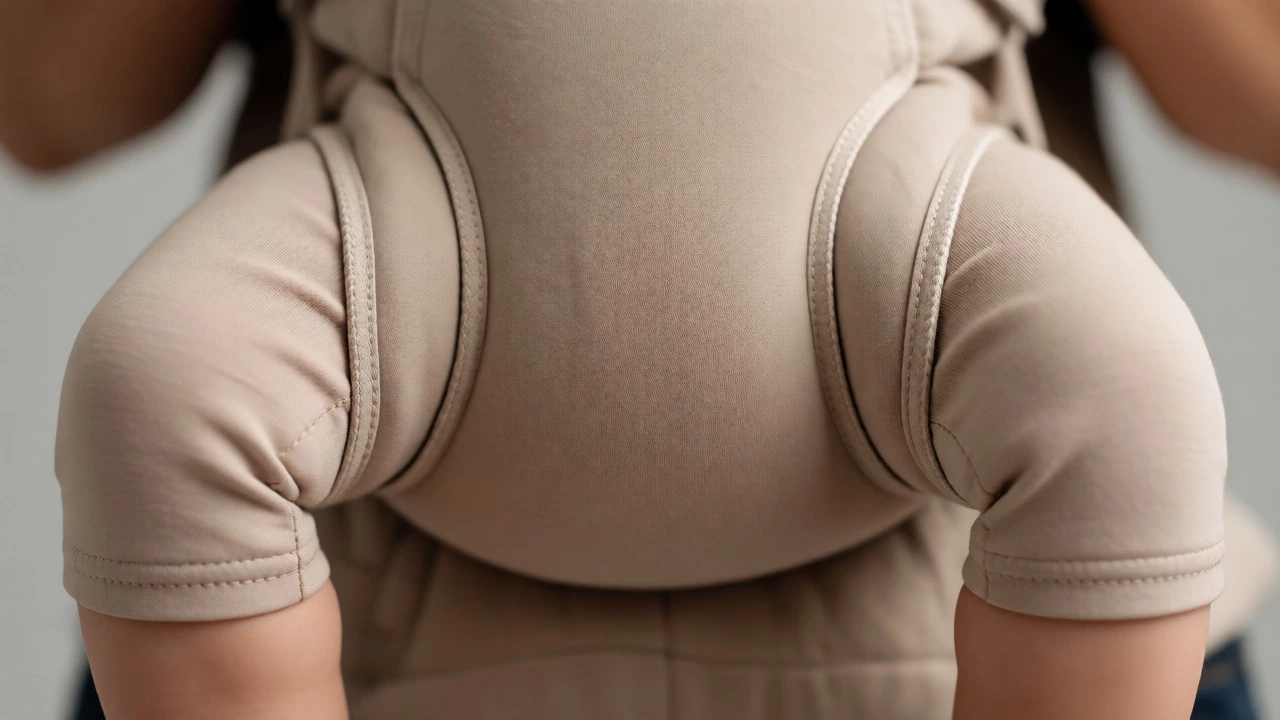
In this position, your baby’s knees are higher than their bottom. The fabric supports the thighs fully, extending from the knee pit to the knee pit. This opens the hips and places the femoral head securely in the acetabulum (the hip socket). If the legs hang straight down, like in a traditional dangling position, the hip joint can become unstable. Over time, this lack of support can lead to long-term orthopedic issues.
| Position Type | Description | Risk Level | Recommended For |
|---|---|---|---|
| M-Shape (Ergonomic) | Knees higher than bottom, thighs fully supported | Low | Newborns to Toddlers |
| Dangling (Straight Legs) | Legs hang vertically, no thigh support | High | Avoid for infants |
| Overextended | Legs pulled too far apart horizontally | Moderate | Older toddlers only |
Common Mistakes Parents Make
Even experienced wearers slip up. Here are the most frequent errors we see in clinics and community groups:
- Wearing too low: Many parents fear tipping over, so they wear the baby lower on their torso. This increases leverage on the spine and makes it harder to keep the chin off the chest. Raise the carrier up to your shoulders.
- Ignoring the seat width: If the panel of a structured carrier is too narrow, it cuts into the baby’s thighs. If it’s too wide, it forces the legs apart unnaturally. Adjust the seat width if your carrier has drawstrings or velcro tabs.
- Forgetting to re-tighten: Fabric stretches. After ten minutes of walking, your wrap might loosen. Check the tightness periodically, especially after nursing or if the baby moves around a lot.
- Face-out wearing for newborns: Facing out exposes the baby to overstimulation and offers no head support. It also prevents the parent from monitoring the airway easily. Face-in is safer for the first six months.
How to Perform a TICKS Check
Make this a habit every time you put your baby in a carrier. Take thirty seconds to run through the checklist:
- Look: Can you see their face? Is their nose clear?
- Touch: Is the fabric snug against their back? No big gaps?
- Check Height: Lean forward. Can you kiss their head easily?
- Inspect Airway: Is there a gap between their chin and chest?
- Verify Hips: Are their knees bent and higher than their bum?
If any of these fail, take the baby out and adjust before continuing. It’s better to lose five minutes adjusting than to risk a medical emergency.

Choosing the Right Carrier for TICKS Compliance
Not all carriers make TICKS easy to achieve. Some designs inherently fight against good positioning.
Ring Slings offer excellent adjustability. You can tighten each pass individually to get a custom fit that meets all TICKS criteria. They are great for quick ups and downs but require practice to avoid bunching.
Structured Soft Carriers (SSCs) are user-friendly. Look for models with adjustable seat widths and high back panels. Brands like Ergobaby or Tula often include features specifically designed to maintain the M-shape and keep the head supported. However, cheap fashion carriers may lack adequate padding or structural integrity, leading to sagging backs.
Woven Wraps provide the most customizable support. Because you control every layer of tension, achieving a perfect TICKS fit is possible even for tiny preemies. The learning curve is steeper, but the result is often the most secure and comfortable for both wearer and baby.
When to Stop Wearing
There is no strict age limit for babywearing. As long as TICKS principles are met and the carrier can safely hold the weight, you can continue wearing your toddler. Many parents wear children up to three or four years old for hikes or busy days. Just remember that as babies grow, their center of gravity shifts, and they become more active. You may need to adjust how you carry them-switching to a hip carry or a back carry-to maintain safety and comfort.
Always prioritize your baby’s physiological needs. If they are sleeping deeply, ensure their head is still supported and their airway is open. Don’t assume sleep equals safety; check their position regularly.
Is it safe to wear a baby facing outward?
Facing outward is generally recommended only for older babies (usually 6+ months) who have full head and neck control. For newborns and young infants, facing inward is safer because it allows you to monitor their airway and provides necessary head support. Outward-facing carries can also expose babies to sensory overload.
What happens if my baby's chin is touching their chest?
This position, known as flexion, can block the baby's airway. Since infants have soft tracheas, this compression can restrict breathing. It can lead to positional asphyxia. If you notice this, immediately lift the baby higher and tighten the carrier to create space under the chin.
Do I need to worry about TICKS when using a baby bjorn?
Yes, absolutely. While some structured carriers claim to be ergonomic, many popular brands do not support the M-shape adequately for newborns. The legs often dangle straight down. For newborns, ensure the seat is wide enough or use a newborn insert to promote the froggy position. Always check the TICKS criteria regardless of the brand.
Can I wear my baby in a carrier while exercising?
You can, but caution is required. High-impact activities like running can jar the baby's spine and airway. Walking is generally safe if the carrier is very tight and secure. Avoid contact sports or activities with a high risk of falling. Always consult your pediatrician before starting vigorous exercise postpartum.
Why is 'Close enough to kiss' important?
This rule ensures the baby is positioned high enough on your chest to prevent their head from flopping forward. If you have to stretch to kiss them, they are likely too low, increasing the risk of chin-to-chest compression. Keeping them high maintains an open airway and keeps their weight close to your center of gravity.