
Toddler Nursery Readiness Checker
Use this interactive checklist to evaluate your child's readiness for nursery at 2.5 years old. Check the boxes that apply to your child today.
You’re standing in the kitchen at 7:15 AM, coffee getting cold, watching your two-and-a-half-year-old build a tower out of wooden blocks with intense concentration. It’s quiet. It’s peaceful. And then it hits you: "Should I have started nursery six months ago?" The guilt creeps in because everyone seems to be talking about socialization and school readiness. But here is the uncomfortable truth most parenting forums won’t tell you straight up: there is no universal "right" age. In fact, for many toddlers, 2.5 years is not too early-it might actually be the sweet spot. But it depends entirely on your child’s temperament and your family’s specific needs.
This isn’t just about freeing up time for work or household chores. It’s about understanding developmental milestones. At this age, children are transitioning from parallel play (playing next to others) to cooperative play (playing with others). This shift is huge. If your child is craving interaction but doesn’t have siblings or regular playdates, nursery can provide that critical social laboratory. On the flip side, if your child is highly sensitive or struggles with separation anxiety, forcing them into a group setting too soon can backfire, leading to stress rather than growth. Let’s break down what actually happens in a nursery environment for a toddler of this age, so you can make a decision based on facts, not fear.
Understanding Toddler Development at 30 Months
To decide if nursery is right, you need to look at where your child stands developmentally. At 2.5 years, a child’s brain is developing rapidly, particularly in areas related to language and emotional regulation. According to data from the UK Department for Education, children who attend high-quality early years settings often show improved vocabulary scores by age five compared to peers who don’t. But this benefit isn’t automatic; it requires the child to be emotionally ready to engage.
Look for these signs of readiness:
- Interest in other children: Does your toddler watch other kids playing? Do they try to join in, even if clumsily?
- Basic independence: Can they eat with a spoon, drink from an open cup, and signal when they need the toilet (or nappy change)?
- Separation tolerance: Have they managed short separations from you before, like staying with grandparents for a few hours without major distress?
- Language expression: Can they communicate basic needs? They don’t need to speak in full sentences, but pointing, gesturing, or using single words to say "more," "hurt," or "toilet" is crucial for staff to support them.
If your child ticks three or more of these boxes, they likely have the cognitive and emotional toolkit to handle a nursery day. If they are still heavily reliant on you for every comfort and struggle significantly with any change in routine, waiting until three might reduce unnecessary stress.
The Social Benefits vs. The Stress Factor
Parents often worry about "socialization." Here is the nuance: toddlers do not naturally socialize in the way adults think. At 2.5, they engage in parallel play. They occupy the same space as other children but focus on their own activities. This is normal. Nursery provides the structure for this proximity, which gradually evolves into shared attention and simple cooperation over the next year.
However, the environment matters immensely. A crowded room with loud noises and strict schedules can overwhelm a sensitive toddler. Conversely, a calm, small-group setting with consistent caregivers can feel like a safe extension of home. Research published in the journal Child Development suggests that the quality of caregiver-child interaction is a stronger predictor of positive outcomes than the mere fact of attending nursery. So, if you choose to enroll, prioritize nurseries with low staff-to-child ratios and high staff retention rates. You want familiar faces, not a revolving door of students.
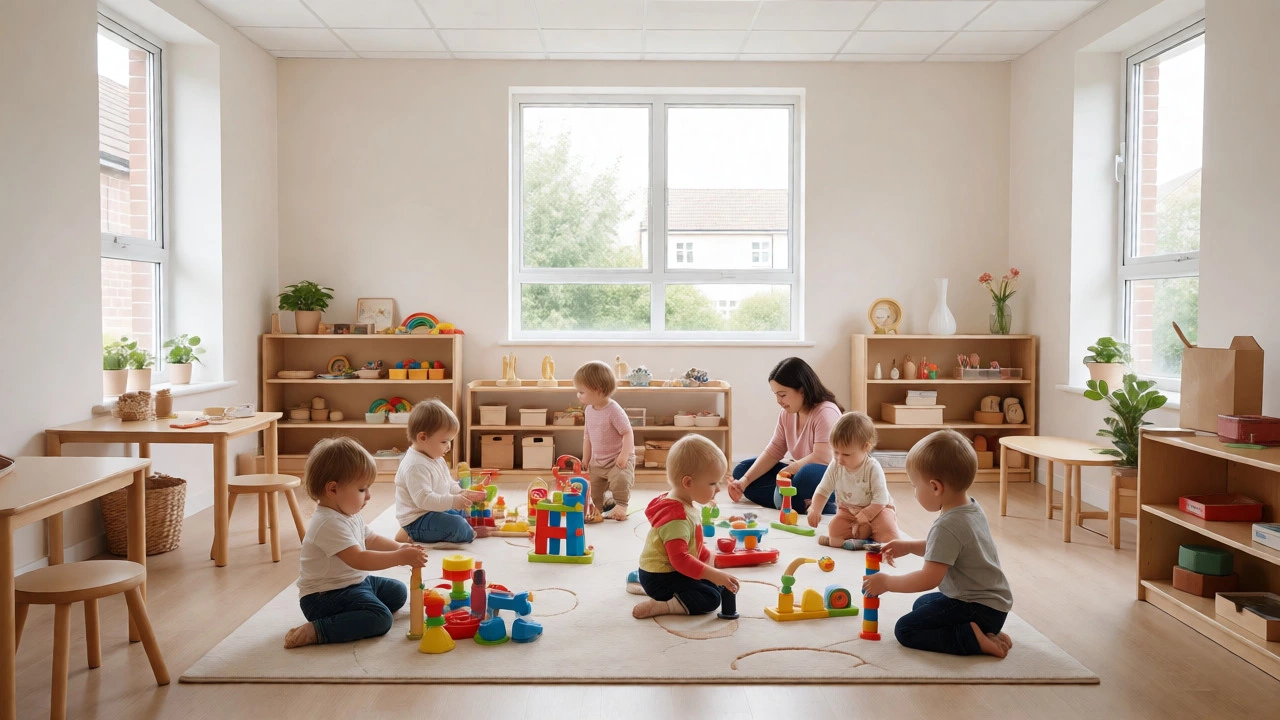
Nursery Furniture and Environment: Setting the Stage
While we often focus on the psychological aspect, the physical environment plays a surprising role in how well a toddler adjusts. When visiting potential nurseries, look closely at the nursery furniture. Is it scaled correctly for a two-year-old? Can they reach the sink independently? Are the chairs sturdy enough to prevent tipping during active play?
At home, preparing your child involves creating a sense of security. Many parents find that introducing a specific "nursery bag" or a favorite comfort object helps bridge the gap between home and care. Ensure your home crib or bed setup allows for easy transitions. If your child is moving from a cot to a junior bed around this time, doing it several months before starting nursery prevents stacking two major life changes simultaneously.
| Factor | Home Advantage | Nursery Advantage |
|---|---|---|
| Routine Flexibility | High - adapt to child’s mood instantly | Low - structured schedule aids predictability |
| Social Exposure | Limited - usually only family or one friend | High - daily interaction with peers |
| Learning Resources | Varies - dependent on parental energy/time | Curated - professional educational toys |
| Physical Space | Safe - known hazards removed | Stimulating - designed for exploration |
The Financial and Practical Reality Check
Let’s talk money, because it’s a real constraint. In the UK, government-funded childcare hours for 2-year-olds are limited to eligible families (usually those receiving certain benefits). For most, paying for 15 or 30 hours a week is a significant expense. Is it worth it? If both parents return to work, the calculation is straightforward: childcare costs versus lost income. But for stay-at-home parents, the question is different. Is the cost buying you mental health breaks, time for errands, or simply a change of scenery that reduces cabin fever? These are valid reasons. A happy, rested parent is better for a child than a stressed, isolated one.
Also, consider the logistical impact. Starting at 2.5 means you’ll likely have a smoother transition when primary school starts at 4 or 5. Children who have already experienced separating from parents, following instructions from non-parental adults, and managing nap times often settle faster in Reception. It’s a long-game strategy.

Signs Your Child Might Need More Time at Home
Not every toddler thrives in a group setting immediately. Watch for these red flags that suggest waiting until age three might be kinder:
- Severe Separation Anxiety: If crying lasts more than 20-30 minutes after drop-off and disrupts the rest of the day, they may not be ready.
- Frequent Illness: Toddlers get sick often. If your child has a compromised immune system or chronic health issues, the germ factory of nursery might lead to constant absences and misery.
- Regression: If starting nursery causes regression in toilet training or speech, pause and reassess. Sometimes, slowing down accelerates progress.
Remember, starting later doesn’t mean "falling behind." There is no academic curriculum in the traditional sense at this stage. It’s all about play-based learning. Missing out on six months of nursery won’t hinder their ability to learn to read or write later. What matters is their confidence and curiosity.
How to Ease the Transition
If you decide to go ahead, don’t just drop them off on day one. Most good nurseries offer a settling-in period. Use it. Start with short sessions-an hour or two-and gradually extend the time. Keep goodbyes brief and confident. Long, tearful goodbyes tend to increase anxiety. Bring a familiar item from home, like a small blanket or toy, to create a sensory link to safety.
Communication with staff is key. Share your child’s quirks: how they fall asleep, what soothes them, what foods they prefer. Treat the nursery team as partners in your child’s care. If you notice persistent unhappiness after four weeks, have an honest conversation. Maybe the timing was wrong, or maybe the specific nursery culture wasn’t a fit. Both are fixable.
Is 2.5 years too early for nursery according to experts?
Experts generally agree that there is no strict minimum age. While some studies suggest waiting until age three reduces behavioral issues in highly anxious children, others highlight the social and linguistic benefits of earlier enrollment. The consensus is that individual readiness-temperament, independence, and family circumstances-is more important than the calendar age.
Will my child get sick more often in nursery?
Yes, statistically, toddlers in nursery catch common colds and viruses more frequently than those cared for at home, especially in the first year. Their immune systems are building resilience. However, research indicates that while they get sick more often initially, they often have fewer infections once they start primary school compared to children who stayed home exclusively.
What are the signs my toddler is ready for nursery?
Key signs include showing interest in other children, being able to communicate basic needs (like hunger or toilet), tolerating short separations from parents, and having some degree of self-help skills like eating with a spoon. If your child seeks out social interaction and handles minor frustrations without prolonged meltdowns, they are likely ready.
Does starting nursery early help with school readiness?
It can help with soft skills such as listening to instructions, sharing resources, and separating from parents, which eases the transition to Reception class. However, it does not necessarily accelerate academic learning like reading or math. The main benefit is social and emotional adaptation to a structured environment.
How long should the settling-in period last?
Most nurseries recommend a settling-in period of 1 to 2 weeks. This involves gradual increases in time spent away from parents, starting with 1-hour sessions and building up to full days. Rushing this process often leads to higher anxiety levels and a harder adjustment for the child.