Children's Book Legality Checker
Enter the details of the book you want to read to see if it is likely in the Public Domain (free) or Copyrighted (requires purchase/licensing).
Recommended Legal Sources:
You’re sitting on the sofa, phone in hand, trying to find something for your kid to read. You type the title into a search engine, and boom-dozens of "Read PDF" buttons appear. It’s tempting. It’s easy. But that little nagging voice in the back of your head asks: Is this actually legal?
The answer isn’t a simple yes or no. It depends entirely on what book you’re looking at, who owns it, and where you’re finding it. If you grab a random PDF from a shady website, you might be breaking the law without even knowing it. But if you know where to look, there are millions of legally free books waiting for you. Let’s clear up the confusion so you can keep your conscience clean and your child entertained.
The Big Divide: Public Domain vs. Copyrighted Works
To understand legality, you need to understand ownership. Every book falls into one of two buckets: Public Domain or Copyrighted Material.
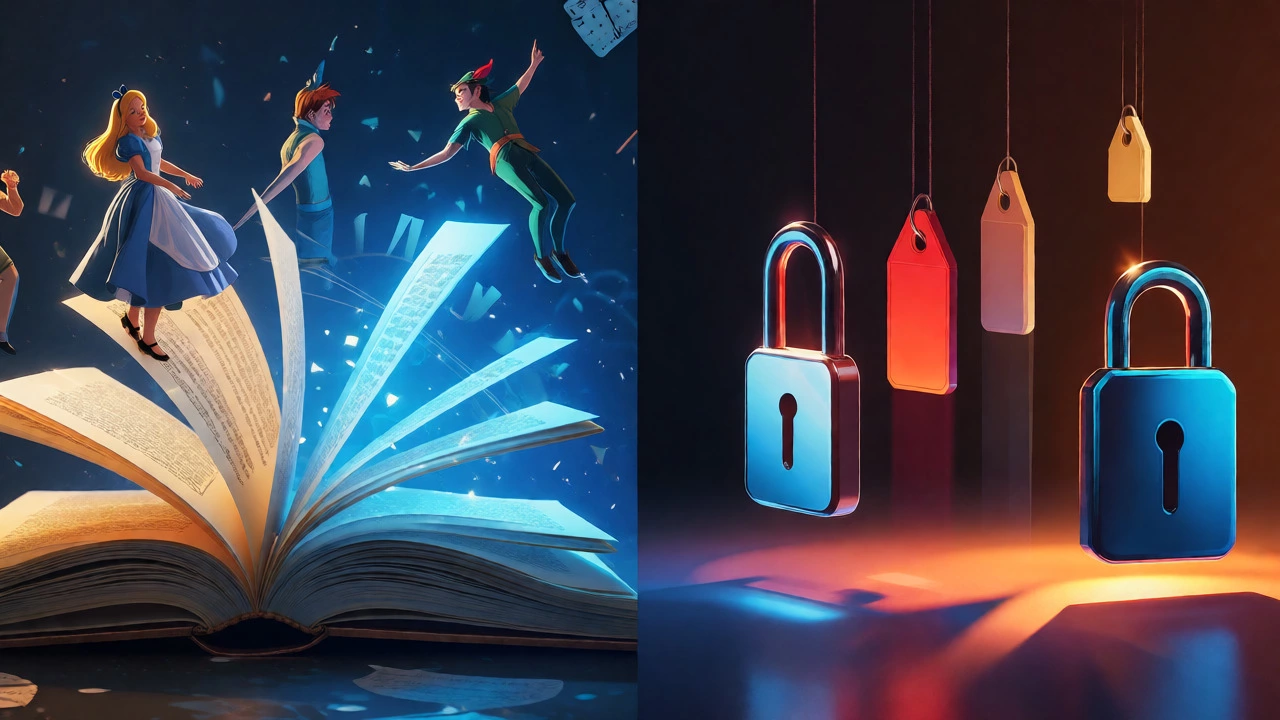
Books in the public domain are free for anyone to copy, share, and read. No permission needed. No fees. Why? Because the copyright has expired. In the UK and most of Europe, copyright generally lasts for the life of the author plus 70 years. Once that clock runs out, the work belongs to everyone. Think of classics like Peter Pan, Alice in Wonderland, or The Wind in the Willows. These are safe harbors. You can download them, print them, or have your tablet read them aloud without worrying about a lawsuit.
Then there’s copyrighted material. This includes anything written by J.K. Rowling, David Walliams, or almost any living author. The publisher owns the rights to sell copies. When you download a pirated copy of Harry Potter from an unofficial site, you’re essentially taking a product someone paid to produce without paying for it yourself. While you won’t get arrested for reading it, the act of downloading unauthorized copies infringes on the publisher’s exclusive right to distribute the work.
Where to Find Truly Legal Free Reads
If you want to stay on the right side of the law, you need to go to sources that have the rights to give books away. Here are the heavy hitters.
| Source | Type of Content | Best For |
|---|---|---|
| Project Gutenberg | Public Domain Texts | Older children, classic literature |
| Internet Archive | Digitized Library Books (Lending) | Research, older titles, out-of-print books |
| Local Library Apps (Libby/Hoopla) | Licensed E-books & Audiobooks | New releases, modern bestsellers |
| Open Library | Borrowable Scans | Historical texts, specific editions |
Project Gutenberg is the gold standard for public domain texts. They’ve digitized over 70,000 books, many of which are perfect for kids who can handle longer sentences. The formatting isn’t always pretty-sometimes it’s just plain text-but the content is solid. You can download EPUBs for e-readers or Kindle files directly.
Libby (and its sibling app Hoopla) is arguably the most useful tool for parents today. It connects to your local library card. If your library has bought digital licenses for a popular new release, you can borrow it for free. This is completely legal because the library pays for each loan. It’s not unlimited, though. Popular titles often have waitlists, just like physical books. But hey, it’s free, legal, and supports your local library system.
The Internet Archive operates differently. It uses a model called Controlled Digital Lending. Essentially, they scan physical books and lend them out digitally, one person at a time, mirroring how a physical library works. If you’re looking for a niche educational book or an old storybook that’s out of print, this is your spot. Just remember, you usually need to create a free account to borrow.
The Gray Area: What About "Free Trials" and Promotions?
Sometimes, authors or publishers will offer a book for free temporarily. Maybe it’s a launch week, maybe it’s a holiday promotion, or maybe it’s part of a subscription trial. Is it legal to read these? Absolutely. If the publisher puts a price tag of £0.00 on it, you’re good to go.
Amazon Kindle Unlimited, Audible, and other subscription services also offer access to thousands of books for a monthly fee. Sometimes, they throw in free trials. During that trial period, reading is fully licensed. The key here is cancellation. If you forget to cancel, you’re paying. If you read a book during the trial and keep the file after the trial ends, check the terms. Usually, with subscription models, you lose access when you stop paying, unlike purchasing a permanent copy.
Why Piracy Hurts More Than You Think
You might think, "I’m just one person reading a PDF. How much does it hurt?" But consider the economics of children’s publishing. Illustrators, editors, printers, and authors all rely on sales. When a book is pirated, those people don’t get paid. For established names like Roald Dahl, the loss might be negligible. But for debut authors or independent illustrators, every sale counts.
Moreover, illegal sites are often riddled with malware. That "free PDF" button might lead you down a rabbit hole of pop-ups, adware, or worse. For a parent browsing on a family tablet, this is a genuine security risk. Sticking to reputable sources protects both your wallet and your device.
How to Spot a Legal Source Instantly
Not sure if a website is legit? Use this quick checklist:
- Does it require a login? Legitimate lending platforms (like Libby or Open Library) usually ask you to sign in with a library card or email. Random PDF dumps rarely do.
- Is the book currently in stores? If a book was published last month, it’s almost certainly still under strict copyright. Unless the author explicitly gave it away, a free full-text version is likely illegal.
- Check the date of publication. If the author died more than 70 years ago, you’re in the clear. If they’re alive or died recently, tread carefully.
- Look for official branding. Sites ending in .org (non-profits) or .edu (educational institutions) are generally safer bets than random .com domains with aggressive ads.
Special Considerations for Young Readers
Kids’ books are unique because they rely heavily on visuals. A public domain text-only version of Winnie-the-Pooh is legally distinct from the illustrated edition you buy in a shop. The original A.A. Milne text is public domain, but the specific illustrations by E.H. Shepard might still be protected depending on their creation date and jurisdiction. Always check if the images are included in the free version. Often, free versions strip out the art to save space, which can ruin the experience for a five-year-old.
For early readers, phonics-based apps often offer free tiers. These are legal because the app developer owns the content they created. Don’t confuse these with scanned copies of commercial phonics books, which are often shared illegally on teacher resource sites.
Making the Most of Your Reading Budget
You don’t have to choose between expensive hardcovers and illegal downloads. There’s a middle ground. Use your library card religiously. Join the waitlist for new releases. Download public domain classics for bedtime stories. Mix and match.
Also, consider used bookstores. Many second-hand shops have bins of children’s paperbacks for pennies. It’s sustainable, legal, and supports local businesses. And sometimes, nothing beats the smell of a real book. Digital convenience is great, but physical books teach spatial awareness and page-turning skills that screens can’t replicate.
Are all old books free to read online?
Not necessarily. While the original text of very old books is often in the public domain, specific modern editions, translations, or illustrated versions may still be under copyright. Always check the publication date and the status of the specific edition you are viewing.
Is it illegal to share a PDF of a book with friends?
If the book is copyrighted and you downloaded it legally, sharing a copy with others who didn't buy it is technically a copyright infringement. However, enforcement against private individuals sharing small numbers of copies is rare. Still, it deprives the author and publisher of revenue.
Can I use Project Gutenberg for young children?
Yes, but be aware that most Project Gutenberg books are text-only and written for older reading levels. For toddlers and preschoolers, you may need to supplement with picture books from your local library or apps that provide visual aids.
Do I need a library card to use Libby?
Yes, Libby requires a valid library card number and PIN from a participating library. Many libraries now offer digital-only cards that you can apply for online, making it accessible even if you don't live near a physical branch.
What happens if I download a pirated book?
In most jurisdictions, individual users are not sued for downloading a single pirated book. However, the download is technically illegal. The main risks are poor quality files, lack of updates/corrections, and potential exposure to malware on piracy websites.