
Crib Safety Transition Checker
Crib Safety Assessment
This tool helps you determine if your child is ready to transition from crib to toddler bed based on safety indicators. Follow the article's guidelines to ensure safe sleep.
Most parents assume their baby will sleep in a crib until they’re three or four. But the truth? Many kids are ready to leave the crib much earlier - and waiting too long can actually make the transition harder and riskier.
Why cribs stop being safe
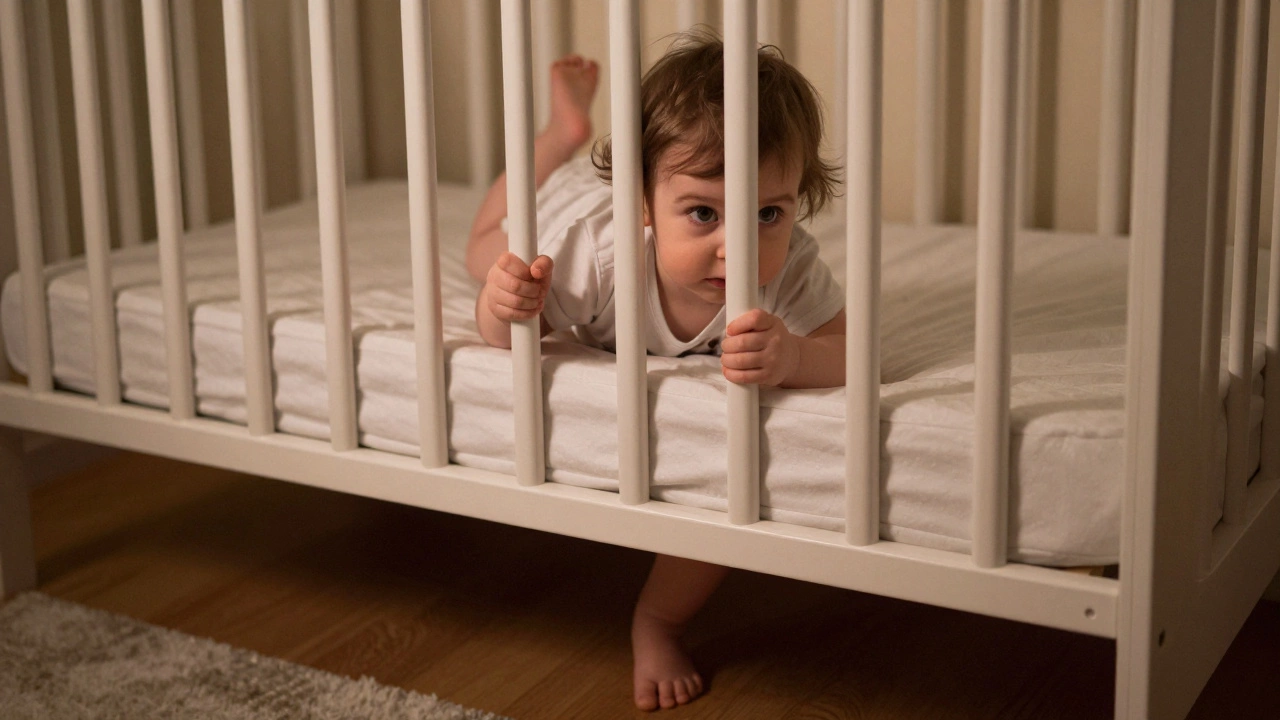
Cribs are designed for infants and young toddlers. But once your child starts climbing, standing for long periods, or trying to jump out, the crib becomes a hazard. The Consumer Product Safety Commission (CPSC) reports over 1,500 crib-related injuries each year in the U.S. alone - and a large portion happen when kids try to climb out. That’s not a coincidence. It’s a warning sign.Your child doesn’t need to be a gymnast to get hurt. Even a 28-inch-tall toddler can swing a leg over the side rail and land awkwardly. Broken arms, head bumps, and even falls onto hard floors are common. If your child has started climbing, even once, it’s time to start thinking about a transition.
The 3 main signs it’s time to switch
There’s no magic age. Some kids are ready at 18 months. Others stay in cribs until 3. But three clear signs tell you it’s time:
- Your child can climb out of the crib - Even if they haven’t fallen yet. Climbing means they’ve figured out how to overcome the safety barrier. That’s the first red flag.
- The crib mattress is at its lowest setting - If you’ve already lowered the mattress all the way and your child is still trying to climb, the crib isn’t protecting them anymore. It’s just a taller box.
- They’re taller than 35 inches - Most crib manufacturers recommend transitioning when a child reaches 35 inches in height, because that’s when their center of gravity makes climbing easier and more dangerous.
These aren’t suggestions. They’re safety thresholds. If two or more apply, you’re already in the danger zone.
What happens if you wait too long
Delaying the transition doesn’t make it easier - it makes it harder. Kids who stay in cribs past 3 years old often develop strong emotional attachments to them. They start seeing the crib as their fortress. Removing it can lead to bedtime battles, night wakings, and anxiety.
Also, older toddlers are stronger and more determined. Trying to move a 36-month-old who’s already figured out how to scale a crib is like trying to move a small, stubborn boulder. The transition becomes a power struggle - not a smooth change.
And here’s the real risk: the longer you wait, the more likely your child is to fall. A 2023 study in the Journal of Pediatric Safety found that toddlers who transitioned after age 3 were 40% more likely to have a serious fall during the switch than those who moved between 18 and 24 months.
How to transition safely
Don’t just swap the crib for a toddler bed and hope for the best. The transition needs planning.
- Start with a floor bed - Many parents skip this step, but it’s the safest. A mattress on the floor, with soft padding around it, gives your child freedom without height risk. No rails. No climbing. Just sleep.
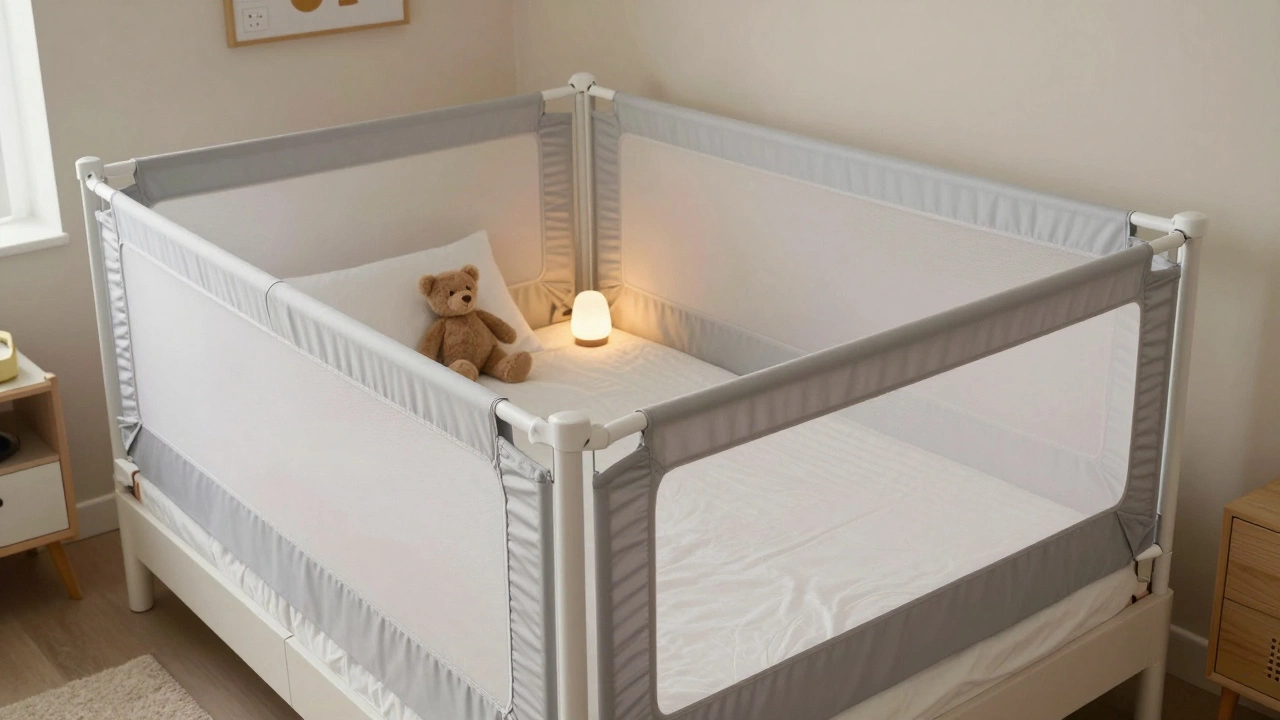
- Use a toddler bed with guardrails - If you’re not ready for a full-size bed, go for a low-profile toddler bed. Make sure the guardrails are secure and don’t have gaps where limbs can get stuck. Look for ones that meet ASTM F406 safety standards.
- Childproof the room - This is non-negotiable. Once your child is out of the crib, they can roam. Cover outlets, lock drawers, secure heavy furniture to the wall, and remove any small objects they could choke on. A 2-year-old who can climb out of a crib can also climb onto a dresser - and that’s dangerous.
- Keep the bedtime routine - Same stories, same songs, same dim lights. Consistency reduces anxiety. Your child doesn’t need a new bedtime ritual - they need to know the rules haven’t changed, even if the bed has.
What not to do
There are common mistakes parents make during this transition - and they’re all avoidable.
- Don’t use crib bumpers - Even if you think they’re “safe,” they’re not. The AAP banned them in 2011. They’re a suffocation risk and don’t prevent injuries.
- Don’t rush to a twin bed - Twin beds are too high for toddlers. A fall from a twin bed can cause serious injury. Stick with low beds until your child is at least 4.
- Don’t use a baby gate at the bedroom door - Gates are for hallways and stairs. In a bedroom, they can become climbing tools. A child who can climb out of a crib can easily scale a gate. It’s not a solution - it’s a new hazard.
What to expect after the switch
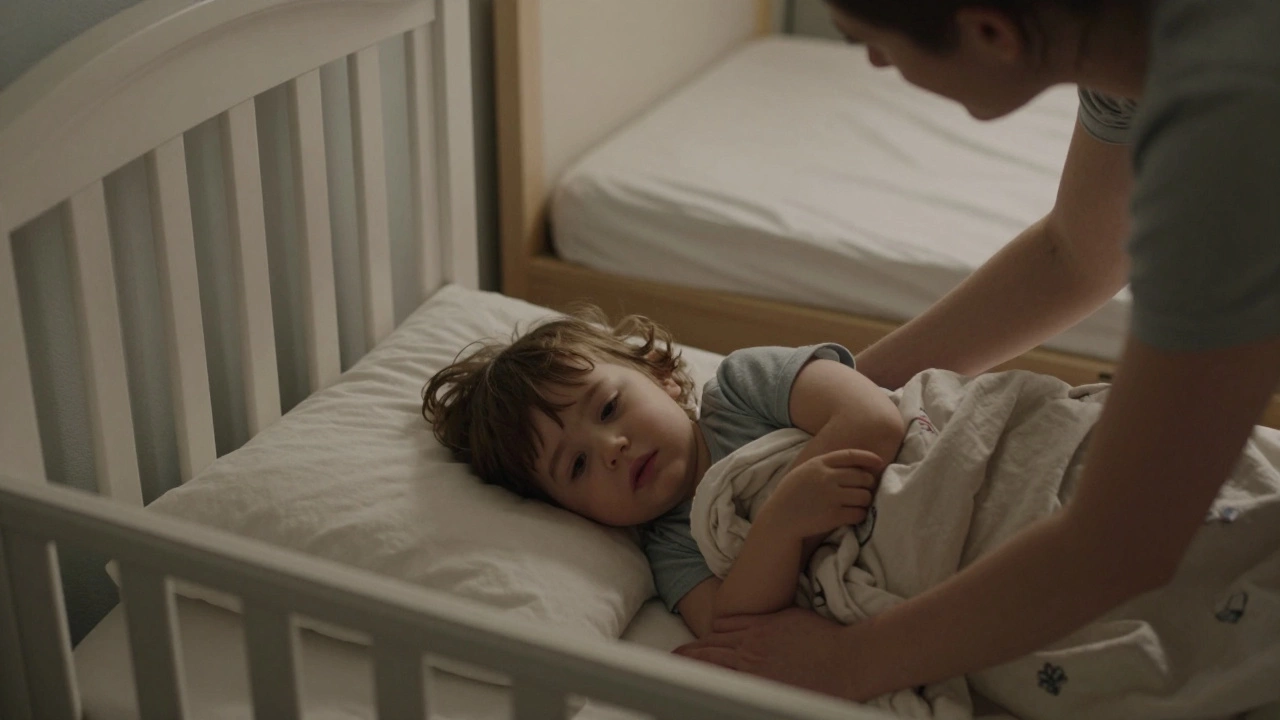
Expect some sleep disruption. It’s normal. Your child may get out of bed 10 times in one night. They might wander. They might call for you. That’s not defiance - it’s adjustment.
Here’s how to handle it:
- Stay calm. Don’t make a big deal out of getting up. Gently guide them back without talking too much.
- Use a nightlight. Fear of the dark is common after the crib goes away.
- Give them a comfort object - a stuffed animal or blanket they’ve had since infancy.
- Don’t give in to staying in the room until they fall asleep. That creates a new habit you’ll regret later.
Most kids adjust within 1-2 weeks. A few take 3-4. But if it’s been over a month and your child is still climbing out of the new bed, or refusing to sleep - talk to your pediatrician. There might be an underlying sleep issue.
When to call the pediatrician
You don’t need to panic if your child resists the change. But if you notice any of these, it’s time to call:
- They’re waking up multiple times a night for over 4 weeks
- They’re showing signs of fear or anxiety around bedtime
- They’ve had a serious fall and are limping, vomiting, or acting confused
- They’re not sleeping at all for 2+ days
These aren’t normal. They need professional input.
Final tip: Watch your child, not the calendar
There’s no perfect age. No universal rule. The right time is when your child shows you they’re ready - through their actions, not their birthday.
If they’re climbing, they’re ready. If they’re tall, they’re ready. If they’re starting to talk about “big kid beds,” they’re ready. Listen to them. Watch them. Trust your gut.
Waiting for a specific birthday or milestone? That’s not safety - that’s convenience. Your child’s safety doesn’t wait for holidays or school breaks. It waits for you to act.
Can a 2-year-old sleep in a twin bed?
It’s not recommended. Twin beds are too high for toddlers - a fall can cause serious injury. Wait until your child is at least 3.5 to 4 years old, and even then, use guardrails and place the bed low to the floor. A toddler bed with low sides is much safer.
Should I use a baby gate to keep my toddler in their room?
No. Gates are designed for stairs and doorways, not bedrooms. A child who can climb out of a crib can easily climb over a gate. It creates a false sense of security and adds another climbing hazard. Instead, focus on making the room safe - remove furniture they can climb on, lock drawers, and secure heavy items to the wall.
What’s the safest alternative to a crib?
A floor bed is the safest option. It’s a mattress placed directly on the floor, with soft padding around it. No rails, no height, no climbing. It gives your child freedom to get in and out safely. If you prefer a bed with sides, choose a low-profile toddler bed that meets ASTM F406 safety standards.
Is it okay to keep a crib until age 3?
Only if your child hasn’t shown any signs of climbing or trying to escape. If they’re still sleeping safely, not standing up in the crib, and haven’t reached 35 inches tall, then yes - it’s fine. But if they’re showing any climbing behavior, even once, it’s time to transition. Waiting past 3 increases the risk of injury during the eventual switch.
How do I know if my child is ready for a toddler bed?
Look for three signs: they can climb out of the crib, the mattress is at its lowest setting, and they’re taller than 35 inches. If two or more apply, they’re ready. Also, if they start asking for a "big kid bed" or seem frustrated being stuck in the crib, those are emotional cues you shouldn’t ignore.