Infant CPR Response Simulator
Practice the critical first moments when an infant is unresponsive. This simulator guides you through the standard protocol for infants under 1 year.
Step-by-Step Protocol
Current Action
Press "Start Simulation" to begin.
Imagine the silence. It’s 3 AM in Bristol, and you check on your sleeping infant. They aren’t breathing. Your heart stops before their lungs do. The question screaming in your mind isn't just "what happened?" but "can I bring them back?" This is the terrifying reality of Sudden Infant Death Syndrome (SIDS) and other sleep-related infant deaths. Parents often wonder if resuscitation works when a baby has been found unresponsive. The short answer is: yes, you should always attempt it. But the outcome depends heavily on how quickly you act and what actually caused the silence.
The Hard Truth About SIDS and Revival
Here is the uncomfortable fact that medical literature confirms: true SIDS is, by definition, a diagnosis of exclusion made after death. If a baby dies from SIDS, they are already gone when you find them. There is no heartbeat to restart because the physiological failure has likely occurred minutes or even hours prior. So, can you "resuscitate" a baby who died of SIDS? Technically, no. Once biological death occurs, CPR cannot reverse it.
However, this distinction matters less in the moment than you think. Why? Because you don’t know if it’s SIDS until later. What looks like SIDS might be suffocation, an airway obstruction, or a cardiac event where the heart stopped recently. In these cases, immediate CPR (Cardiopulmonary Resuscitation) can save a life. If you wait to see if they wake up naturally, you lose precious seconds. Every second without oxygen damages the brain. If there is any chance the baby is alive but unconscious, you must treat them as if they are.
| Scenario | Likely State | Effectiveness of CPR | Action Required |
|---|---|---|---|
| True SIDS | Biological death occurred earlier | Low to None (No heart rhythm to restore) | Attempt CPR; confirm with paramedics |
| Airway Obstruction | Choking or blockage | High (If cleared quickly) | Back blows, chest thrusts, then CPR |
| Cardiac Arrest | Heart stopped recently | Moderate to High (If started within 4 mins) | Immediate CPR + AED if available |
| Suffocation | Oxygen deprivation ongoing | Variable (Depends on duration) | Remove obstruction, rescue breaths |
Why You Should Always Attempt CPR
Parents hesitate because they fear causing harm or facing the trauma of performing CPR on a child they believe is already dead. But hesitation is the enemy here. If a baby is not breathing and has no pulse, their brain begins to suffer irreversible damage after about four to six minutes without oxygen. If you find them cold and stiff (rigor mortis), revival is unlikely. But if they are still warm, or only slightly cool, there is a window of opportunity.
Consider this: many incidents labeled as "near-miss SIDS" turn out to be successful resuscitations. These babies survived because someone acted fast. They might have had a temporary apnea (pause in breathing) triggered by illness or environmental factors. By starting CPR, you manually pump blood to their brain and heart. Sometimes, this manual circulation is enough to trigger the body's own systems to restart. If you do nothing, you guarantee no chance. If you try, you keep the possibility alive.
Step-by-Step: How to Resuscitate an Infant
Knowing the steps reduces panic. Most parents take a first aid course, but under stress, muscle memory fails. Here is the simplified protocol for infants under one year old. Remember, the ratio is different for adults. For a single rescuer, it is 30 compressions to 2 breaths. For two rescuers, it is 15 compressions to 2 breaths.
- Check Responsiveness: Tap the soles of their feet or shake their shoulders gently. Do not shake vigorously, as this can cause injury. If there is no response, shout for help.
- Call Emergency Services: If you are alone, call 999 (in the UK) or 911 (US) immediately. Put the phone on speaker so you can start CPR while waiting for instructions.
- Open the Airway: Tilt the head back very slightly. Infants have large heads and floppy necks; over-tilting can close the airway. Look inside the mouth for visible obstructions. Do not perform blind finger sweeps unless you see something solid.
- Check Breathing: Look, listen, and feel for no more than 10 seconds. If they are gasping (agonal breathing), treat it as not breathing.
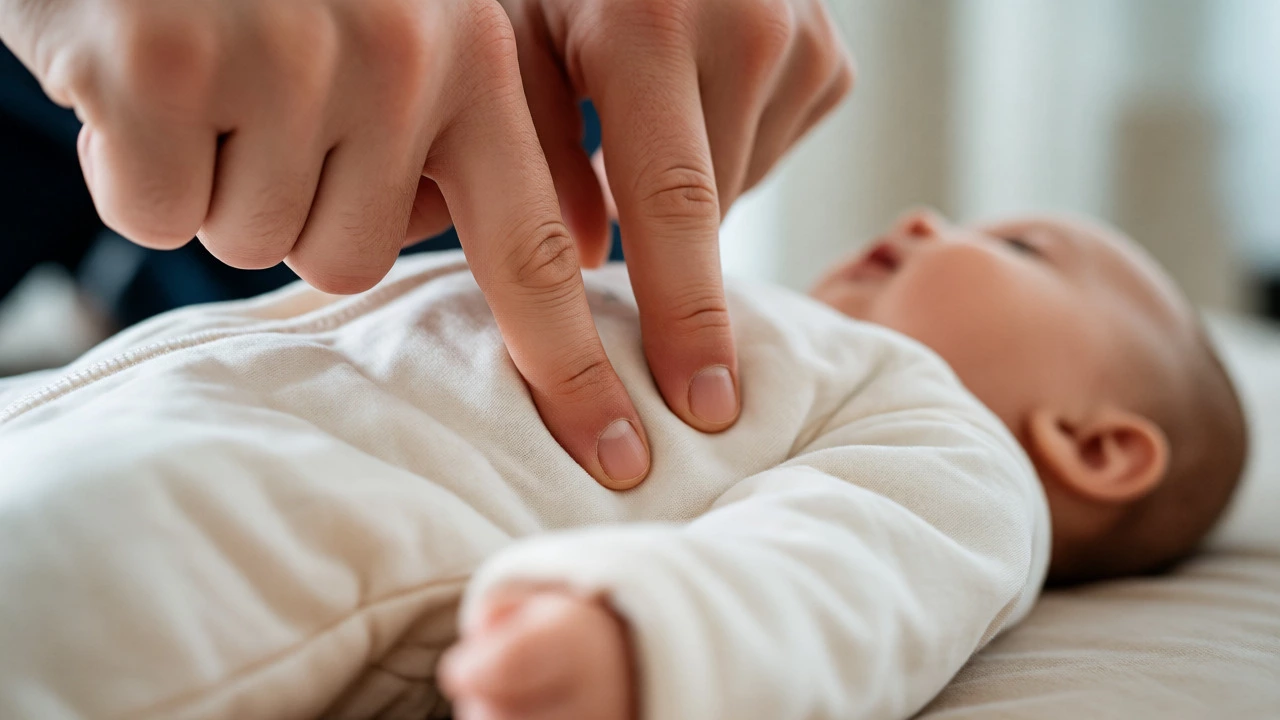
- Start Compressions: Place two fingers in the center of the chest, just below the nipple line. Push down about one-third to one-half the depth of the chest (approx. 4 cm). Push hard and fast-about 100 to 120 compressions per minute. Let the chest recoil completely between pushes.
- Give Rescue Breaths: Cover the baby’s nose and mouth with your mouth. Give gentle puffs. You only need enough air to make the chest rise visibly. Over-inflating can force air into the stomach, causing vomiting and aspiration.
- Continue Until Help Arrives: Keep going at a 30:2 ratio. Switch with another person every two minutes to avoid fatigue. Stop only if the baby starts moving, breathing normally, or if paramedics take over.
The Role of Baby Blankets and Sleep Environment
You might be asking, "Did my baby blanket cause this?" This is a common guilt trip for parents. While loose bedding is a risk factor for suffocation, it is rarely the sole cause of SIDS. However, safe sleep guidelines exist for a reason. The Lullaby Trust and NHS recommend specific practices to reduce risk.
Using heavy, loose blankets increases the risk of overlaying (where the blanket covers the face) or entrapment. In the UK, the recommendation is clear: use a fitted sheet and a well-fitted sleep sack instead of loose blankets. If you must use a blanket, ensure it is light, tucked firmly around the mattress, and reaches only to the baby’s chest. Never let a baby sleep with pillows, duvets, or stuffed animals.
There is also a myth that overheating causes SIDS. It doesn't directly kill, but overheating can disrupt arousal mechanisms. If a baby gets too hot, they may not wake up if their breathing slows down. Dress your baby in one layer more than you would wear. Check their tummy or back of the neck for warmth, not their hands or feet, which are naturally cooler.
Distinguishing SIDS from Other Causes
It is vital to understand that not every unexplained death is SIDS. Medical examiners look for signs of accidental suffocation, infection, or metabolic disorders. For example, if a baby was found face-down in a thick pile of blankets, it might be classified as accidental suffocation rather than SIDS. This distinction affects legal outcomes and insurance, but for the parent, the grief is identical.
Some conditions mimic SIDS. Cardiac channelopathies (electrical problems in the heart) can cause sudden arrest without warning. Respiratory syncytial virus (RSV) can cause apnea in young infants. Knowing this helps parents advocate for autopsies if needed, but it doesn't change the emergency response. You still treat the symptoms: no breathing, no pulse.
When to Stop CPR
This is the hardest part. When do you stop pushing on a baby’s chest? Generally, you continue until emergency services arrive. Paramedics have equipment like defibrillators and drugs that can sometimes restart a heart that external compressions cannot. If you are exhausted and alone, you might need to stop briefly to catch your breath, but minimize interruptions.
If the baby shows signs of life-coughing, moving limbs, normal breathing-you can stop compressions but stay ready to resume. Monitor their breathing closely. Even if they wake up, they need hospital evaluation. Post-resuscitation care is critical to manage potential brain swelling or lung issues.
Preventing Future Tragedies
While we cannot prevent all cases of SIDS, we can mitigate risks. The "Back to Sleep" campaign reduced SIDS rates by over 50% in many countries. But vigilance continues. Room-share, don't bed-share. Bed-sharing is risky, especially if parents smoke, drink alcohol, or are overly tired. Use a firm, flat mattress. Avoid soft surfaces like sofas or armchairs for infant sleep, as babies can slip into gaps and suffocate silently.
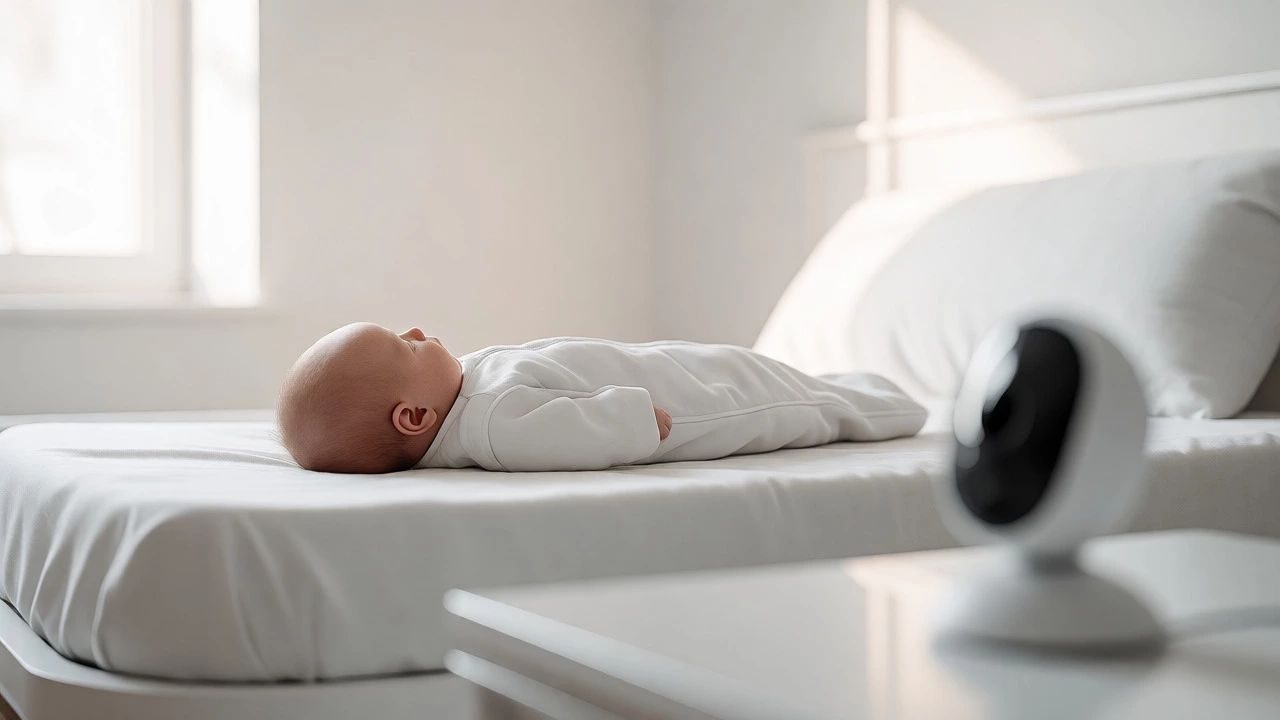
Also, consider infant monitors. While they don't prevent SIDS, they alert you to changes in breathing patterns. Some smart socks monitor oxygen levels and heart rate. These tools provide peace of mind, though they should not replace parental intuition and physical checks.
Can a baby survive SIDS?
By strict medical definition, SIDS is fatal. If a baby is diagnosed with SIDS, they did not survive the event. However, if a baby experiences a similar event but survives due to quick intervention, it is usually reclassified as a "Brief Resolved Unexplained Event" (BRUE) or near-miss SIDS, not SIDS itself. Survival depends on whether the heart and brain were deprived of oxygen long enough to cause permanent death.
How long does CPR last before it becomes ineffective?
Brain damage can begin after 4 minutes without oxygen. Irreversible damage typically occurs after 10 minutes. However, in infants, survival has been recorded even after longer periods of CPR, especially if hypothermia was present. Therefore, never stop CPR prematurely. Continue until professional help takes over or obvious signs of death (like rigor mortis) appear.
Do baby blankets cause SIDS?
Baby blankets themselves do not cause SIDS, but loose bedding significantly increases the risk of suffocation and accidental overlaying. Heavy or loose blankets can cover an infant's face, blocking airflow. Safe sleep guidelines recommend using wearable blankets (sleep sacks) instead of loose quilts or duvets to reduce this risk.
What is the difference between SIDS and suffocation?
SIDS is sudden and unexplained death in an infant under one year, where no cause is found after thorough investigation. Suffocation involves a physical obstruction of the airway (e.g., pillow, blanket, position). Autopsies and scene investigations help distinguish the two. Suffocation may show signs of struggle or positional asphyxia, whereas SIDS leaves no trace.
Should I take a CPR course specifically for infants?
Yes, absolutely. Adult CPR techniques differ from infant CPR. Infants require gentler compressions with two fingers and smaller rescue breaths. Taking a certified infant first aid course ensures you know the correct depth, rate, and ratios. Many organizations in the UK, such as St John Ambulance, offer specialized courses for new parents.