Learning Aid Toy Selector
Select Your Child's Age
Choose Skill Focus
Recommended Learning Aid Toys
Based on your selections, here are toys that match your child's developmental stage
Every parent has seen it: a baby grabbing a colorful block, a toddler stacking rings, a preschooler sorting shapes by color. These aren’t just random play moments-they’re quiet, powerful lessons happening in real time. That’s the heart of a learning aid toy: a toy designed not just to entertain, but to build skills as a child plays.
What Exactly Is a Learning Aid Toy?
A learning aid toy is any play item created with a clear developmental goal in mind. Unlike regular toys that focus on fun alone, these are built around how children naturally learn-through touching, moving, experimenting, and repeating. They don’t teach with flashcards or lectures. They teach by letting kids figure things out on their own.
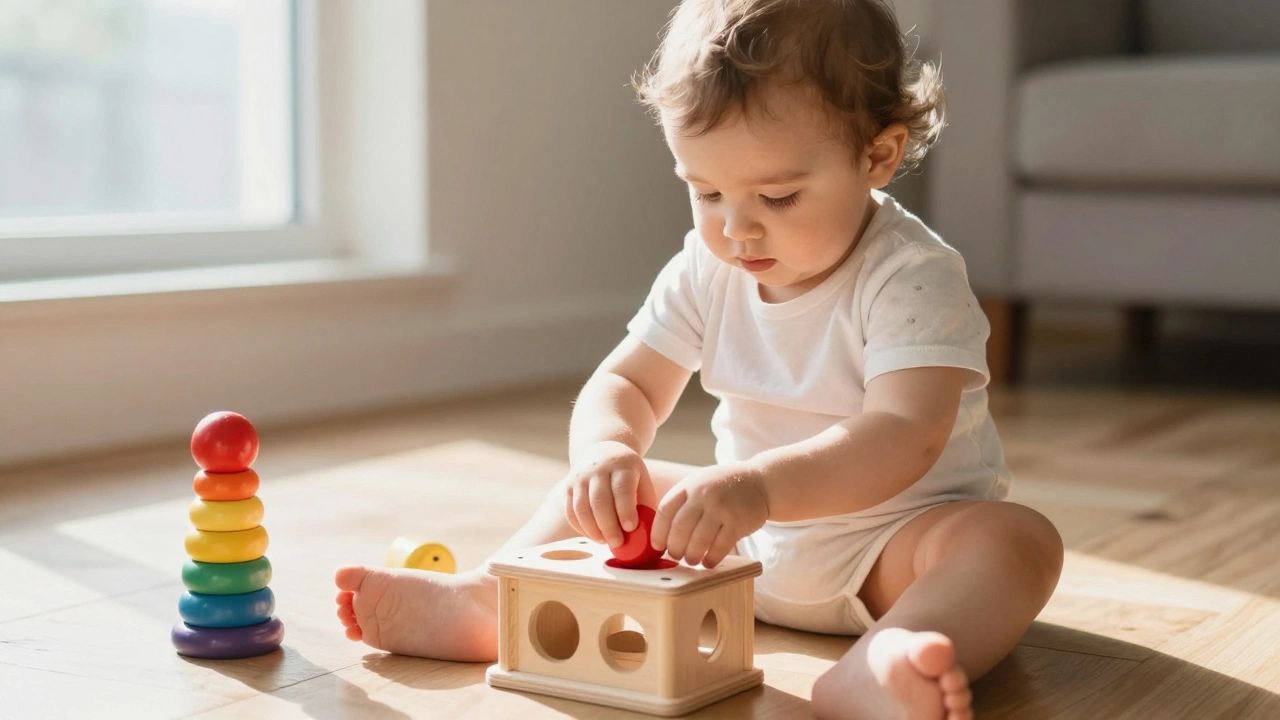
Think of them as silent teachers. A shape sorter doesn’t say, "This is a triangle." But when a child tries to force a circle into a square hole and it doesn’t fit, they’re learning about spatial relationships. That’s real problem-solving. That’s cognitive growth.
These toys follow principles from child psychology research, especially the work of Jean Piaget and Maria Montessori. Piaget showed that kids learn best by doing, not by being told. Montessori proved that structured play materials help children master fine motor control, logic, and self-regulation. Modern learning aid toys are the direct result of those ideas.
How Do Learning Aid Toys Work?
They work because they match a child’s brain development stage. A 6-month-old doesn’t need a math app. They need something they can grasp, shake, and mouth safely. A 2-year-old doesn’t need flashcards for letters. They need a puzzle with big, easy-to-hold pieces that teach hand-eye coordination and pattern recognition.
Here’s how learning aid toys break down by skill area:
- Motor skills: Toys with buttons to press, knobs to turn, or beads to slide help build fine motor control. Think of a busy board with zippers, Velcro, and latches.
- Cognitive development: Sorting toys, nesting cups, and simple puzzles train memory, cause-and-effect thinking, and problem-solving.
- Language skills: Toys with labeled pictures, sound buttons (like animal noises), or story cubes encourage vocabulary building and early communication.
- Sensory processing: Textured balls, light-up sensory panels, or water play toys help kids process touch, sight, and sound.
- Emotional regulation: Toys that encourage turn-taking, like simple board games or cooperative building sets, teach patience and social interaction.
One of the most powerful aspects? They’re self-correcting. If a child puts the wrong piece in a puzzle, it doesn’t fit. No adult needs to say "no." The toy itself gives feedback. That builds confidence and independence.
What Makes a Toy a True Learning Aid?
Not every toy with "educational" on the box is one. Here’s how to tell the difference:
- Real interaction: Does it require the child to do something? Or does it just play sounds and lights automatically? True learning aid toys demand participation.
- No screens: While some apps claim to be educational, research from the American Academy of Pediatrics shows that children under 2 learn best from real objects and human interaction-not screens.
- Open-ended play: A toy that only does one thing (like a musical keyboard that plays one song) has limited value. A block set, a stackable tower, or a set of wooden animals can be used in dozens of ways as the child grows.
- Age-appropriate challenge: If it’s too easy, the child gets bored. If it’s too hard, they get frustrated. The best learning aid toys offer just enough challenge to keep a child engaged without quitting.
For example, a simple wooden shape sorter from 2024 is still one of the most effective learning tools. It doesn’t have Bluetooth, apps, or voice prompts. But it teaches shape recognition, hand-eye coordination, and persistence-all without a single battery.
Common Types of Learning Aid Toys
Here are the most proven types you’ll find in homes and early learning centers:
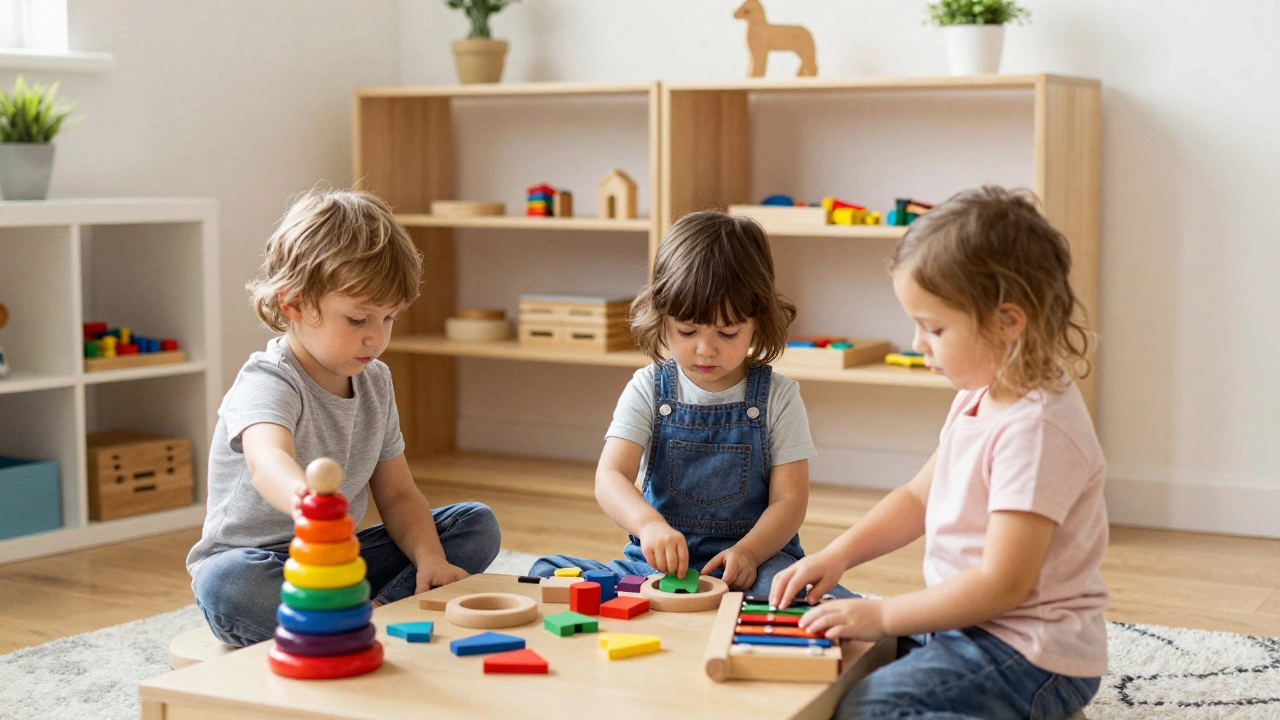
- Stacking and nesting toys: Teach size, order, and balance. Babies as young as 6 months enjoy these.
- Shape sorters and peg puzzles: Build spatial reasoning and fine motor control. Ideal for ages 1-3.
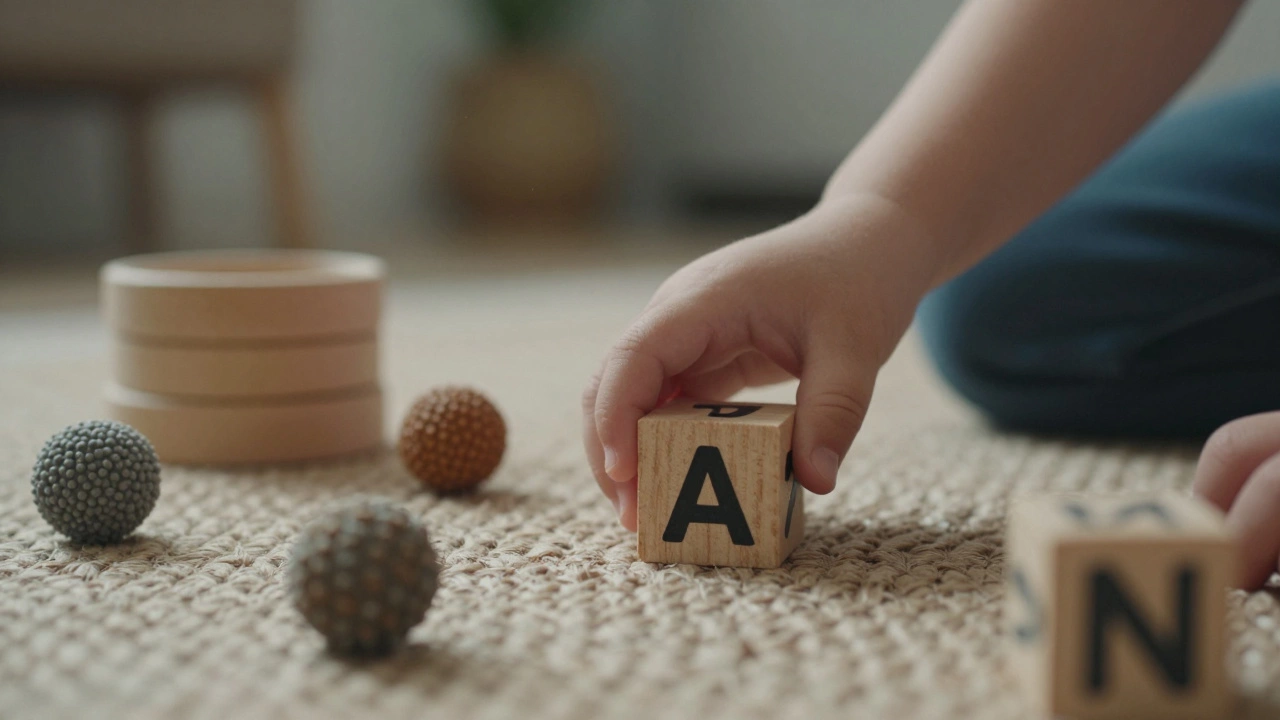
- Wooden alphabet and number blocks: Introduce letters and counting through tactile play. No screens needed.
- Textured and sensory toys: Soft fabrics, crinkly paper, rattles, and squishy balls help babies and toddlers process sensory input.
- Role-play sets: Toy kitchens, tool benches, and doctor kits help children understand social roles and language.
- Simple musical instruments: Tambourines, xylophones, and drums develop rhythm, listening skills, and coordination.
- Building sets (large blocks, magnetic tiles): Encourage creativity, engineering thinking, and teamwork.
These aren’t fancy gadgets. Most cost under $20. Many are made from wood, fabric, or recycled materials. Their power comes from simplicity and real-world interaction.
What to Avoid
Not all "educational" toys are helpful. Watch out for:
- Overstimulating toys: Flashing lights, loud noises, and rapid music can overwhelm young brains and reduce attention span.
- Single-function toys: A toy that only plays one song or lights up one color doesn’t grow with the child.
- Screen-based "learning" apps: For kids under 3, real objects and human interaction are far more effective than digital content.
- Too many features: A toy with 15 buttons, 3 modes, and a voice recorder is often just a distraction. Less is more.
Research from the University of Washington in 2023 showed that toddlers who played with simple wooden toys developed stronger vocabulary and problem-solving skills than those who used electronic learning tablets.
Why Learning Aid Toys Matter More Than Ever
In a world full of screens, fast-paced media, and structured activities, unstructured play is becoming rare. Learning aid toys fill that gap. They give children the space to explore, fail, try again, and succeed-on their own terms.
They also reduce pressure on parents. You don’t need to be a teacher to help your child learn. Just give them a shape sorter and let them figure it out. The learning happens naturally.
Studies from the National Institute of Child Health and Human Development show that children who regularly play with open-ended, hands-on toys enter kindergarten with stronger math, language, and social skills than peers who mostly watch videos or play with electronic toys.
How to Choose the Right One
Start with your child’s age and current skills:
- 0-12 months: Focus on texture, sound, and grasping. Rattles, soft books, and teething rings count.
- 1-2 years: Look for stacking, sorting, and simple cause-and-effect toys.
- 2-4 years: Introduce puzzles, pretend play, and building sets.
- 4-6 years: Add simple board games, counting toys, and early literacy tools.
Choose toys made from safe, non-toxic materials. Look for certifications like ASTM F963 (U.S. safety standard) or EN71 (European standard). Avoid small parts for kids under 3.
And remember: the best learning aid toy is the one your child keeps coming back to. If they ignore it after a week, it’s not the right fit. Try something else. There’s no rush.
Real-World Impact
A mom in Ohio shared how her 18-month-old son, who barely spoke, started saying "circle," "square," and "red" after playing with a shape sorter every day for two weeks. No lessons. No drills. Just play.
A daycare in Portland replaced half its electronic toys with wooden blocks and sorting trays. Within three months, staff noticed kids were more focused, less aggressive, and more willing to share.
These aren’t isolated stories. They’re proof that simple, thoughtful toys do real work.
A learning aid toy isn’t about getting ahead. It’s about giving your child the tools to build their own understanding-one block, one shape, one try-at-a-time.
Are learning aid toys better than regular toys?
Not necessarily better-just different. Regular toys focus on fun and imagination. Learning aid toys add structure to that play, helping kids develop specific skills like problem-solving, motor control, or language. The best approach combines both. A stuffed animal for comfort, plus a shape sorter for learning, creates a balanced play environment.
Can I make my own learning aid toys?
Absolutely. Many of the most effective learning tools are homemade. A cardboard box with cut-out shapes, a jar with different textured fabrics inside, or a set of wooden spoons and pots for stacking are all powerful learning aids. The key is to let your child interact with the object, not just watch it.
Do learning aid toys help with speech delays?
Yes, especially those that encourage communication. Toys with picture labels, sound buttons, or role-play sets give children a reason to speak. A child pointing to a picture of a dog and saying "dog" is building language. A parent repeating the word reinforces it. These toys turn play into natural language practice.
How long should a child play with a learning aid toy?
There’s no set time. Toddlers might play for 5 minutes. Preschoolers might stay engaged for 20 or more. The goal isn’t duration-it’s engagement. If your child walks away, let them. Come back to it later. Forced play doesn’t work. Curiosity does.
Are expensive learning toys worth it?
Not usually. A $50 electronic learning tablet won’t teach more than a $12 wooden puzzle. The most effective learning aid toys are simple, durable, and open-ended. Focus on materials (wood, fabric, metal) and design (how it encourages interaction), not price tags or brand names.
Can older kids still benefit from learning aid toys?
Definitely. A 5-year-old building with magnetic tiles is learning geometry and physics. A 7-year-old playing a memory matching game is improving concentration and recall. Learning aid toys evolve with the child. What’s simple for a toddler becomes complex for a preschooler. The same toy can serve multiple stages.