
Stair Gate Safety Checker
Select the details of your current or planned gate installation to check its safety rating.
You’re standing at the top of your stairs, holding a toddler who has just discovered that gravity is optional if you jump hard enough. You need a barrier. You go online, and suddenly you’re drowning in jargon: pressure-mounted, hardware-mounted, auto-close, swing-door. And then there’s this weird term popping up in reviews and forum posts: badger gate. Is it a brand? A type of animal? A new British slang for "don't let the kid fall"?
Here is the truth that will save you ten minutes of confused Googling: there is no such thing as a literal "badger gate." It’s not a product category defined by the British Standards Institution or sold under that name on Amazon. Instead, "badger gate" is colloquial shorthand-mostly used in UK parenting forums and older community threads-for a specific type of hardware-mounted safety gate designed for high-risk areas like the top of stairs. Why "badger"? Likely because badgers are low-slung, sturdy animals that dig in and don’t move easily. Parents started using the term to describe gates that feel solid, immovable, and dug into the wall, unlike flimsy pressure gates that slide around when a determined two-year-old leans on them.
If you’ve been searching for a badger gate, what you’re actually looking for is a **secure, screw-fixed barrier** that won’t budge when your child decides to use it as a trampoline. This guide breaks down why this distinction matters, how to spot the right gear, and why putting the wrong type of gate at the top of your stairs could be a disaster waiting to happen.
The Myth vs. The Reality
Let’s clear the air immediately. If you walk into a Baby Basics or Argos and ask for a badger gate, the assistant might look at you blankly. The term isn’t official industry terminology. However, in the wild world of parenting advice-think Facebook groups, Netmums threads, and local Bristol parent networks-the language evolves fast.
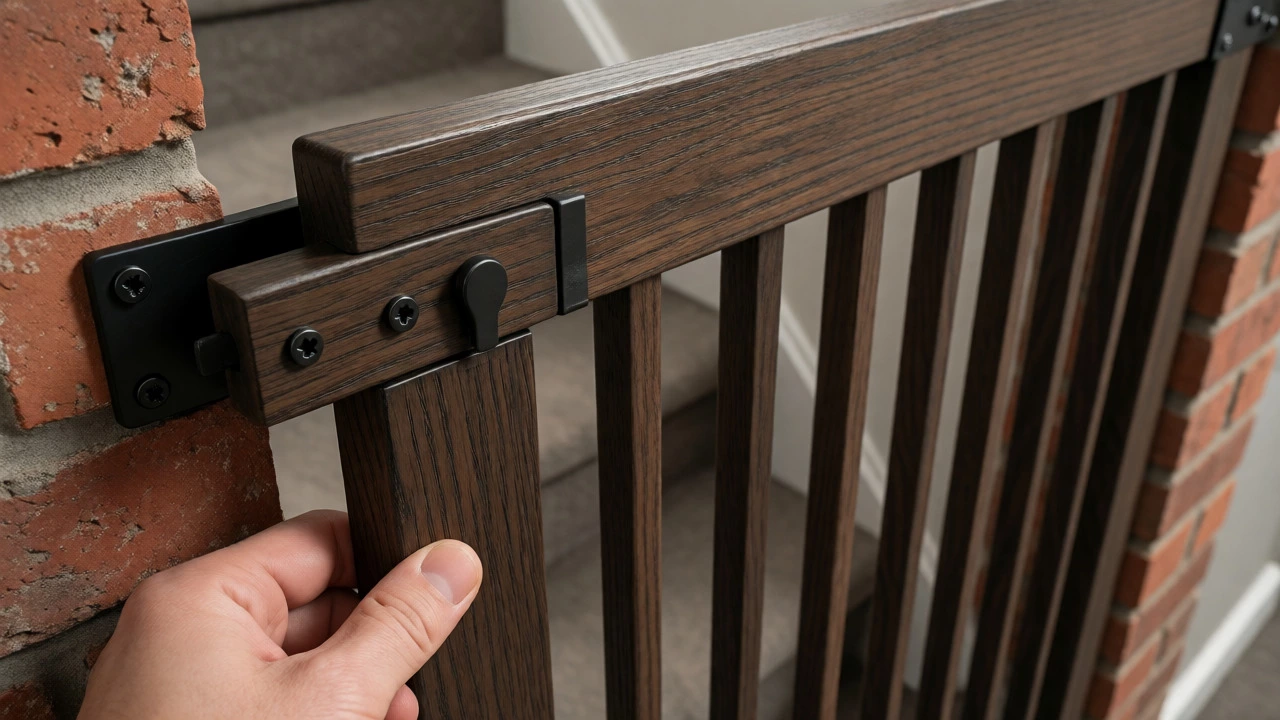
When parents say "badger gate," they are almost exclusively referring to hardware-mounted gates made of wood or metal that require drilling into the wall or banister. They contrast these with "pressure gates," which rely on spring-loaded tension between two walls. Think of it this way:
- The Pressure Gate: Like a doorstop. It stays put because you squeeze it tight. Good for flat hallways, kitchens, or blocking off a doorway where a fall isn’t fatal.
- The "Badger" (Hardware) Gate: Like a fence post. It’s screwed in. It doesn’t care how hard you push; it’s part of the house now. Essential for the top of stairs.
The confusion stems from the fact that some brands have rugged-looking designs that evoke the sturdiness of a badger’s burrow entrance. But functionally, if it screws into the wall, it fits the "badger" description in the eyes of most UK parents.
Why Top-of-Stairs Safety is Non-Negotiable
Not all gates are created equal, and placing the wrong one in the wrong spot is a common mistake. The UK’s Royal Society for the Prevention of Accidents (RoSPA) is blunt about this: never use a pressure-mounted gate at the top of a staircase.
Here’s the physics problem. A pressure gate relies on friction. If a toddler runs full tilt into a pressure gate at the top of the stairs, the force can overcome the friction. The gate slides, pops out, or tilts forward. Now your child is falling down the stairs *with* the gate attached to their front. It’s like trying to stop a car by leaning against it while standing on roller skates.
A hardware-mounted gate (our "badger") eliminates this risk. Because it’s anchored to structural elements-wall studs or banister posts-it cannot dislodge under normal impact. It absorbs the energy rather than transferring it into motion. For families in older terraced houses, which are common here in Bristol, this distinction is critical. Older homes often have uneven walls or plaster that crumbles easily, making pressure mounts unreliable even in hallways, but definitely dangerous at stair heads.
Anatomy of a Proper Stair Barrier
So, you know you need a hardware-mounted gate. What makes a good one? Not all screw-fixed gates are safe. Some cheap imports have gaps wide enough for a head to slip through, or latches that a clever three-year-old can figure out in seconds.
Look for these specific attributes when shopping:
- Double-Lock Mechanism: You want a latch that requires two distinct actions to open (e.g., lift and pull). Single-action latches are easy for toddlers to manipulate.
- Swing Direction: At the top of stairs, the gate should ideally only open *away* from the stairs. If it swings over the steps, a tired parent carrying laundry might accidentally leave it open, or a child might push it open and tumble. Some premium models offer bi-directional swinging with an auto-lock feature, but manual control is safer if you’re forgetful.
- Gap Size: The vertical bars must be spaced less than 65mm apart. This prevents small heads from getting trapped. Horizontal slats are risky unless they are extremely close together, as they act like a ladder for climbing.
- Material Integrity: Wood (beech, oak) feels warm and blends with home decor. Metal (steel, aluminum) is easier to clean and generally more durable against chew marks. Both are fine if they meet safety standards.
| Feature | Pressure-Mounted Gate | Hardware-Mounted ("Badger") Gate |
|---|---|---|
| Installation | No tools; spring tension | Drill and screws required |
| Best Location | Hallways, kitchens, bottom of stairs | Top of stairs, balconies, uneven walls |
| Risk Factor | High at stair tops (can pop out) | Low (anchored to structure) |
| Wall Damage | Minimal (rubber cups may mark paint) | Permanent holes in wall/banister |
| Portability | Easy to move room-to-room | Semi-permanent installation |
DIY vs. Buying Off-the-Shelf
Some parents, especially those handy with a drill, consider building their own gate. This is essentially creating your own "badger gate" from scratch. It’s cost-effective and allows for custom sizing if you have awkward arches or curved banisters.
However, DIY comes with pitfalls. The biggest issue is the hinge and latch alignment. Commercial gates are tested to withstand thousands of cycles of opening and closing. A homemade wooden frame might warp after a month of humidity changes in a UK winter, causing the latch to stick or fail. If you do go DIY, ensure you use heavy-duty steel hinges and a commercial-grade lock kit. Don’t rely on simple hooks or eye-latches.
For most people, buying a certified gate is safer. Look for the BS EN 1930 standard mark. This European standard ensures the gate has passed rigorous tests for strength, gap size, and latch security. If a gate doesn’t carry this mark, it hasn’t been independently verified for safety. Period.
Common Mistakes Parents Make
Even with the right gate, installation errors can compromise safety. Here are the traps to avoid:
1. Ignoring Wall Studs: Screwing into plasterboard alone is weak. Over time, the weight of the gate and the stress of children pushing against it will rip the anchors out. Always hit a stud, or use proper masonry anchors for brick/concrete walls. In older Bristol homes with solid stone or brick, you’ll need long masonry screws.
2. Leaving Gaps Underneath: If your floor is uneven (common in Victorian conversions), a rigid gate might leave a gap at the bottom. A curious cat-or a crawling baby-might try to squeeze under. Use adjustable extension kits to fill side gaps, and consider a threshold ramp if the floor slope is significant.
3. Forgetting the Bottom of Stairs: Many parents focus entirely on the top. But if your child can climb furniture near the bottom of the stairs, they might get stuck halfway down. A gate at the bottom helps contain play areas, though it’s less critical for fall prevention than the top gate.
4. Assuming "Auto-Close" Means "Safe": Auto-closing gates are convenient, but they can pinch fingers. Ensure the hinge has a slow-close damper. If it snaps shut like a trapdoor, you’re risking little digits.
Maintenance and Longevity
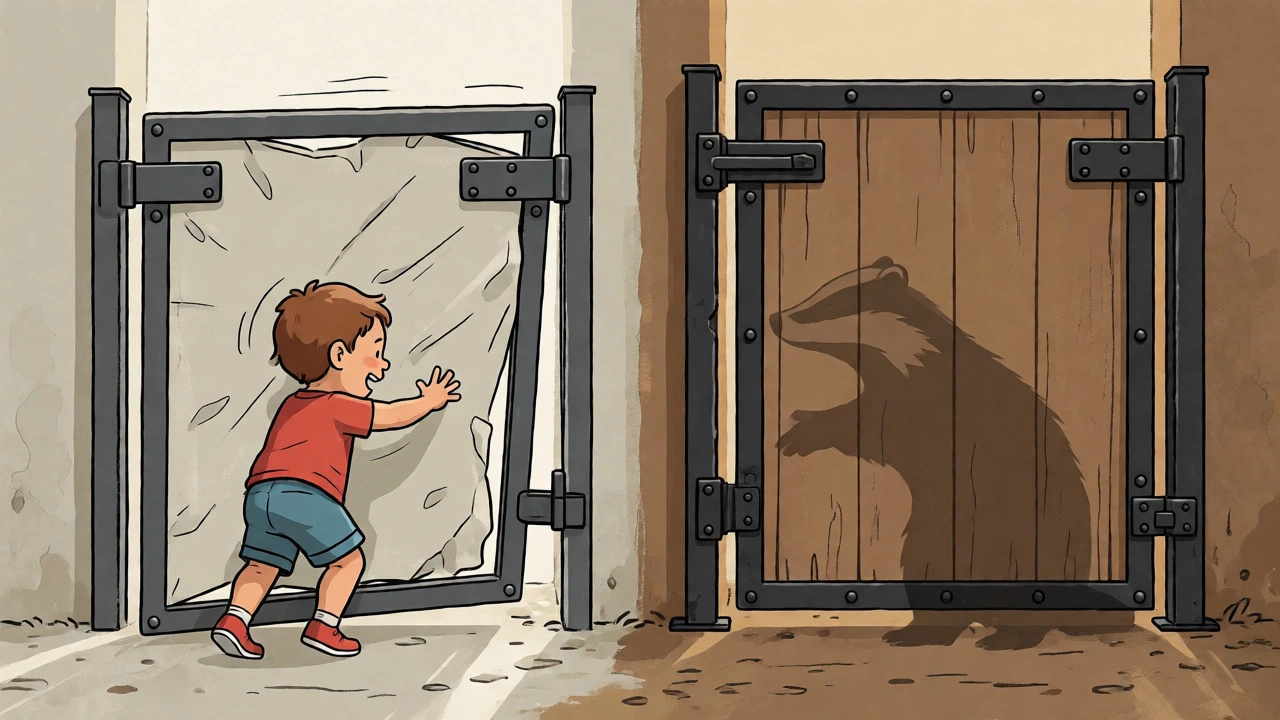
A "badger gate" isn’t set-and-forget. Check it monthly. Tighten any loose screws. Test the latch with your hand-does it click firmly? Does it stay closed if you wiggle the handle? As your child grows stronger, the stress on the mounting points increases.
If you move house, don’t leave the gate behind. Take it with you. It’s cheaper to re-install than to buy new. Plus, you know its history-you know if the hinges are worn or if the wood has warped. When installing in a new home, always check the wall composition first. Don’t assume every wall is the same.
Final Thoughts on Keeping Your Little Ones Safe
So, next time someone mentions a badger gate, smile. You know they mean a sturdy, screw-in barrier that stands its ground. It’s not about the animal; it’s about the attitude. You want a gate that acts like a badger: tough, grounded, and impossible to bully out of position.
Take the time to install it correctly. Drill into the studs. Buy the BS EN 1930 certified model. And never, ever trust a pressure gate at the top of the stairs. Your peace of mind is worth the five minutes of drilling.
Can I use a pressure-mounted gate at the top of the stairs?
No. Manufacturers and safety organizations strictly advise against this. Pressure gates can slip or pop out if a child leans or runs into them, potentially causing a fall down the stairs. Only hardware-mounted gates should be used at the top of staircases.
What does the term 'badger gate' actually mean?
It is informal slang used primarily in UK parenting communities to describe a robust, hardware-mounted safety gate. It implies the gate is sturdy and fixed securely to the wall, much like a badger is known for being low to the ground and difficult to move.
How far apart should the bars be on a safety gate?
Vertical bars should be spaced no more than 65mm apart to prevent a child's head from becoming trapped. Horizontal slats should be avoided unless they are very closely spaced, as they can act as a ladder for climbing.
Do I need to hire a professional to install a hardware-mounted gate?
Not necessarily. If you are comfortable using a drill and locating wall studs, you can install it yourself. However, if you live in a rental property with strict rules about drilling, or if your walls are made of fragile lath and plaster, consulting a handyman might be wise to avoid damage.
Which safety standard should I look for?
Look for the BS EN 1930 certification. This European standard covers requirements for safety features, including gap sizes, latch mechanisms, and strength testing. Gates without this mark may not have undergone rigorous independent safety testing.