Baby Bottle Replacement Calculator
When to Replace Baby Bottles
Calculate when you should replace your baby's bottle based on material type, usage frequency, and baby's age. Follow safe practices for infant feeding.
Replacement Recommendation
Key Safety Factors
- Check for cloudiness, cracks, warping, or unpleasant odors
- Replace nipples every 1-2 months
- Glass bottles should be inspected for cracks
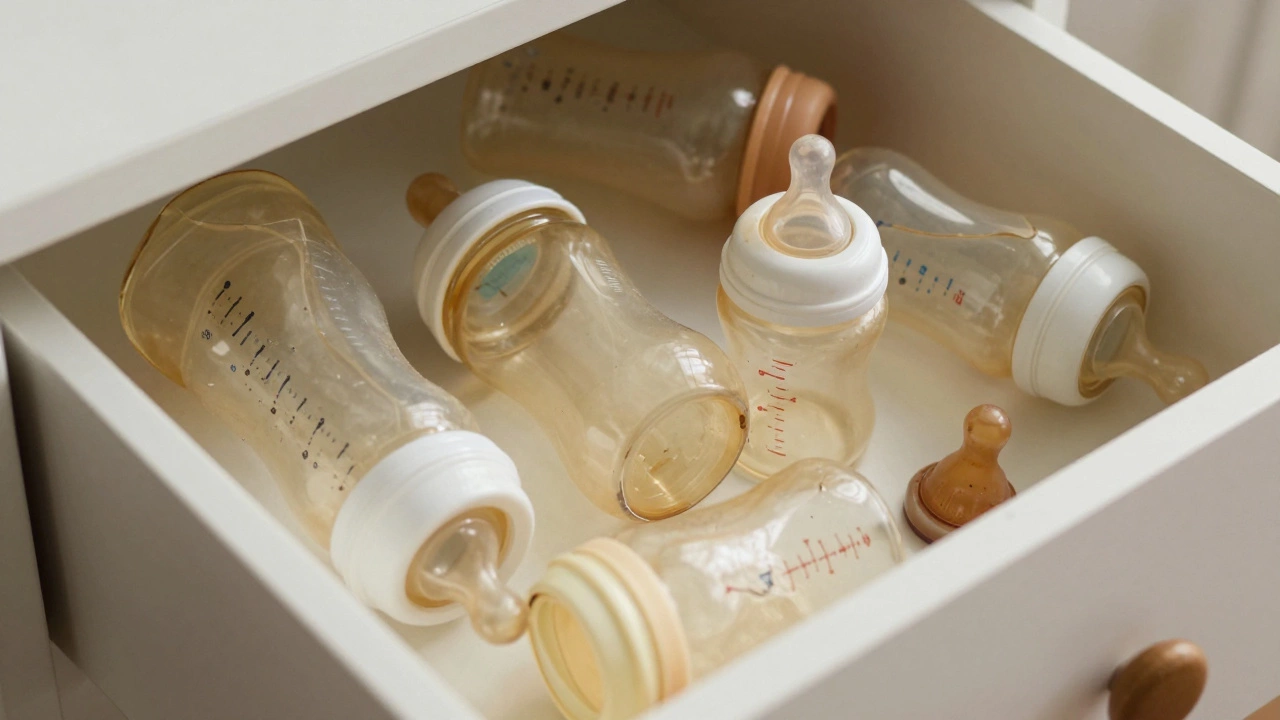
Every parent has stood in front of a drawer full of old baby bottles, wondering: are you supposed to throw away baby bottles? It’s not just about clutter. It’s about safety, hygiene, and whether that bottle your baby used at six months is still safe to use at 18 months. The answer isn’t simple, and it’s not the same for every bottle.
When Do Baby Bottles Actually Need Replacing?
Baby bottles don’t have an expiry date stamped on them, but they do wear out. Plastic bottles-especially those made from polycarbonate (BPA-containing) or older types of polypropylene-start to break down over time. Heat from dishwashers, boiling water, and repeated scrubbing causes micro-scratches and tiny cracks. These aren’t always visible, but they’re where bacteria hide.
Most manufacturers recommend replacing plastic bottles every 3 to 6 months. That’s not arbitrary. A 2023 study from the University of Bristol’s infant nutrition lab found that after 150 wash cycles, plastic bottles showed a 40% increase in bacterial adhesion in scratches compared to new ones. Even if the bottle looks fine, it’s not.
Glass bottles last longer, but they’re not invincible. Cracks, chips, or cloudy spots mean it’s time to toss them. A single chip near the nipple base can create a sharp edge that’s dangerous for your baby’s gums. And if the nipple has turned sticky, cracked, or lost its shape, the whole bottle needs replacing-even if the glass is perfect.
Signs Your Baby Bottle Is Done
You don’t need a lab test to know when to replace a bottle. Look for these clear red flags:
- Cloudiness or yellowing - Plastic that’s turned opaque or stained is likely degraded. This isn’t just cosmetic; it means the material’s structure has changed.
- Cracks or splits - Even hairline fractures can leak or harbor bacteria. Run your finger along the rim and base. If it catches, replace it.
- Warped shape - Bottles that no longer sit flat on the counter or have bulging sides have been exposed to too much heat. They’re no longer stable or safe.
- Smell that won’t wash off - If milk smells sour even after a deep clean, the plastic has absorbed odors and is breaking down.
- Nipple deterioration - Nipples should be soft and flexible. If they’re stiff, sticky, or stretched out, replace them every 1-2 months. A worn nipple can cause choking or feeding issues.
Some parents keep bottles for multiple kids. That’s fine-if they’re in great shape. But don’t assume a bottle that worked for your first child is safe for your second. Each baby’s feeding habits, cleaning routine, and exposure to heat differ. What survived 14 months with your first might not make it past 8 months with your second.
Why You Shouldn’t Keep Bottles ‘Just in Case’
It’s tempting to hang onto bottles for future use. Maybe you’re planning another child. Maybe you’re saving them for a friend. But holding onto old bottles carries real risks.
BPA-free doesn’t mean risk-free. Many modern bottles use BPA-free plastics like Tritan or polypropylene, but studies show these can still leach chemicals under high heat or over time. A 2024 report from the UK’s Food Standards Agency found that even BPA-free bottles released trace endocrine disruptors after 6 months of daily use and sterilization.
Also, bottles degrade faster than you think. If you’ve stored a bottle in a cupboard for a year, it’s not sitting still. UV light from windows, temperature swings, and humidity can cause slow breakdown. A bottle that looked fine in storage might be brittle and unsafe when you pull it out.
And let’s be honest-how many times have you dug out an old bottle only to find the nipple missing, the cap broken, or the label peeled off? You’re not saving money by keeping them. You’re risking your baby’s health for the sake of convenience.
What About Silicone and Glass Bottles?
Silicone bottles are more durable than plastic. They resist scratches, don’t stain, and handle heat well. But they’re not immortal. Check for thinning walls, tears around the base, or a loss of elasticity in the nipple. Replace silicone bottles every 8-12 months, even if they look fine.
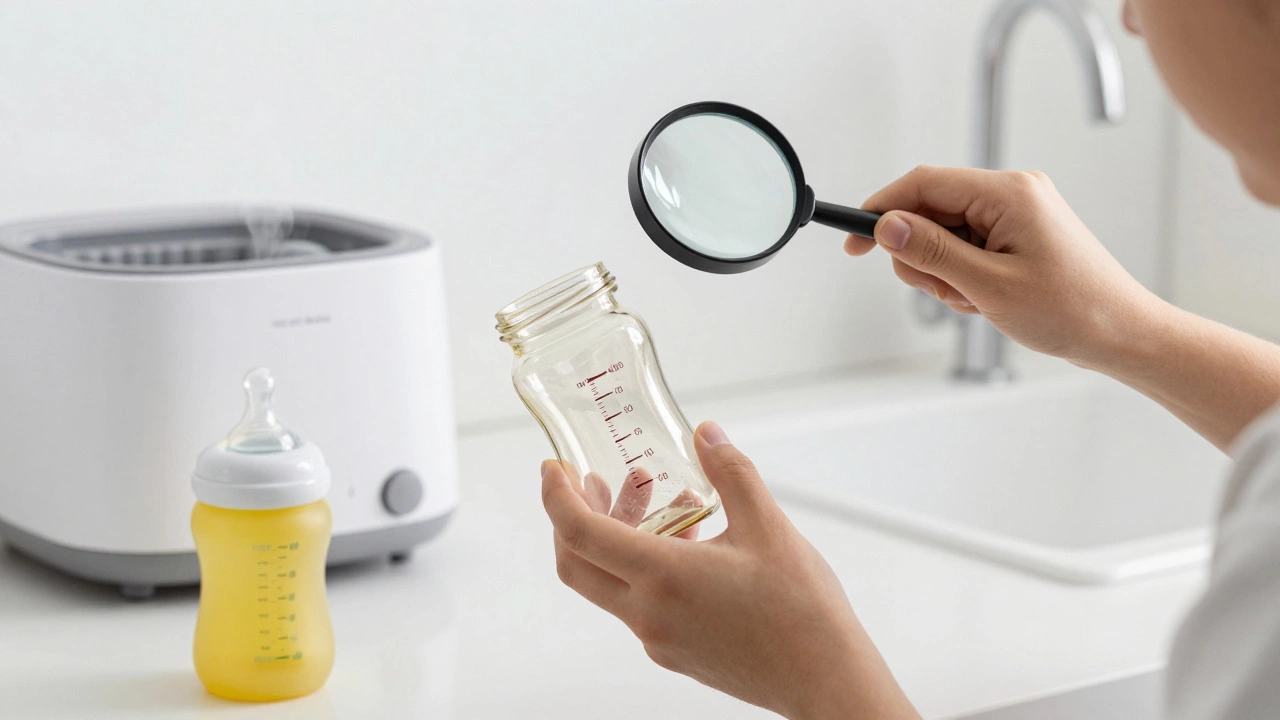
Glass bottles are the most stable. They don’t leach chemicals, and they’re easy to sterilize. But they’re fragile. A drop on tile or a crack from thermal shock (like pouring hot liquid into a cold bottle) can create invisible damage. Always inspect glass bottles for fine lines or cloudiness. If in doubt, toss it.
Some parents use glass with silicone sleeves for extra protection. That’s smart. But the sleeve doesn’t protect the nipple or cap. Those parts still wear out.
How to Replace Bottles Without Wasting Money
Replacing bottles every few months sounds expensive. But you don’t need to buy new ones every time.
- Buy in packs. Most brands sell 4-packs or 6-packs at a discount. Rotate them so each gets equal use and wear.
- Replace nipples first. Nipples are the most worn-out part. Buy extra nipples and swap them out monthly. A new nipple can extend a bottle’s life by months.
- Stick to one brand. Different brands have different nipple flow rates and bottle shapes. Sticking with one makes transitions easier and reduces waste.
- Check for recycling programs. Some brands like Philips Avent and Dr. Brown’s offer take-back programs for used bottles. You get a discount on new ones, and the plastic gets properly recycled.
Don’t buy the cheapest bottles. Low-cost bottles often use thinner plastic that degrades faster. Spend a few extra pounds on a quality bottle-it lasts longer and is safer.
What to Do With Old Bottles
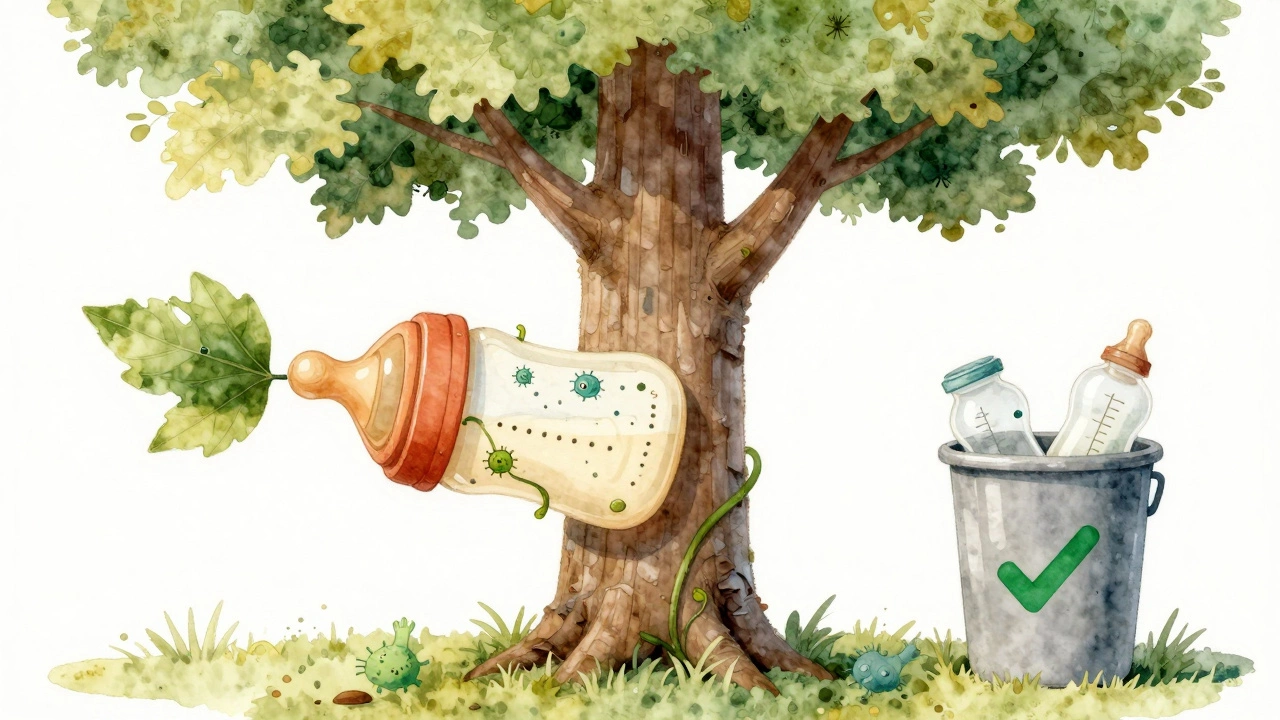
Once you’ve decided to toss a bottle, don’t just bin it. Here’s what to do instead:
- Recycle properly - Rinse the bottle, remove the nipple and cap (they’re often different plastics), and check your local recycling rules. In the UK, most councils accept PP (polypropylene) and PET plastics in curbside recycling.
- Repurpose - Cleaned bottles can become planters, storage containers for small toys, or even DIY sensory bottles for toddlers. Just don’t use them for food or drink again.
- Donate if still usable - If the bottle is under 3 months old and in perfect condition, local baby banks or shelters may accept them. Call first-many have strict hygiene rules.
Never give away cracked, stained, or smelly bottles. You’re not helping- you’re risking another baby’s health.
Bottom Line: When in Doubt, Throw It Out
The real question isn’t whether you’re supposed to throw away baby bottles. It’s whether you’re willing to risk your baby’s health to save a few pounds.
Baby bottles are designed to be replaced. They’re not heirlooms. They’re tools-tools that degrade with use. Just like you wouldn’t keep a worn-out car seat or a cracked sippy cup, you shouldn’t keep a worn-out bottle.
Replace plastic bottles every 3-6 months. Replace silicone every 8-12 months. Replace glass if it’s cracked or cloudy. Swap nipples every 1-2 months. Don’t wait for visible damage. By the time you see it, it’s already unsafe.
Your baby’s health isn’t something to gamble with. When you’re tired, overwhelmed, or short on time, remember: a new bottle costs less than a doctor’s visit. And peace of mind? That’s priceless.
Can I reuse baby bottles for a second child?
Yes, but only if the bottles are in perfect condition-no scratches, cloudiness, warping, or worn nipples. Replace nipples and check the plastic for signs of degradation. Even then, limit reuse to one additional child. After that, replace the entire set.
Do I need to replace bottles if I only use them occasionally?
Yes. Even unused bottles degrade over time due to exposure to light, temperature changes, and humidity. Plastic can become brittle, and silicone can lose elasticity. Replace plastic bottles after 6 months, even if they’ve only been used a few times.
Is it safe to boil baby bottles every day?
Boiling is safe for glass and high-quality silicone bottles. But frequent boiling speeds up degradation in plastic bottles. If you use plastic, opt for sterilizing with steam or cold-water tablets instead. Boil only when necessary, like after illness.
What’s the safest material for baby bottles?
Glass is the safest in terms of chemical leaching. But it’s fragile. High-quality, food-grade silicone is the best balance-durable, non-toxic, and heat-resistant. Avoid low-cost plastics, especially those without clear labeling like ‘BPA-free’ or ‘PP’.
Can I recycle baby bottle nipples?
Most nipples are made from silicone or latex, which aren’t accepted in standard recycling bins. Some brands like Tommee Tippee and Medela offer mail-back recycling programs. Check their websites. Otherwise, dispose of them in general waste-don’t put them in recycling unless specified.