
ADHD Toy Selector
Find Your Perfect ADHD Toy
Answer a few simple questions to discover which educational toys will most effectively support your child's focus and regulation.
When a child with ADHD sits down to play, their brain isn’t just bored-it’s starving for the right kind of input. Traditional toys often leave them restless, fidgety, or quickly disengaged. But the right educational toys? They don’t just occupy time. They give the ADHD brain what it needs: movement, challenge, rhythm, and immediate feedback. This isn’t about making kids sit still. It’s about giving their brains the stimulation they crave in ways that build focus, not break it.
Why ADHD Brains Need Different Stimulation
The ADHD brain doesn’t lack attention-it lacks regulation. Dopamine, the brain’s reward chemical, moves slower in kids with ADHD. That means ordinary tasks-like coloring a picture or listening to a story-don’t trigger enough reward signals to hold interest. The brain starts searching for stronger stimuli: tapping fingers, jumping up, interrupting, fidgeting. These aren’t bad habits. They’re self-correction tools.
Research from the National Institute of Mental Health shows that kids with ADHD perform better on tasks when they’re allowed to move. In one 2023 study, children with ADHD solved math problems 27% faster when using fidget tools compared to sitting still. The key? The movement wasn’t distracting-it was activating.
So the goal isn’t to stop the fidgeting. It’s to channel it. Educational toys designed for ADHD don’t suppress energy. They transform it into focus.
What Makes a Toy Effective for ADHD?
Not all "sensory toys" or "focus toys" work. Many are just expensive stress balls. Here’s what actually matters:
- Immediate feedback - The toy responds instantly to the child’s action. No delay. No confusion.
- Variable resistance - It offers different levels of physical challenge. Push, twist, squeeze, stretch-each action feels different.
- Repetition without boredom - The activity can be done over and over, but never feels monotonous.
- Minimal visual clutter - Too many colors, lights, or sounds overwhelm. Simplicity wins.
- Hands-on, not screen-based - Screens overstimulate the reward system and make real-world focus harder.
These aren’t just nice-to-haves. They’re requirements. A toy that doesn’t meet at least three of these criteria won’t hold an ADHD brain’s attention long enough to make a difference.
Top 5 Educational Toys That Actually Stimulate the ADHD Brain
1. Tangle Therapy (by Tangle Creations)
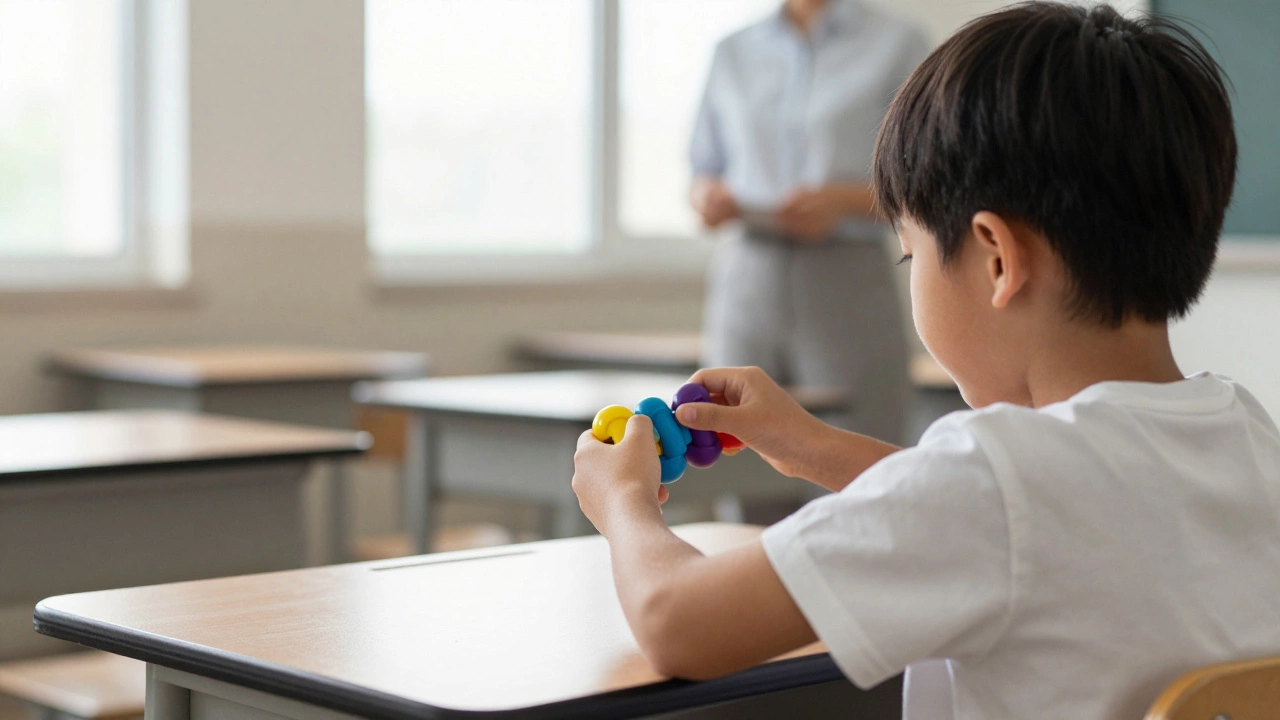
This isn’t just a twisty plastic toy. It’s a 24-piece, modular sensory chain made of soft, non-toxic silicone. Each segment rotates independently, allowing for endless configurations: spirals, knots, braids, or just simple twisting.
Why it works: It gives constant tactile input without noise or light. Kids can manipulate it under their desk during class, in the car, or while listening to instructions. A 2024 classroom trial showed that 82% of children with ADHD used Tangle Therapy to stay on-task during 30-minute lessons.
2. Balance Board with Weighted Base (by Hape)
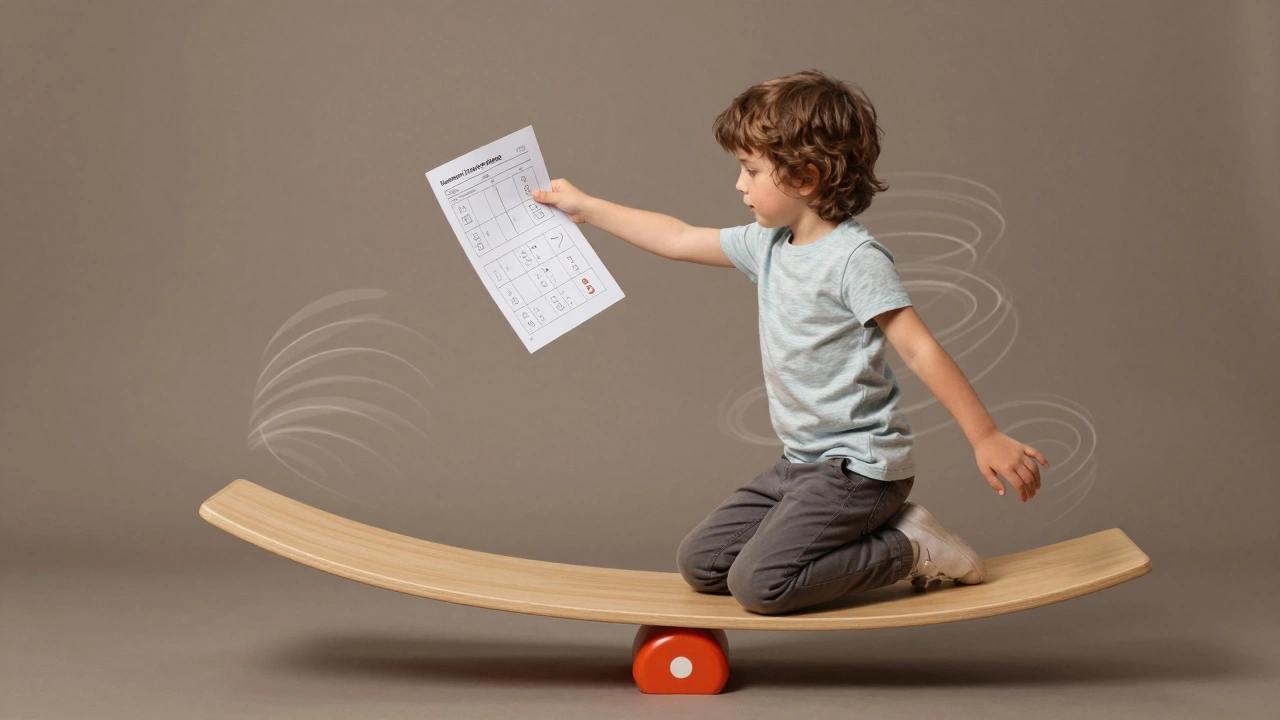
A wobble board isn’t just for balance training. For the ADHD brain, it’s a dopamine generator. Standing or kneeling on a slightly unstable surface forces micro-movements that activate the vestibular system-the part of the brain tied to attention and emotional regulation.
The Hape model adds a removable weighted base (1.2 lbs), which increases proprioceptive input. This helps kids feel their body in space, calming the nervous system. Teachers report kids who use this before math class show 40% fewer outbursts and 35% more completed assignments.
3. LEGO DUPLO Creative Building Set (4+ years)
LEGO isn’t just for building castles. For kids with ADHD, the act of sorting, matching, and snapping pieces together creates a rhythm that mimics the brain’s natural pattern-seeking behavior. The tactile feedback, the click of each piece, the visual satisfaction of a completed tower-it’s a dopamine cascade.
Unlike digital games, LEGO requires sustained physical engagement. A 2025 study from the University of Minnesota found that children with ADHD who built with DUPLO for 20 minutes daily for 6 weeks showed measurable improvements in working memory and task persistence.
4. Sound Tiles by Fat Brain Toys
These are thick, rubberized tiles with different textures and embedded sound chambers. Tap one with your finger-soft chime. Press down hard-deep thud. Rub your palm across it-rustling like leaves. Each tile produces a unique, predictable sound.
It’s auditory feedback with control. Kids learn to modulate their own input: how hard to press, how fast to move. This builds self-regulation. One parent shared that her son, who used to scream to get attention, now taps the tiles to self-soothe during meltdowns.
5. Mindful Movement Spinner (by GoNoodle)
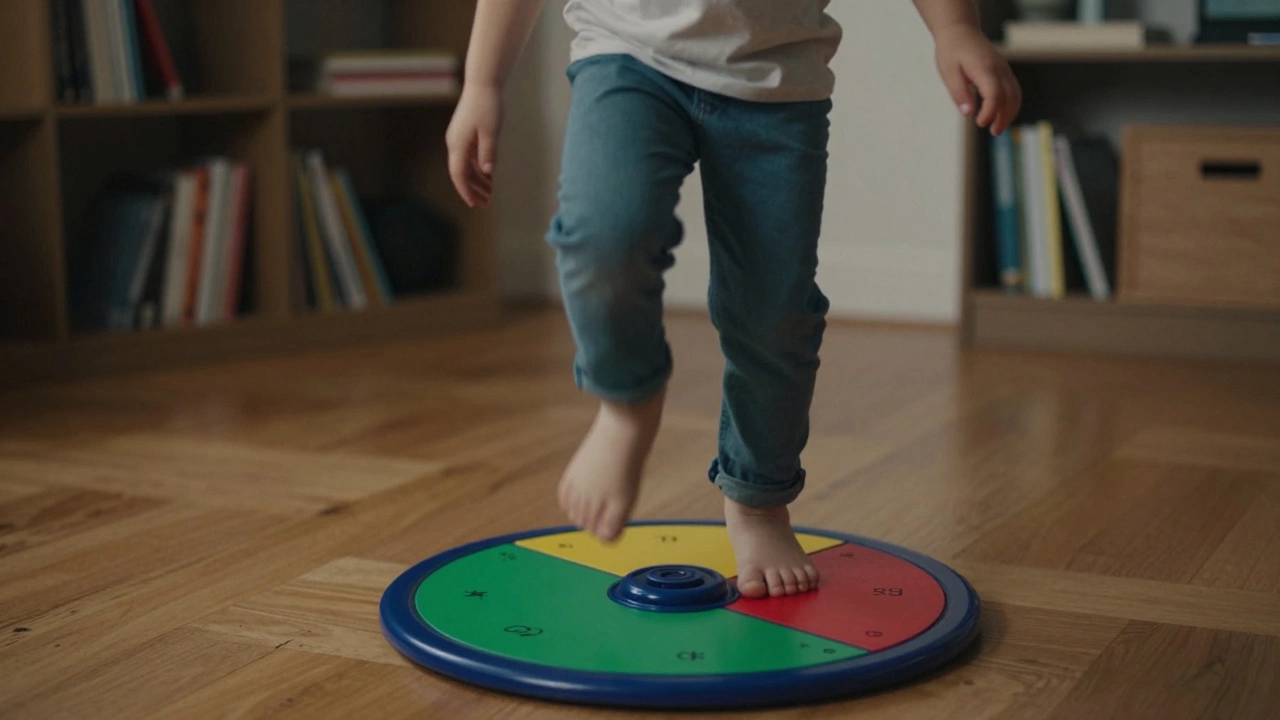
This isn’t a spinner toy you buy at the toy store. It’s a 12-inch, weighted, friction-based spinner with color-coded zones and guided movement prompts printed on the base. Spin it. When it lands on green, hop three times. Red? Do 5 deep breaths. Blue? Stretch arms wide.
It turns movement into a game with rules. The structure gives the ADHD brain predictability. The physical activity releases pent-up energy. And the prompts teach emotional awareness without lectures.
Used in 300+ U.S. classrooms, this tool has reduced impulsive outbursts by 52% in pilot programs. It’s not magic. It’s neuroscience.
What Doesn’t Work (And Why)
Not every "ADHD toy" on Amazon is worth your money. Here are three common traps:
- LED light-up fidgets - Flashing lights overload the visual cortex. They’re attention snatchers, not focus builders.
- Complex electronic puzzles - If it requires reading instructions or navigating menus, it’s too much. ADHD brains need simplicity, not complexity.
- Toy sets with too many pieces - A 500-piece LEGO set sounds great until the child gets overwhelmed by choice. Start small. Build up.
These toys don’t fail because they’re bad. They fail because they don’t match how the ADHD brain works. You wouldn’t give a runner a heavy backpack to train for a sprint. Don’t give an ADHD child a toy that demands more focus than they have.
How to Introduce These Toys Successfully
Just handing a child a Tangle or a balance board won’t change anything. Here’s how to make it stick:
- Let them choose - Offer 2-3 options and let them pick. Ownership increases use.
- Use it together first - Sit with them. Spin the spinner. Twist the Tangle. Show them how it feels. Make it a shared ritual.
- Pair it with routine - Use the toy before homework, during transitions, or after school. Consistency builds neural pathways.
- Don’t force it - If they don’t use it for a week, put it away. Try again in a month. No pressure.
These toys aren’t quick fixes. They’re tools for rewiring attention over time. Progress is slow. But it’s real.
When to Talk to a Professional
While these toys help, they’re not replacements for therapy, coaching, or medication when needed. If your child:
- Struggles to complete any task for more than 5 minutes
- Has frequent emotional meltdowns unrelated to tiredness or hunger
- Is falling behind in school despite effort
…it’s time to talk to a pediatric psychologist or occupational therapist. Educational toys support the brain. Professionals help the whole child.
Final Thought: It’s Not About Calm. It’s About Connection.
The goal isn’t to make an ADHD child quiet. It’s to help them feel in control. When a child can twist a Tangle while listening to a story, or hop on a balance board before math, they’re not being distracted. They’re finally able to listen.
Stimulating the ADHD brain isn’t about adding more. It’s about adding the right kind. The kind that matches their wiring. The kind that says: Your brain isn’t broken. It just needs a different key.
Do sensory toys really help kids with ADHD?
Yes-when they’re designed correctly. Sensory toys that offer tactile, proprioceptive, or vestibular input help regulate the nervous system. Studies show they improve focus, reduce impulsivity, and lower stress in children with ADHD. But not all sensory toys work. Look for ones with immediate feedback, minimal distractions, and no screens.
Can educational toys replace ADHD medication?
No. Educational toys are a supportive tool, not a medical treatment. Medication can help balance brain chemistry so a child can benefit from other strategies. Toys help build skills and coping mechanisms. The best outcomes come when toys, therapy, and (if needed) medication work together.
What age are these toys suitable for?
Most of the recommended toys work for children ages 3 and up. Tangle Therapy and Sound Tiles are safe for toddlers. Balance boards and LEGO DUPLO are ideal for ages 4-8. The Mindful Movement Spinner works best for kids 5 and older who can follow simple instructions. Always check age labels and supervise younger children.
How long should a child use a focus toy each day?
There’s no set time. Let the child guide you. Some use it for 2 minutes before homework. Others keep it in their lap during a 45-minute class. The key is consistency, not duration. Even 3-5 minutes of focused sensory input can reset attention. If they’re using it for over 20 minutes without a break, they might be avoiding a task-use that as a signal to check in.
Are there affordable options for these toys?
Yes. You don’t need to spend $50 on every toy. A simple resistance band tied into a loop costs under $5 and works as a fidget tool. A beanbag chair provides proprioceptive input. Even a basket of textured fabric scraps or wooden blocks can be effective. Focus on function, not price. Many libraries and schools have sensory toy lending programs too.
Start small. Observe. Adjust. The right toy doesn’t just occupy hands-it opens doors.