Baby Gate Compatibility & Training Estimator
Select your dog's characteristics below to receive a personalized recommendation for the safest gate type and an estimated timeline for successful adjustment.
Dog Profile
Your Custom Plan
Recommended Gate Type
Estimated Adjustment Time
Safety Checklist
Fill out the form and click "Get Recommendation" to see your tailored advice.
You just installed the baby gate and are ready to keep your toddler safe from the stairs. But then you hear it-the frantic scratching, the whining, or worse, the aggressive barking at the barrier. If you’re wondering how to get a dog used to a baby gate, you aren’t alone. This is one of the most common friction points when families transition from "just us" to "us plus a tiny human." The good news? It’s rarely about stubbornness. It’s usually about confusion, fear, or a lack of clear boundaries. With the right approach, you can turn that metal or mesh barrier into a neutral part of their daily routine in days, not months.
Why Your Dog Hates the Gate (It’s Not What You Think)
Before you start bribing with treats, you need to understand the psychology. Dogs don’t hate gates; they hate uncertainty. When you suddenly place an obstacle in a path they’ve walked for years, two things happen: either they feel trapped, or they feel excluded. For many dogs, especially those with high prey drive or separation anxiety, the gate represents a loss of control over their territory. They see the baby moving through spaces they used to patrol, but now they are locked out. This triggers frustration. In some cases, if the gate is too low or flimsy, the dog might try to jump it, leading to a cycle of punishment and more anxiety. Recognizing whether your dog is anxious, frustrated, or simply curious is the first step to solving the problem.
The Gradual Introduction Method
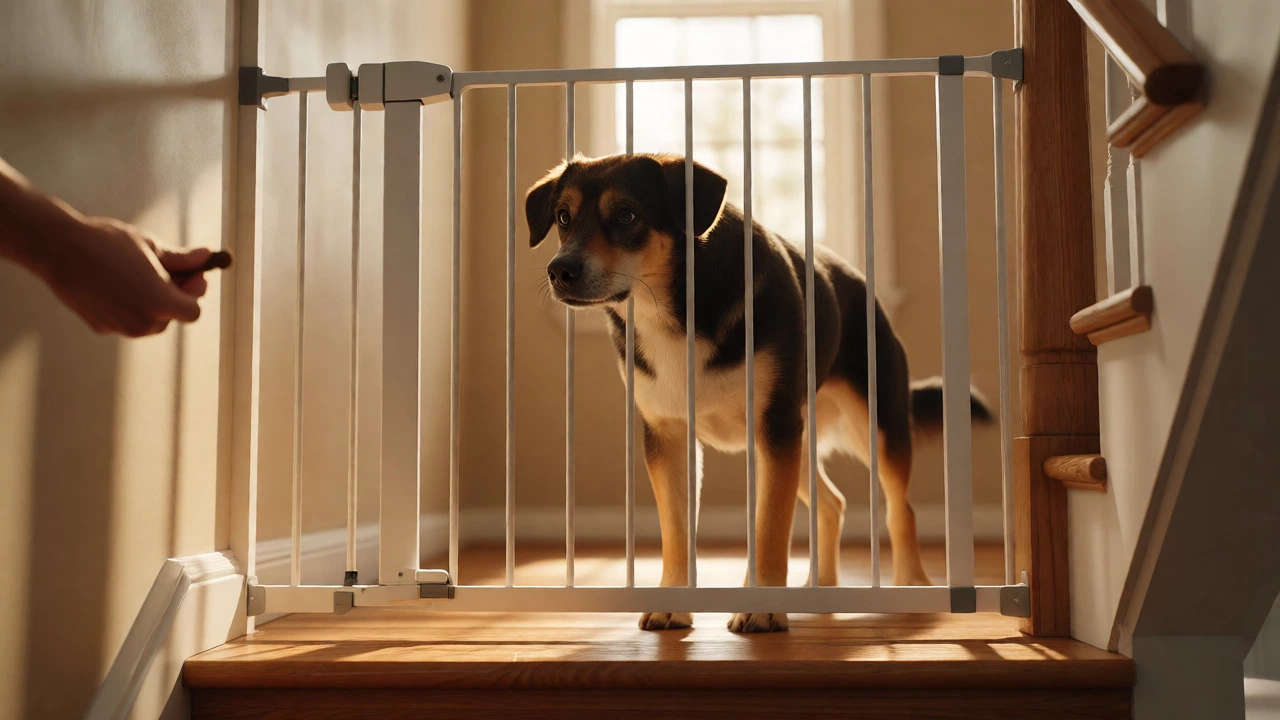
Rushing this process is the biggest mistake parents make. Don’t just slam the gate shut and expect your dog to accept it. Start by leaving the gate open. Let your dog walk through it freely while you supervise. Reward them every time they cross it calmly. This desensitization helps them realize the object isn’t a threat. Once they are comfortable walking through the open frame, close the gate but leave it unlatched. Let them push against it gently. If they back off, reward them. If they paw at it, ignore the behavior until they stop, then reward the pause. This teaches them that calm behavior gets results, while frantic energy does nothing. Keep these sessions short-five minutes max-to prevent frustration buildup.
| Gate Type | Dog-Friendliness | Best For | Potential Issues |
|---|---|---|---|
| Pressure-Mounted | Low | Small dogs, temporary use | Can wobble, easy to knock down |
| Hardware-Mounted | High | All sizes, stairways | Requires drilling, permanent holes |
| Freestanding | Medium | Open floor plans, no drilling | Large dogs may lean on it |
| Mesh Roll-Up | Medium | Wide openings, travel | Cheap material tears easily |
Choosing the Right Barrier for Your Dog’s Size
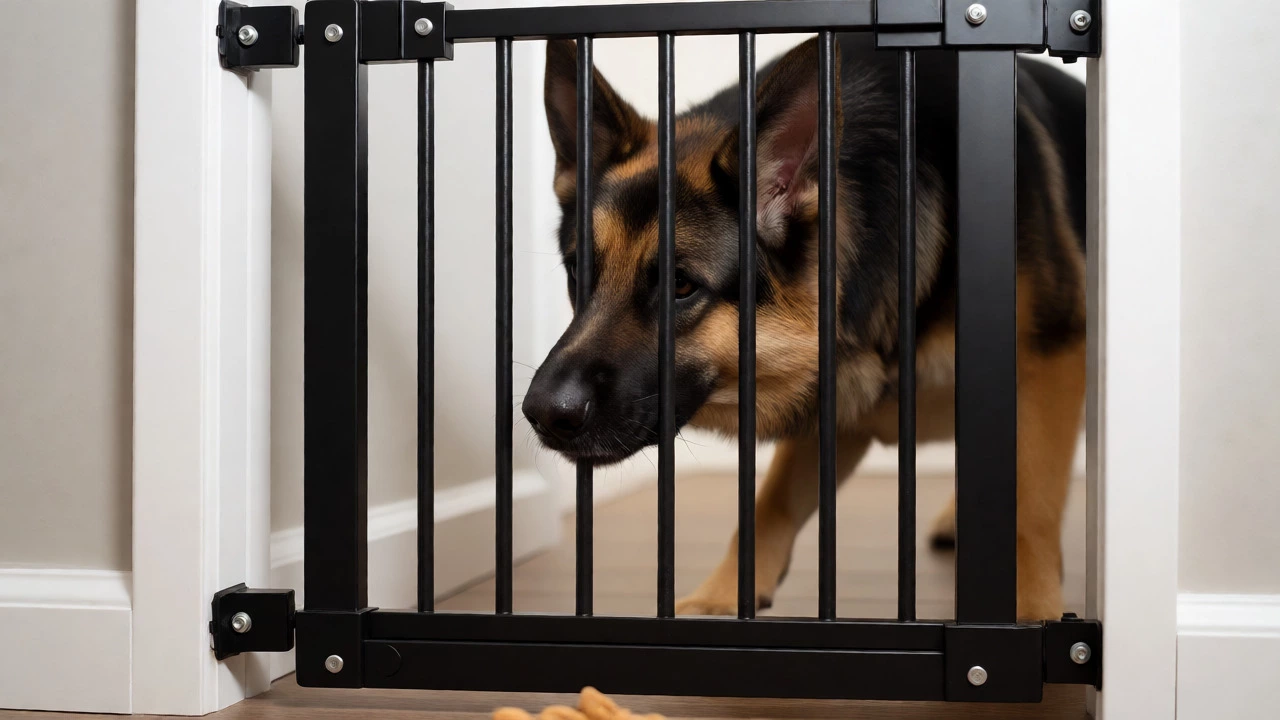
Not all gates are created equal, and picking the wrong one can undo your training efforts. If you have a large breed like a Labrador or a German Shepherd, a flimsy pressure-mounted gate is a disaster waiting to happen. These gates rely on tension between walls. A strong dog leaning on them can pop them loose, startling both the dog and the baby. Hardware-mounted gates, which screw directly into the wall studs, are the gold standard for durability. They don’t wobble, and they provide a solid visual boundary. For smaller dogs, a freestanding gate might work, but ensure it has a wide base so it doesn’t tip over. Remember, the goal is safety for the child and clarity for the dog. A shaky gate creates noise and instability, which increases canine anxiety.
Training Techniques That Actually Work
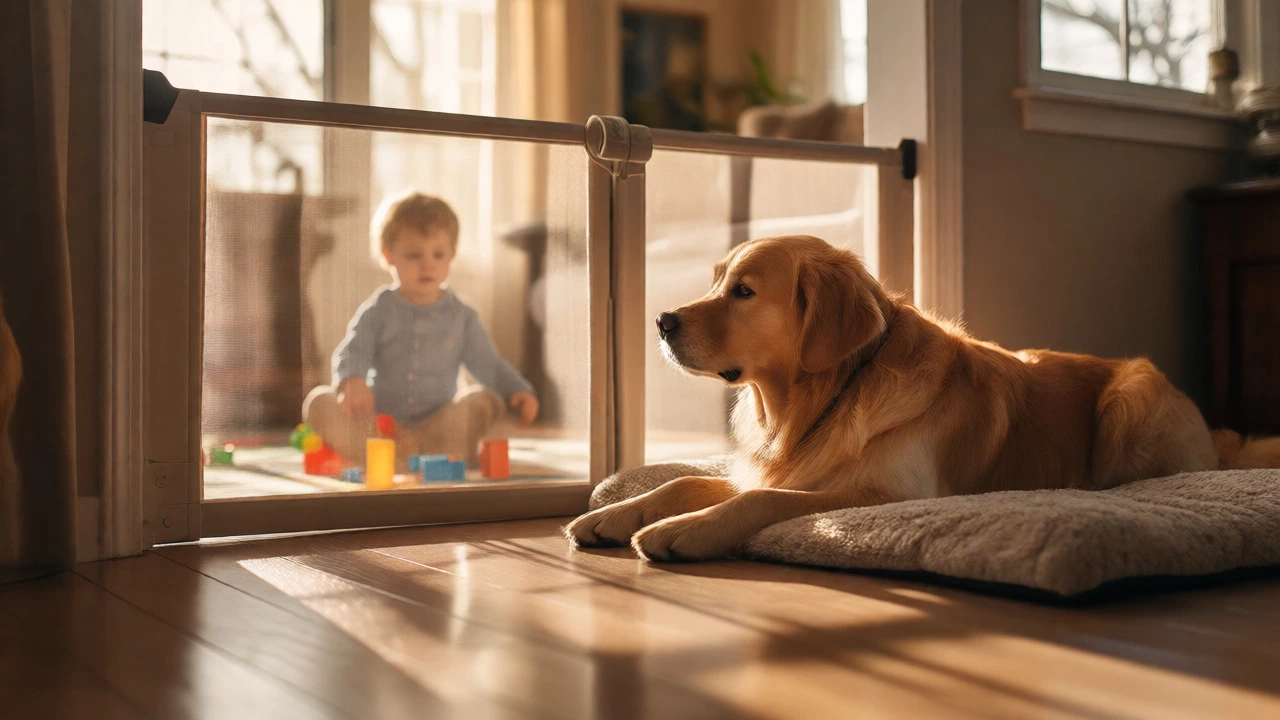
Once the gate is securely installed, it’s time for active training. Use the "Look at That" game. Place your dog on a leash on one side of the closed gate. Have a family member walk past on the other side. Every time your dog looks at the person or the gate without reacting, mark the behavior with a clicker or a verbal "yes!" and give a high-value treat. This changes the emotional response from "barrier equals stress" to "barrier equals snacks." Another effective technique is teaching a "Place" command near the gate. Ask your dog to go to their bed or mat next to the gate and stay there. Reward them heavily for staying put while the baby moves around behind the gate. This gives them a job to do instead of worrying about the barrier.
Managing Separation Anxiety at the Gate
Some dogs panic because they think they’re being abandoned. If your dog howls the moment the gate closes, you need to address separation anxiety. Start by closing the gate for just three seconds. Open it before they even have time to whine. Gradually increase the time to ten seconds, then thirty, then a minute. Crucially, do not make a big fuss when opening the gate. No excited hellos. Just calmly let them through. This lowers the emotional stakes of the interaction. If your dog tries to chew the bottom of the gate, apply a bitter apple spray deterrent. Chewing is often a self-soothing mechanism, so providing a long-lasting chew toy on their side of the gate can redirect that energy productively.
Safety First: Child-Proofing the Interaction
While training your dog, never leave the baby and dog unsupervised, even with a gate in place. Gates are barriers, not guarantees. Toddlers are clever climbers and can sometimes reach through bars or pull themselves up. Ensure the gate has a locking mechanism that a small child cannot operate. Also, check for pinch points. Fingers and paws can get caught in certain hinge designs. Regularly inspect the mounting hardware for looseness. If you notice your dog trying to squeeze under the gate, consider adding a transparent acrylic panel to the bottom half. This blocks the view slightly, reducing the temptation to chase the baby’s feet, while still allowing airflow and sound.
Troubleshooting Common Behavioral Roadblocks
If progress stalls, look for specific triggers. Is your dog guarding food bowls placed near the gate? Move them further away. Resource guarding can escalate quickly when a new family member appears. Is the dog reactive to the sound of the gate latch? Practice operating the latch repeatedly without letting the dog through, rewarding calmness each time. If your dog is an escape artist, you might need a taller gate or a double-barrier system for high-risk areas like kitchens. Patience is key. Some dogs adapt in a week; others take a month. Consistency matters more than speed. Stick to the same cues and rewards so your dog builds a reliable mental map of what is expected.
How long does it take for a dog to accept a baby gate?
Typically, it takes between one to four weeks for a dog to fully accept a baby gate. The timeline depends on the dog's temperament, age, and previous training. Puppies and adaptable adult dogs often adjust within a few days if positive reinforcement is used consistently. Dogs with anxiety or territorial issues may require several weeks of gradual desensitization exercises.
Should I use a pressure-mounted or hardware-mounted gate for my dog?
For most households with dogs, a hardware-mounted gate is superior. Pressure-mounted gates can be pushed over by medium to large breeds, creating a safety hazard for both the child and the pet. Hardware-mounted gates are screwed into the wall, offering stability and durability. Only use pressure-mounted gates for very small dogs or in doorways where drilling is absolutely impossible, and always supervise initial interactions.
My dog keeps jumping over the gate. What should I do?
If your dog jumps the gate, the barrier is likely too low or the dog is highly motivated by what's on the other side. Install a taller gate (at least 40 inches) or add a top extension kit. Additionally, reduce the motivation by managing access to toys or food on the other side. Train a solid "leave it" command and reward your dog heavily for staying on their side of the gate rather than attempting to leap over.
Is it safe to leave a baby and dog together with a gate closed?
A gate provides a physical barrier but does not replace supervision. Babies can stick fingers through bars, and dogs can reach over or under depending on the design. Always ensure the gate is securely latched and that the dog cannot squeeze through gaps. Treat the gate as a tool to manage space, not as a substitute for adult eyes on the pair, especially during the early adjustment period.
How do I stop my dog from whining at the gate?
Ignore the whining completely. If you respond by opening the gate or speaking to the dog, you reinforce the behavior. Wait for a moment of silence, even if it's just two seconds, then immediately reward with a treat or praise. Gradually extend the duration of silence required before a reward. This teaches the dog that quiet behavior gets them what they want, while whining leads to nothing.