Booster Seat Readiness Checker
Child Details
Legal Status
Enter details to see results.
Safety Recommendation
Based on expert guidelines.
The Five-Step Seatbelt Fit Test
Even if your child meets the legal height, they must pass this test to safely use an adult seatbelt without a booster.
Picture this: your seven-year-old climbs into the back of the car, buckles up, and looks at you with those innocent eyes. "Do I need my booster now?" they ask. You hesitate. Is it about their age? Their size? Or just what the law says? Getting this wrong isn't just about avoiding a fine; it's about keeping that seatbelt from riding across their neck or abdomen in a crash.
The short answer is simple but often misunderstood. In the UK, children must use a booster seat until they are either 135 centimeters tall or reach their 12th birthday, whichever comes first. That’s the legal baseline set by the Department for Transport (DfT). But here’s the catch: many experts argue that waiting until 135cm leaves smaller kids vulnerable. Let’s break down exactly how long your child should stay boosted, why height matters more than age, and what happens when they finally graduate to an adult belt.
The Legal Baseline: 135cm or Age 12?
Since January 2017, the rules have been clear. If your child is under 12 years old AND under 135cm tall, they legally require a child restraint system. This usually means a high-back booster seat or a booster cushion. Once they hit one of those two milestones, the law allows them to use the standard adult seatbelt.
However, "allowed" doesn’t always mean "safe." Think of the law as the minimum requirement, like wearing a helmet on a bike. It keeps you out of trouble with the police, but it might not be enough to protect you if things go wrong. Many parents stop boosting too early because their child turns 11 but is still only 120cm tall. At that height, the lap belt can dig dangerously deep into soft abdominal organs during a sudden stop. The shoulder belt might also slip off the collarbone and rest against the throat. That’s not protection; that’s a hazard.
| Age / Height | Legal Requirement | Recommended Safety Practice |
|---|---|---|
| Under 135cm OR Under 12 years | Must use approved child restraint | Use high-back booster for side impact protection |
| 135cm to 150cm | Can use adult seatbelt | Consider continuing booster use for better fit |
| Over 150cm | Adult seatbelt only | Standard adult restraint is generally sufficient |
Why Height Matters More Than Age
You might wonder why we focus so much on centimeters instead of birthdays. It’s all about anatomy. A seatbelt is designed for an adult skeleton. It needs to lock across the strong pelvic bones and the sturdy collarbone. Children don’t have fully developed pelvises until they’re older and taller. Until then, their bones are softer, and their internal organs are more exposed.
If a child uses an adult belt without a booster, the lap portion often rides up over the hips. In a collision, the force drives straight into the stomach and spine. This can cause serious injuries like broken vertebrae or damage to intestines and kidneys. The shoulder belt, meanwhile, can cut across the neck. A booster seat raises the child so the belt sits correctly: low on the hips and snug across the chest. It’s not just comfort; it’s physics.
Here’s a practical tip: measure your child regularly. Growth spurts happen fast. Don’t guess based on how they look next to a sibling. Use a tape measure against a wall, barefoot, and check every few months. If they’re hovering around 130cm, keep them in the booster. Even if they turn 11, that extra five centimeters makes a huge difference in belt positioning.
High-Back vs. Backless Boosters: Which Lasts Longer?
Not all boosters are created equal. You’ll see two main types in shops: high-back boosters and backless cushions. Both serve the same purpose-lifting the child-but they offer different levels of support and longevity.
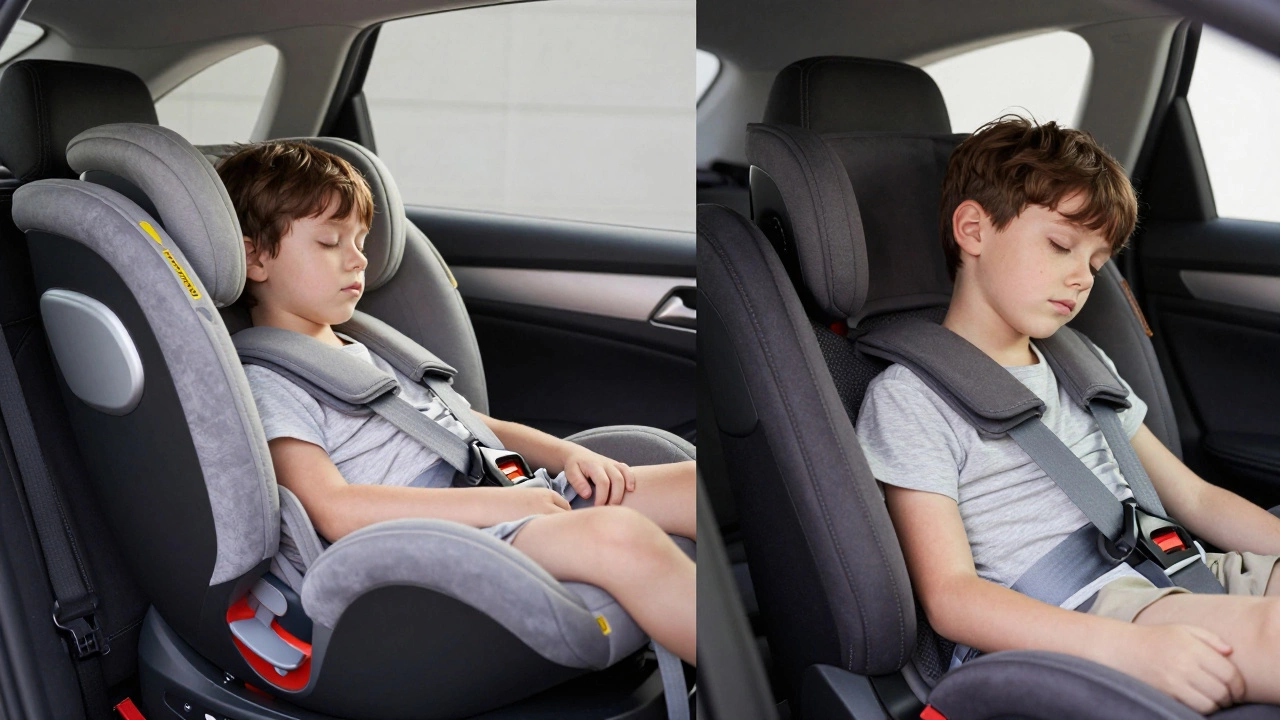
High-back boosters are seats with a tall backrest that provides head support and side-impact protection. They are ideal for younger children who are transitioning from group 1 seats. The backrest helps guide the shoulder belt into the correct position, preventing it from slipping forward. Plus, if your child falls asleep in the car, the headrest supports their neck. Most high-back boosters are rated for weights between 15kg and 36kg, meaning they can last from about age 4 right up to the 135cm mark.
Backless boosters, on the other hand, are lighter and cheaper. They work well for older, more mature children who sit upright properly. However, they offer no side-impact protection and rely entirely on the vehicle’s seatback for support. If your car has a low seatback or poor headrest geometry, a backless booster might not position the belt correctly. For maximum safety duration, a high-back model is usually the smarter investment. It bridges the gap longer before you need to switch to an adult belt.
The "Five-Step Test": When Are They Really Ready?
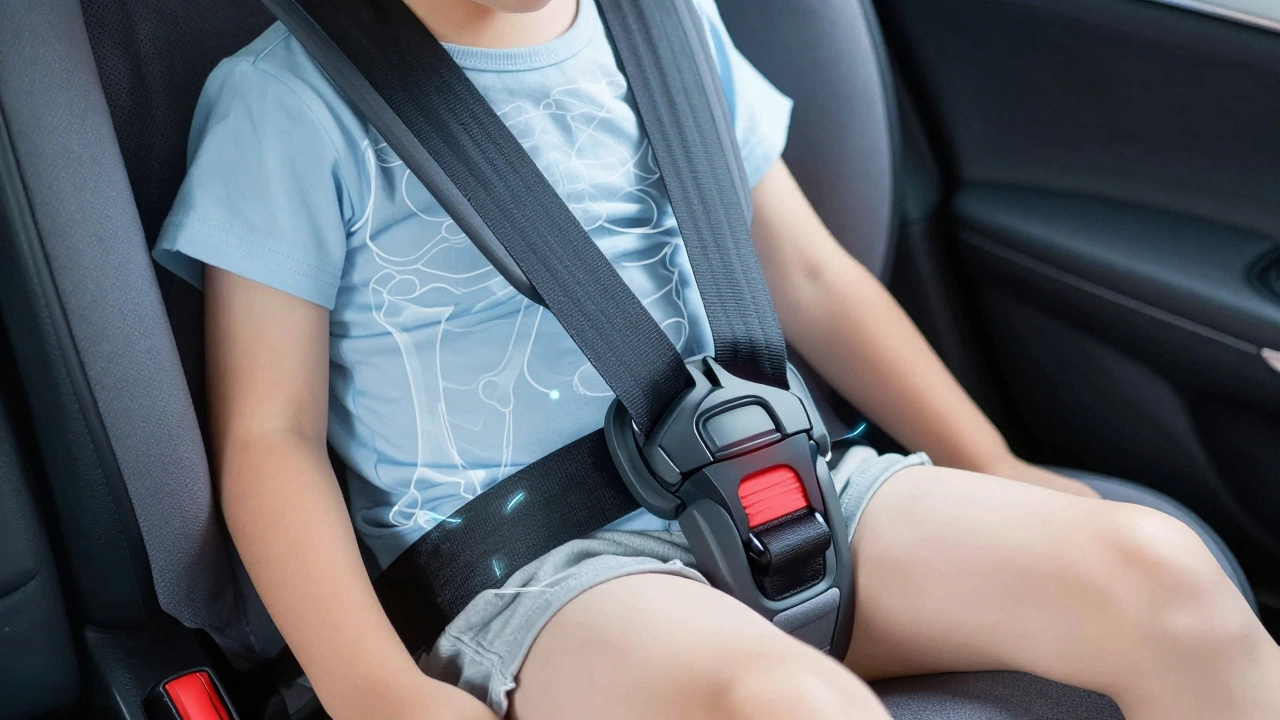
Just because your child hits 135cm doesn’t automatically mean they’re ready to ditch the booster. Some kids grow tall but remain slender or slouchy. Before removing the booster, run them through the Five-Step Test. This checklist ensures the adult seatbelt fits safely:
- Sits all the way back: Does your child’s back rest flat against the vehicle seat?
- Knees bend comfortably: Do their knees bend naturally at the edge of the seat without sliding forward?
- Lap belt low: Does the lap belt lie snugly across the upper thighs, not the stomach?
- Shoulder belt secure: Does the shoulder belt cross the center of the chest and shoulder, away from the neck and face?
- Stays seated: Will your child stay in this position for the entire trip without slouching or unbuckling?
If they fail any of these steps, keep the booster on. I’ve seen plenty of 135cm teenagers who slump forward, causing the shoulder belt to ride up near their ear. That’s a recipe for injury. The test isn’t just about size; it’s about behavior and posture. If they can’t maintain proper seating discipline, the booster acts as a physical reminder to sit correctly.
Common Mistakes Parents Make
Even well-meaning parents trip up on booster seat usage. Here are the most frequent errors I see while driving around Bristol:
- Switching too early: Removing the booster because "all their friends are doing it." Peer pressure shouldn’t dictate safety. Your child’s body structure is unique.
- Ignoring the LATCH/ISOFIX connection: Many modern boosters can click into the car’s ISOFIX anchors. This prevents the seat from shifting sideways during braking. Always lock it in place if your model allows it.
- Using expired seats: Plastic degrades over time due to UV exposure and temperature changes. Check the manufacturing date on the label. Most manufacturers recommend replacing seats after 6 to 10 years. An old booster might crack under stress.
- Wrong belt routing: On high-back boosters, there are specific slots for the shoulder and lap belts. Mixing them up can angle the belt incorrectly. Follow the arrows on the seat carefully.
Another subtle mistake is letting kids wear bulky coats while buckled up. The coat compresses in a crash, creating slack in the belt. Dress them in thin layers, then put the coat backwards over the harness or belt. It’s a small tweak that saves lives.
What About European Travel?
If you plan to drive abroad, remember that rules vary. While most EU countries follow similar height-based guidelines (often 135cm), some nations like Sweden and Norway recommend rear-facing seats until age 4 and strict booster use until 150cm. Germany enforces fines heavily for incorrect restraints. Always check the local regulations before crossing borders. Renting a car? Inspect the provided booster for cleanliness and structural integrity. Don’t assume rental agencies keep up with safety standards.
Making the Transition Smooth
Eventually, every kid graduates from the booster. To make the switch smooth, involve them in the process. Explain why the belt fits better now. Show them how to adjust the seat height for optimal belt placement. Teach them to pull the belt tight and check its position themselves. Empower them to be safety advocates. When they understand the "why," they’re less likely to complain about the rules.
Also, consider the car itself. Some vehicles have higher seatbacks that help position the belt better even for shorter adults. Others have low seats that require extra caution. Test the fit in every car your child rides in. Grandparents’ cars, taxis, and school buses all have different geometries. Consistency is key.
Can a 10-year-old use an adult seatbelt?
Only if they are at least 135cm tall. If they are under 135cm, they legally must use a booster seat regardless of age. Using an adult belt too early increases the risk of abdominal and spinal injuries in a crash.
Is a backless booster safe for a 7-year-old?
It depends on the child’s maturity and the car seat design. High-back boosters are generally safer for younger children because they provide side-impact protection and better belt guidance. Backless boosters are acceptable if the child sits upright consistently and the vehicle seatback offers adequate support.
What happens if I don't use a booster seat?
You could face a fixed penalty notice of £100 (or up to £500 if taken to court) in the UK. More importantly, your child is at significantly higher risk of severe injury in a collision due to improper seatbelt fit.
How do I know if my child is ready to stop using a booster?
Use the Five-Step Test. Ensure they sit back fully, knees bend comfortably, the lap belt rests low on the hips, the shoulder belt crosses the chest center, and they stay seated properly throughout the trip. Meeting all criteria plus being over 135cm indicates readiness.
Do booster seats expire?
Yes. Most manufacturers recommend replacing booster seats every 6 to 10 years. Plastic becomes brittle with age and temperature fluctuations, reducing effectiveness in a crash. Check the label for the manufacture date.