
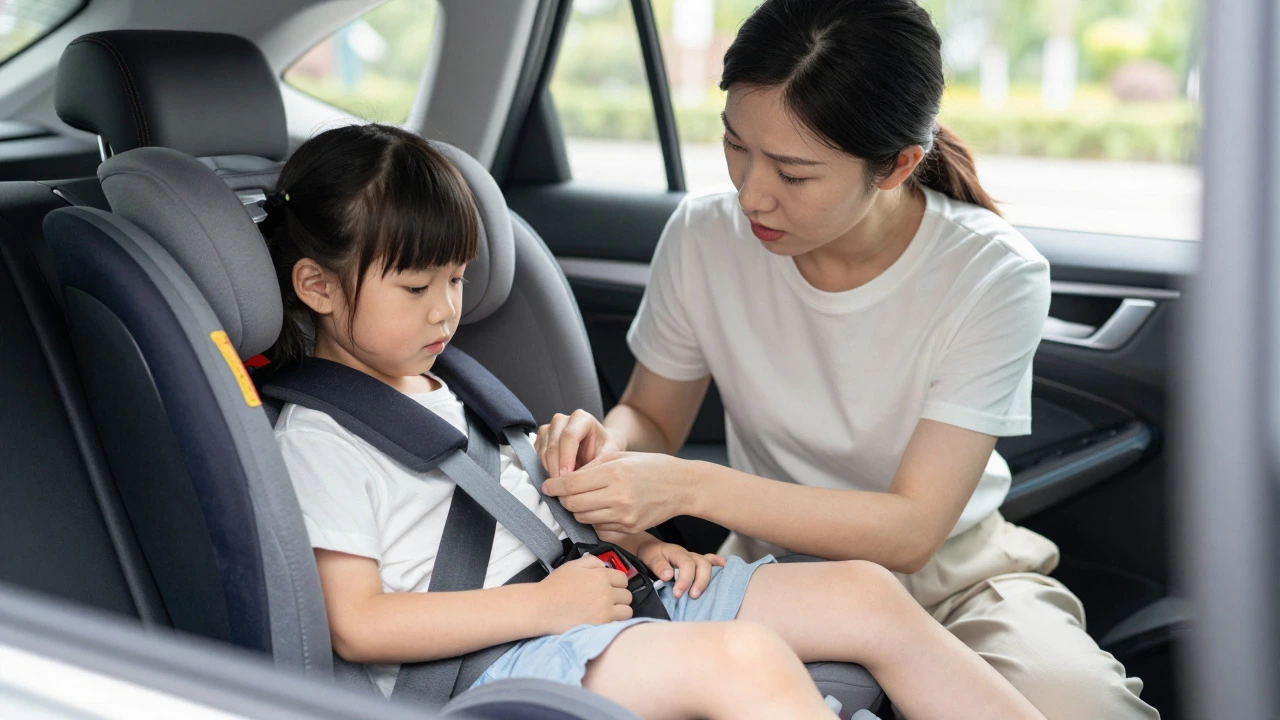
Booster Seat Readiness Calculator
Child Details
The Safety "Five-Step Test"
Even if legal, is the seatbelt physically fitting correctly?
There is a specific moment in every parent’s life when the question pops up: "Can they sit without that bulky plastic thing now?" It feels like a milestone. Your child is taller, older, and maybe even complaining about the headrests digging into their neck. But before you let them ditch the booster seat is a device that raises a child so the vehicle's seat belt fits correctly across their body., you need to be sure. Getting this wrong isn't just about comfort; it is about whether the seatbelt saves their life or causes injury in a crash.
In the United Kingdom, the rules are strict, but they are also designed to keep kids safe until their bodies are physically ready to handle the force of a standard adult seatbelt. Let’s break down exactly when your child can legally and safely move on.
The Legal Minimums in the UK
If you are driving in England, Scotland, Wales, or Northern Ireland, the law is clear-cut. You must use an approved child car seat until your child reaches one of two milestones:
- Age 12: Once they turn twelve years old.
- Height 135cm: Once they reach a height of 135 centimeters (approximately 4 feet 5 inches).
Whichever comes first. This means if your child hits 135cm at age ten, they can technically stop using a booster seat. However, if they are eleven and only 130cm tall, they still need the booster. The law does not care about weight alone for this transition, though weight was part of older regulations. Height is the critical metric here because it determines how the lap belt sits on the hips.
If neither condition is met, and you don’t have a suitable child restraint available, your child can use an adult seatbelt-but only as a last resort. For example, if you are hailing a taxi and there is no room for another booster. In these rare cases, the child must wear the adult seatbelt properly. But for your family car, the expectation is that you will have the correct restraint fitted.
Why Height Matters More Than Age
You might wonder why the law focuses on 135cm. It comes down to anatomy. Adult seatbelts are designed for people who are roughly 150cm (5 feet) or taller. When a child is shorter than that, the geometry of the crash changes drastically.
Without a booster, the shoulder belt often cuts across the child’s throat or face instead of resting on the collarbone and chest. In a collision, this can cause strangulation or severe neck injuries. Meanwhile, the lap belt rides up over the soft abdomen rather than staying low on the strong pelvic bones. This "submarining" effect can lead to broken ribs, spinal damage, or internal organ injuries because the force isn't being absorbed by the skeleton.
A high-back booster seat is a type of booster with a backrest that supports the child's head and guides the shoulder belt. solves this by lifting the child up. It ensures the lap belt stays tucked into the hip crease and the shoulder belt crosses the center of the chest. Until a child is tall enough for the belt to fit naturally, the booster acts as a necessary bridge.
The "Five-Step Test": Is Your Child Ready?
Even if your child has hit the legal height of 135cm, experts from organizations like Thatcham Research is an independent automotive research institute in the UK that tests vehicle safety. recommend running through a practical check. Just because they *can* sit without a booster doesn't mean the seatbelt fits them *correctly*. Use this five-step test before making the switch:
- Knees Bend: Do their knees bend comfortably over the edge of the car seat without sliding off?
- Feet Flat: Are their feet touching the floor in front of them?
- Lap Belt Low: Does the lap belt lie snug and low across the upper thighs or hips, not the stomach?
- Shoulder Belt Centered: Does the shoulder belt cross the middle of the chest and shoulder, away from the neck and face?
- Sitting Upright: Can they stay seated upright for the entire journey without slouching or leaning forward?
If the answer to any of these is "no," they aren't ready yet. Keep them in the booster. Slouching is a common issue; many kids lean back to play with tablets, which pulls the shoulder belt off their collarbone. If they can't maintain good posture, the protection is compromised.
High-Back vs. Backless Boosters
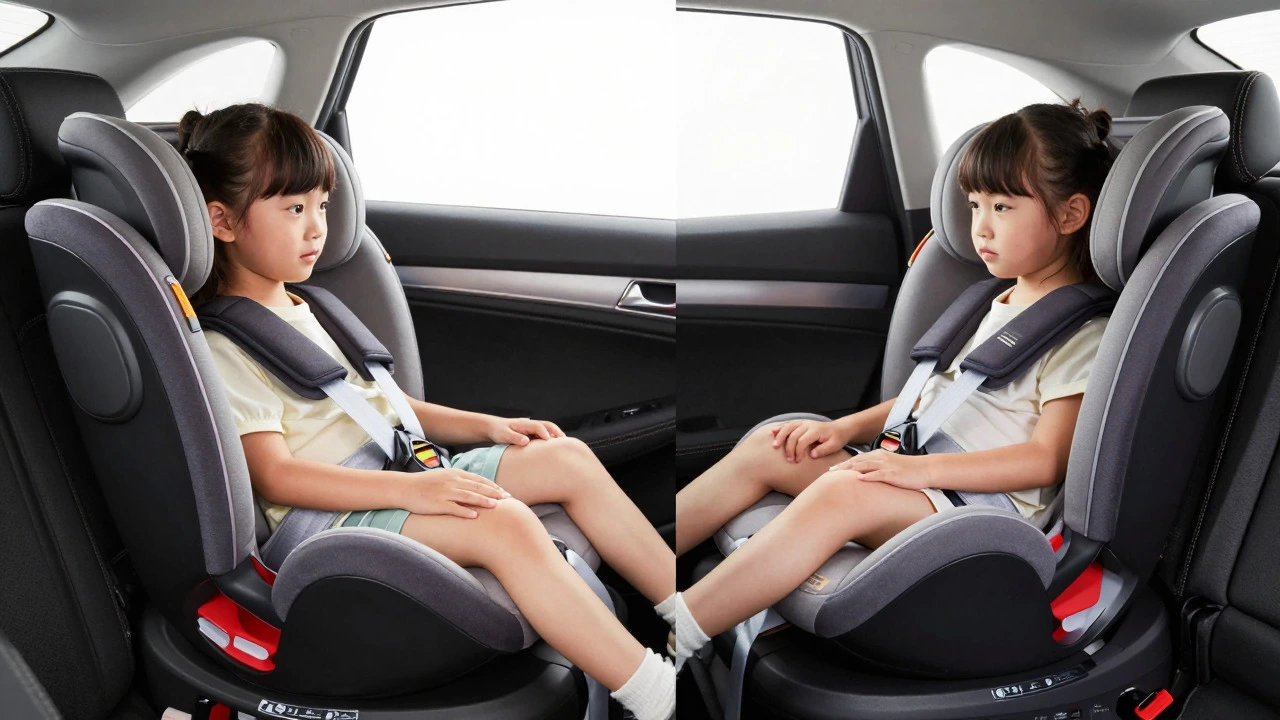
Not all boosters are created equal. You’ll see two main types on the market: high-back boosters and backless boosters. While both lift the child to the correct height, they offer different levels of protection.
| Feature | High-Back Booster | Backless Booster |
|---|---|---|
| Side Impact Protection | Yes, built-in wings absorb energy | No, relies on car door/window |
| Head Support | Provides headrest for sleeping children | None, head may loll forward |
| Belt Positioning | Often has a guide to route shoulder belt | Relies on child positioning |
| Portability | Bulkier, harder to move between cars | Lightweight, easy to carry |
| Best For | Daily use, side-impact safety, nappers | Taxis, occasional use, very tall kids |
For most families, a high-back booster is the safer choice during the transition years. It offers side-impact protection, which is crucial since many crashes happen from the side. It also keeps the child upright if they fall asleep. Backless boosters are fine for older children who are close to the 135cm limit and rarely sleep in the car, but they offer less structural support.
Common Mistakes Parents Make
I talk to parents in Bristol all the time who make the same errors. Here is what to avoid:
- Rushing the Transition: Taking the booster off too early because the child complains. Comfort is temporary; safety is permanent. Wait until the seatbelt fits perfectly.
- Using Expired Seats: Car seats have expiration dates, usually around six to ten years from manufacture. Plastic degrades, and standards change. Check the label on the bottom of the seat.
- Ignoring ISOFIX: Many modern boosters connect via ISOFIX is a standardized system for attaching child car seats to vehicle anchor points.. This prevents the booster from sliding around on the car seat. A loose booster won't position the belt correctly during a crash. If your car has ISOFIX anchors, use a booster that locks into them.
- Mixing Up Weight Classes: Older seats used weight classes (Group 1, 2, 3). Newer European standards (R129 or i-Size) focus on height. Ensure you are buying a seat that matches your child's current height, not just their weight.
What About Airbags?
If your child is moving to the front seat, caution is key. Most experts recommend keeping children in the rear seat until they are at least 12 years old. Front airbags deploy with tremendous force-up to 200 mph. For a small child, this can be fatal or cause serious injury.
If you must put a child in the front (for example, if the back seat is full of other child restraints), push the front seat as far back as possible. Turn off the passenger airbag if the car allows it, or ensure the child is properly restrained in a booster that meets the manufacturer's guidelines for front-seat use. Never place a rear-facing seat in front of an active airbag.
Choosing the Right Next Step
As your child grows out of the booster, you don't just jump to an adult belt. There is often a transitional phase. Some families find that a "travel vest" or harness-style booster helps for slightly smaller children who are too big for a convertible seat but not quite ready for a simple booster. These provide extra security by holding the child in place.
However, for most kids, the path is straightforward: Rear-facing infant carrier → Forward-facing group 1/2/3 seat → High-back booster → Backless booster (optional) → Adult seatbelt. Follow the height markers on the seat itself. Manufacturers design these limits based on rigorous testing. If the manual says "max height 125cm," trust it. Don't try to hack the straps to keep a bigger child in a smaller seat.
Final Thoughts on Safety
It is natural to want your child to feel grown-up. Sitting without a booster feels like a rite of passage. But safety isn't about feelings; it's about physics. The difference between a minor scrape and a life-changing injury often comes down to whether that seatbelt was positioned correctly across the hips and chest.
Check your child's height regularly. Run the five-step test. And when in doubt, keep the booster on a little longer. It is better to be the parent whose child complains about the headrest than the one wishing they had waited another six months.
At what age can a child sit without a booster seat in the UK?
In the UK, a child can sit without a booster seat once they reach either 12 years of age OR 135cm in height, whichever comes first. Before this, they must use an approved child restraint.
Is it illegal to not use a booster seat?
Yes, it is illegal under UK law to drive with a child under 12 or under 135cm tall without an appropriate child car seat, unless no suitable seat is available (e.g., in a taxi). In that rare case, they must wear an adult seatbelt.
How do I know if my child is too big for a booster?
Use the five-step test: Their knees should bend over the seat edge, feet touch the floor, lap belt sits low on hips, shoulder belt crosses the chest (not neck), and they can sit upright without slouching. If all apply, they may be ready.
Are high-back boosters safer than backless ones?
Generally, yes. High-back boosters offer side-impact protection and head support, which helps keep the seatbelt positioned correctly even if the child moves or sleeps. Backless boosters rely more on the car's structure and the child's posture.
Can a child sit in the front seat with a booster?
It is recommended to keep children in the rear seat until age 12. If they must sit in the front, push the seat back as far as possible and consider turning off the passenger airbag, as deploying airbags can injure smaller children.
Do booster seats expire?
Yes, most car seats and boosters have an expiration date, typically 6 to 10 years from the date of manufacture. Plastic becomes brittle over time, and safety standards evolve. Always check the label on the bottom of the seat.