
Baby Gate Safety & Suitability Checker
Installation Assessment
Select the location where you plan to install or have installed the gate.
Ready to Assess
Select your options on the left and click "Check Safety Rating" to see recommendations based on safety guidelines.
Installation Security Checklist
Use this checklist to verify your current pressure-mounted gate is secure. Click items to mark them complete.
- Walls are parallel and solid (brick/stud).
- No visible gaps between gate and wall.
- Gate does not shift when pushed firmly by an adult.
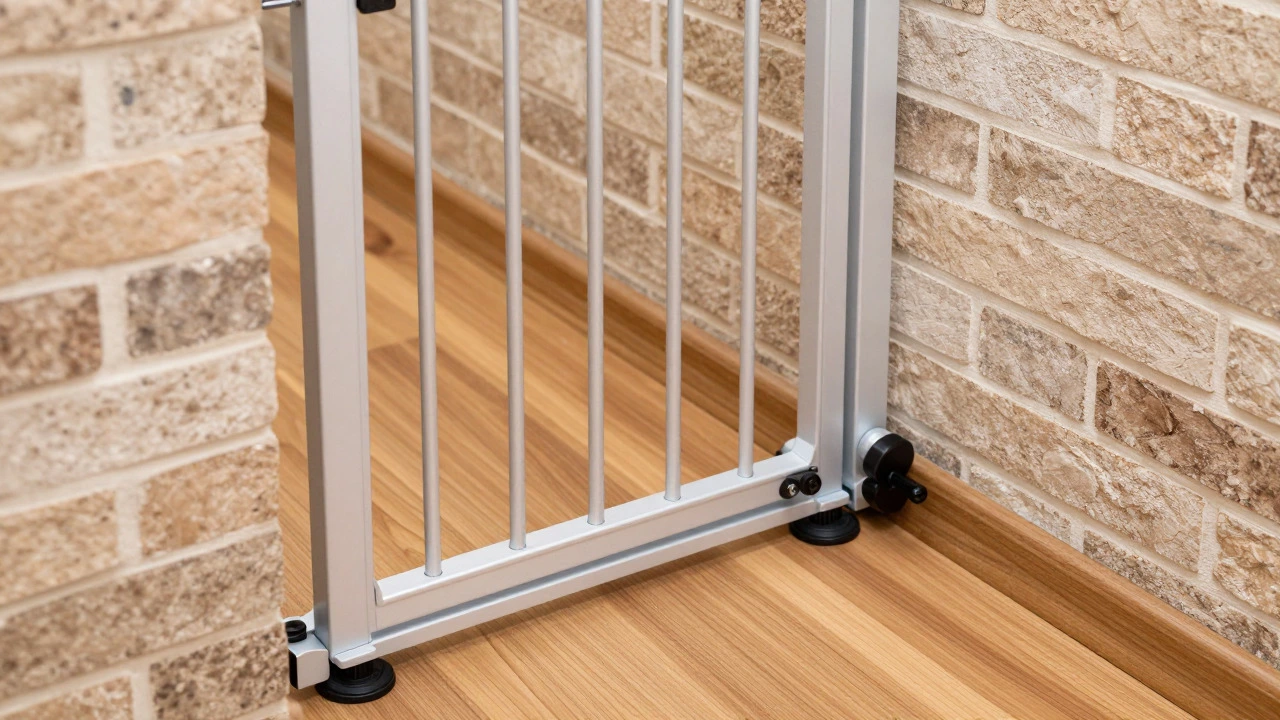
- Non-slip feet/pads are present and clean.
- Tension knobs/springs are fully tightened.
Security Score
Start checking...
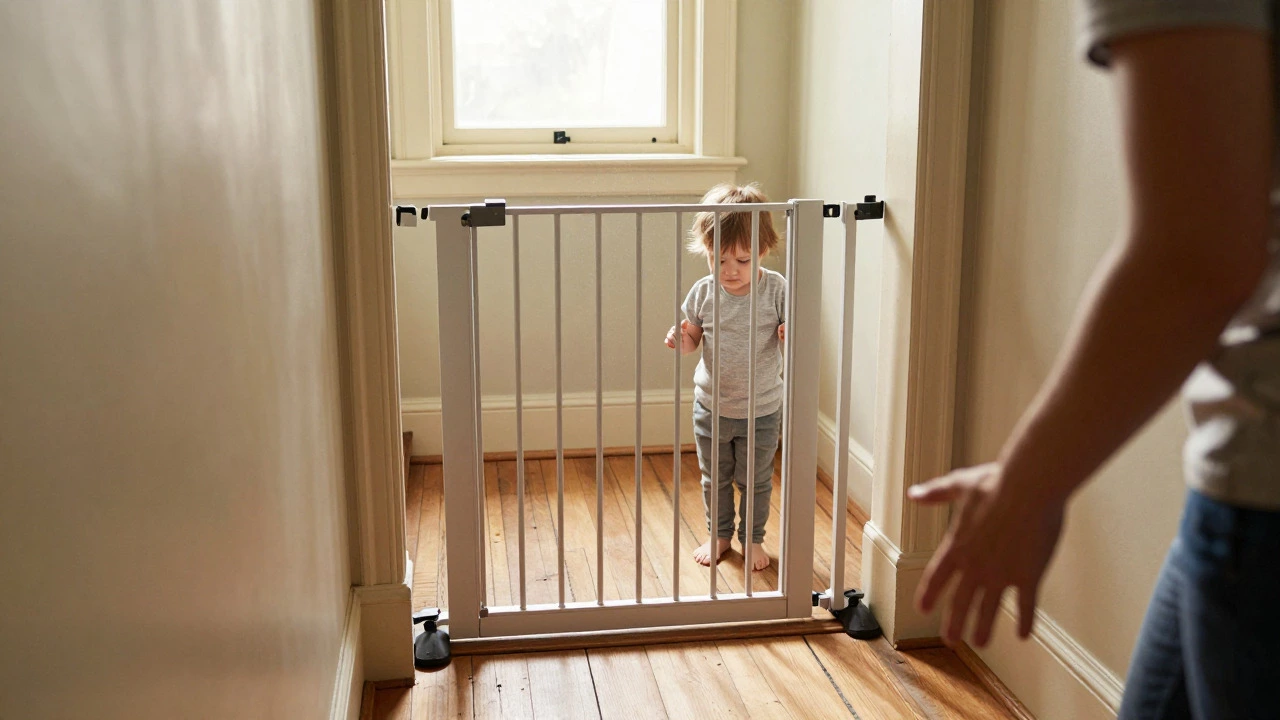
Imagine this: you’re rushing to answer the door, your toddler is toddling toward the living room rug where the cat just knocked over a vase, and the only thing standing between chaos and calm is that white plastic gate at the top of the stairs. You push it into place, give it a firm shove to lock it in, and walk away. But later, as you watch from the kitchen, you notice the gate shifting slightly when the floorboards creak. A cold knot forms in your stomach. Is that gate actually holding, or is it just waiting for the right moment to fail?
This is the reality for millions of parents who rely on pressure mounted baby gates, which are safety barriers secured by tension against walls or doorframes rather than screws. They promise convenience-no drilling, no damage to walls, easy removal. But convenience often comes with a trade-off in security. The short answer is yes, they can be safe, but only if used in the exact right spot. Use them wrong, and they become a hazard.
The Mechanics of Pressure Mounting
To understand whether these gates are safe, you first need to know how they work. Unlike hardware mounted gates, which are gates permanently fixed to wall studs or doorframes using screws and brackets, pressure gates rely entirely on friction and tension. Inside the telescoping poles, there’s usually a spring-loaded mechanism or a tightening knob. When you extend the pole past the required width and tighten it, the gate pushes outward against both sides of the opening.
The force generated is significant enough to hold back a curious two-year-old pushing gently, but not enough to withstand a determined climb or a heavy lean. Think of it like trying to hold a door shut with your hands versus bolting it locked. One works until someone pushes hard; the other doesn’t budge. This fundamental difference dictates where you can safely install each type.
| Feature | Pressure Mounted | Hardware Mounted |
|---|---|---|
| Installation Method | Tension against walls | Screwed into studs/frame |
| Best Location | Bottom of stairs, hallways, doorways | Top of stairs, high-traffic areas |
| Wall Damage | Minimal (indentations possible) | Small screw holes |
| Security Level | Moderate | High |
| Removal Difficulty | Easy | Requires tools |
The Golden Rule: Never Use Pressure Gates at the Top of Stairs
If you take nothing else from this guide, remember this: never install a pressure mounted gate at the top of a staircase. This isn’t just advice; it’s a critical safety mandate backed by organizations like the American Academy of Pediatrics and consumer safety groups worldwide. Why? Because gravity is unforgiving.
At the bottom of the stairs, if a child pushes against the gate, they fall onto flat ground. At the top, if the gate gives way-even slightly-the child tumbles down multiple steps. The impact can cause serious head injuries, broken bones, or worse. Pressure gates can shift due to temperature changes, house settling, or repeated use. A hardware mounted gate, anchored into the structural frame of your home, does not shift.
In Bristol, where many homes are Victorian terraces with narrow, steep staircases, this rule is even more crucial. Older homes may have uneven walls or plaster that cracks under pressure, making tension-based gates less reliable. Always check the manufacturer’s label. If it says “not for top of stairs,” believe it.
Where Pressure Mounted Gates Shine
Don’t get me wrong-pressure mounted gates have their place. They are excellent for blocking off rooms at the same level, such as keeping a toddler out of the kitchen while you cook, or preventing access to a home office during work hours. They also work well at the bottom of stairs, provided the landing is flat and stable.
For example, I installed one in my hallway to keep my daughter out of the laundry room. The walls were parallel, solid brick, and the floor was level. After tightening the knobs, I tested it by leaning my full weight against it. It didn’t budge. For six months, it held up perfectly. Then, when we moved, I took it down in seconds without leaving any marks. That’s the beauty of pressure mounting when used correctly.
Key locations for safe use include:
- Doorways between rooms on the same floor
- Bottom of staircases (with a flat landing)
- Hallways with parallel, sturdy walls
- Temporary barriers in rental properties where drilling is prohibited
Signs Your Pressure Gate Isn’t Secure Enough
Even in ideal conditions, pressure gates can fail if not installed properly. Here’s how to tell if yours is slipping:
- Visible gaps: If you can see light through the sides where the gate meets the wall, it’s not tight enough.
- Shifting after closing: Close the gate, step back, and look. Does it move closer to one side? That means the tension is uneven.
- Fingerprints or smudges on walls: These indicate the gate is sliding slowly over time.
- Child can push it open: Have your toddler try to push it. If they can create space, tighten it further or consider a different location.
A simple test: stand behind the gate and pull firmly toward you. If it moves more than half an inch, it’s not secure. Re-tighten the knobs or springs. If it still shifts, the walls may not be parallel, or the surface may be too smooth (like glossy tile) to grip effectively.
Choosing the Right Gate for Your Home
Not all pressure mounted gates are created equal. Look for models with:
- Wide adjustment range: Ensures a snug fit in various openings.
- Non-slip feet: Rubberized bases prevent sliding on hardwood or tile.
- Dual-locking mechanisms: Some gates have both tension knobs and secondary latches for extra security.
- Clear safety certifications: In the UK, look for BS EN 1930 compliance. In the US, JPMA certification is a good indicator.
Avoid cheap, no-name brands. Safety gear is one area where cutting corners can cost dearly. Brands like Dreambaby, North States, and Regalo offer reputable pressure mounted options with rigorous testing standards.
Maintenance Matters
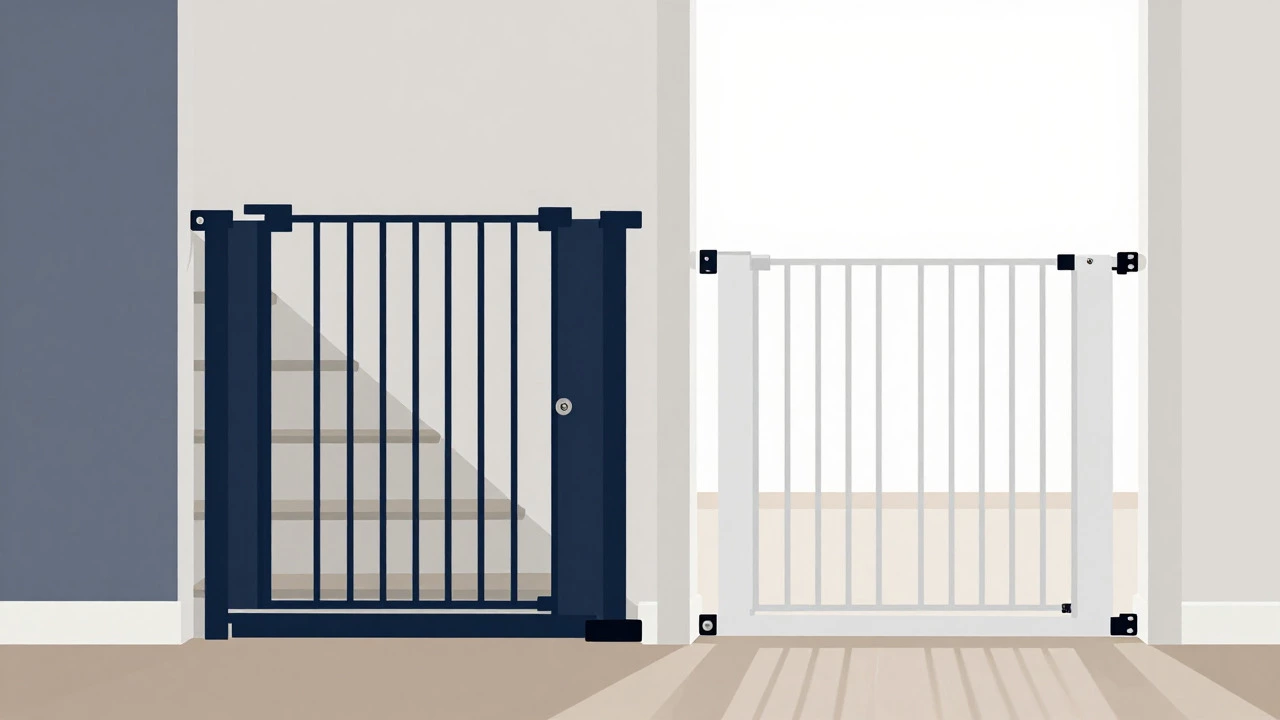
Like any piece of equipment, baby gates require regular checks. Dust accumulates in the hinges, lubricants dry out, and tension mechanisms weaken over time. Every month, inspect your gate:
- Clean the tracks and hinges with a damp cloth.
- Check for loose screws or worn parts.
- Test the locking mechanism repeatedly.
- Re-tighten the tension if needed.
If your child has grown taller or stronger, reassess whether the gate is still appropriate. Toddlers learn quickly-they’ll figure out how to unlatch swing gates or climb over low ones. Upgrade to a taller model or switch to hardware mounting if necessary.
Alternatives to Consider
If you’re unsure about pressure mounted gates, explore other options:
- Freestanding gates: Stand alone without wall contact, ideal for wide openings or uneven surfaces.
- Decorative railings: Permanent installations that blend with home aesthetics.
- Door knob covers: Prevent children from opening interior doors altogether.
Each has pros and cons. Freestanding gates don’t damage walls but can tip if pushed hard. Decorative railings are secure but expensive and permanent. Door knob covers are cheap but only work for single-door barriers.
Can I use a pressure mounted gate at the top of the stairs if I tighten it really well?
No. Even if tightened maximally, pressure gates can shift due to temperature changes, house movement, or repeated stress. At the top of stairs, any failure risks a fall down multiple steps. Always use a hardware mounted gate here.
How do I know if my walls are suitable for a pressure mounted gate?
Walls should be parallel, solid (brick, concrete, or stud-backed drywall), and free of large moldings or irregularities. Avoid placing gates on curved walls, wallpapered surfaces, or thin partition walls that might bow under pressure.
What should I do if my pressure gate keeps loosening?
First, ensure the walls are truly parallel. If not, the gate will always slip. Try adding rubber pads to increase friction. If problems persist, the gate may be too old or damaged-replace it. Alternatively, switch to a hardware mounted model for that location.
Are pressure mounted gates safe for pets?
Yes, for small dogs or cats in non-critical areas. However, larger or more energetic pets may push harder than toddlers, increasing the risk of displacement. For pet containment near stairs or high-risk zones, hardware mounted gates are safer.
How often should I replace a baby gate?
Every 3-5 years, or sooner if parts show wear. Plastic becomes brittle, springs lose tension, and locks degrade. Check for cracks, rust, or difficulty operating. Don’t wait for failure-proactive replacement ensures ongoing safety.