

Baby Carrier Safety & Readiness Checker
Enter your baby's age in months to get personalized recommendations for carrier types, positioning, and safety checks.
The T.I.C.K.S. Safety Checklist
Regardless of age, always perform this check before walking with your baby:
You just brought your tiny human home, and they want to be held. Constantly. Your arms are tired, your back is screaming, and you still have laundry to fold. Enter the baby carrier, a wearable device designed to support an infant against a caregiver's body while leaving hands free. But here’s the big question that keeps new parents up at night (aside from the actual waking-up part): when is it actually safe to put your baby in one? Is day one too soon? Do you need to wait until they can hold their head up? The answer isn't just about age; it’s about anatomy, readiness signs, and choosing the right gear for the job.
The Newborn Window: Day One or Week Six?
Technically, you can use a baby carrier from day one. Many hospitals even encourage skin-to-skin contact using a wrap immediately after birth. However, "safe" doesn't mean any carrier works for any baby. For a newborn under three months, the primary concern is airway protection and spinal support. A standard structured carrier with rigid panels might not offer enough flexibility for a squishy newborn whose neck muscles haven't developed yet. This is where soft wraps come into play.
A stretchy wrap distributes weight evenly across your shoulders and back, supporting the baby’s entire spine from bottom to top. If you’re eyeing a structured carrier right away, look for models specifically labeled as "newborn-ready" without needing a separate insert. These usually feature adjustable seat widths and high back supports that cradle the head. Always check the manufacturer’s minimum weight limit. Some say seven pounds, others say ten. If your baby was born premature or has low muscle tone, chat with your pediatrician before strapping them in. Their advice trumps any blog post, including this one.
Understanding Hip Health: The M-Shape Rule
You’ve probably heard the term "hip dysplasia." It sounds scary, but it’s preventable with proper positioning. Baby hips are still cartilaginous in the first few months, meaning they’re flexible and prone to slipping out of place if forced into straight legs. The gold standard for hip health is the "M-shape" or "froggy" position. In this pose, the baby’s knees are higher than their bottom, and their thighs are supported all the way down to the knee crease.
| Carrier Type | Hip Position | Support Level | Best For |
|---|---|---|---|
| Stretchy Wrap | M-Shape | Full Spine & Head | Newborns (0-3 months) |
| Ring Sling | M-Shape | Good (requires technique) | Newborns & Toddlers |
| Structured Carrier | Varies | High (if adjusted correctly) | 3+ Months (or with insert) |
| Pocket Carrier | Straight Legs | Low Hip Support | Toddlers Only |
Notice that pocket carriers, often marketed as easy-in-easy-out, frequently fail the hip test for infants. They tend to dangle babies by their bottoms rather than supporting their thighs. If you see a baby’s legs hanging straight down like a little soldier, adjust the fabric width or switch carriers. You want the fabric to go from one knee pit to the other. If it stops at the crotch, it’s too narrow. This simple visual check prevents long-term joint issues.
Head and Neck Control: When Can They Sit Forward?
Back-facing is the default mode for a reason. Facing inward protects the baby’s airway and allows you to monitor their breathing easily. But let’s face it, babies get curious. Around four to six months, many start trying to twist around to see what’s happening behind you. So, when is it safe to turn them forward-facing?
Most experts recommend waiting until your baby has full head control and can sit unassisted for short periods. This typically happens between five and seven months. Before this milestone, turning them outward risks two things: overstimulation and poor posture. Without strong neck muscles, a forward-facing baby may slump, compromising their airway. Also, facing the world can be overwhelming for a young infant who isn’t ready for constant sensory input. If you do switch to front-outward, keep sessions short-maybe fifteen minutes-to gauge their reaction. If they look stressed or fall asleep awkwardly, flip them back around.
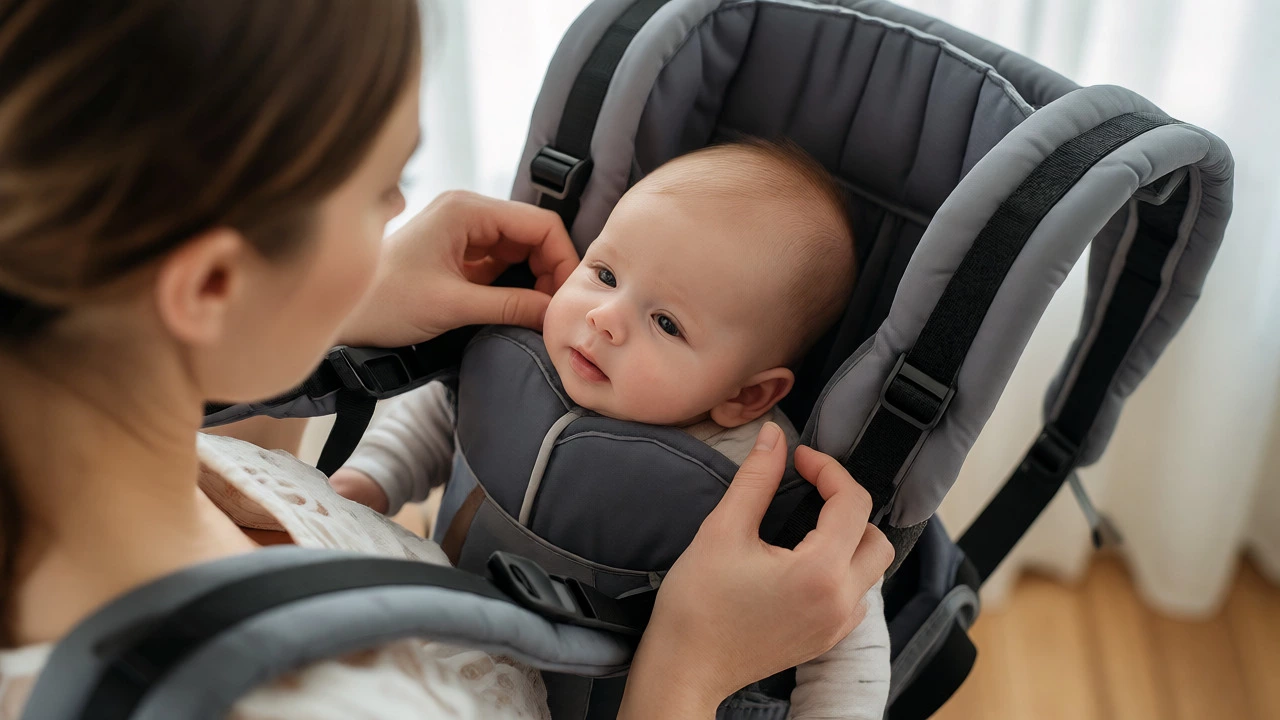
Age-Specific Carrier Recommendations
Not all carriers are created equal, and matching the tool to the developmental stage makes life easier. Here’s a breakdown based on typical milestones:
- 0-3 Months (Newborn Phase): Stick to stretchy wraps or ring slings. These allow for tight, customizable fits that support the C-curve of a newborn’s spine. Avoid rigid buckles that press against delicate ribs.
- 3-6 Months (The Awkward Middle): Structured carriers become viable here, especially those with adjustable seats. Your baby’s legs are getting stronger, but they still need significant head support. Look for carriers with roll-down tops or removable headrests.
- 6-12 Months (The Explorer): Most structured carriers work well now. Hip seats might be tempting for carrying heavier babies, but ensure the baby’s weight is distributed across both your hips and shoulders, not just one spot.
- 12+ Months (Toddlerhood): Back carries become popular as toddlers get heavier. Front carries remain possible but require a sturdy waistband. Toddler-specific carriers offer more padding for longer hikes.
Remember, these ages are averages. Your child’s individual strength matters more than the calendar date. If your six-month-old has weak core muscles, stick to inward-facing positions longer. Conversely, a robust four-month-old might handle a structured carrier better than a fragile six-month-old.
The T.I.C.K.S. Safety Checklist
Regardless of age, every time you strap in, run through the T.I.C.K.S. rule. It’s a mnemonic used by midwives and pediatricians worldwide to ensure basic safety standards are met.
- Tight: The carrier should be snug. If you lean forward, the baby shouldn’t fall away from your body. Loose fabric leads to sagging, which can restrict breathing.
- In View at All Times: You must be able to kiss the baby’s head by leaning down. If their face is buried against your chest, tilt their head to the side so their nose is clear.
- Close Enough to Kiss: This overlaps with visibility. High carry ensures the airway remains open.
- Hands Free: Ensure your hands are free to protect the baby’s head if you bend or stumble. No dangling phones or coffee cups while adjusting straps.
- Keep Chin Off Chest: This is critical. A chin pressed to the chest can block the airway, leading to positional asphyxia. Keep the baby’s head turned to the side if necessary.
- Back Supported: The carrier should follow the natural curve of the baby’s back, not force it flat or round excessively.
If you fail any of these checks, take the baby out and readjust. It takes thirty seconds to fix a loose strap, but it could save you a trip to the ER.

Common Pitfalls to Avoid
Even with the best intentions, mistakes happen. The most common error is buying a carrier that looks cute but functions poorly. Fancy prints don’t matter if the waistband digs into your hips or the shoulder straps slip off. Another trap is ignoring your own body mechanics. If you have pre-existing back pain, a poorly fitted carrier will exacerbate it. Invest time in fitting. Many local babywearing consultants offer free or low-cost fittings. They can show you how to tighten a ring sling or adjust a buckle in ways the manual never explained.
Also, beware of overheating. Babies regulate temperature less efficiently than adults. In summer, dress them lightly. If you’re wearing a thick coat, consider taking the baby out periodically to check their skin temperature. Sweaty backs lead to rashes and discomfort. Use breathable fabrics like cotton or bamboo blends instead of synthetic polyester if you live in a warmer climate.
Final Thoughts on Readiness
There is no single magic number for when to start babywearing. It depends on your comfort level, your baby’s size, and the specific carrier you choose. Start slow. Try a short walk around the house before heading to the park. Trust your instincts. If something feels unsafe or uncomfortable, stop and reassess. Babywearing should enhance your bonding experience, not add stress. With the right setup and attention to detail, you can safely carry your child from the very first days of life, freeing your hands and soothing your baby simultaneously.
Can I use a baby carrier for a premature baby?
Yes, but with caution. Premature babies often have lower muscle tone and smaller airways. Consult your pediatrician before starting. Soft wraps are generally recommended because they provide gentle, uniform support without rigid structures. Monitor your baby closely for signs of respiratory distress or fatigue during the first few uses.
Is it bad to carry a baby in a carrier for too long?
For newborns, frequent breaks are essential to check breathing and allow movement. There is no strict maximum time for older babies, but prolonged static positioning can affect hip development if the position isn't ideal. Aim to change positions occasionally and ensure the baby has tummy time when out of the carrier to strengthen neck and back muscles.
When should I stop using a baby carrier?
Most children outgrow standard carriers by age two or three, depending on their weight and your physical strength. Some specialized toddler carriers support up to 45 pounds. Stop using it if the baby becomes too heavy for comfortable carrying, if they refuse to be worn, or if their legs no longer fit properly within the seat width.
Do baby carriers cause hip dysplasia?
Poorly designed carriers can contribute to hip issues, but correct usage prevents them. The key is maintaining the "M-shape" position where knees are higher than the bottom. Carriers that force legs straight down (like some cheap pouches) are riskier. Always check that the fabric supports the thighs fully.
Can I breastfeed in a baby carrier?
Yes, many mothers find it convenient. Loosen the top panel slightly to bring the baby to the breast. Ensure the baby’s head remains visible and their airway stays open. Practice at home first to figure out the best angle for your specific carrier and body type.