Dr. Brown's Vent Replacement Calculator
How Often Should You Replace Your Vent System?
The green silicone vent is critical for preventing air from mixing with milk. Replace it when needed to maintain the bottle's anti-colic benefits.
Your Replacement Recommendation
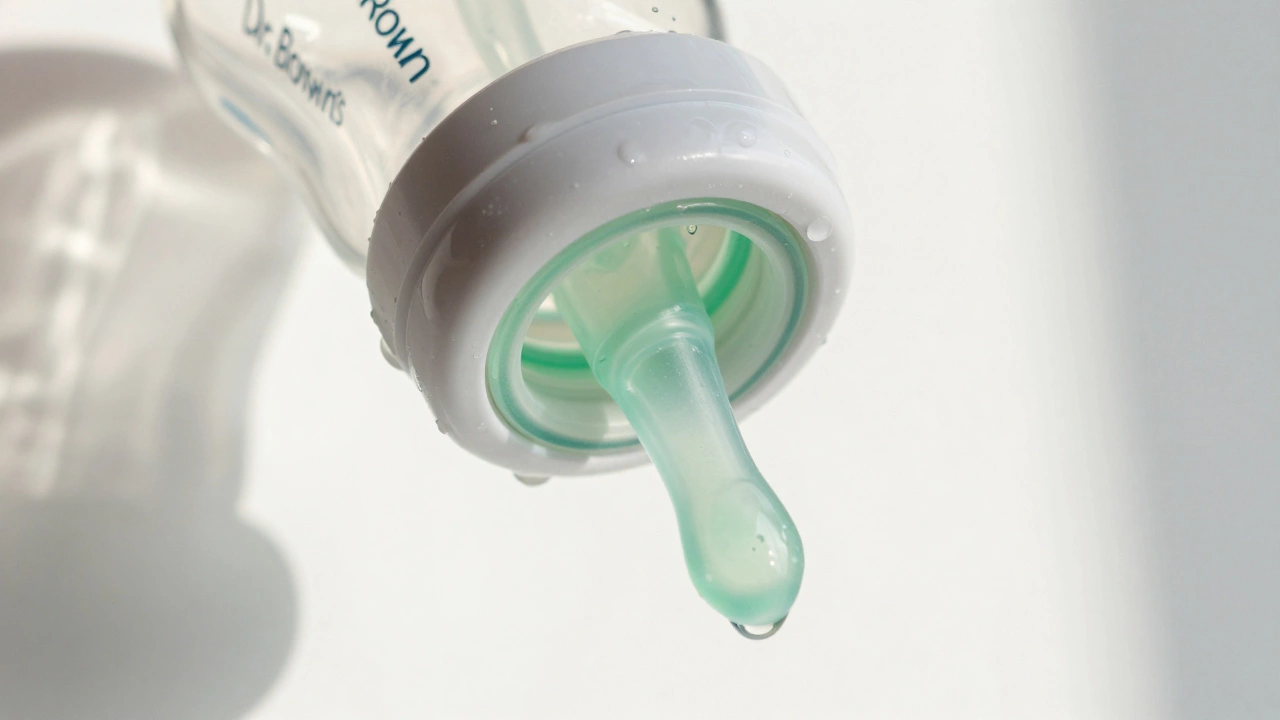
Ever picked up a Dr. Brown's bottle after feeding and noticed a strange green piece inside? You’re not alone. Many parents panic, thinking it’s mold, plastic breakdown, or something dangerous. The truth? That green thing isn’t a defect-it’s part of the design. It’s the internal vent system, made from medical-grade silicone, and it’s there to help your baby feed more comfortably.
Why Does Dr. Brown’s Have a Green Piece?
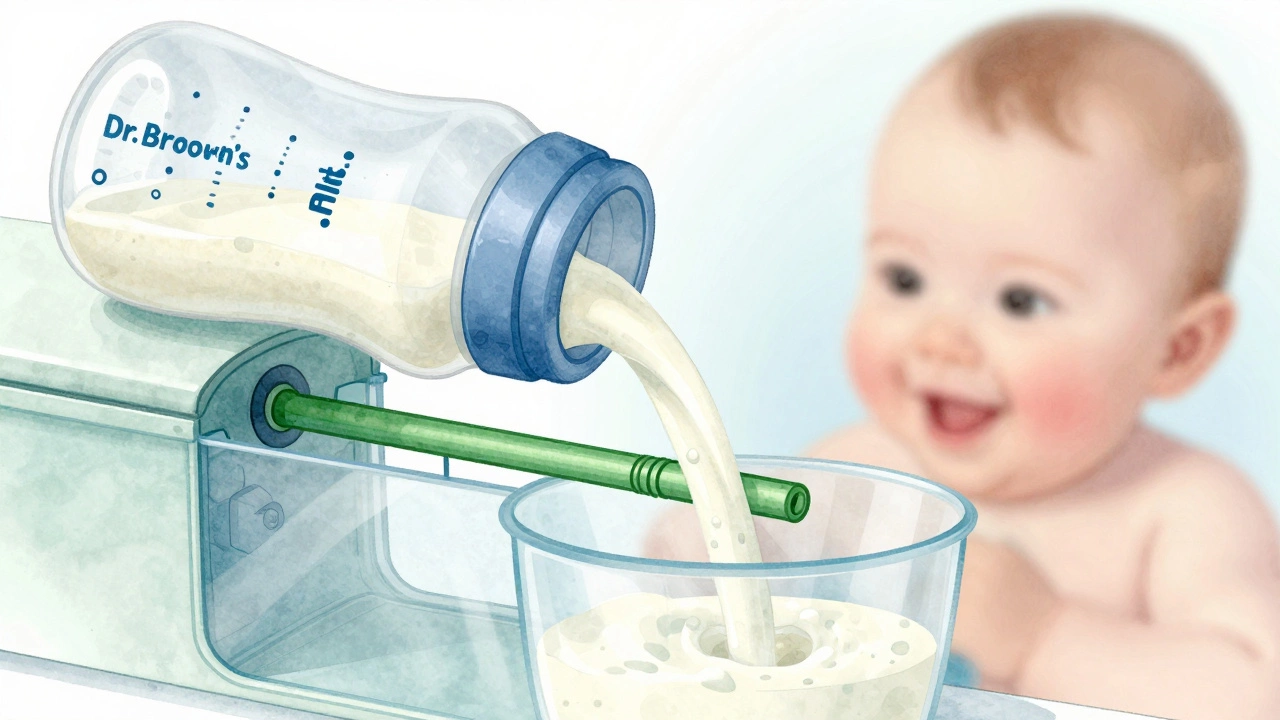
Dr. Brown’s bottles were created in the 1990s to solve a common problem: colic and gas in newborns. Traditional bottles let air mix with milk as the baby drinks, which leads to swallowed air, burping, spit-up, and fussiness. The green silicone vent is the heart of Dr. Brown’s patented internal venting system. It channels air from the nipple area down into a separate chamber at the bottom of the bottle, keeping it away from the milk.
This means your baby doesn’t swallow air bubbles while feeding. That’s why parents often report fewer fussy episodes and less reflux with Dr. Brown’s compared to other bottles. The green part isn’t just a random color choice-it’s a functional component made from soft, BPA-free silicone that’s safe for babies and durable enough to last through hundreds of washes.
Is the Green Part Safe?
Yes. The green silicone is FDA-compliant and meets strict international safety standards for infant feeding products. It’s free from BPA, phthalates, lead, and other harmful chemicals. The material is designed to withstand high temperatures, so it won’t melt or break down during sterilization or hot water cleaning. You can boil it, steam it, or run it through the dishwasher without worry.
Some parents worry that the green color means it’s dyed with something unsafe. But the color is just a pigment added during manufacturing to make the part easy to identify during cleaning. It’s not a dye that leaches out. Independent lab tests over the past 20 years have confirmed no chemical migration from the silicone into milk, even after repeated use.
What If the Green Part Looks Dirty or Discolored?
Over time, especially with frequent use and washing, the silicone vent can develop a slight yellow or brown tint. This is normal and usually caused by milk residue or mineral buildup from hard water. It doesn’t mean it’s mold or unsafe. But if you see actual green fuzz, black spots, or a slimy texture, that’s mold or bacteria-and you need to clean it better.
To keep the vent clean:
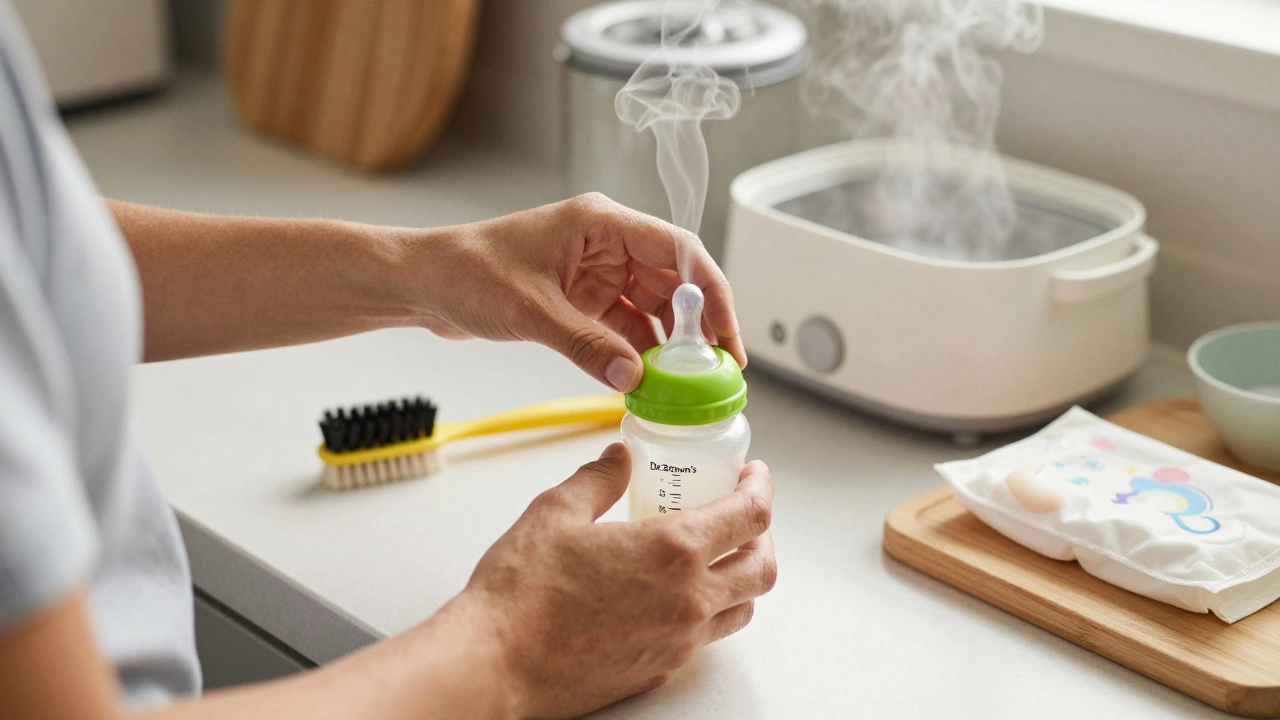
- Disassemble the bottle after every use-take off the vent system, nipple, and collar.
- Soak the green silicone part in warm, soapy water for 10 minutes.
- Use a bottle brush or pipe cleaner to gently scrub inside the vent tube.
- Rinse thoroughly under running water.
- Let it air-dry upside down on a clean towel.
Don’t use abrasive scrubbers or bleach. They can damage the silicone and create tiny cracks where bacteria hide. If you’re still seeing discoloration after cleaning, replace the vent system. They’re inexpensive and sold in packs of two or four.
How Often Should You Replace the Green Vent?
Manufacturers recommend replacing the vent system every 2-3 months, or sooner if you notice:
- Cracks, tears, or stickiness in the silicone
- Difficulty assembling the bottle
- Milk leaking from the vent area
- Persistent odor even after deep cleaning
Some parents stretch this to 4-6 months if the part looks and feels fine. But since the vent is critical to the bottle’s function, it’s better to err on the side of caution. A worn-out vent can lose its shape, let air back into the milk, and undo all the benefits you bought the bottle for in the first place.
What Happens If You Remove the Green Part?
You can physically remove it-but you shouldn’t. Without the vent, Dr. Brown’s bottle becomes just another regular bottle. Air will mix with the milk, and your baby will likely swallow more air. That means more gas, more spit-up, and more crying after feedings.
Some parents remove the vent thinking it’s easier to clean or that it makes the bottle simpler to use. But the whole point of Dr. Brown’s is that the vent system reduces feeding issues. Removing it defeats the purpose. If cleaning feels too hard, try switching to a different bottle brush or soaking the parts overnight in vinegar and water (1:1 ratio) to break down stubborn residue.
Why Do Other Bottles Not Have This?
Most bottles rely on anti-colic vents on the nipple or external air channels. Those can work, but they’re less effective. Dr. Brown’s is one of the few systems that separates air from milk entirely inside the bottle. Other brands like Philips Avent, Comotomo, or Lansinoh use different approaches-like wide necks or flexible silicone bases-but none replicate the internal vent design.
That’s why Dr. Brown’s remains a top choice for pediatricians and parents dealing with colic or reflux. The green part isn’t just a gimmick-it’s the reason the bottle works. It’s been studied in clinical trials, including one published in the Journal of Pediatric Gastroenterology and Nutrition, where babies using Dr. Brown’s showed 30% less regurgitation compared to those using standard bottles.
Can You Use the Green Part With Other Bottles?
No. The vent system is designed specifically for Dr. Brown’s bottle shape and threading. It won’t fit other brands. Trying to force it into another bottle could damage both the vent and the bottle. Even if it somehow fits, it won’t function properly without the exact internal chamber design.
If you like the concept but want a different bottle style, look for other brands with internal venting systems. But know that Dr. Brown’s is still the original and most tested design.
What If Your Baby Refuses the Bottle Because of the Green Part?
It’s rare, but some babies get distracted by the green piece, especially if it’s new or if they’re transitioning from another bottle. Try these tips:
- Use a slower-flow nipple if your baby is younger than 3 months.
- Warm the bottle slightly before feeding-some babies respond better to temperature cues.
- Try feeding in a quiet, dim room to reduce distractions.
- Let your baby explore the bottle without milk first-let them hold it, chew on the nipple, get used to the shape.
Most babies adjust within a few days. If they continue to refuse it, don’t force it. Try a different bottle brand that also has anti-colic features. The goal is feeding without stress, not sticking to one brand.
Final Thoughts: It’s Not a Problem-It’s the Solution
The green thing in Dr. Brown’s bottles isn’t something to fear. It’s not mold. It’s not plastic melting. It’s not a defect. It’s a carefully engineered part designed to make feeding easier for your baby and calmer for you. It’s been used by millions of families for over 25 years. Millions of pediatricians recommend it. And if you’re seeing it in your bottle, you’re using a system that actually works.
Keep it clean. Replace it when needed. Don’t remove it. And if you’re still unsure, hold it up to the light, wipe it clean, and look again. That green silicone is doing its job-keeping air out of your baby’s tummy so they can eat, sleep, and grow without unnecessary fuss.
Is the green part in Dr. Brown's bottles mold?
No, the green part is not mold. It’s a medical-grade silicone vent system designed to prevent air from mixing with milk. If you see actual fuzzy green growth, black spots, or slime, that’s mold-and you need to clean the bottle more thoroughly. Regular discoloration from milk residue is normal and not harmful.
Can I remove the green part from the bottle?
You can physically remove it, but you shouldn’t. The green vent is the core of Dr. Brown’s anti-colic design. Without it, air enters the milk, leading to more gas, spit-up, and fussiness. Removing it defeats the entire purpose of using this bottle.
How often should I replace the green vent system?
Replace the green silicone vent every 2-3 months, or sooner if it shows cracks, stickiness, or leaks. Even if it looks okay, the material can lose its shape over time, reducing its effectiveness. A worn vent won’t prevent air from entering the milk the way it should.
Why is the green part made of silicone?
Silicone is soft, flexible, heat-resistant, and safe for babies. It doesn’t break down in boiling water or the dishwasher, and it’s free from BPA and other toxins. The material is chosen specifically because it can handle daily sterilization and still maintain its shape and function over time.
Can I use Dr. Brown's vent system with other bottles?
No. The green vent is designed to fit only Dr. Brown’s bottles. It won’t attach properly to other brands, and even if it did, it wouldn’t work without the internal chamber that Dr. Brown’s bottles have. Using it with another bottle won’t give you the same anti-colic benefits.
If you’re still unsure about the green part, try this: Next time you wash the bottle, take a moment to look at the vent system. Notice how it’s shaped like a thin tube that connects the nipple to the bottom. That’s not a mistake-that’s science. It’s why so many parents swear by Dr. Brown’s. It’s not magic. It’s just well-designed.