

Bassinet Safety & Transition Calculator
Enter your baby's details to determine if it is time to transition from the bassinet to a crib.
That tiny bassinet looked perfect in your nursery. It kept your newborn close during those midnight feeds and made your life easier in the first few weeks. But babies grow fast-faster than you might expect. Suddenly, that cozy little space feels cramped. You notice your baby kicking the sides or rolling onto their tummy while still strapped in.
So, when do you actually stop using a bassinet? The short answer is usually around three to four months of age, or as soon as your baby shows signs of rolling over. However, it’s not just about time. It’s about specific physical milestones and safety thresholds set by manufacturers.
Getting this timing right matters. Keeping a baby in a bassinet too long can be a safety hazard, but moving them out too early means missing out on the convenience of having them nearby. Let’s break down exactly how to know when it’s time to say goodbye to the bassinet and hello to the crib.
The Hard Limits: Weight and Size
Every bassinet has strict safety specifications defined by the manufacturer. These aren’t suggestions; they are engineering limits based on how much weight the frame and mattress support can safely hold. If you ignore these numbers, you risk structural failure or suffocation hazards if the mattress sags.
Most standard bassinets have a maximum weight limit between 15 and 20 pounds (approximately 7 to 9 kilograms). Some lightweight travel bassinets cap out even lower, at around 15 pounds. Always check the label sewn into the fabric or the manual that came with your unit. If your baby hits this weight, it is time to transition, regardless of how many months old they are.
Height is another factor. If your baby’s head is touching the top rail of the bassinet, or if their legs are bent uncomfortably against the sides, the space is no longer safe. A good rule of thumb is to look for clearance. There should be enough room for your baby to lie flat without their knees pressing hard against the mesh or fabric walls.
| Feature | Standard Bassinet | Standard Crib |
|---|---|---|
| Max Weight Limit | 15-20 lbs (7-9 kg) | No practical limit until toddler bed conversion |
| Mattress Firmness | Firm, thin foam or spring | Firm, thick innerspring or high-density foam |
| Sleep Duration | Naps and short nighttime sleeps | Full night sleep |
| Rail Height | Low (for easy access) | High (to prevent climbing later) |
The Milestone Trigger: Rolling Over
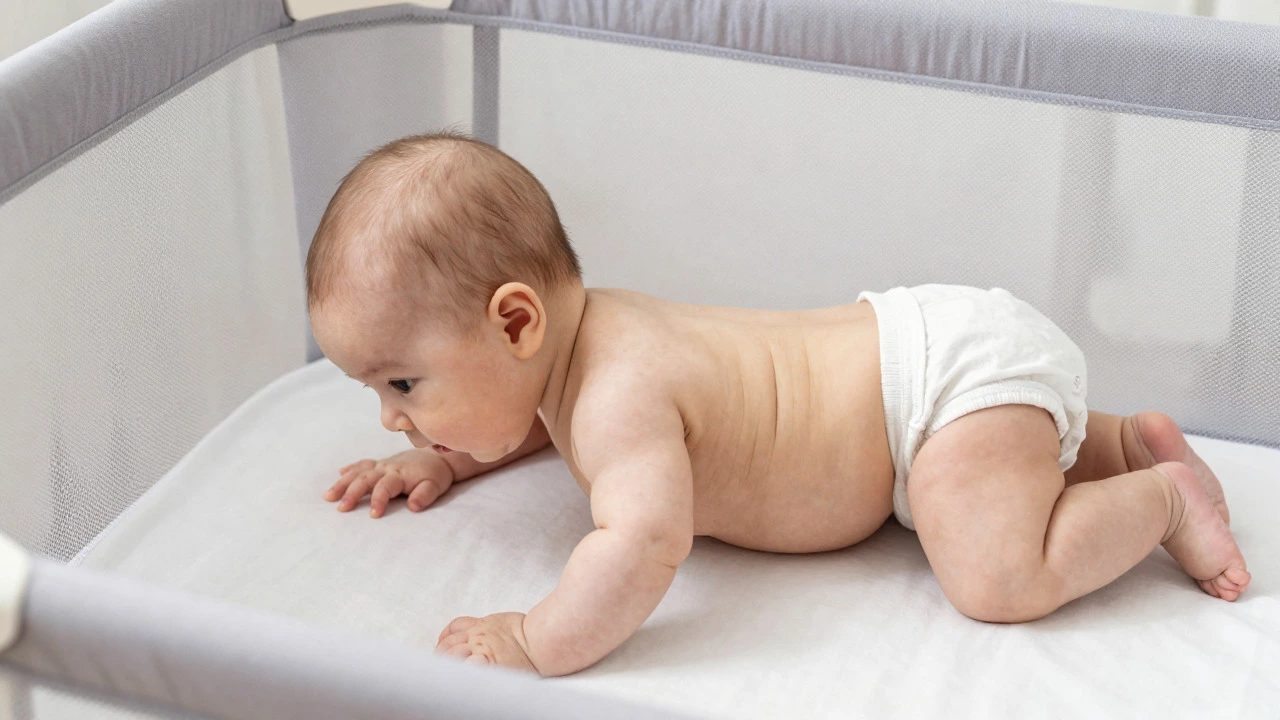
Weight isn't the only sign. The most critical developmental milestone to watch for is rolling over. As soon as your baby attempts to roll from back to tummy-or even just shifts significantly to one side-the bassinet becomes unsafe. This usually happens between three and four months, but some early developers start trying at eight weeks.
Why is rolling dangerous in a bassinet? Bassinets often have soft, padded sides or mesh walls. If a baby rolls onto their stomach and presses their face against a soft surface, the risk of suffocation increases. Additionally, the low rails of a bassinet mean a determined roller could potentially tumble out if the harness isn't secured tightly-and even then, the entrapment risk rises.
You don’t need to wait for your baby to successfully roll over completely. If you see them practicing the motion, getting stuck on their side, or pushing up with their arms, pack the bassinet away. The crib offers a firmer, more open environment where rolling is safe because there are no soft walls to press against.
Signs Your Baby Has Outgrown the Space
Sometimes the signs are subtle. You might not see your baby hit the weight limit or roll over, but you’ll notice behavioral changes. Here are the red flags that indicate it’s time to move:
- Kicking the sides: If your baby is constantly kicking their legs against the bassinet walls during sleep, they are physically uncomfortable. This disrupts sleep quality for both of you.
- Waking up frequently: A cramped sleeping space can lead to more frequent waking. If your baby was sleeping well and suddenly starts crying every two hours, check if they’ve outgrown their current bed.
- Head bumping: If your baby lifts their head and bumps it against the top edge of the bassinet, the height is no longer appropriate.
- Visible distress: Babies communicate discomfort through fussiness. If they seem agitated specifically when placed in the bassinet but calm down in other spaces, they likely feel confined.
Trust your instincts here. You know your baby better than any guideline does. If the bassinet looks small compared to your child, it probably is.
Safety Standards and Expiration Dates
Like car seats, bassinets have expiration dates. Most manufacturers recommend retiring a bassinet after five to seven years of use, even if it looks brand new. Materials degrade over time. Plastic becomes brittle, fabrics lose tensile strength, and metal frames can weaken. If you are using a hand-me-down bassinet, check the manufacture date tag inside.
In the United States, all bassinets must meet standards set by the Consumer Product Safety Commission (CPSC) and ASTM International. In the UK and Europe, look for the BS EN 1130 standard. These standards ensure that the slats are spaced correctly (no more than 2.375 inches apart) to prevent head entrapment and that the mattress fits snugly without gaps.
If your bassinet lacks a certification label, or if parts are missing or broken, stop using it immediately. Do not try to repair it with DIY fixes. Buy a new one or transition to a crib.
How to Transition Smoothly to a Crib
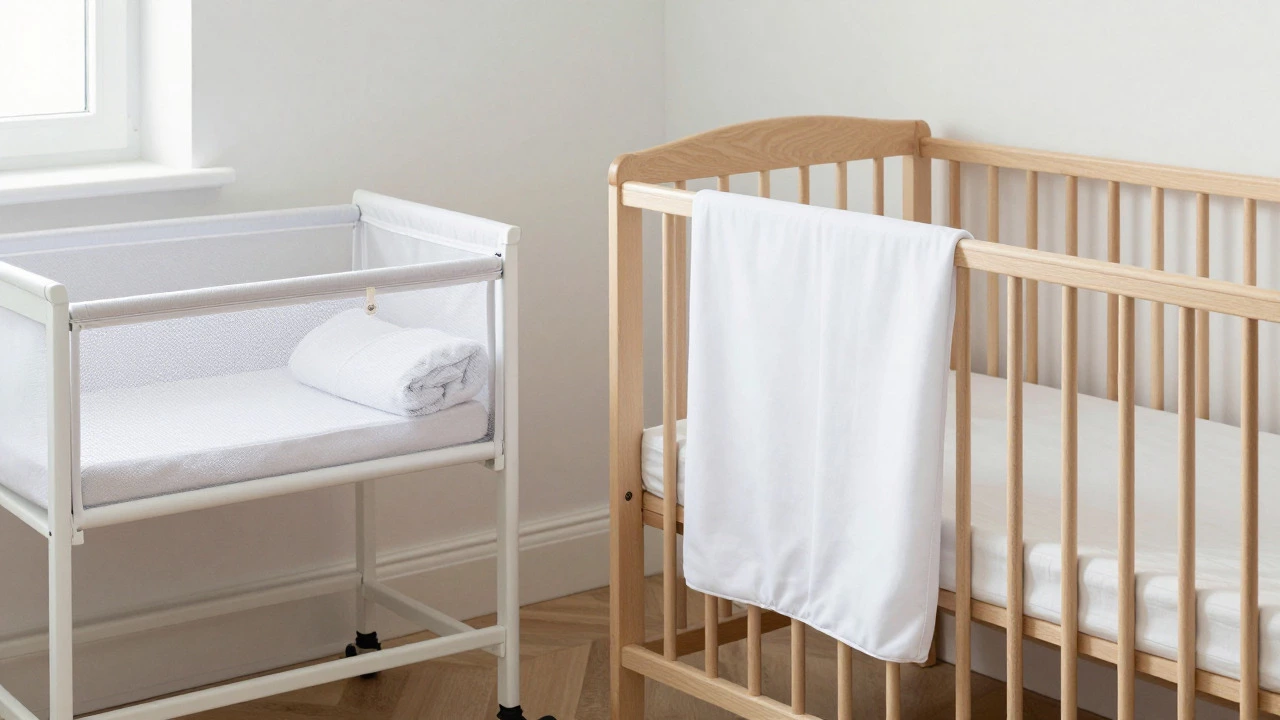
Moving from a bassinet to a crib is a big change. The bassinet is small, dark, and close to you. The crib is large, bright, and often in a different part of the room. To make this switch smoother, follow these steps:
- Use the same bedding: Transfer the fitted sheet from the bassinet to the crib mattress. The familiar smell and texture provide comfort.
- Start with naps: Let your baby get used to the crib during daytime naps before attempting the full night. This reduces anxiety around bedtime.
- Keep the crib nearby: If possible, place the crib next to your bed or in the same room for the first few weeks. This maintains the closeness your baby is used to.
- Stick to the routine: Keep your pre-sleep rituals identical. Bath, book, feed, sleep. Consistency signals that it’s time to rest, regardless of the furniture.
- Expect protest: Your baby may cry more for the first few nights. They are adjusting to a larger space. Offer comfort, but avoid picking them up immediately unless necessary. Give them a chance to self-soothe in the new environment.
Some parents find success using a play yard or pack-and-play as an intermediate step if the jump to a full-sized crib feels too drastic. However, most babies adapt quickly once they realize the crib is just a bigger version of their sleep space.
What to Do With the Old Bassinet?
Once your baby graduates, the bassinet doesn’t have to disappear entirely. Many parents repurpose it for:
- Toddler naps: While less common, some toddlers enjoy the enclosed feeling of a bassinet for short naps, provided it’s still structurally sound.
- Pet bed: Clean it thoroughly and give it to your dog or cat. They love the soft padding.
- Storage: Fold it up and store it for future siblings. Just remember to check the expiration date before using it again.
- Donation: Local charities, shelters, or family members with newborns will appreciate a gently used bassinet. Ensure it meets current safety standards before donating.
Don’t feel pressured to keep it if you’re running low on space. Nursery furniture accumulates quickly. Clearing out what you no longer need makes your home safer and more organized.
Can I use a bassinet for a 6-month-old?
Generally, no. By six months, most babies weigh over 20 pounds and can roll over easily. Using a bassinet beyond the manufacturer's weight limit or after rolling begins poses significant safety risks, including suffocation and falls. Transition to a crib or play yard immediately.
Is it safe to put a blanket in a bassinet?
No. The American Academy of Pediatrics recommends keeping the bassinet free of loose bedding, pillows, and bumper pads. Use a firm mattress with a fitted sheet only. For warmth, dress your baby in a wearable blanket or sleep sack to reduce the risk of SIDS (Sudden Infant Death Syndrome).
How do I know if my bassinet is expired?
Check the label attached to the frame or fabric for a manufacture date. Most bassinets expire 5 to 7 years after production. If there is no date, or if the materials look worn, cracked, or frayed, replace it. Safety standards also change over time, so older models may lack current protections.
Should I move my baby to the crib at 3 months?
If your baby is approaching the weight limit or showing signs of rolling, yes. Even if they haven't rolled yet, three months is a common transition point. It’s better to move them slightly early than to wait until they become too big for the safe space.
Can I use a bassinet on a changing table?
Only if the bassinet is specifically designed and certified for that purpose. Never place a standard bassinet on top of a dresser or changing table unless the manufacturer explicitly states it is safe to do so. Falls from height are a leading cause of infant injury.