
Senior Backpack Ergonomics & Fit Calculator
Your Profile & Load
Enter your details and click analyze to see if your current setup is safe for your spine and joints.
Quick Reference: Why Kids' Packs Work
| Feature | Handbag | Adult Pack | Kids' Pack |
|---|---|---|---|
| Empty Weight | 1.5 - 3 lbs | 2.5 - 4 lbs | 0.5 - 1 lb |
| Distribution | Single Point | Bilateral | Bilateral |
| Sitting Fit | Poor/Bulky | Moderate | Excellent |
| Cost | $20+ | $50+ | $15 - $30 |
You’ve probably seen it at the grocery store or in a park. A person over 70, walking with a slight shuffle, carrying a bright red or blue backpack that looks like it belongs to a kindergartner. It’s not a mistake. It’s not necessarily a sign of cognitive decline, though that can be a factor. For many older adults, these little kid backpacks are a practical, dignified, and surprisingly comfortable solution to everyday mobility challenges.
The trend isn’t just anecdotal. Retailers specializing in senior goods have noticed a surge in sales of small, lightweight packs originally marketed for children aged 4 to 8. Why? Because standard adult handbags are heavy, shoulder bags cause pain, and large travel backpacks are too bulky for daily errands. The "kid" size hits a sweet spot: it’s light enough to ignore, small enough to fit under a bus seat, and sturdy enough to hold essentials like medication, reading glasses, and a wallet.
It’s About Weight Distribution, Not Just Size
Think about your own body after age 65. Your spine has compressed slightly. Your shoulders may have developed arthritis. Carrying a purse on one side creates an uneven load that pulls on the trapezius muscles, leading to chronic neck pain. This is where the design of a children's backpack shines. By distributing weight across both shoulders, it keeps the center of gravity aligned with the body’s midline.
For seniors with conditions like osteoporosis or mild scoliosis, this bilateral support is crucial. A 10-pound purse feels like 20 pounds when it’s dragging down one shoulder. That same 10 pounds, split evenly across two straps, feels manageable. The straps on kids' backpacks are often padded and adjustable, allowing for a custom fit that larger adult packs sometimes lack due to their bulkier construction.
Moreover, the back panel of these smaller packs is usually shorter. An adult-sized backpack might extend down to the lumbar region, which can interfere with sitting in low chairs or car seats. A child-sized pack sits higher on the thoracic spine, leaving the lower back free to move naturally. This freedom of movement reduces stiffness during long waits at the doctor’s office or while riding public transit.
Dignity Through Simplicity
There’s a stigma attached to assistive devices. Walkers, canes, and medical alert systems can make people feel "old" or "frail." But a colorful backpack doesn’t scream "medical necessity." It looks casual, even playful. This psychological aspect matters. When a senior wears a backpack, they aren’t announcing their limitations; they’re just carrying their stuff.
This choice also preserves independence. Many seniors refuse to ask for help carrying groceries because they don’t want to be a burden. A backpack frees up their hands completely. They can open doors, hold onto railings, or manage a walker without balancing a bag on their arm. If they need to sit down quickly, they can simply take the pack off and place it beside them, rather than fumbling with a strap on a crowded bench.
| Feature | Standard Handbag | Adult Travel Backpack | Kids' Backpack (Size 12-16") |
|---|---|---|---|
| Average Empty Weight | 1.5 - 3 lbs | 2.5 - 4 lbs | 0.5 - 1 lb |
| Weight Distribution | Single point (shoulder/arm) | Bilateral (shoulders/back) | Bilateral (shoulders/back) |
| Hand Accessibility | Low (requires holding) | High (hands-free) | High (hands-free) |
| Sitting Compatibility | Poor (bulky on lap) | Moderate (can hit chair back) | Excellent (compact profile) |
| Cost | $20 - $200+ | $50 - $150 | $15 - $30 |
Cognitive Cues and Routine Building
For some seniors, particularly those in the early stages of dementia or Alzheimer’s, a backpack serves as a tangible reminder. In assisted living facilities, staff often encourage residents to wear a small pack containing personal items. It creates a routine: "Check your backpack before you leave." This simple ritual helps maintain autonomy and reduces anxiety about forgetting things.
The visual cue of the backpack signals to caregivers that the individual is prepared for an outing. It contains specific items tailored to their needs-perhaps a spare pair of hearing aid batteries, a water bottle, or a photo of family members for grounding during moments of confusion. Unlike a purse, which can become a chaotic mess of receipts and old tissues, a backpack encourages organization. Its compartments are distinct and easy to navigate, reducing the frustration of searching for keys or medication.
Practical Design Features You Might Miss
Don’t underestimate the engineering behind a good youth backpack. Manufacturers know kids are rough on their gear. These packs are made from durable nylon or polyester that resists tears and wipes clean easily. Spill coffee? Wipe it down. Rain? Most have water-resistant coatings.
Another hidden benefit is the top handle. Kids’ backpacks almost always feature a reinforced grab loop at the top. This allows a senior to lift the bag into an overhead bin, hang it on a hook, or pass it to someone else without awkwardly adjusting shoulder straps. Adult backpacks often hide this feature or make it too small to grip comfortably with arthritic hands.
Visibility is another factor. Many kids' backpacks come in high-visibility colors like neon green, orange, or bright yellow. For seniors who walk near traffic or ride bikes, this added visibility enhances safety. It’s a subtle but effective way to ensure drivers see them, especially during dusk or dawn hours.

How to Choose the Right Fit
If you’re considering this switch for yourself or a loved one, size matters. You don’t want a pack so big it looks comical, nor one so small it can’t hold a book. Look for dimensions between 12 and 16 inches in height. This typically corresponds to ages 4-8 in retail sizing.
- Strap Padding: Ensure the straps are at least 2 inches wide and padded. Thin straps dig into the shoulders.
- Back Panel: Look for mesh or breathable fabric to prevent sweat buildup, which can lead to skin irritation.
- Zippers: Test the zippers. Large pull tabs are easier to grasp than tiny metal rings, especially for those with limited dexterity.
- Side Pockets: Essential for water bottles or umbrellas. Make sure they’re elasticated so items don’t fall out if the bag tips over.
Also, consider the closure mechanism. Magnetic snaps are easier for seniors with arthritis than traditional buckles. Velcro can be noisy and may catch on clothing, so use it sparingly. Zipper pulls should be robust; flimsy ones break quickly.
Breaking the Stigma
Society often dictates what is "appropriate" for different age groups. Women are expected to carry structured purses; men might opt for messenger bags. Breaking this norm takes confidence. But once a senior experiences the relief of balanced weight distribution, the social judgment fades. You’ll find more and more grandparents sporting these packs at parks, libraries, and community centers.
Families can help by normalizing the choice. Instead of saying, "You look like a child," try, "That looks really comfortable. Can I try it on?" Frame it as a health hack, not a fashion faux pas. Highlight the ergonomic benefits. Show them how much lighter their shoulders feel after a day of wearing it versus a tote bag.
Ultimately, the goal is quality of life. If a $20 backpack allows a senior to walk further, stand longer, and worry less about dropping their belongings, it’s worth every penny. It’s a small change that yields significant physical and emotional dividends.
Are kids' backpacks durable enough for daily adult use?
Yes, generally speaking. Brands like JanSport, Herschel, and Under Armour design kids' versions with the same materials as their adult counterparts. The main difference is scale. However, avoid ultra-cheap novelty packs sold at discount stores, as their stitching may fail under heavier loads. Stick to reputable brands known for durability.
What is the ideal weight limit for a senior wearing a backpack?
Physical therapists recommend keeping the total weight of the backpack under 10% of the wearer's body weight. For a 150-pound senior, that means the pack should weigh no more than 15 pounds fully loaded. Given that kids' backpacks are small, they rarely exceed this limit unless stuffed with dense items like books or tools.
Can wearing a backpack help with balance issues?
Absolutely. By keeping hands free, seniors can use walkers, canes, or wall supports without juggling a bag. Additionally, the centered weight distribution prevents the lateral sway that occurs when carrying a heavy purse on one side, which can trigger imbalance in those with vestibular issues.
Is it weird for a man to wear a kids' backpack?
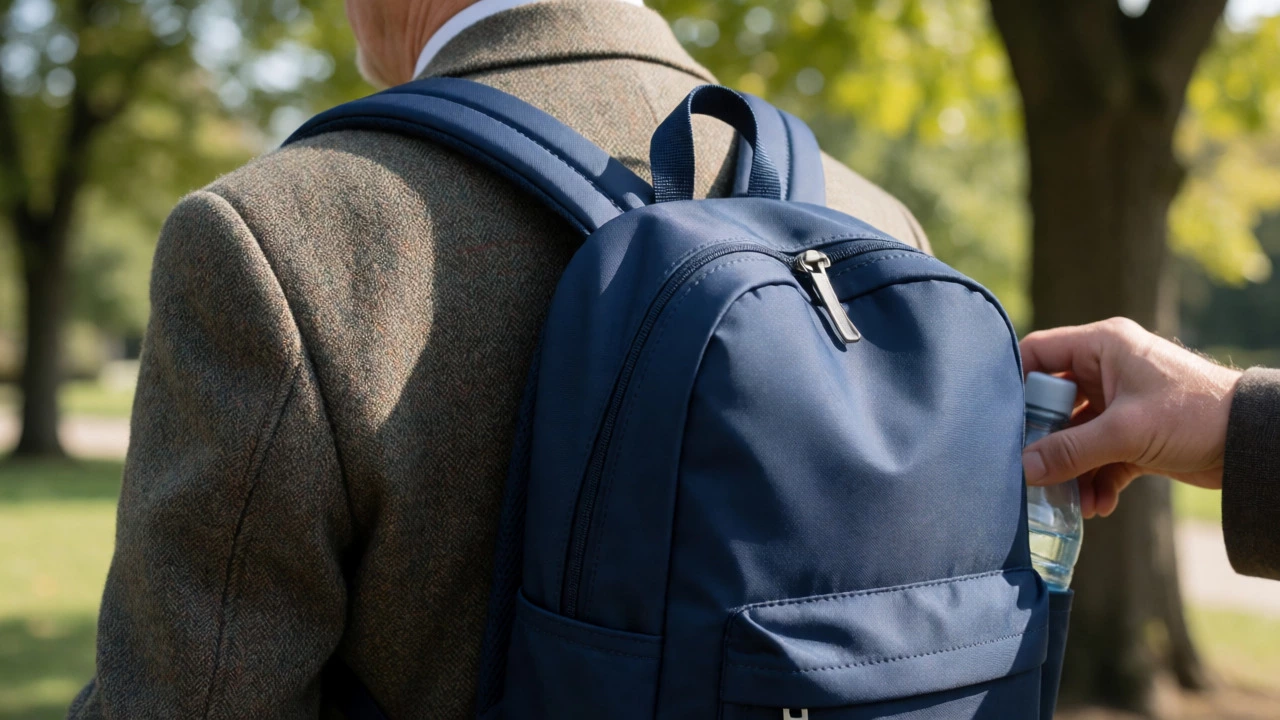
Not at all. Neutral colors like navy, black, gray, or olive green are widely available in youth sizes. Many men prefer the utilitarian look of a small rucksack over a satchel. Functionality often trumps traditional gender norms in practical clothing choices, especially among active retirees.
How do I keep the backpack from sliding down my back?
Adjust the shoulder straps so the bottom of the pack sits above your waistline. Tighten the chest strap if the backpack has one; this stabilizes the load and prevents shifting. If it lacks a chest strap, consider adding a third-party sternum clip, which is inexpensive and easy to install.