
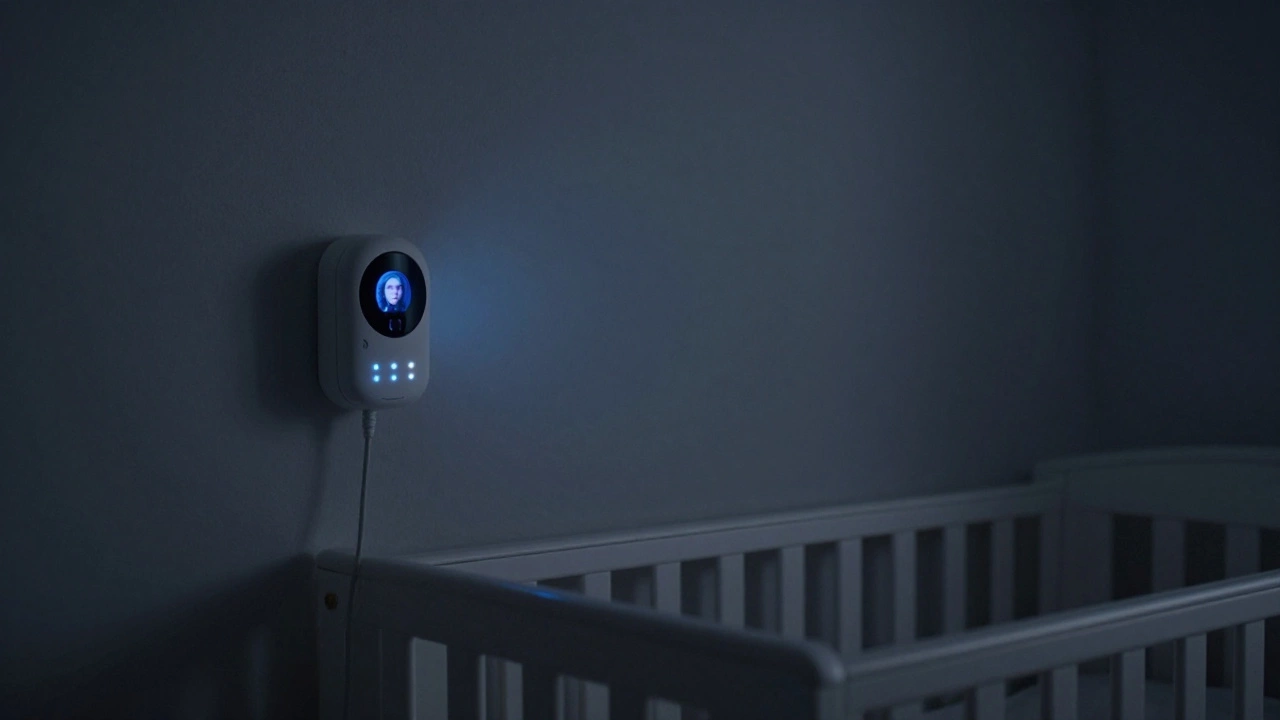
Baby Monitor Safety Checker
This tool helps you assess potential risks of your baby monitor based on security, radiation exposure, and privacy concerns. Enter your monitor details to receive a safety risk assessment.
Risk Assessment
Key Risks Identified:
- Possible hacking vulnerability
- Continuous radiation exposure
- Data privacy concerns
Parents want to keep a close eye on their baby, but not at the cost of their child’s safety or their own peace of mind. Wi-Fi baby monitors promise convenience-remote access, app alerts, smartphone viewing-but they come with serious trade-offs most manufacturers downplay. If you’re considering a Wi-Fi baby monitor, you need to know what you’re really signing up for.
They’re hackable-and it’s not just a scare tactic
There are documented cases of strangers accessing baby monitor feeds through unsecured Wi-Fi networks. In 2023, a security firm found over 200,000 baby monitor streams exposed online, many with default passwords still active. That’s not a glitch. That’s a design flaw. These devices connect directly to your home network, and if your router isn’t locked down (and most aren’t), hackers can slip in through the monitor’s weak security. One parent in Ohio discovered a stranger had been watching their newborn through the monitor for three weeks before they noticed the unusual activity in the app logs. No one was speaking, no threats were made-but the violation was complete. Your baby’s room is not a livestream.
Radio frequency interference is real-and it’s silent
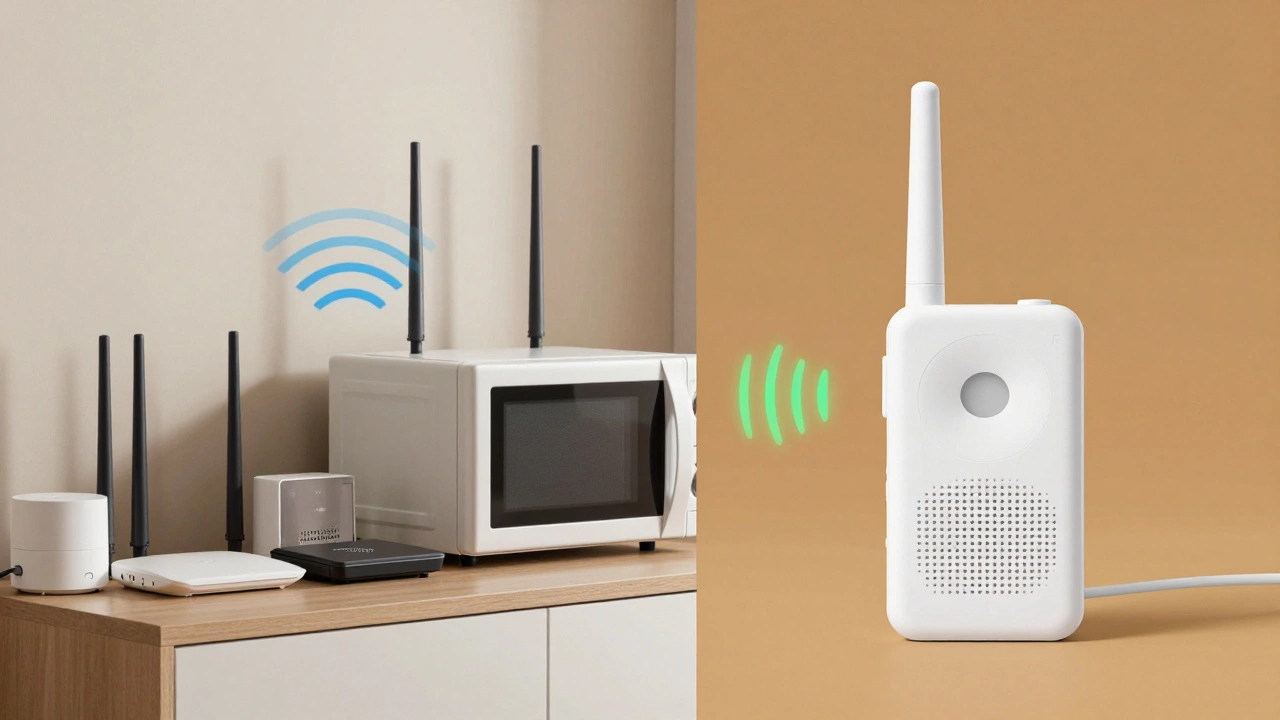
Wi-Fi baby monitors don’t just use your home network. They also broadcast on 2.4 GHz or 5 GHz radio frequencies, the same ones used by microwaves, cordless phones, Bluetooth speakers, and even your smart thermostat. These signals can interfere with each other, causing lag, static, or sudden blackouts. In one test by a consumer electronics lab, a Wi-Fi monitor lost signal for 12 seconds every time the microwave ran. That’s 12 seconds where you think your baby is sleeping peacefully, but you’re actually blind. Analog monitors using DECT or FHSS technology avoid this entirely. They operate on dedicated frequencies, immune to household interference. If you’re relying on your monitor to alert you to a cry or movement, you can’t afford blind spots.
Constant radiation exposure-yes, it adds up
Wi-Fi monitors emit non-ionizing radiation continuously, even when idle. While no government agency has declared them dangerous, the World Health Organization classifies radiofrequency electromagnetic fields as “possibly carcinogenic” based on long-term exposure studies. The American Academy of Pediatrics doesn’t recommend placing electronic devices with wireless transmitters within three feet of a baby’s crib. Why? Because infants’ developing brains and tissues absorb radiation more readily than adults’. A Wi-Fi monitor mounted on the wall beside the crib is emitting signals 24/7. An analog monitor with no wireless connection emits zero RF radiation. You wouldn’t put a cell phone next to your baby’s head all night. Why do it with a monitor?
Privacy isn’t just about hackers-it’s about data harvesting
Many Wi-Fi baby monitors come with companion apps that collect data: audio clips, motion patterns, sleep duration, even room temperature. That data doesn’t just live on your phone. It gets uploaded to company servers, often sold to third-party advertisers or used to train AI models. One popular brand was caught in 2024 sharing anonymized sleep data with a marketing analytics firm. The data was stripped of names, but researchers could still trace patterns back to specific households using unique room layouts and baby movement signatures. You’re not just monitoring your baby-you’re feeding a data pipeline. And you never agreed to that.
Dependence on tech creates false security
When your monitor dies because the app crashes, the battery drains, or the Wi-Fi goes out, do you know what to do? Parents who rely solely on Wi-Fi monitors often skip basic safety checks: listening with the door open, checking in person, using a simple audio-only monitor as backup. One mother in Seattle reported that after her Wi-Fi monitor failed during a power surge, she didn’t realize her baby had woken up until 45 minutes later-because she’d forgotten how to listen without the app. Technology should support you, not replace your instincts. A monitor that works without internet, without apps, without batteries, is still the most reliable tool you have.
What should you use instead?
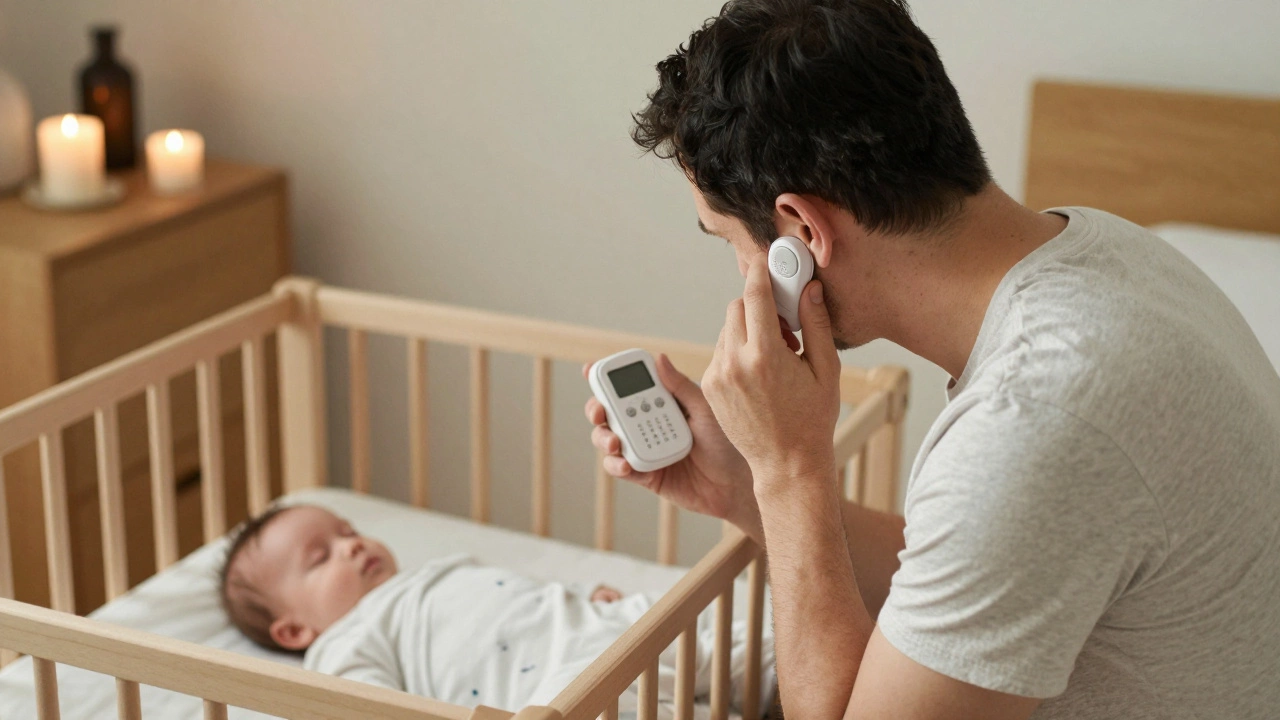
Not all baby monitors are created equal. If you want safety, simplicity, and reliability, go analog:
- Audio-only monitors with analog transmission (like the VTech DM221 or Philips Avent SCD630) use secure, encrypted radio signals. No Wi-Fi. No app. No data collection.
- DECT monitors (Digital Enhanced Cordless Telecommunications) are the gold standard. They operate on a dedicated frequency, are encrypted, and don’t interfere with your home network.
- Wired video monitors exist-yes, really. Some models use a physical cable between the camera and parent unit. Zero wireless transmission. Zero risk.
These options cost less than Wi-Fi models, last longer, and don’t require software updates or cloud subscriptions. They’re built to last, not to be replaced every two years.
Real parents, real choices
One father, a software engineer, switched from a high-end Wi-Fi monitor to a DECT analog model after his child’s monitor was hacked during a routine firmware update. He told a parenting forum: "I spent $400 on a device that turned my baby’s room into a security vulnerability. I didn’t need remote viewing. I needed to know my baby was safe. The analog one works better anyway. I sleep better now."
Another mother, a nurse, stopped using her Wi-Fi monitor after noticing her baby’s sleep patterns changed whenever the monitor’s LED light blinked. She switched to a non-electronic monitor and noticed her child slept more deeply. She didn’t have a scientific study to prove it-but she trusted her experience.
The bottom line
Wi-Fi baby monitors are not dangerous by design, but they are risky by default. The convenience they offer comes with hidden costs: exposure to radiation, vulnerability to hackers, constant data tracking, and a false sense of security. For most families, the benefits don’t outweigh the risks. Your baby doesn’t need a smart monitor. They need you nearby, awake, and attentive. Sometimes, the simplest solution is the safest one.