Booster Seat Readiness Checker
Instructions: Have your child sit in the vehicle seat (preferably the middle back). Click each step below to indicate whether they pass or fail that specific requirement.
Hip Contact
Does the child sit all the way back against the vehicle seat without slouching?
Knee Bend
Do their knees bend comfortably at the edge of the seat? Legs shouldn't hang straight down.
Foot Position
Are their feet flat on the floor to help stabilize their posture?
Lap Belt Placement
Does the lap belt lie snugly across the upper thighs/hip bones? It should NOT touch the stomach.
Shoulder Belt Placement
Does the shoulder belt cross the middle of the chest and shoulder? Never under the arm or behind the back.
Always verify with your local DMV laws, but prioritize safety standards over legal minimums.
It feels like just yesterday you were buckling them into a rear-facing infant carrier. Now, they’re sitting in the back seat, complaining that the "baby seat" is embarrassing. You might be tempted to let them ditch the booster seat is a device that positions a child so the vehicle's seat belt fits correctly across their body. sooner rather than later. But here is the hard truth: letting go too early can turn a standard lap-and-shoulder belt into a deadly trap.
The question isn't really about age. It’s about fit. A standard adult seat belt is designed for someone who is at least 4 feet 9 inches tall (about 145 cm). If your child is smaller than that, the belt won’t hug their strong bones. Instead, it will ride up on their soft belly or slip off their neck. In a crash, that difference between a proper fit and a poor one is the difference between walking away with a bruise and suffering internal injuries.
The Golden Rule: The 5-Step Fit Test
Forget the number on their birthday cake for a moment. Most safety experts, including the American Academy of Pediatrics (AAP) and the National Highway Traffic Safety Administration (NHTSA), agree on one universal standard. Before you remove the booster, your child must pass the 5-Step Seat Belt Fit Test is a checklist used to determine if a child can safely use an adult seat belt without a booster.. This test checks how the vehicle’s restraint system interacts with your child’s body geometry.
You need to sit your child in the vehicle seat-preferably the middle back seat-and check these five points:
- Hip Contact: Does the child sit all the way back against the vehicle seat? They shouldn't be slouching forward.
- Knee Bend: Do their knees bend comfortably at the edge of the seat? Their legs should hang over the edge naturally, not dangling straight down.
- Foot Position: Are their feet flat on the floor? This helps stabilize their posture during the test.
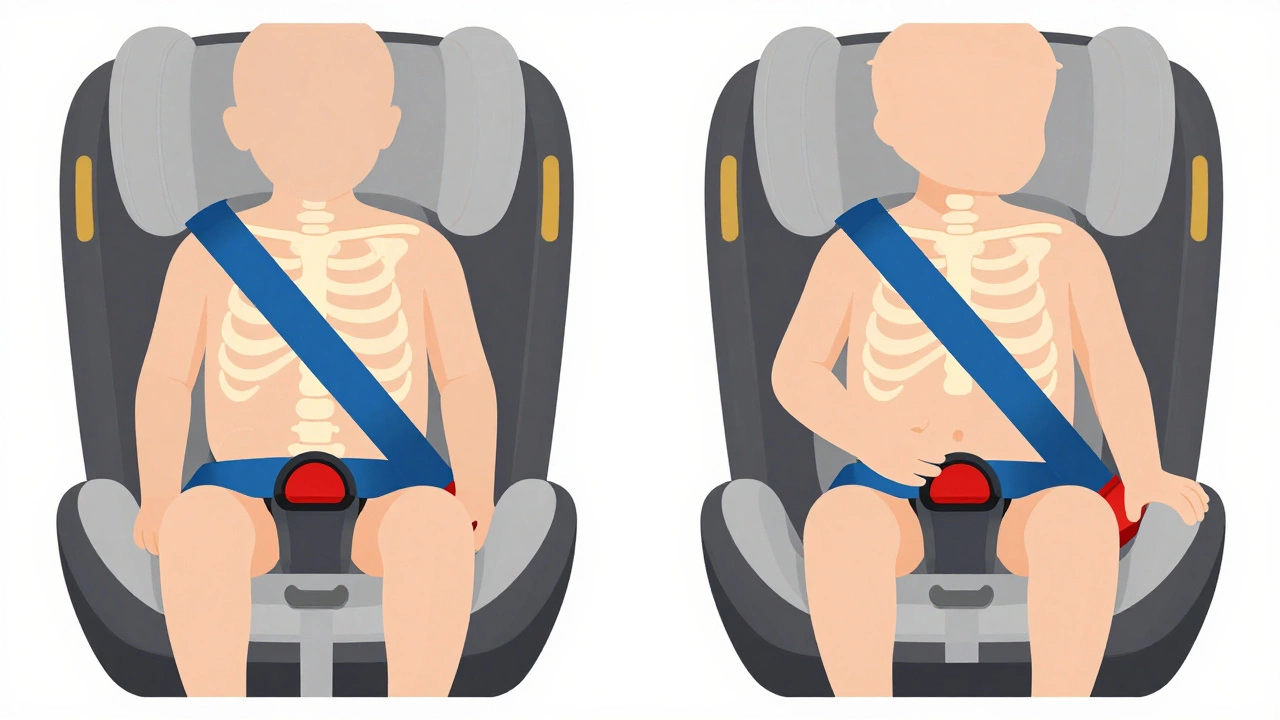
- Lap Belt Placement: Does the lap belt lie snugly across the upper thighs (the hip bones)? It should never touch the stomach. If it rides up on the soft tissue of the abdomen, it can cause severe internal organ damage in a collision.
- Shoulder Belt Placement: Does the shoulder belt cross the middle of the chest and shoulder? It should rest between the neck and the arm. Never under the arm, and never behind the back.
If the answer to any of these is "no," they are not ready. Keep them in the booster until every single step passes.
Why Age Is a Misleading Metric
Parents often ask, "Can my 8-year-old stop using a booster?" The honest answer is: maybe, but probably not yet. While many states set the legal minimum age for dropping a booster at 8, biology doesn't follow state statutes. Children grow at wildly different rates. An 8-year-old who is 3 feet 6 inches tall has the same skeletal vulnerability as a 6-year-old of the same height.
The danger lies in what we call "submarining." This happens when the lap belt sits too high on the torso. During a sudden stop, the child slides under the lap belt. The force of the crash concentrates on the spine and internal organs rather than being distributed across the pelvis. This is why the height requirement is far more critical than the age requirement. Most children don't reach the necessary proportions for a safe belt fit until they are between 8 and 12 years old.
Understanding State Laws vs. Best Practices
Here is where it gets tricky. Legal requirements vary significantly across the United States. Some states have strict laws requiring boosters until age 8 or a specific weight (often 80 lbs). Others have vague language that allows parents to decide based on "proper fit."
| Region Type | Typical Age Limit | Height Requirement | Enforcement Style |
|---|---|---|---|
| Strict States (e.g., California, Florida) | Up to age 8 | Often 4'9" implied | Primary enforcement (police can ticket solely for this) |
| Flexible States (e.g., Texas, Georgia) | Up to age 8 | Varies by law wording | Secondary enforcement (ticketed only if stopped for another offense) |
| Safety Best Practice (AAP/NHTSA) | Until 4'9" tall | Must pass 5-Step Test | N/A (Medical/Safety Standard) |
Always check your local Department of Motor Vehicles (DMV) website for the current laws in your state. However, remember this rule of thumb: The law sets the minimum standard for avoiding a ticket. Safety standards set the optimum standard for surviving a crash. Don't let the legality of a decision convince you it's safe.
High-Back vs. Backless Boosters: Does It Matter?
If your child is struggling with the transition, the type of booster might be the issue. There are two main types: high-back and backless.
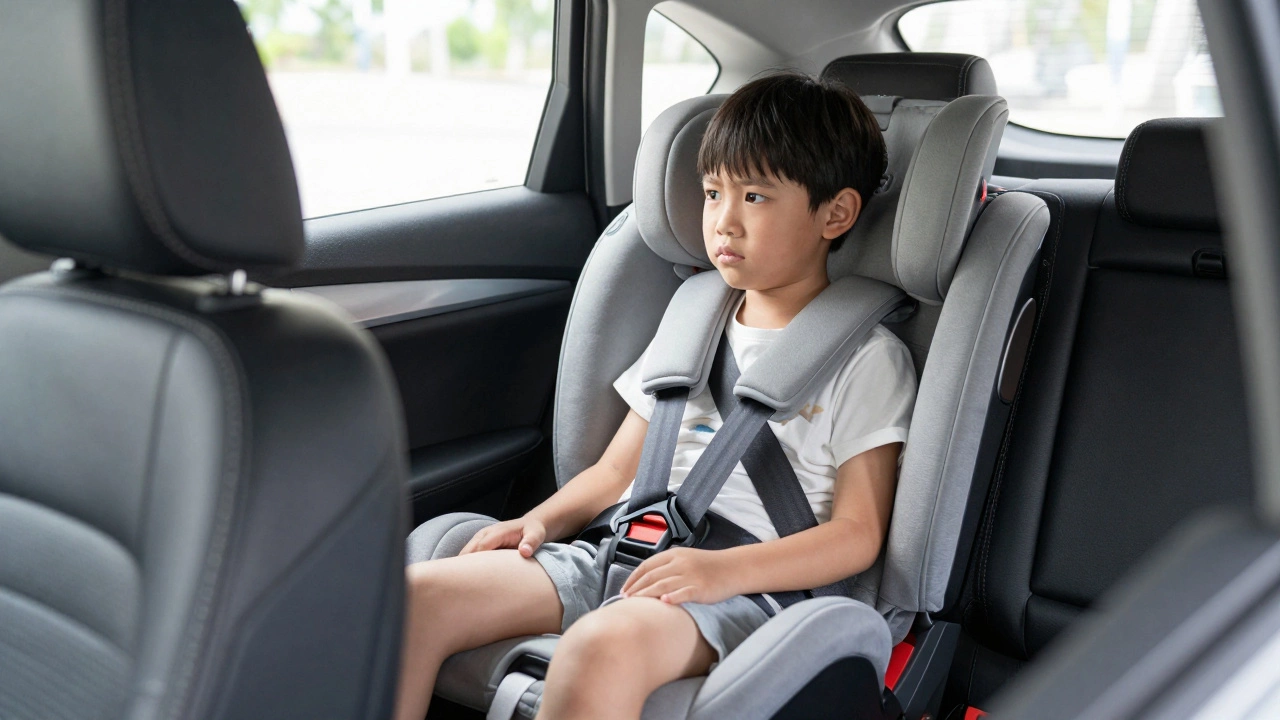
A high-back booster is a booster seat with a tall backrest that provides side-impact protection and head support. These are generally better for younger children or those who nap in the car. The backrest offers structural support if the vehicle seat is low, and it often includes tether anchors for added stability. More importantly, the side wings provide crucial protection in T-bone collisions, which are common in parking lots and intersections.
A backless booster is a portable cushion that raises the child to improve seat belt fit but lacks side impact protection. These are lighter, cheaper, and easier to move between cars. They work well for older kids who sit upright and don't sleep, provided the vehicle seat has good head support. If you switch to a backless booster, ensure your car’s headrest is positioned correctly to support your child's head.
Common Pitfalls When Transitioning
Even when a child seems ready, small mistakes can compromise safety. Here are the most frequent errors I see parents make:
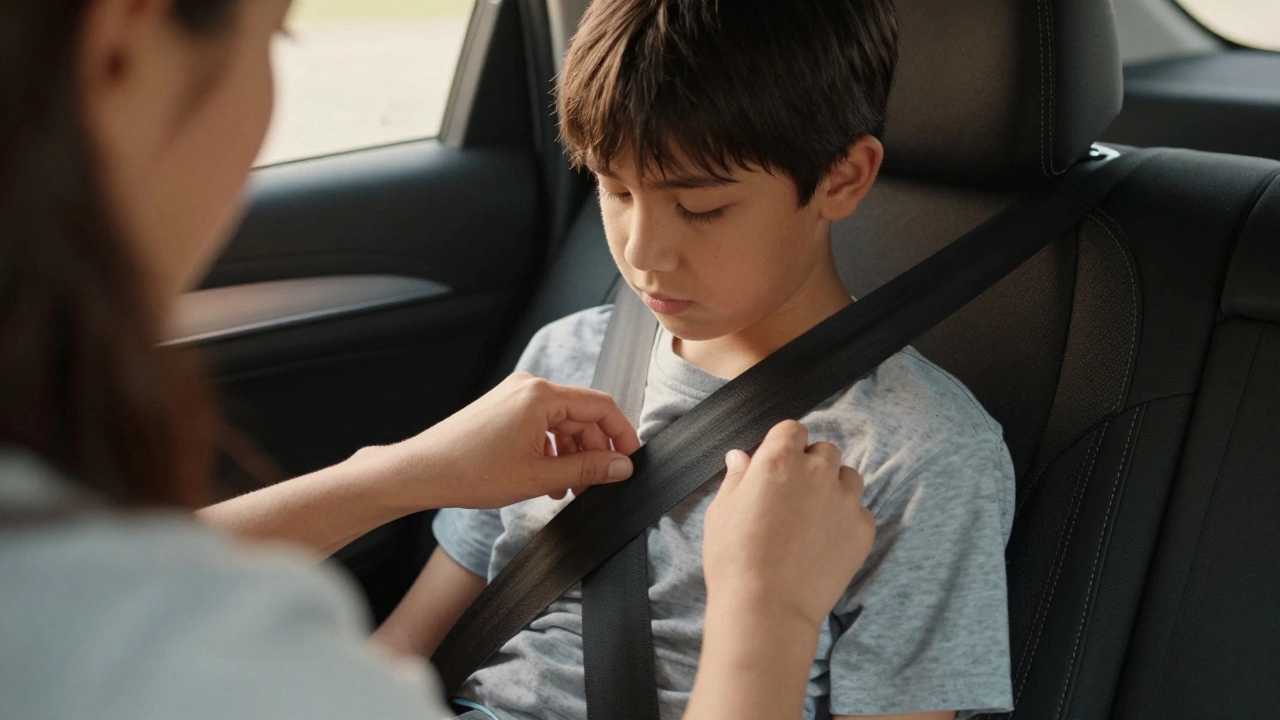
- The "Loose" Shoulder Belt: Parents think the belt is fine if it touches the shoulder, even if it’s digging into the neck. Use a clip or guide (if approved by the car seat manual) to position the belt correctly, or keep the booster longer.
- Ignoring Vehicle Differences: A child might fit perfectly in your minivan but slide around in your sedan. Different cars have different seat angles and belt anchor points. Always re-test the 5-Step Fit in every vehicle they ride in.
- Bulky Clothing: Puffer jackets create slack in the belt. In a crash, the fabric compresses, leaving the belt loose. Remove bulky coats before buckling. Use blankets over the top for warmth.
- Moving to the Front Seat Too Soon: Even if they outgrow the booster, children should remain in the back seat until age 13. Airbags can deploy with enough force to injure a smaller frame, regardless of seat belt fit.
What If My Child Refuses?
Let’s be real. Kids want to look big. They want to sit like adults. The social pressure from friends can be intense. Giving in feels like the easy parenting win, but it’s a dangerous compromise.
Instead of a power struggle, frame it as a "fit check." Make it a game. "Let’s see if your hips are strong enough for the big kid belt yet." If they fail the test, explain it simply: "The belt hurts your tummy, so we need the booster to protect your insides." Consistency is key. If they pass in one car but not another, use the booster in both. Mixed messages lead to confusion and unsafe habits.
Remember, the goal isn't just to avoid a ticket. It's to ensure that if the unexpected happens, your child’s body is protected by science, not guesswork. Keep them in the booster until the belt fits right. It’s the safest choice you can make for their journey home.
At what height should a child stop using a booster seat?
A child should typically stop using a booster seat when they reach 4 feet 9 inches (145 cm) tall. At this height, the vehicle's seat belt is likely to fit properly across the hip bones and shoulder, reducing the risk of injury in a crash.
Is it illegal to let an 8-year-old ride without a booster?
It depends on your state laws. Many states require booster seats until age 8, regardless of height. However, some states allow removal if the child meets certain height or weight criteria. Always check your local DMV regulations, but prioritize the 5-Step Fit Test for safety.
Can a child use a backless booster in any car seat?
Not necessarily. A backless booster requires the vehicle seat to have adequate head support. If the car seat is low-backed or lacks a headrest, a high-back booster is safer because it provides head and neck support, especially if the child sleeps in the car.
Why is the lap belt position so important?
The lap belt must rest on the upper thighs (hip bones), not the stomach. If it rides up on the soft abdomen, a crash can cause severe internal injuries, such as damage to the liver, spleen, or intestines, because the force isn't absorbed by the strong pelvic bone.
How do I know if the shoulder belt fits correctly?
The shoulder belt should cross the middle of the chest and shoulder, resting between the neck and the arm. It should never slip off the shoulder or dig into the neck. If it does, the child needs to stay in a booster seat until their body grows enough to accommodate the belt properly.