Bottle Sterilizer Necessity Checker
Answer three simple questions to find out if a dedicated sterilizer is essential for your household right now.
There is a moment in every new parent’s life where the laundry pile seems to grow faster than you can wash it. Then, on top of that, there are the bottles. The question pops up immediately: do you really need a baby bottle sterilizer? It feels like an extra chore, another machine taking up counter space, and yet everyone from your mother to the pediatrician seems to insist on it. The truth is less black-and-white than you might think. It depends heavily on your baby’s age, their health status, and how much time you have in your day.
Let’s clear up the confusion right away. For most healthy, full-term babies over three months old, a dedicated electric sterilizer is not strictly necessary if you use a good dishwasher. However, for newborns, premature infants, or those with compromised immune systems, sterilization is a critical safety step. This guide breaks down exactly when you need one, what the alternatives are, and how to make the decision without breaking the bank or your sanity.
The Science Behind Bottle Hygiene
To understand why we talk about sterilizing, we first need to distinguish between cleaning and sterilizing. Cleaning removes milk residue, dirt, and some bacteria using soap and water. Washing in a dishwasher uses high heat and detergent to kill most common pathogens. Sterilizing, however, is the process of eliminating all microorganisms, including spores that survive normal washing.
Bacterial contamination is the presence of harmful microbes like E. coli or Salmonella on surfaces that come into contact with food. In the context of infant feeding, the risk comes from the fact that babies have immature immune systems. A newborn’s gut flora is still developing, making them more susceptible to infections that an older child or adult would easily fight off. The UK Health Security Agency (UKHSA) generally recommends strict hygiene practices for the first few months of life, particularly until the baby has developed sufficient antibody protection from breastfeeding or maternal transfer.
Here is the key distinction: if your baby is exclusively breastfed, they don’t need bottles at all, so the question becomes moot. But if you are formula feeding or pumping, the milk sits in a container that isn’t sealed by nature. That container needs to be as clean as possible to prevent introducing unnecessary bugs into your baby’s system.
When Is a Sterilizer Actually Necessary?
You don’t need to panic-buy a £80 steam sterilizer before the baby arrives. Instead, look at these specific scenarios where sterilization moves from "nice to have" to "essential":
- Newborns (0-3 months): During this window, the baby’s immune system is in its most vulnerable phase. If you are formula feeding, sterilizing bottles after every use is the gold standard recommended by many pediatric nurses. Even if you use a dishwasher, running a final rinse cycle with hot water helps, but a true sterilizer ensures zero microbial load.
- Premature Infants: Babies born before 37 weeks often have underdeveloped immune responses. Their doctors will likely mandate sterilization for several months, sometimes longer, depending on their weight and health milestones.
- Compromised Immune Systems: If your baby has any chronic conditions, is undergoing treatment, or has a family history of severe gastrointestinal issues, keeping the bacterial count at zero provides peace of mind.
- Traveling or On-the-Go Feeding: If you are constantly preparing bottles in public restrooms or hotels where dishwashers aren’t available, portable sterilization methods become much more practical than trying to scrub bottles with travel-sized soap and uncertain water quality.
Once your baby hits the three-to-four-month mark, their immune system starts maturing rapidly. At this stage, thorough washing becomes sufficient for most households. You can transition to regular dishwasher cycles without worrying about hidden risks.

Sterilizers vs. Dishwashers: The Head-to-Head Comparison
This is the debate that splits parents. Let’s look at the practical differences between using a dedicated sterilizer and a modern dishwasher. Both aim to achieve the same goal-safe, clean bottles-but they go about it differently.
| Feature | Dedicated Steam Sterilizer | Modern Dishwasher | Hand Washing + Boiling |
|---|---|---|---|
| Kills Bacteria | Yes (100% via steam) | Most (via heat/detergent) | Yes (if boiled 5+ mins) |
| Time per Cycle | 10-15 minutes | 1.5 - 3 hours | 10-15 minutes |
| Cost (Initial) | £40 - £100 | £0 (if owned) | £0 |
| Convenience | High (fast, compact) | Medium (requires loading/unloading) | Low (labor intensive) |
| Best For | Newborns, small kitchens | Older babies, large families | Emergency situations |
The dishwasher wins on volume. If you have six bottles, four teats, and two caps to clean, fitting them into a small countertop sterilizer can be a puzzle. A dishwasher handles the entire set easily. However, the sterilizer wins on speed. When you are awake at 3 AM because your baby is hungry, waiting for a dishwasher cycle to finish is impossible. A steam sterilizer heats up quickly, allowing you to prep a fresh bottle in under ten minutes.
One major caveat with dishwashers: ensure you are using a detergent that is free from harsh fragrances or dyes, as some babies are sensitive to chemical residues. Also, make sure the bottles are placed upright so water doesn’t pool inside them, which can lead to mold growth if they sit too long before being used.
Types of Sterilizers: What Should You Buy?
If you decide that a sterilizer is right for your household, you’ll find three main types on the market. Each has pros and cons that affect your daily routine.
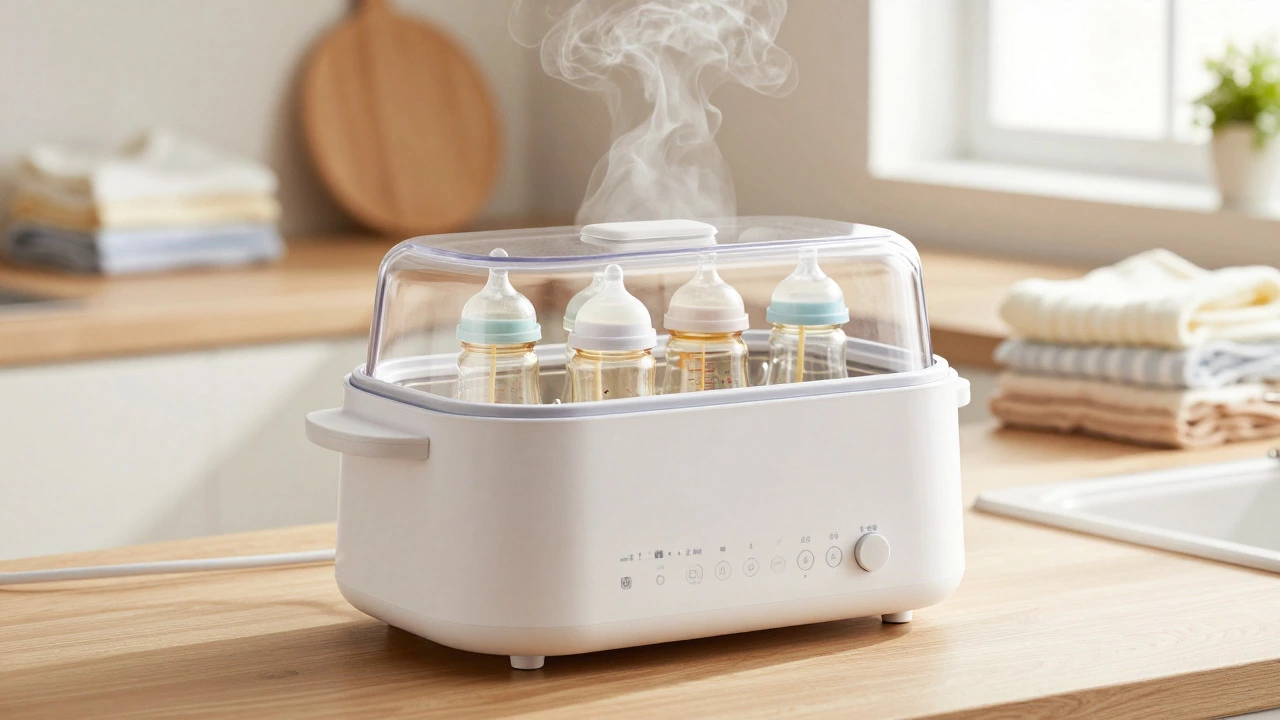
- Steam Sterilizers: These are the most popular option. They work similarly to a kettle, boiling water to create steam that fills the chamber. Steam sterilization is a method that uses saturated steam at 100°C to kill microorganisms. They are fast, energy-efficient, and leave no chemical taste. The downside? They require a power source and take up counter space.
- Microwave Sterilizers: These are plastic containers that you fill with water and place in your microwave. They are cheap (often under £20) and don’t need electricity beyond your microwave. However, they can be awkward to handle when hot, and you need to be careful not to overfill them, which can cause boiling over.
- UV Sterilizers: These use ultraviolet light to kill bacteria. They are great for keeping bottles sterile for extended periods (up to 24 hours) without opening the lid. However, UV light only works on surfaces directly exposed to the light, so complex shapes with deep crevices might not get fully treated. They also tend to be more expensive upfront.
For most parents, a standard steam sterilizer offers the best balance of cost, reliability, and ease of use. Look for models that have a drying function built-in; nothing is worse than pulling out damp bottles that start growing mildew within an hour.
Common Mistakes Parents Make
Even when you have the right equipment, technique matters. Here are the most common errors I see in my own home and among friends:
- Not Disassembling Completely: The valve under the teat is where milk gets trapped. If you don’t pop that little white piece out and scrub it, you’re leaving a breeding ground for bacteria. Use the provided brush specifically for that part.
- Using Hot Water Immediately After Cold Milk: Thermal shock can crack glass bottles. If you have glass bottles, let them warm up gradually or use lukewarm water for the initial rinse before applying heat.
- Storing Wet Bottles in Closed Containers: If you sterilize bottles and then store them wet in a closed cabinet, you’re creating a humid environment perfect for mold. Always allow them to air dry completely or use a sterilizer with a fan-assisted drying mode.
- Ignoring the Teats: Silicone teats degrade over time. Check them regularly for cracks or stickiness. Once a teat starts to feel gummy or tears easily, replace it, regardless of whether it looks clean.
Practical Tips for Busy Parents
Parenting is already exhausting. Your bottle routine should fit into your life, not disrupt it. Here are some hacks to streamline the process:
First, batch process. Instead of washing each bottle individually as soon as your baby finishes, collect them in a sink filled with soapy water. Wash them all together once a day, then run them through the sterilizer or dishwasher. This saves you from doing multiple small loads.
Second, keep a "ready