Booster Seat Transition Calculator
This tool helps determine if your child is ready to transition from a forward-facing car seat to a booster seat based on UK safety guidelines. The calculator checks height, weight, and proper seat belt fit requirements as recommended by the Department for Transport and RoSPA.
Switching your child from a car seat to a booster seat isn’t about age alone-it’s about height, weight, and safety. Too early, and you risk serious injury in a crash. Too late, and you’re missing out on better protection. In the UK, the rules are clear, but many parents still get confused. Here’s what actually matters.
What the Law Says in the UK
By law in the UK, children must use a child car seat until they’re 12 years old or 135cm tall, whichever comes first. After that, they can use a regular seat belt. But the transition from a harnessed car seat to a booster seat happens well before that.
Booster seats are designed for children who’ve outgrown their forward-facing car seat with a five-point harness. That usually means your child is at least 15kg (about 33 pounds) and around 4 years old. But weight alone isn’t enough. You need to check height and fit too.
How to Know Your Child Is Ready
Don’t just wait for the weight label to change. Look at these three signs:
- Your child’s shoulders are above the top harness slots on their car seat.
- The harness straps no longer fit snugly across the chest and shoulders-there’s slack or they sit too high.
- Your child is too big for the seat’s height or weight limit, as marked by the manufacturer.
Most harnessed car seats have a maximum weight of 18kg to 25kg. If your child hits that limit, it’s time to move. But if they’re still under 15kg, even if they’re tall, stick with the harnessed seat. A booster without a harness won’t hold them safely in a crash.
Types of Booster Seats in the UK
There are two main types, and both must meet EU safety standards (R129 or R44/04). Look for the orange label on the seat.
- Booster seats (without backrest): These are for children over 22kg and 125cm tall. They raise the child so the seat belt fits properly. But they offer no side impact protection.
- Booster seats with backrest (high-back boosters): These are the safest choice. They guide the seat belt across the shoulder and hips correctly, and protect the head and sides. Recommended until your child reaches 135cm or 12 years old.
Most experts in the UK, including the Department for Transport and the Royal Society for the Prevention of Accidents (RoSPA), strongly recommend high-back boosters. They reduce injury risk by up to 70% compared to backless boosters.
Why Backless Boosters Are Risky
Backless boosters are cheaper and easier to move between cars. But they’re not safe for most kids under 125cm. In a side-impact crash, a child’s head can snap into the door or window. The seat belt can ride up over the stomach instead of lying flat across the hips.
One 2023 study by the University of Bristol’s Child Safety Lab found that children under 125cm using backless boosters had a 45% higher chance of abdominal injury than those using high-back boosters. That’s not a small risk-it’s a preventable one.
If you’re switching to a backless booster because it’s easier to fit in your car, think again. Most high-back boosters fold flat, tuck into bags, or even have built-in handles. The extra safety is worth the slight inconvenience.
How to Fit a Booster Seat Correctly
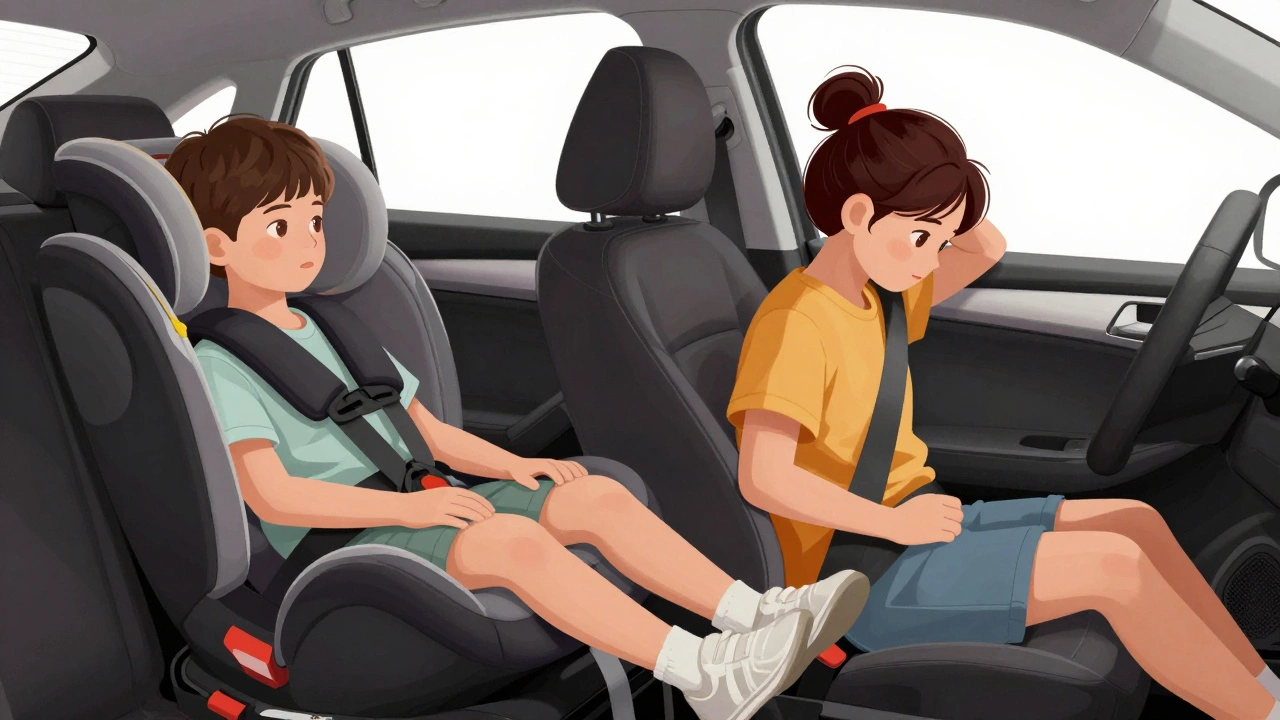
Even the best booster won’t protect your child if it’s installed wrong.
- Place the booster on the rear seat. Never put it in the front unless the airbag is turned off and there’s no other option.
- Have your child sit down. The seat belt should lie flat across the collarbone-not the neck-and across the hips, not the stomach.
- Check the lap belt: it should touch the tops of the thighs, not cut into the soft part of the belly.
- Make sure the shoulder belt crosses the middle of the shoulder. If it’s too high, adjust the seat position or use a booster with an adjustable belt guide.
- Never let your child tuck the belt under their arm or behind their back. That’s illegal and deadly.
Test the fit by having your child sit normally for 10 minutes. If they slouch, the belt moves, or they complain it’s uncomfortable, the booster might be too small or too big. Try a different model.
When to Keep the Harnessed Seat Longer
Some parents feel pressured to move kids to boosters early because they’re “big for their age.” But bigger doesn’t mean safer.
If your child is 14kg but 5 years old and still fits in their harnessed seat with room to spare, keep them in it. Many modern seats go up to 25kg. That’s often around age 6 or 7.
Children under 5 are still developing bones and ligaments. A five-point harness distributes crash forces across the strongest parts of the body-shoulders, hips, and pelvis. A seat belt only has two points: lap and shoulder. That’s why harnessed seats are safer for younger kids, even if they’re tall.
There’s no rush. The goal isn’t to grow out of car seats-it’s to keep your child safe until they truly fit a seat belt.
Common Mistakes Parents Make
- Switching too early because the child “doesn’t like” the car seat. Comfort isn’t safety.
- Using a booster seat in the front passenger seat without disabling the airbag. That’s illegal and dangerous.
- Buying a second-hand booster without checking the date or damage. Seats expire after 6-10 years. Cracks, missing parts, or torn straps mean it’s unsafe.
- Thinking a booster seat is good enough for occasional use. Every trip, every time, needs proper restraint.
One parent I spoke to in Bristol switched her 4-year-old to a backless booster because it fit better in her husband’s car. Two months later, they had a minor collision. Her child suffered a bruised liver because the belt rode up. She didn’t know the difference between booster types. That’s the kind of mistake that changes lives.
What to Do If You’re Unsure
Don’t guess. Get it checked.
Many local councils in the UK run free car seat checks. In Bristol, the Safe Kids Bristol team offers monthly appointments at health centres. You can book one online through the NHS website or call 0117 903 8500. They’ll fit the seat, show you how to adjust the belt, and tell you if you’re ready to move on.
Or visit a certified child car seat technician. Look for someone with a Child Seat Fitting Specialist qualification. They’re trained by RoSPA or the Institute of Advanced Motorists. A 30-minute check costs around £20-£30, but it’s cheaper than a hospital bill.
Final Rule: Height Over Age
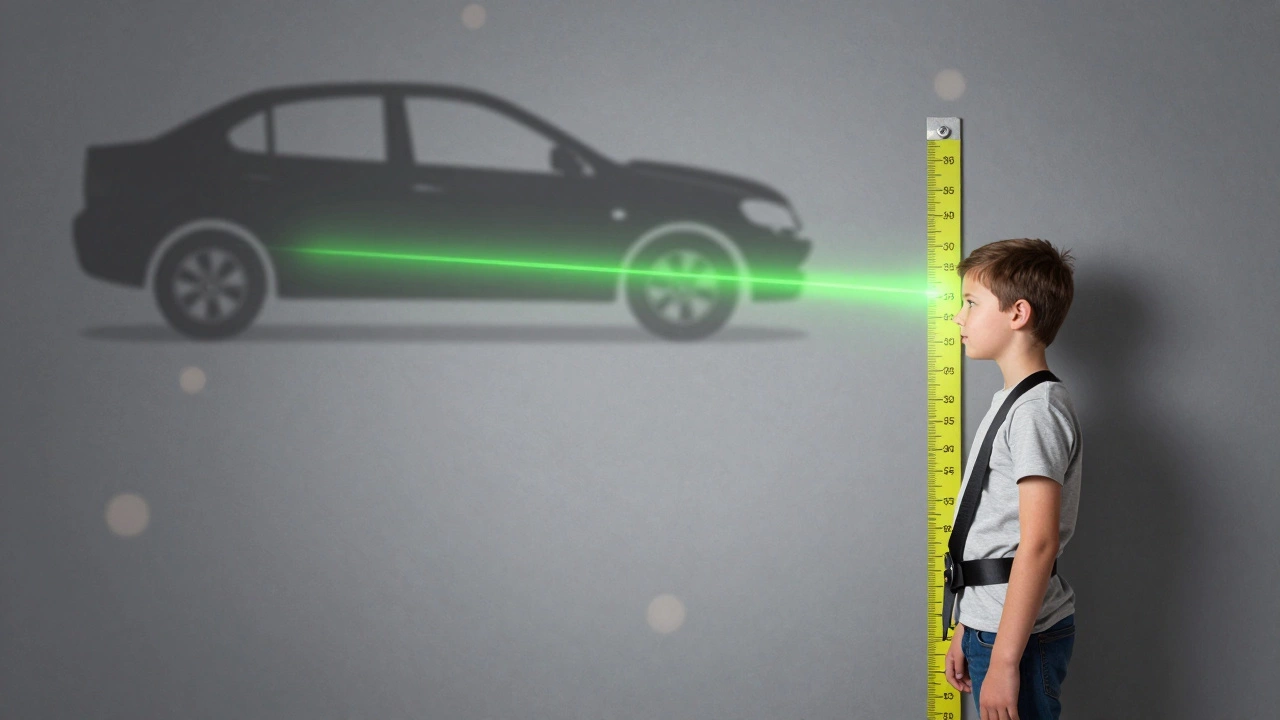
Forget the birthday. Forget the weight. The only thing that truly matters is whether your child fits the seat belt properly.
Here’s the simple test: Can your child sit all the way back against the seat? Do their knees bend naturally over the edge? Is the lap belt low on the hips, not the stomach? Is the shoulder belt crossing the collarbone, not the neck?
If you answered yes to all four, they’re ready for a booster. If even one is no, stay with the harnessed seat. It’s not about being big. It’s about being safe.
There’s no prize for moving up early. There’s only risk.
Can my 3-year-old use a booster seat?
No. Most 3-year-olds weigh less than 15kg and are not tall enough for a booster to work safely. They need a forward-facing car seat with a five-point harness. Boosters are designed for children who are at least 15kg and 100cm tall, and even then, a high-back booster is strongly recommended.
Is it legal to use a backless booster in the UK?
Yes, but only for children over 125cm tall or 22kg. However, it’s not recommended for children under 135cm. High-back boosters provide much better protection, especially in side impacts. Many safety experts say backless boosters should only be used as a last resort.
Can my child sit in the front seat with a booster?
Only if the airbag is turned off and there’s no rear seat available. It’s legal but strongly discouraged. The front seat is the most dangerous place in the car for children. Always use the back seat. If you must use the front, make sure the seat is pushed as far back as possible.
How long does a booster seat last?
Most booster seats expire after 6 to 10 years, depending on the manufacturer. Check the label on the seat for the manufacture date. Plastic can become brittle over time, and straps can weaken. Never use a booster that’s been in a crash-even if it looks fine.
What if my child refuses to sit in a booster?
Make sure the booster fits properly and isn’t uncomfortable. Try different models-some have padding, cup holders, or fun designs. Explain why it’s important in simple terms: "This keeps you safe so you don’t get hurt." Never let them ride without it. If they’re still resisting, consider a car seat with a higher weight limit that they can use longer. Safety isn’t negotiable.
Next Steps
Check your child’s current car seat label for height and weight limits. If they’re close to the max, start shopping for a high-back booster now. Don’t wait until the last minute. Test it in your car before buying. Bring your child along.
If you’re unsure, book a free car seat check. It takes 20 minutes. It could save their life.