
Baby Bottle Sterilization Calculator
Is Sterilization Needed?
Get personalized guidance based on your baby's age and circumstances
When your baby is newborn, everything feels like a rulebook you didn’t get to read. Should you sterilize the bottle after every feed? What if you just rinse it? Is boiling really necessary, or is the dishwasher enough? These questions aren’t just about cleanliness-they’re about peace of mind. And the truth? It’s not as simple as ‘yes’ or ‘no.’
When sterilization actually matters
Sterilizing baby bottles isn’t about being overly cautious-it’s about protecting a baby whose immune system is still learning how to fight off germs. Before your baby is three months old, their body doesn’t have the defenses older kids or adults do. That’s why health organizations like the NHS and the American Academy of Pediatrics still recommend sterilizing bottles, nipples, and pump parts until then.
After three months, the risk drops sharply. Most babies start putting everything in their mouths-toys, fingers, floor grime-so the occasional bacteria on a bottle isn’t going to make a difference. That doesn’t mean you stop cleaning. It means you stop sterilizing.
There are exceptions. If your baby was born prematurely, has a weakened immune system, or is on antibiotics, your pediatrician might advise continuing sterilization longer. Same goes if you live in an area with unsafe tap water. But for healthy, full-term babies in the UK? Sterilizing every single time after three months is unnecessary.
What sterilizing actually kills
Sterilizing isn’t just about washing off milk residue. It’s about killing harmful bacteria like Candida albicans (a yeast that causes thrush), Escherichia coli (E. coli), and Salmonella. These can grow in leftover milk, especially if bottles sit at room temperature for hours.
Boiling, steam sterilizers, and cold water sterilizing solutions all work. Boiling for five minutes kills almost everything. Steam sterilizers (which most parents use now) take about 10 minutes and are easier on plastic parts. Cold water solutions like Milton tablets are handy for travel or when you’re short on time.
But here’s what sterilizing doesn’t do: it doesn’t remove milk stains. It doesn’t get rid of odors. And it doesn’t replace cleaning. You still need to wash bottles with hot, soapy water right after each feed-sterilizing only works if the bottle is already clean.
How to clean bottles properly (without sterilizing every time)
After each feed, rinse the bottle and nipple under running water. Then wash with hot, soapy water. Use a bottle brush to scrub the inside and a nipple brush for the tiny openings. Don’t forget the ring and cap.
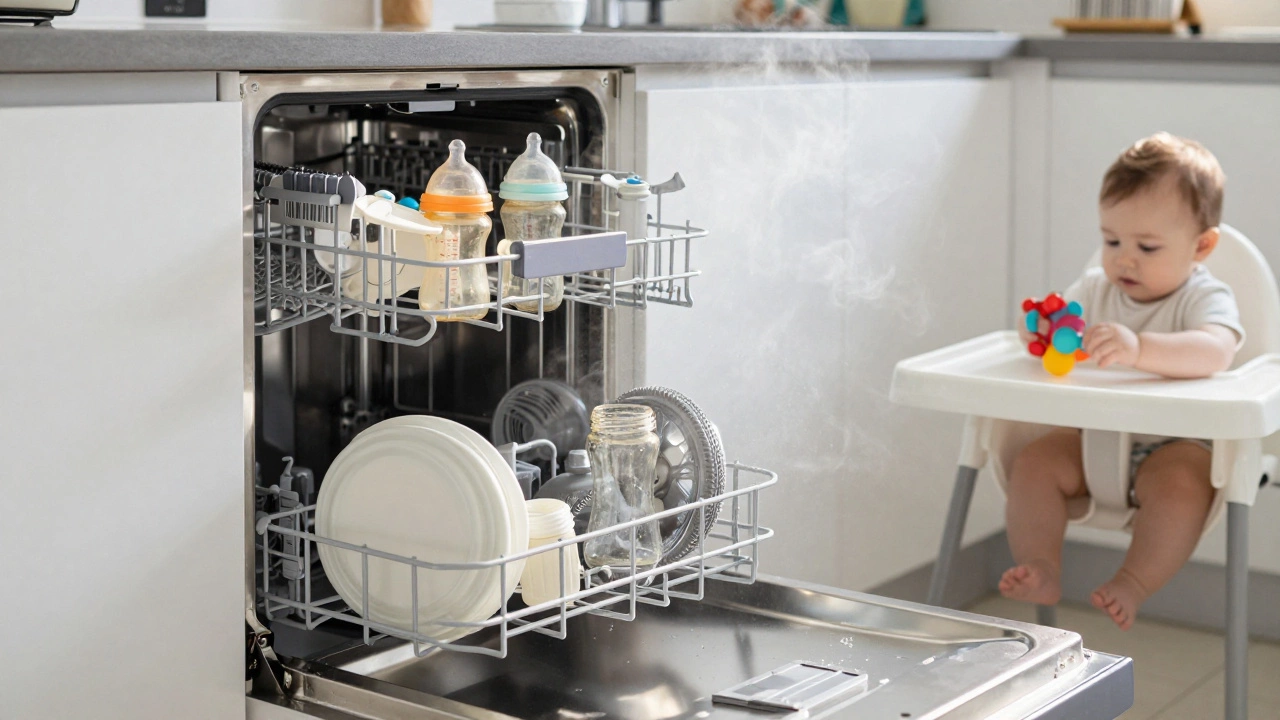
Let the parts air dry on a clean rack. Avoid towels-they can carry germs. If you’re using a dishwasher, put the parts on the top rack. Modern dishwashers with a hot wash cycle (at least 65°C) and a drying cycle are effective enough for daily cleaning after three months.
Some parents worry about soap residue. Use a mild, fragrance-free baby detergent. Rinse well. A quick rinse under hot water after washing removes any leftover soap. You don’t need special baby dish soap-just avoid harsh chemicals.
When you can skip sterilizing altogether
By six months, most babies are eating solids, teething, and putting toys in their mouths constantly. At this point, the risk from a slightly dirty bottle is minimal. You’re not protecting them from the world-you’re just trying to reduce avoidable risks.
Here’s a simple rule: sterilize only if:
- Your baby is under three months old
- You’re using formula (breast milk is naturally antibacterial, but bottles still need cleaning)
- Your water supply isn’t reliably safe
- Your baby is sick or recovering from illness
Otherwise? Wash well, dry properly, and move on. You’re not neglecting hygiene-you’re adapting to your baby’s growing immunity.
What about bottle warmers and storage?
Bottle warmers are convenient, but they’re not sterilizers. Don’t leave prepared formula in a warmer for more than an hour. Bacteria multiply fast in warm, sugary milk. If your baby doesn’t finish a bottle within an hour, throw it out. Don’t save it for later.
Prepared formula can be stored in the fridge for up to 24 hours. Store it in clean, sealed containers. When you reheat it, use warm water-not the microwave. Microwaves heat unevenly and can create hot spots that burn your baby’s mouth.
Same goes for breast milk. It can be stored in the fridge for up to 72 hours or frozen for six months. Always label with the date. Thaw overnight in the fridge or under running warm water. Never reheat thawed milk more than once.

Common mistakes parents make
Most parents aren’t careless-they’re just tired. Here are the most common errors:
- Sterilizing bottles daily after six months-unnecessary and time-consuming
- Using the same brush for bottles and the sink-cross-contamination
- Leaving bottles in the sterilizer for days-dust and bacteria can settle
- Not drying bottles properly-moisture breeds mold
- Using the same bottle for multiple feeds without cleaning-milk residue builds up
Pro tip: Buy at least six bottles and six nipples. That way, you can wash and sterilize in batches instead of doing one at a time after every feed. It saves time and reduces stress.
What experts really say
The NHS updated its guidance in 2024 to reflect modern evidence: “For healthy babies, thorough cleaning with hot soapy water is sufficient after three months. Sterilization is not required daily.”
A 2023 study in the Journal of Pediatric Infectious Diseases followed 1,200 families in England and Wales. Babies who stopped sterilizing after four months had no higher rates of stomach infections, ear infections, or thrush than those who kept sterilizing. The only difference? Parents who stopped sterilizing reported less stress and more sleep.
Doctors aren’t telling you to be sloppy. They’re telling you to be smart. Your baby doesn’t need a sterile world. They need a clean, calm, and loving one.
What to do if you’re still unsure
If you’re anxious about hygiene, it’s okay. Parenting is full of choices that feel like life-or-death. But here’s what you can do:
- Start sterilizing daily until your baby is three months
- Switch to thorough washing after that
- Keep a sterilizer handy for when your baby is sick or you’re traveling
- Ask your health visitor or GP if you’re unsure-most will confirm you can stop
There’s no shame in being cautious. But don’t let fear drive your routine. Your baby is tougher than you think.
Do I need to sterilize bottles if I’m breastfeeding?
If you’re using a bottle to feed expressed breast milk, yes-clean and sterilize until your baby is three months. Breast milk itself is protective, but the bottle and nipple can still carry bacteria from handling or storage. After three months, regular washing with hot, soapy water is enough.
Can I use the dishwasher instead of sterilizing?
Yes, if your dishwasher has a hot wash cycle (65°C or higher) and a drying cycle. It’s just as effective as boiling or steam sterilizing for daily cleaning after your baby is three months old. Make sure all parts are dishwasher-safe and placed on the top rack.
How often should I replace baby bottle nipples?
Replace nipples every 1-2 months, or sooner if they show cracks, stickiness, or changes in flow. Older nipples can harbor bacteria in tiny tears and may leak or collapse during feeding. Check them every week when you’re cleaning.
Is cold water sterilizing safe?
Yes, cold water sterilizing with solutions like Milton is safe and effective. It kills bacteria without heat, making it good for plastic parts that warp in boiling water. Change the solution every 24 hours, and rinse bottles before use-though rinsing isn’t strictly necessary if you’re using a food-safe solution.
What if I forget to sterilize one night?
One missed sterilization won’t harm your baby if they’re over three months and you’ve been cleaning properly. Babies are exposed to germs every day-from hands to floors to pets. What matters is consistency over time, not perfection in every single feed.