
Before baby formula existed, parents didn’t have a shelf full of powdered options to mix with water. There were no sterile bottles, no temperature-controlled warmers, and no pediatricians recommending specific brands. So how did babies eat? The answer isn’t one simple thing-it’s a mix of practicality, culture, and survival. And yes, it was often risky.
Wet Nursing Was the Most Common Solution
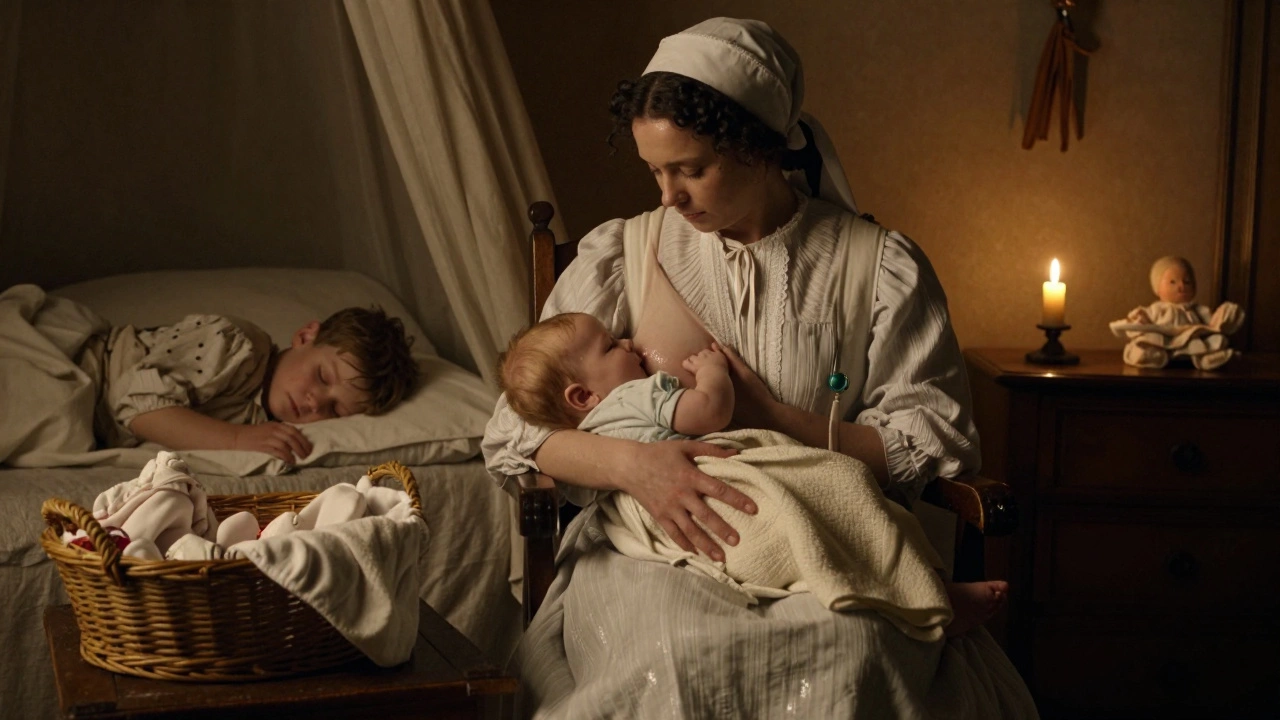
The most widespread way to feed infants before formula was wet nursing. This meant hiring a woman-usually a lactating mother-who would breastfeed another woman’s child. In ancient Rome, wealthy families kept teams of wet nurses. In 18th-century Europe, it was so common that some women made a living out of it. In rural areas, families often swapped babies with neighbors who had recently given birth. It wasn’t just about convenience; it was about biology. Human milk was the only food proven to keep babies alive.
But wet nursing wasn’t perfect. Some nurses were overworked, underpaid, or even drugged to keep them calm. Others were forced to give up their own babies to feed someone else’s. In cities like Paris and London, infant mortality rates spiked when wet nurses were sent to the countryside to nurse multiple children at once. Many of those babies died from malnutrition or disease because the nurse couldn’t care for them all.
Animal Milk Was Used-But It Was Dangerous
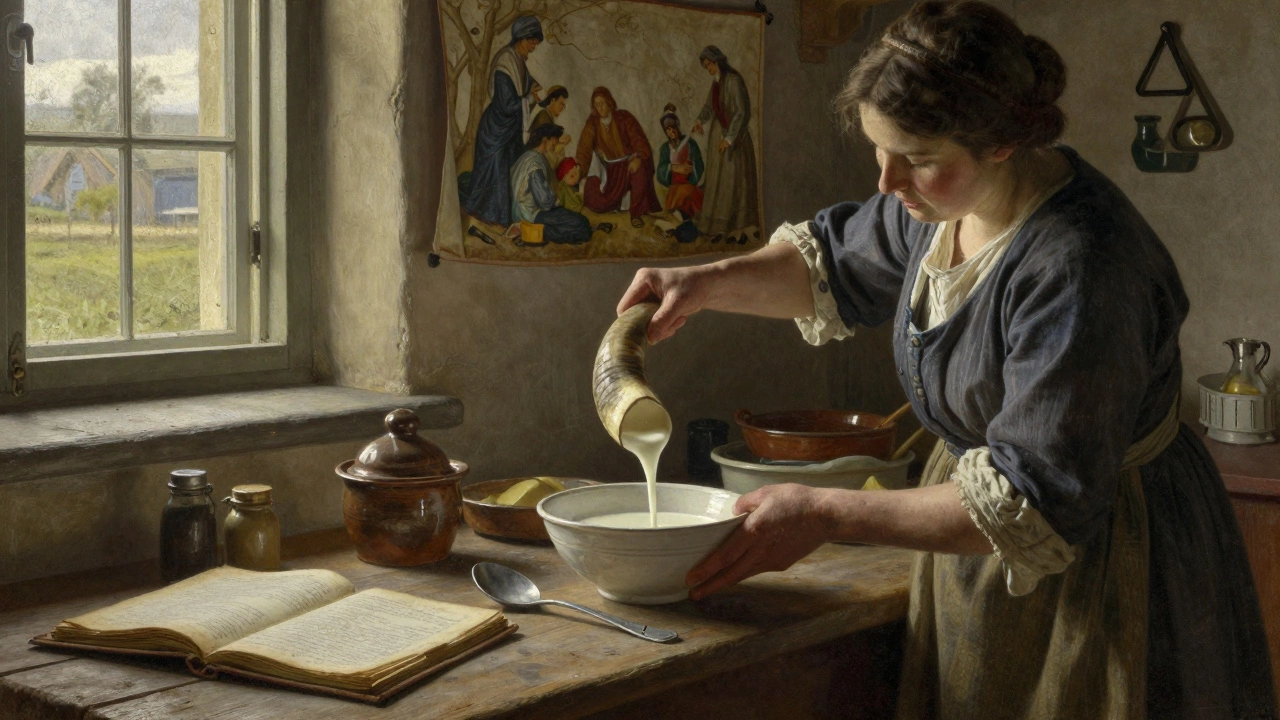
When wet nursing wasn’t possible, families turned to animal milk. Cow’s milk, goat’s milk, and even sheep’s milk were boiled, diluted with water, and fed to babies using spoons, horns, or cloth dipped in liquid. In some parts of rural Europe and Asia, goat’s milk was preferred because it was easier to digest than cow’s milk.
But here’s the problem: animal milk lacks the right balance of nutrients for human infants. It has too much protein and minerals, which strain a baby’s kidneys. It has too little iron, vitamin C, and essential fatty acids. Babies fed only animal milk often developed scurvy, anemia, or severe diarrhea. In the 1800s, hospitals in New York and London reported that over half of bottle-fed infants died before their first birthday. Many of those deaths were directly linked to spoiled milk or improper dilution.
Early Bottles and Feeding Tools Were Dirty-and Deadly
By the 1700s, glass and ceramic bottles with rubber nipples started appearing in Europe. They looked harmless, but they were anything but. These bottles had no way to be cleaned properly. Milk stuck to the rubber and glass, and bacteria grew fast. Some bottles even had long, flexible tubes that let mothers feed babies from a distance-like a primitive version of today’s feeding tubes. But those tubes were nearly impossible to sanitize.
One study from 1860 in Germany found that over 60% of bottle-fed infants died before age one. The leading cause? Contaminated feeding tools. In rural areas, parents sometimes used hollowed-out gourds or animal horns as makeshift bottles. These were rarely washed between uses. One mother in rural England wrote in her diary in 1842: "I gave the babe milk from the cow’s horn, and it cried all night. It died three days later. I did not know why."
Pre-Formula Alternatives: Porridge, Broth, and Even Wine
Some cultures tried feeding babies soft foods before they could chew. In parts of Africa and Southeast Asia, families made thin porridge from ground grains like millet or rice, mixed with water or animal milk. In 19th-century America, some doctors recommended giving babies beef broth or weak tea. Others even added a drop of wine or brandy to calm fussy infants.
These weren’t nutritionally sound. Porridge lacked protein and fat. Broth had almost no calories. Alcohol? It didn’t soothe-it damaged developing brains. In 1886, a pediatrician in Boston published a warning after 17 infant deaths in one year were traced to alcohol-laced feedings. He called it "a cruel experiment on the helpless."
Why Formula Eventually Replaced These Methods
Formula didn’t appear because someone wanted a convenience-it appeared because babies were dying. In the late 1800s, scientists began analyzing human milk. They found it had about 7% fat, 1.2% protein, and 7.5% lactose. By the 1920s, companies started making formulas that tried to match those numbers. Early versions were made from cow’s milk, sugar, and lime water. They weren’t perfect, but they were better than what came before.
By the 1950s, formula became widely available, affordable, and marketed as "scientific" and "modern." Hospitals began using it routinely. Wet nursing faded. Animal milk fell out of favor. Bottles were replaced with sterilized, disposable parts. Infant mortality rates in developed countries dropped sharply after formula became common.
What We Can Learn from the Past
Today, we take formula for granted. But looking back shows us something important: babies need precise nutrition. Human milk isn’t just food-it’s medicine. It changes composition as the baby grows. It carries antibodies. It’s tailored. Animal milk, broth, wine, or porridge? None of those can replicate that.
That’s why modern formula, despite being processed, is still the next best thing. It’s not perfect, but it’s designed with decades of research. It’s tested. It’s regulated. It’s not a guess. It’s science.
And that’s why, even now, the American Academy of Pediatrics says breast milk is best-but if that’s not possible, commercial formula is the only safe alternative. No porridge. No goat’s milk. No wine. Just formula, carefully made, and properly prepared.
Was breast milk always the ideal choice before formula?
Yes. Breast milk was always the best option when available. It provided antibodies, the right balance of nutrients, and reduced infection risk. But not all mothers could breastfeed-due to illness, death in childbirth, poverty, or social pressure. That’s why alternatives like wet nursing and animal milk existed.
Did all cultures use the same feeding methods?
No. In West Africa, mothers often fed babies mashed plantains and water. In parts of India, rice water or lentil broth was common. In medieval Europe, honey and milk mixtures were used. In the American colonies, some families fed babies cornmeal gruel. These methods reflected local food availability, not medical knowledge.
Why was goat’s milk sometimes preferred over cow’s milk?
Goat’s milk has smaller fat globules and slightly less lactose than cow’s milk, making it marginally easier to digest for some infants. In regions where goats were more common than cows-like mountainous areas of Europe and the Middle East-goat’s milk became the default substitute. But it still lacked folate and iron, so babies fed only goat’s milk often developed anemia.
When was the first commercial baby formula created?
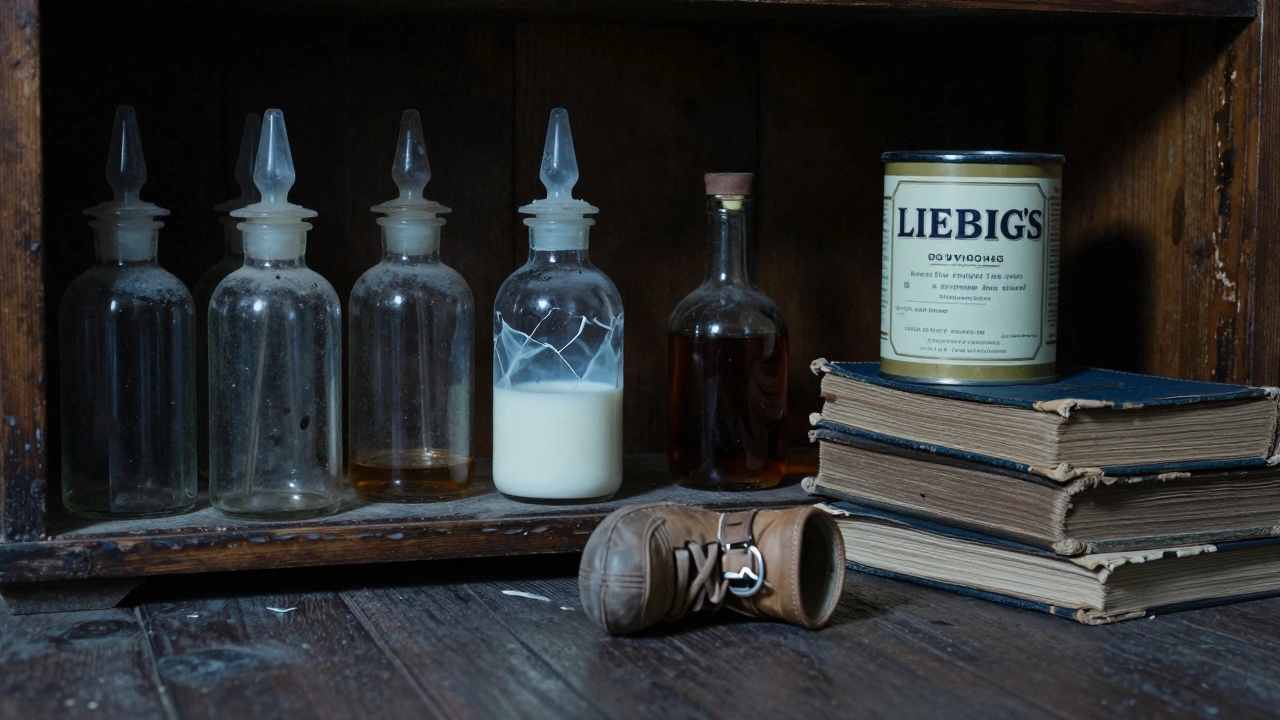
The first commercially produced baby formula was developed in 1867 by German chemist Justus von Liebig. His "Liebig’s Soluble Food for Children" was a powdered mix of wheat flour, malt flour, and cow’s milk. It was sold in tins and marketed as a "scientific" alternative. It didn’t save many lives-many babies still died from improper preparation-but it started the industry.
Is it safe to use animal milk for babies today?
No. The American Academy of Pediatrics strongly advises against giving cow’s milk, goat’s milk, or other animal milk to infants under 12 months. Their kidneys can’t handle the high protein and mineral load, and they miss critical nutrients like iron and vitamin D. Formula or breast milk are the only safe options before age one.