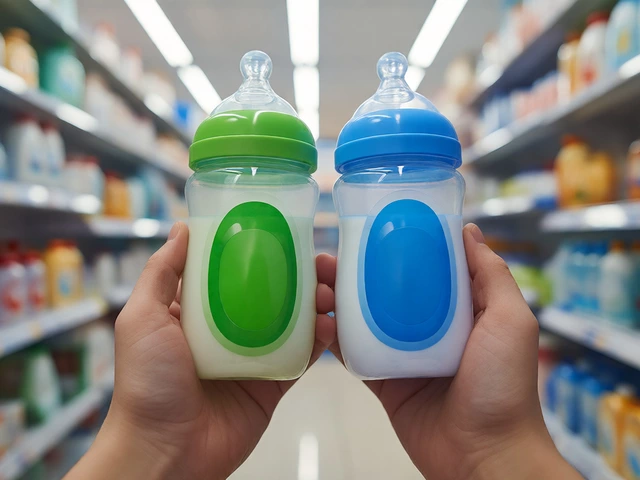
Baby Emergency Feeding Guide
Select your baby's age group to see recommended emergency foods and safety warnings.
Strategy: Liquid only. No solids. Kidneys are immature.
Emergency Diluted Milk Recipe
- Mix 3 parts whole cow's milk with 1 part boiled & cooled water.
- Add 1 tsp vegetable oil or unsweetened yogurt for calories.
- Warm slightly before feeding.
- Note: Use for max 2-3 days only.
Strategy: Mix of liquids and nutrient-dense purees. Hydration is critical.
Strategy: Wide variety allowed. Risk of malnutrition from short-term changes is low.
You’re at home, the pharmacy is closed, and you’ve just realized you have absolutely no breast milk and no formula left. The panic sets in immediately. Your baby is hungry, crying, and needs fuel now. You might be tempted to reach for cow’s milk from the fridge or dilute some juice, but hold on. Feeding an infant isn’t like feeding a toddler. Their kidneys are tiny, their digestive systems are immature, and their nutritional needs are incredibly specific.
Here is the hard truth: there is no perfect long-term substitute for breast milk or commercial infant formula. However, if you are facing a short-term emergency-say, 24 to 48 hours while you wait for a delivery or run to the store-you can bridge the gap safely. This guide walks you through exactly what to do based on your baby’s age, why certain common foods are dangerous, and how to make a temporary homemade solution that won’t hurt them.
The Golden Rule: Age Determines Everything
Before you feed anything, check your baby’s age. This single factor changes the entire strategy.
- Under 6 months: This group is the most vulnerable. Their guts cannot handle complex proteins or high mineral loads. Solid food is off the table entirely. You need liquid calories that mimic human milk as closely as possible.
- 6 to 12 months: These babies have started solids. They can handle more variety, including pureed fruits, vegetables, and grains. You have more flexibility here, but milk (breast or formula) should still be the primary source of nutrition.
- Over 12 months: Congratulations, the rules loosen up. Toddlers can drink whole cow’s milk and eat a wide variety of foods. The risk of malnutrition from a few days of weird eating is low.
If your baby is under six months, please read the next section carefully. Do not skip it.
Emergency Feeding for Babies Under 6 Months
For infants younger than six months, the World Health Organization and pediatric bodies agree on one thing: nothing beats breast milk or formula. But in a pinch, you have two main options depending on availability.
Option 1: Diluted Cow’s Milk (The Last Resort)
Yes, you can give cow’s milk to a young infant in an emergency, but only if you prepare it correctly. Whole cow’s milk has too much protein and sodium for a newborn’s kidneys to handle efficiently. It also lacks enough iron and vitamin C.
To make it safer for a short period (no more than 2-3 days), follow this recipe:
- Take whole cow’s milk (not skim or low-fat; babies need fat for brain development).
- Mix 3 parts milk with 1 part water. For example, 300ml milk + 100ml boiled and cooled water.
- Add a teaspoon of vegetable oil or unsweetened yogurt to boost calorie density, as diluted milk is less energy-dense than formula.
- Warm it slightly before feeding.
This mixture provides hydration and basic calories but will leave the baby deficient in key nutrients if used for weeks. Monitor for signs of dehydration or poor weight gain.
Option 2: Homemade Emergency Formula
If you want something closer to formula, you can try a simple homemade version. Note that this is not sterile and lacks the precise micronutrient balance of commercial products, so use it only until you get real formula.
| Ingredient | Amount | Purpose |
|---|---|---|
| Whole Cow’s Milk | 750 ml | Base protein and fat |
| Water | 250 ml | Dilution for kidney safety |
| Corn Syrup or Maple Syrup | 30 ml (approx. 2 tbsp) | Carbohydrates for energy |
| Vegetable Oil | 10 ml (approx. 2 tsp) | Essential fatty acids |
Mix these ingredients thoroughly. Store in the fridge for up to 24 hours. Discard any leftover after each feeding. This recipe is derived from historical pediatric guidelines used when commercial formula was unavailable, but modern advice stresses consulting a doctor immediately if you must use this for more than a day or two.
Feeding Babies 6-12 Months Without Formula
If your baby has already started solids, you have more breathing room. You don’t need to rely solely on liquids. Focus on nutrient-dense purees and soft foods that provide calories and hydration.
Safe Solid Food Substitutes
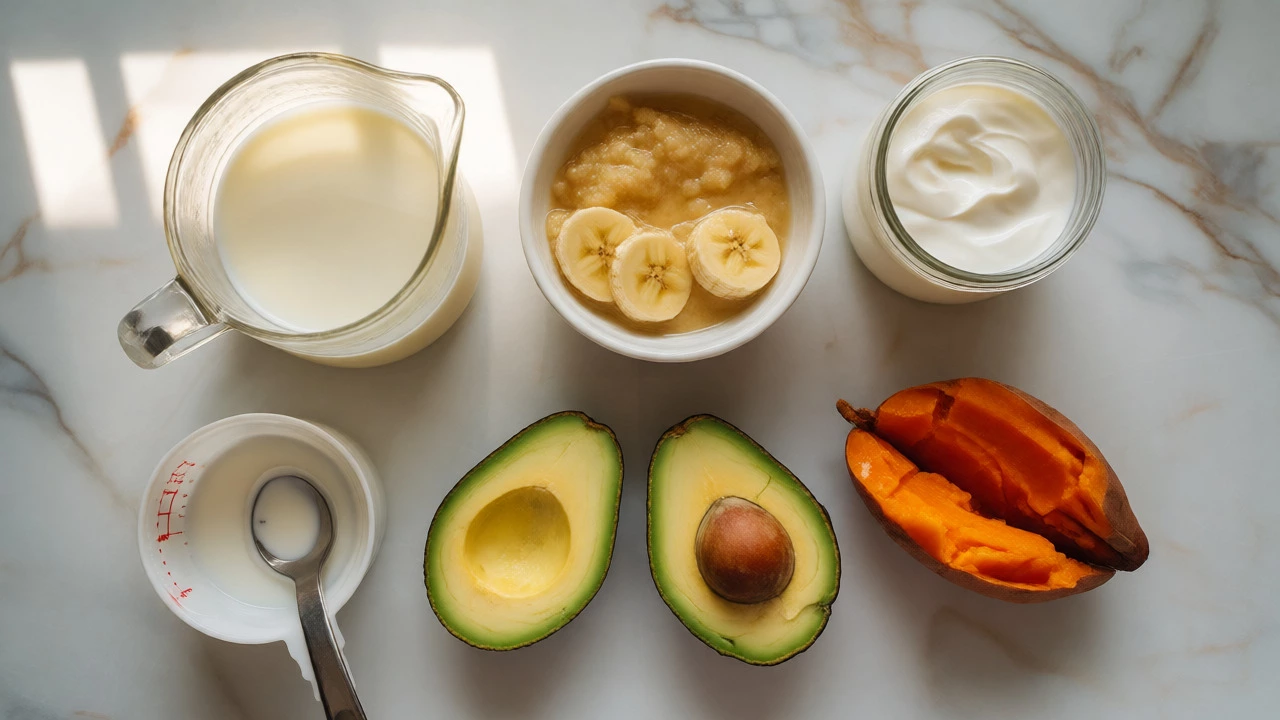
- Banana Puree: Mash a ripe banana with a little water or breast/formula milk if you have any left. Bananas are easy to digest and packed with potassium.
- Avocado: Mash half an avocado. It’s rich in healthy fats, which are crucial for brain growth. Mix with water to thin it out.
- Sweet Potato Puree: Boil or steam a sweet potato until very soft, then mash. It’s gentle on the stomach and naturally sweet.
- Rice Cereal: If you have instant baby rice cereal, mix it with water. It’s bland but filling and hypoallergenic.
- Yogurt: Plain, full-fat yogurt (without added sugar) is excellent. It contains probiotics and calcium. Ensure the baby is not allergic to dairy.
Offer these foods frequently throughout the day. Since they aren’t drinking their usual volume of milk, they may need more frequent small meals to stay hydrated and fueled.
Hydration Is Critical
One of the biggest risks when switching feeds is dehydration. Formula and breast milk are over 80% water. Solids are not. If you switch to solids, you must offer water separately.
Give small sips of boiled and cooled water between meals. Watch for wet diapers. A baby should have at least four to six wet diapers in 24 hours. If diapers are dry, lips are sticky, or the baby seems lethargic, seek medical help immediately.
What NOT to Feed Your Baby
In the desperation of hunger, parents often reach for things that seem logical but are actually dangerous. Here are the big no-nos:
- Honey: Never give honey to babies under 12 months. It can contain Clostridium botulinum spores, which cause infant botulism-a rare but serious illness affecting the nervous system.
- Fruit Juice: Apple or pear juice is high in sugar and low in nutrients. It can cause diarrhea, leading to faster dehydration. Avoid it unless directed by a doctor for constipation.
- Plant-Based Milks (Almond, Oat, Soy): Most commercial plant milks lack the protein and fat content infants need. Soy milk is the exception for older babies if fortified, but almond and oat milks are essentially watery snacks for adults, not meal replacements for babies.
- Goat’s Milk: Often marketed as a natural alternative, goat’s milk lacks folate and B12, leading to anemia if used exclusively without supplementation. It’s not a safe standalone substitute.
- Skim or Low-Fat Milk: Babies need fat for brain development. Skim milk doesn’t provide enough calories.

Signs Your Baby Needs Immediate Medical Attention
While these emergency measures work for short periods, some babies react poorly to dietary changes. Go to the ER or call your pediatrician if you notice:
- Vomiting after every feed.
- Blood or mucus in stool.
- Extreme fussiness or inconsolable crying.
- Signs of dehydration (sunken fontanelle-the soft spot on the head).
- Fever.
Trust your gut. If something feels wrong, it probably is. Better to get checked out than to guess.
Long-Term Strategy: Getting Back on Track
Once you’ve survived the immediate crisis, plan your return to standard feeding. If cost is the issue, look into government assistance programs like WIC in the US or Sure Start centers in the UK, which often provide free formula vouchers. If supply chain issues are the problem, consider buying different brands of formula ahead of time rather than sticking to one specific type.
Remember, consistency matters. When you reintroduce breast milk or formula, do so gradually if your baby has been on solids for several days. Their digestion might need a moment to adjust back to a liquid-heavy diet.
Can I dilute regular cow's milk for my newborn?
Yes, but only in emergencies and for short periods. Mix 3 parts whole cow's milk with 1 part water to reduce the protein and mineral load on the kidneys. Add a little oil for calories. This is not a long-term solution due to nutrient deficiencies.
Is goat milk a good substitute for formula?
No, not directly. Goat milk lacks sufficient folate and vitamin B12 for infants. Using it exclusively without supplementation can lead to megaloblastic anemia. It requires fortification to be comparable to formula.
How long can a baby go without proper formula?
Newborns can survive 24-48 hours on emergency substitutes like diluted milk or water-based solutions without severe harm, provided they stay hydrated. However, prolonged reliance (over a week) risks significant nutrient deficiencies and failure to thrive.
Can I give my baby almond milk instead of formula?
Generally, no. Almond milk is low in protein and fat compared to breast milk or formula. It does not meet the caloric and nutritional demands of growing infants. It is better suited as a beverage for toddlers over 1 year old.
What if my baby refuses the emergency food?
Try offering smaller amounts more frequently. Warm the food slightly to mimic body temperature. If they refuse all fluids and solids for more than 8-12 hours, contact a healthcare provider to rule out illness or oral thrush.