Nursery Budget & Safety Planner
Build your ideal nursery setup below to see estimated costs and receive personalized safety tips.
Enter your preferences and click calculate to see your estimated total and safety checklist.
Walking into a baby store can feel like stepping into a trap. Everything is cute, everything smells like fresh pine or lavender, and the sales assistants are aggressively pushing bundles that cost more than your first car. But here’s the truth most parents learn too late: you don’t need half of what they sell you. You need a safe place for your baby to sleep, a functional spot to change their nappy at 3 AM, and enough storage so you aren’t tripping over piles of onesies in the living room.
Building a nursery is less about decorating and more about logistics. It’s about flow. If you have to walk five steps to grab a diaper while holding a squirming infant, you’re going to hate your life by week two. This guide cuts through the marketing fluff to tell you exactly what furniture matters, which pieces save money, and how to set up a room that actually works for tired humans.
The Non-Negotiables: Sleep and Safety
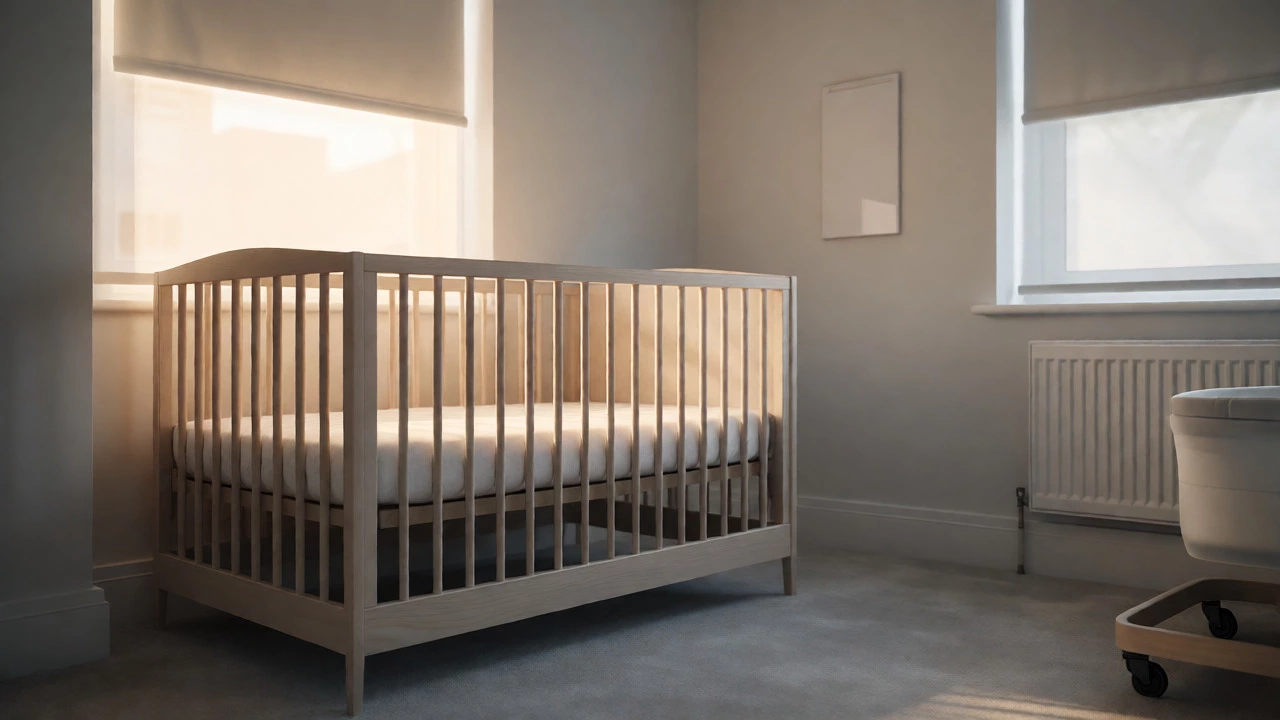
If you buy nothing else, get the sleep setup right. The baby crib is the centerpiece of any nursery, but it’s also where most safety mistakes happen. In the UK, standards are strict for a reason. You want a crib that meets BS EN 716 standards. This ensures the slats are spaced correctly (no more than 65mm apart) so tiny heads don’t get stuck, and the paint is non-toxic.
Do you need a fancy convertible crib? Maybe. Convertible cribs turn into toddler beds and sometimes daybeds. They cost £200-£400 upfront but save you buying another bed in three years. However, if you plan on moving houses or having multiple children close in age, a simple standard crib might be smarter. You can resell it easily. A cheap IKEA Sniglar crib costs under £80 new and holds its value surprisingly well on Facebook Marketplace. Just make sure you buy a solid, breathable mattress. Never use memory foam for infants; it traps heat and poses suffocation risks. Go for firm, ventilated core materials.
Then there’s the bassinet. Is it necessary? For the first four months, yes, if you’re sleeping in a different room from the baby. A bassinet sits next to your bed, allowing you to feed without getting up. It saves your back and your sanity. Look for one with wheels and a locking mechanism. Side-sleepers should check compatibility with their adult bed height. If you’re co-sleeping safely or have a small flat, skip the bassinet and put the crib in your bedroom initially. It saves space and money.
The Changing Station Reality Check
You will change approximately 8,000 nappies in the first year. Do not underestimate this number. It is a marathon of wiping, powdering, and dressing. Because of this volume, the changing table isn’t just furniture; it’s a workstation.
Traditional tall changing tables take up floor space and often go unused once the baby starts rolling and crawling. Many parents find themselves changing babies on the sofa or the floor after month six anyway. So, what’s the smart move? Consider a changing dresser. It’s a regular chest of drawers with a removable top tray. Once the baby outgrows the changing phase, you keep the dresser for clothes. No waste, no resale hassle.
Alternatively, use a wall-mounted folding changing unit. These clamp onto a wall or sit atop an existing shelf. They fold away when not in use, reclaiming precious square footage. This is ideal for small flats in cities like Bristol or London. Just ensure the weight rating exceeds 15kg to account for a growing baby plus your leaning weight. Always keep one hand on the baby, even if the unit looks sturdy. Babies wiggle unpredictably.
| Type | Pros | Cons | Best For |
|---|---|---|---|
| Tall Standalone Table | Dedicated space, lots of storage below | Bulky, becomes useless later, expensive | Larger rooms, long-term planning |
| Changing Dresser | Dual-purpose, durable, keeps value | Heavier to move, fixed height | Small spaces, eco-conscious buyers |
| Folding Wall Unit | Space-saving, modern look, cheaper | Limited storage, installation required | Rentals, very small nurseries |
| Crib Topper | No extra footprint, uses existing furniture | Ergonomically poor (too low), unstable | Temporary solution, tight budgets |
Storage That Actually Works
Nurseries get cluttered fast. Diapers, wipes, lotions, spare clothes, burp cloths-it adds up. Open shelving looks great on Instagram, but dust collects on every toy and bottle. Closed storage is your friend. You want cabinets with doors or deep drawers.
A good rule of thumb: buy vertical storage. Floor space is premium real estate in a nursery. Tall bookcases or wardrobes draw the eye upward and keep the floor clear for play mats later. When choosing a wardrobe, check the depth. Standard wardrobes are 60cm deep. If your nursery is narrow, look for shallow-depth options (35-40cm). You’ll lose some hanging capacity for dresses, but baby clothes are short. You can hang two rows of bodysuits on double rails within that shallow depth.
Don’t forget the laundry basket. It sounds trivial, but you will wash baby clothes constantly. Get a large, lidded hamper with wheels. Why wheels? Because you’ll be dragging it down stairs. Lids contain smells-let’s be honest, baby poop has a potency that defies physics-and keep pets out. Place it near the changing station so dirty clothes don’t pile up on the chair.
Comfort for the Caregiver
We talk a lot about the baby, but who is feeding them? You. And you will spend hours sitting in a chair. A bad nursing chair can cause chronic back pain that lasts longer than the breastfeeding period. This is the one piece of furniture where you should not skimp on quality or comfort.
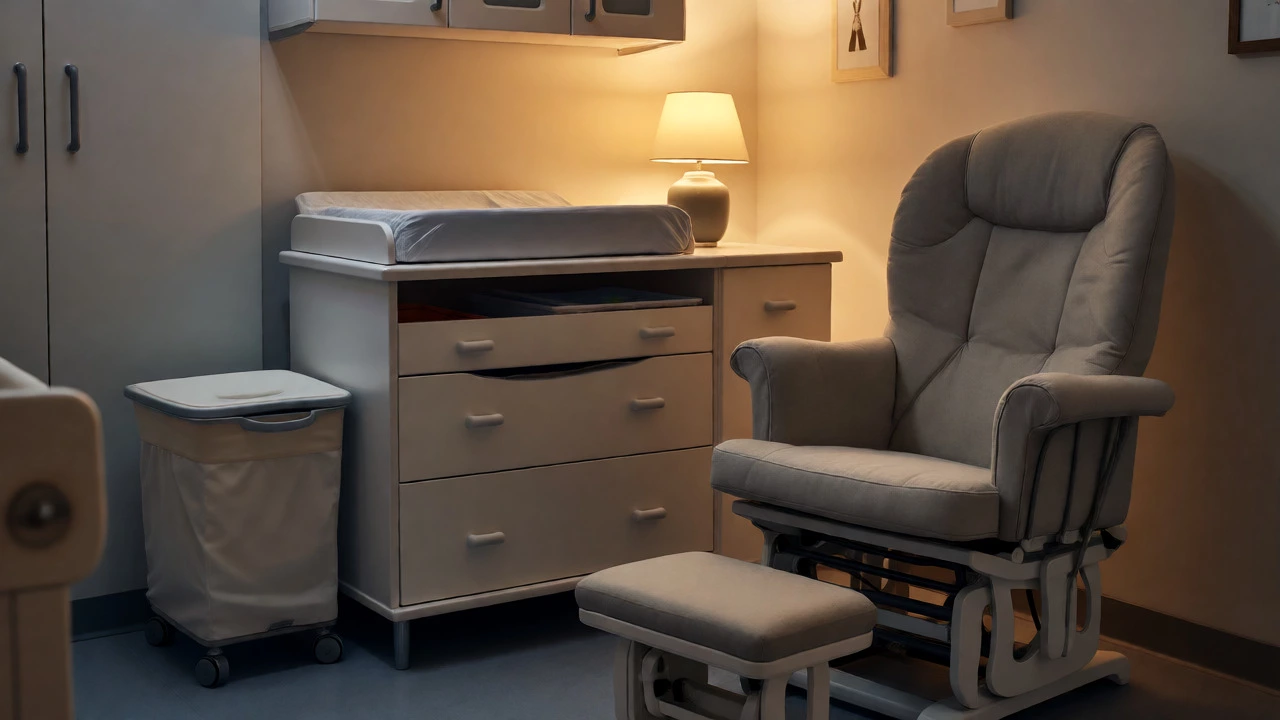
Glider chairs are superior to rocking chairs. Rocking requires momentum and can strain ankles if you’re wearing slippers. Gliders move smoothly back and forth with minimal effort. Look for a chair with a high backrest to support your neck, especially if you’re looking down at the baby. Armrests must be wide enough to hold a pillow or a phone. Test the seat depth; if it’s too deep, you’ll slump. If it’s too shallow, your thighs won’t be supported.
Pair the chair with a footstool. Elevating your feet reduces pressure on your lower back. Also, consider the fabric. Velvet looks luxurious but shows stains and cat hair. Leather is easy to wipe clean but can be cold in winter and sticky in summer. Performance fabrics designed for family homes are stain-resistant and breathable. If you have other kids, choose a patterned fabric that hides crumbs.
Lighting and Ambience
Overhead lighting is rarely useful in a nursery. Blinding yourself with a bright ceiling light during a 2 AM feed wakes the baby up completely. You need dimmable, localized light sources.
Install dimmer switches on the main lights if possible. If you’re renting, use smart bulbs that you can control via app or voice assistant. This lets you adjust brightness without fumbling for switches in the dark. Add a small table lamp next to the nursing chair for reading stories or checking diapers. Choose warm white bulbs (2700K) rather than cool daylight (5000K+). Warm light promotes melatonin production for both you and the baby, signaling that it’s time to rest.
Avoid string lights or fairy lights as the primary source. They cast uneven shadows and can distract older babies. Instead, use a blackout blind system. Not all blinds block 100% of light. Look for "blackout" specifically, not just "dim-out." Daylight ruins nap schedules faster than anything else. If your window faces east, morning sun will wake your baby at 5 AM regardless of their internal clock.
Safety Standards and Hidden Hazards
In the UK, furniture safety falls under specific regulations. All cribs must comply with BS EN 716. Mattresses should meet BS 7177 for fire resistance. When buying second-hand-which is perfectly fine and sustainable-check for recalls. The Office for Product Safety and Standards maintains a list of recalled items.
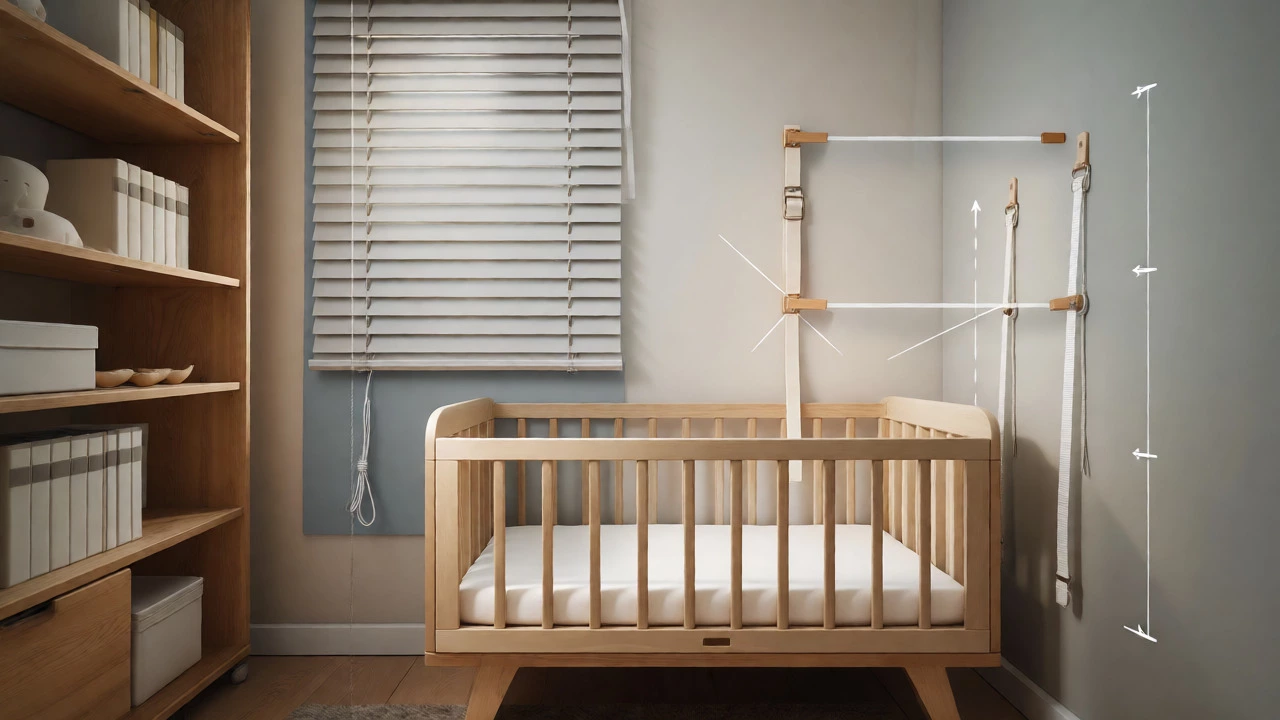
Anchor everything. Tip-over accidents are rare but devastating. Tall dressers and bookcases must be secured to the wall using anti-tip straps. Even if you think your baby can’t pull themselves up yet, wait until they do. Toddlers are strong climbers. Ensure cords from blinds are out of reach or use cordless options. Cord strangulation remains a leading cause of injury in young children. If you have existing blinds with cords, install cleats to wrap them up high.
Check for sharp edges. Modern furniture often has rounded corners, but older pieces might not. Use corner guards if you notice any pointy bits on tables or shelves. Also, inspect paint finishes. Chipped lead-based paint is a hazard in older properties. If you’re renovating an old Victorian house in Bristol, test the walls before letting a toddler chew on the baseboards.
What to Skip (Save Your Money)
Let’s save you some guilt and cash. Here are items you probably don’t need:
- Crib Bumpers: The American Academy of Pediatrics and UK health bodies advise against them. They pose suffocation risks and offer little protection against bumps. Bare slats are safer.
- Mobile Phones for Cribs: Cute, but babies stop noticing them after six weeks. They become dust collectors and potential entanglement hazards if strings dangle.
- Specialized Nursery Hampers: Those tiered baskets for sorting clothes? You’ll sort them once, then throw everything in one bin because you’re too tired. Regular laundry hampers work fine.
- Diaper Pails: Unless you live in a hot climate where smell builds up quickly, a regular bin with a lid and biodegradable bags works. Diaper pails are bulky and require proprietary refills that add ongoing costs.
Planning Your Layout
Before you buy anything, measure your room. Draw a scale map on graph paper. Mark windows, radiators, and door swings. Radiators are tricky-you cannot place a crib directly against a hot radiator due to burn risk and overheating. Leave at least 50cm gap. Door swings eat up floor space; ensure the door doesn’t hit the crib when opened.
Create zones. The "Sleep Zone" should be quiet and dark. The "Care Zone" (changing + nursing) needs good light and easy access to supplies. Keep these areas distinct if the room size allows. If the room is tiny, combine them vertically. A changing unit above a drawer bank, with a glider nearby, creates a compact care hub.
Think about future-proofing. Will this room become a toddler’s room in two years? If so, avoid overly babyish themes like giant cartoon animals painted on the walls. Use neutral colors and change accessories instead. A grey or beige palette with colorful textiles is easier to update than a themed mural.
Final Checklist Before Purchase
Ready to shop? Run through this quick audit:
- Does the crib meet current safety standards?
- Is the mattress firm and fitted snugly (no gaps >2 fingers)?
- Can I reach diapers and wipes without turning around while holding the baby?
- Is the nursing chair comfortable for my height and back?
- Are all tall units anchored to the wall?
- Is there blackout capability for daytime naps?
Building a nursery is exciting, but it shouldn’t bankrupt you or stress you out. Focus on function first, aesthetics second. A safe, well-lit, organized room helps everyone sleep better. And honestly, a good night’s sleep is the best gift you can give yourself.
How much does a basic nursery setup cost in the UK?
A functional basic nursery can be set up for between £300 and £600 if you mix new and second-hand items. This includes a crib (£80-£150), a mattress (£50-£80), a changing unit (£100-£150), a glider (£100-£200), and basic storage. Luxury setups with designer brands can easily exceed £2,000.
Is a cot bed worth the extra cost compared to a standard crib?
Yes, for many families. Cot beds convert into toddler beds, lasting up to age 3-4. While they cost more upfront (£150-£300 vs £80-£150 for a crib), they eliminate the need to buy a separate toddler bed. However, if you plan to move frequently or have limited space, a standard crib is more portable and easier to resell.
Do I need a dedicated nursery room?
No. Many parents successfully raise children without a spare room. You can create a "nursery corner" in your bedroom using a bedside crib and a small changing unit. As the child grows, you can transition them to a shared room or a converted space. The key is consistency in routine, not the location of the furniture.
What is the safest material for nursery furniture?
Solid wood (like beech, oak, or pine) is generally the safest and most durable option. It avoids the volatile organic compounds (VOCs) found in some particleboard or MDF glues. Ensure any finish used is water-based and non-toxic. Metal frames are also safe if they have smooth, rounded welds and non-toxic powder coating.
When should I start setting up the nursery?
Start gathering ideas and measuring spaces around 20 weeks pregnant. Begin purchasing major furniture items around 28-30 weeks. This gives you time for delivery delays and assembly. Aim to have the crib assembled and the mattress aired out by 32 weeks so it’s ready for early arrivals.