
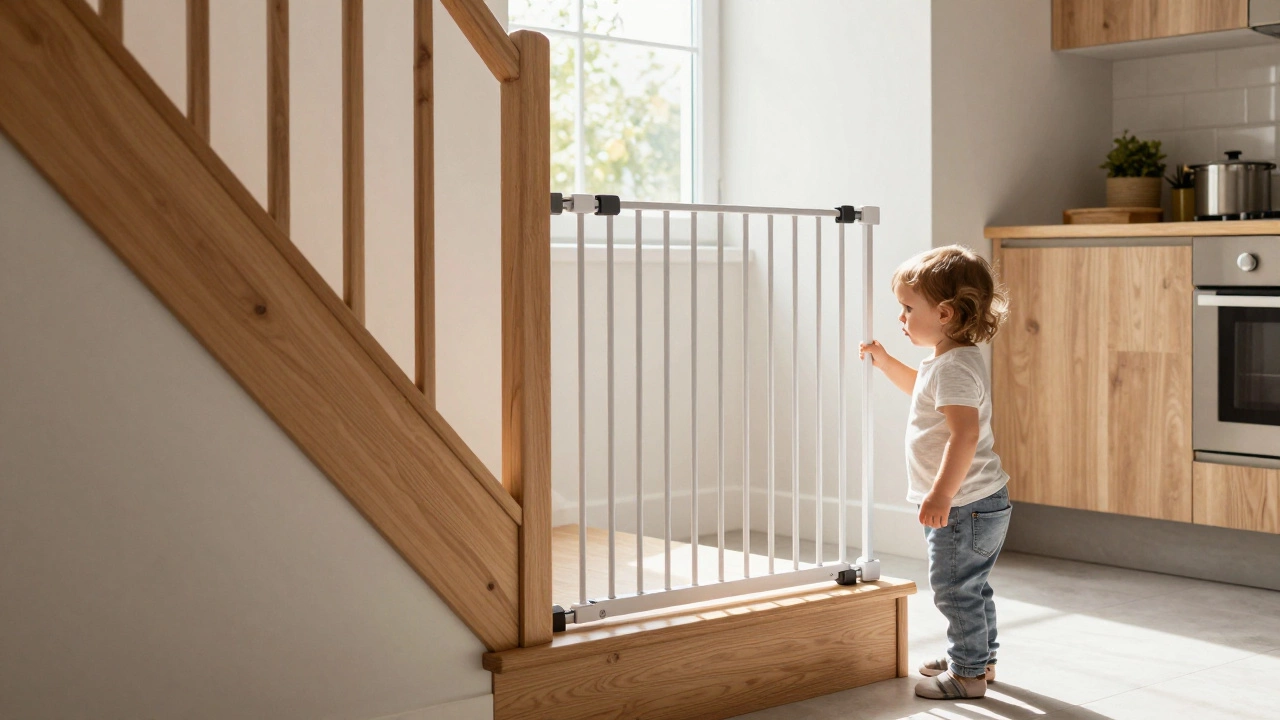
Baby Gate Placement Advisor
Click on each location that exists in your home to analyze gate requirements.
Top of Stairs
Main staircase entranceBottom of Stairs
Staircase exit pointKitchen
Cooking area with hazardsBasement
Storage/utility areaLiving Room
General family spaceBedroom
Sleeping areaHallway
Connecting passagesGarage
Vehicle/storage areaYou walk into the kitchen and there it is: a metal grid blocking your path. It looks like a prison cell entrance in a low-budget movie. You bought it because every parenting blog said you needed one. But now, six months later, your toddler has learned to climb over it, or worse, they’ve figured out how to unlatch it faster than you can say 'no.' So, here is the uncomfortable question that keeps parents up at night: do you really need baby gates?
The short answer is yes, but not everywhere. The long answer involves understanding where danger actually lives in your home versus where anxiety tells you danger lives. Most parents buy three or four gates and end up using only one. Let’s break down why, where they are non-negotiable, and where they are just expensive decoration.
Where Baby Gates Are Non-Negotiable
Not all spaces are created equal when it comes to risk. There are two zones in almost every house where a baby gate is a physical barrier designed to restrict access to hazardous areas for young children isn’t optional-it’s mandatory. These are stairs and high-risk utility rooms.
Stairs are the number one reason for serious head injuries in toddlers under three. Gravity doesn’t negotiate. When a child learns to cruise along furniture, their center of gravity is high, and their balance is precarious. A fall down even three steps can result in a concussion or broken bones. At the top of the stairs, you need a hardware-mounted gate is a security gate screwed directly into the wall frame for maximum stability. Do not use a pressure-mounted gate here. Pressure gates rely on tension against the wall. If a determined two-year-old leans their entire body weight against it, it will tip. Screwing it into the stud ensures it stays put. Yes, it leaves small holes in your drywall. You can patch those holes when your child is five. You cannot patch a skull fracture.
The second non-negotiable zone is anywhere with immediate, lethal hazards. This usually means the basement entrance if you have unfinished basements with exposed wiring, tools, or chemicals. It also applies to kitchens if you have a gas stove or sharp knives within reach. In these cases, the gate acts as a fail-safe. You might think you’re watching closely, but distraction happens. A phone rings, the doorbell chimes, or you sneeze. In that split second, a curious explorer can pull a pot of boiling water onto themselves. A gate buys you time.
Where Gates Are Often Unnecessary
This is where most parents overspend. You see a gate installed across the living room archway in a magazine and think, "I need that." But ask yourself: what is the danger behind that archway? Is there a fire pit? A pool? A loaded gun? If the answer is no, you probably don’t need a gate there.
Living rooms and bedrooms are generally safe zones. They contain soft furnishings, toys, and open floor space. Installing a gate here often creates more problems than it solves. Children hate being confined. If you block off the living room, your child may become frustrated, leading to tantrums. Worse, they may learn to manipulate the latch. Once a child figures out how to open a gate, they feel empowered. That skill transfers to other latches-cupboard doors, car seats, and windows. By putting a gate in a low-risk area, you are essentially giving them practice on opening barriers without teaching them *why* some barriers exist.
Furthermore, gates in wide-open areas disrupt flow. You find yourself constantly climbing over them or carrying laundry baskets through narrow gaps. Life becomes an obstacle course. If your goal is independence, let them roam in safe spaces. Use supervision, not infrastructure, in low-risk areas.
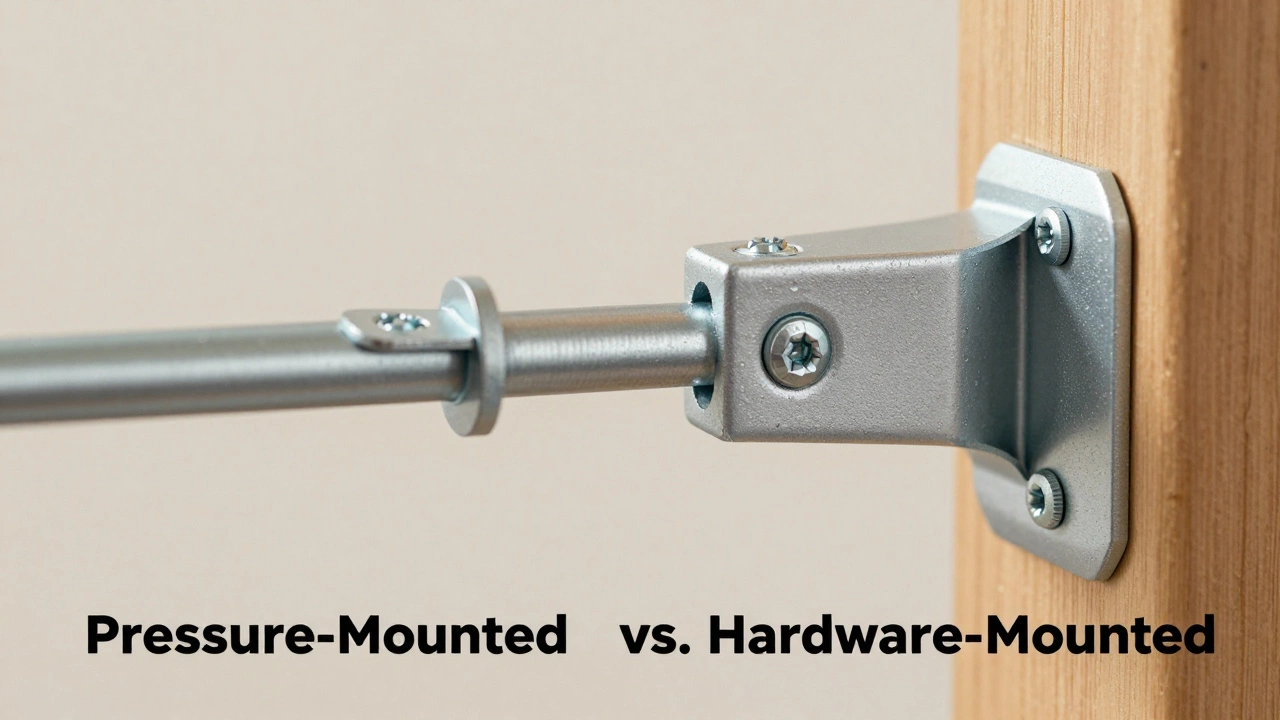
Pressure-Mounted vs. Hardware-Mounted: The Real Difference
If you decide you need a gate, choosing the right type is critical. There are two main types: pressure-mounted and hardware-mounted. Understanding the difference can save you from a costly mistake-or a hospital visit.
| Feature | Pressure-Mounted | Hardware-Mounted |
|---|---|---|
| Installation | No tools required; uses tension rods | Requires drill and screws into studs |
| Safety Level | Low to Medium | High |
| Best For | Doorways, hallways, bottom of stairs (with caution) | Top of stairs, basements, high-traffic areas |
| Removal | Easy; leaves no marks | Difficult; leaves screw holes |
| Cost | £20 - £50 | £40 - £100+ |
Pressure-mounted gates are convenient. You twist the rod, it expands, and it holds. But they are weak. A strong push from a running child can dislodge them. Never use them at the top of stairs. They are fine for keeping a cat out of the bedroom or blocking a hallway temporarily. However, even in hallways, check them weekly. Walls settle, humidity changes, and tension loosens. If the gate wobbles, replace it or reinforce it.
Hardware-mounted gates are the gold standard. They require a drill and some effort, but they are immovable. Look for gates with a double-latch system. A single latch is too easy for a clever toddler to figure out. Double latches mean they have to operate two mechanisms, which is cognitively challenging for a child under three. Also, ensure the gap between the bars is less than 10 centimeters. This prevents heads from getting stuck-a known hazard with older, wider-barred gates.
The Psychological Impact of Barriers
We often forget that children are learning social rules alongside motor skills. Gates send a message: "This area is forbidden." But if every area is forbidden, the concept loses meaning. Selective gating teaches boundaries. If you gate the stairs, your child learns that stairs are dangerous. If you gate the living room, they learn that mom is controlling. There is a subtle difference.
Consider the alternative: active supervision. Instead of gating the entire house, follow your child. Yes, it’s exhausting. But it builds trust and allows you to intervene before a mistake happens. You can say, "No, we don’t touch the hot stove," and show them why. A gate just says "stop" without explanation. Over-reliance on gates can lead to passive parenting, where you assume the environment is safe enough to ignore. It isn’t. No gate replaces attention.
Also, think about escape routes. In case of fire or emergency, a locked gate can trap a child. Ensure any gate you install has a quick-release mechanism that adults can operate easily but children cannot. Test it regularly. If you can’t open it in two seconds, it’s a liability.

When to Remove the Gates
There is no fixed age for removing gates. It depends on your child’s development. Some kids lose interest in exploring by age two. Others remain curious until four. Watch for signs: Can they climb over the gate? Do they try to pick the lock? If they can bypass the gate consistently, it’s time to remove it. Leaving a gate up that a child can climb over is dangerous. They may jump from a height they aren’t ready for, or get stuck trying to squeeze through.
Transition gradually. Start by removing gates from low-risk areas like the living room. Keep the stair gate until they demonstrate consistent caution around heights. Teach them verbal cues: "Stop," "Wait," "Look." Replace the physical barrier with mental discipline. This takes patience, but it leads to greater long-term safety awareness.
Alternatives to Traditional Gates
If you dislike the look of metal grids, consider alternatives. Self-closing hinges for doors are excellent. They ensure doors stay shut without latching, preventing access while allowing easy entry for adults. Cabinet locks are better than gating the entire kitchen. Lock away the dangers, leave the rest accessible. Window guards prevent falls without blocking views. Pet gates made of mesh are lighter and less imposing, though less secure.
Remember, the goal is not to build a fortress. It is to create a safe environment where exploration is encouraged, not suppressed. Use gates strategically, not decoratively.
Are pressure-mounted gates safe for the top of stairs?
No. Pressure-mounted gates are not safe for the top of stairs. They rely on tension against the wall, which can fail if a child leans or pushes against them. Always use hardware-mounted gates secured into wall studs at the top of stairs to prevent tipping and falls.
How wide should the gaps between gate bars be?
The gaps between gate bars should be less than 10 centimeters (approximately 3.75 inches). This width prevents a child’s head from getting stuck between the bars, reducing the risk of strangulation or injury.
At what age should I remove baby gates?
There is no specific age. Remove gates when your child can consistently climb over them or open the latches. Typically, this happens between ages 2 and 4. Transition by teaching verbal safety rules and removing gates from low-risk areas first.
Can I use a baby gate in a doorway with uneven walls?
Pressure-mounted gates work best in uniform doorways. If walls are uneven, the gate may not seal properly, creating gaps. In such cases, choose a hardware-mounted gate or a model with adjustable side panels to accommodate irregular shapes.
Are mesh gates safer than metal bar gates?
Mesh gates are lighter and less likely to cause impact injuries if a child bumps into them. However, they are generally less secure than metal bar gates. Choose mesh gates for low-risk areas like hallways, but stick to sturdy metal or wood gates for stairs and high-hazard zones.