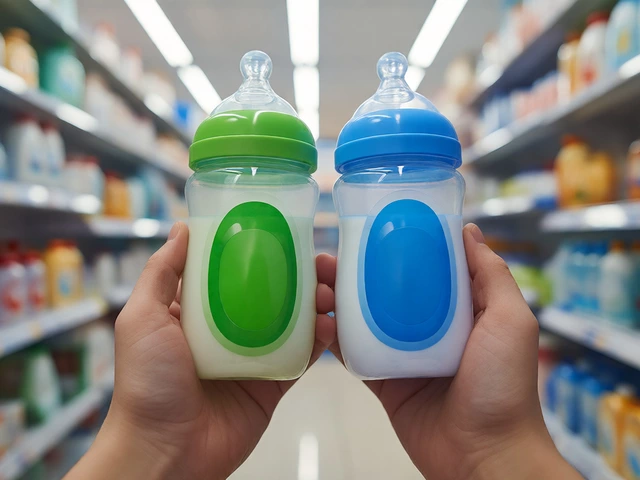
Newborn Bottle Matchmaker
Not sure which bottle to buy? Answer a few questions about your baby and feeding style to get personalized recommendations.
Your Ideal Setup
120ml - 150ml
Why this choice?
You’re standing in the aisle of a pharmacy or scrolling through an online store, staring at a wall of plastic and glass containers. There are wide-necked ones, narrow ones, curved ones, and ones that look like they belong in a chemistry lab. The price tags vary wildly, from £5 to £25 per pack. Your brain starts doing the math: Do I really need to spend this much on something my kid will chew on and drop within three months?
The short answer is no, you don’t need a specific brand or a magic design. But the longer, more helpful answer is yes, newborns have very specific physiological needs that generic toddler bottles often fail to meet. If you pick the wrong setup, you might end up with a gassy, frustrated baby who spits up half their feed. If you pick right, feeding becomes a calm bonding moment rather than a wrestling match.
Newborn bottles are specialized infant feeding vessels designed with specific attributes to support the immature digestive system and weak sucking muscles of infants aged 0-3 months. Unlike standard bottles, they typically feature slow-flow nipples (size 0 or 1), smaller capacities (120ml-150ml), and integrated air venting systems to reduce colic symptoms.
Why Age Matters More Than Brand
Think about how your own mouth works when you drink coffee versus when you sip water through a straw. Now imagine doing that while lying down, with a tongue that hasn’t fully learned to coordinate swallowing and breathing yet. That’s a newborn’s reality.
Adults and older toddlers have strong jaw muscles and coordinated tongue movements. They can handle fast-flow liquid without choking. Newborns cannot. Their primary job during feeding is survival-getting calories without inhaling milk into their lungs. This is where the concept of nipple flow rate becomes critical. Flow rate is measured in milliliters per minute and determines how hard the baby has to work to get milk out.
If the flow is too fast, the baby chokes, gulps air, and vomits. If it’s too slow, they exhaust themselves before getting full, leading to frequent wake-ups and cranky parents. Most "generic" bottles sold for toddlers come with medium or fast flow nipples. These are dangerous for a two-week-old. You need a size 0 or size 1 nipple, which releases just enough milk to keep them satisfied but not so much that it overwhelms them.
The Anatomy of a Newborn-Ready Bottle
When you look at a bottle labeled "for newborns," you aren’t paying for marketing fluff. You’re paying for engineering that solves three specific problems: air ingestion, temperature retention, and ease of cleaning. Let’s break down the components that actually matter.
Nipple Design and Material
This is the most important part of the bottle. For a newborn, silicone is generally preferred over latex. Latex can degrade faster and is a common allergen, whereas medical-grade silicone lasts longer and holds its shape better under heat sterilization.
- Shape: Look for orthodontic or teat-shaped nipples. These mimic the breast more closely than round nipples, encouraging a proper latch. A bad latch leads to sore nipples for breastfeeding moms trying combo-feeding.
- Holes: Ensure the holes are small. Some brands use laser-cut micro-holes that prevent leaking when upside down but allow drip-only flow when squeezed gently. This prevents accidental flooding if the baby falls asleep with the bottle in their mouth.
- Texture: It should feel soft but resilient. If it collapses completely when sucked, it’s too thin. If it feels like rubber tire tread, it’s too stiff.
Ventilation Systems
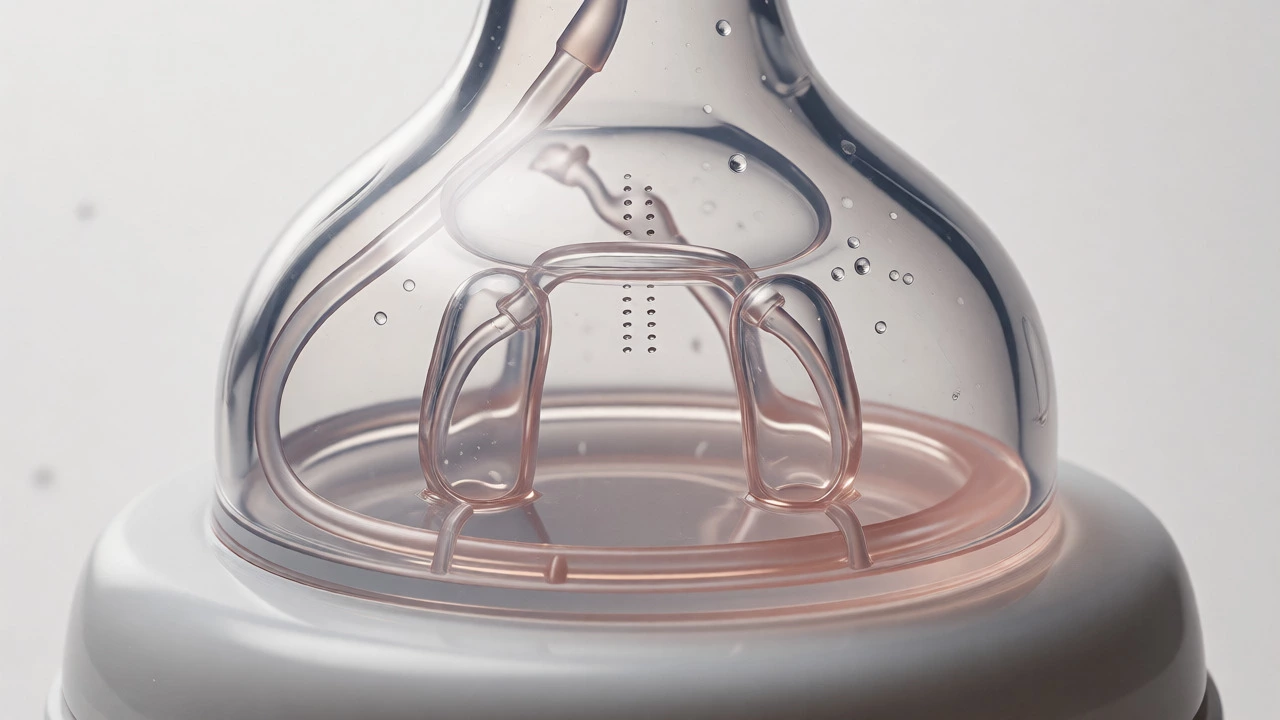
Air bubbles in a baby’s stomach cause pain. This is the root of many "colic" episodes. Standard bottles let air mix with milk as the baby sucks. Specialized newborn bottles include ventilation systems-either internal straws or external vents in the cap-that separate air from milk.
For example, the Dr. Brown’s Natural Flow system uses an internal vent tube to pull air away from the liquid. Philips Avent Anti-Colic uses a dual-valve system in the collar. While no system eliminates gas 100%, these designs significantly reduce the amount of swallowed air compared to a simple open-top bottle. If your baby arches their back during feeds or pulls legs up to their chest, a ventilated bottle is worth the extra effort of cleaning the tiny vent parts.
Material: Glass vs. Plastic
In the UK, safety standards for baby products are strict. Both borosilicate glass and BPA-free polypropylene (PP) plastics are safe. However, they behave differently.
| Feature | Borosilicate Glass | Polypropylene (Plastic) |
|---|---|---|
| Weight | Heavy; harder for baby to hold later | Lightweight; easy for parents to carry |
| Durability | Shatters if dropped; scratch-resistant | Does not shatter; scratches over time |
| Cleaning | No odors/stains; dishwasher safe | Can retain smells; may stain with formula |
| Temperature | Retains heat longer; safer for warming | Cools faster; check for hot spots |
Many parents start with glass for the first few weeks because it stays warm longer during night feeds and doesn’t harbor bacteria in microscopic scratches. Once the baby starts holding their own bottle around 4-6 months, switching to lightweight plastic makes sense.
How Many Bottles Do You Actually Need?
Here is a mistake almost every new parent makes: buying the big 8-pack of 240ml bottles because it was on sale. Don’t do it.
Newborns eat small amounts frequently. In the first week, they take 15-30ml per feed. By month one, maybe 90-120ml. Using a large bottle for a small amount of milk means there’s lots of empty space at the top, which can confuse the baby or lead to uneven mixing if using powder. More importantly, large bottles are cumbersome to wash and dry quickly.
Start with 4-6 small bottles (120ml or 150ml). Here’s why:
- Hygiene Cycle: You need clean bottles ready for the next feed while dirty ones are being washed. With 4-6 bottles, you can rotate them through a dishwasher or sterilizer without running out.
- Waste Reduction: If you prepare a 240ml bottle for a baby who only drinks 60ml, you throw away 180ml of expensive formula or expressed breast milk. Small bottles save money.
- Portability: Small bottles fit easily into diaper bags and coolers for outings.
You can always buy more later. If your baby grows quickly, you’ll switch to larger sizes by month two or three anyway. Buying in bulk now locks you into a size that will be obsolete in six weeks.
Breastfeeding vs. Formula Feeding Needs
Your choice of bottle depends heavily on whether you are exclusively formula feeding, exclusively breastfeeding, or combo-feeding.
If you are exclusively formula feeding, consistency is key. Pick one brand and stick with it initially. Switching nipples or bottle shapes confuses babies. They learn the mechanics of a specific nipple. If you change from a wide-neck to a narrow-neck mid-feed, they might refuse the bottle entirely. Choose a brand known for reliable flow rates, like Tommee Tippee or MAM, and ensure you have replacements for nipples, which wear out after 4-6 weeks of daily use.
If you are combo-feeding (breast and bottle), you face the challenge of "nipple confusion." Babies prefer the path of least resistance. A bottle with a fast flow is easier than the breast. To combat this, use paced bottle feeding techniques and choose bottles marketed specifically for breastfed babies. These usually have slower flows and wider bases to encourage a deeper latch similar to nursing. Brands like Lansinoh or Medela offer nipples designed to replicate the breast’s stretchiness.
If you are exclusively breastfeeding but want to occasionally give a bottle (perhaps for partner bonding or date nights), you might only need one or two bottles. In this case, consider whether you even need a traditional bottle. Some parents prefer cup feeders or syringe feeders to avoid introducing artificial nipples altogether. But if you do use a bottle, prioritize the slowest flow available.
Cleaning and Sterilizing: The Hidden Workload
Specific bottles often require specific care. This is a factor many people ignore until they’re scrubbing tiny valves at 3 AM.
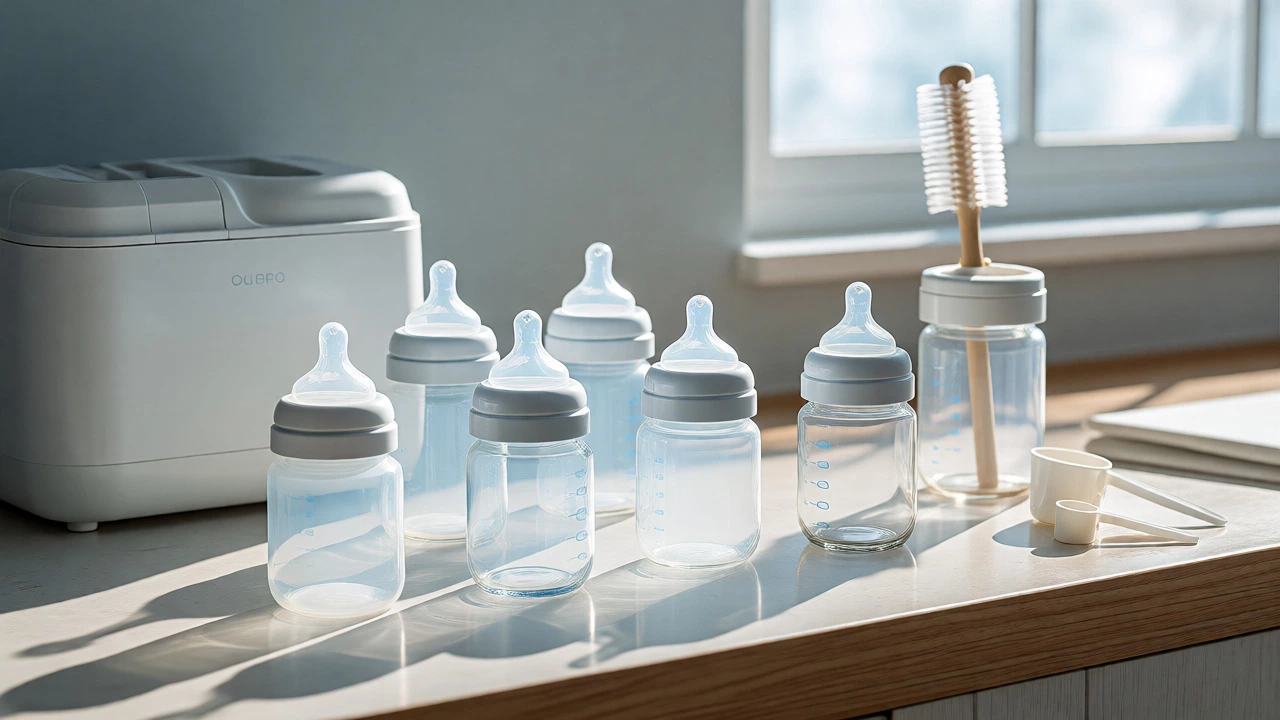
Glass bottles are dishwasher-friendly and can be boiled easily. Plastic bottles must be checked for dishwasher safety labels; high heat can warp some plastics, ruining the seal. Ventilated bottles have multiple parts-collars, discs, tubes, caps. Each part is a potential hiding spot for milk residue. If you don’t clean them thoroughly, mold grows in the vents.
Pro tip: Buy a dedicated bottle brush with bristles that reach into the vent tubes. A regular sponge won’t cut it. Also, inspect nipples regularly. If they become sticky, discolored, or develop tears, replace them immediately. A torn nipple changes the flow rate unpredictably, which can cause choking or frustration.
What About "Smart" or Expensive Bottles?
You’ll see bottles with built-in thermometers, self-warming features, or ergonomic curves costing £20+. Are they necessary for a newborn? Rarely.
Thermometer lids are nice but often inaccurate or slow to read. Self-warming bottles rely on chemical packs that need replacement. Ergonomic curves help tired parents hold the bottle, but they don’t help the baby digest food. Save your budget for high-quality nipples and a good sterilizer. The technology in most premium bottles offers marginal benefits compared to a well-chosen standard bottle with the correct flow rate.
However, if you have a premature baby or one with reflux, consult your pediatrician. They might recommend specific medical-grade bottles or thicker nipples designed for slower extraction. Always follow medical advice over general parenting blogs in these cases.
Troubleshooting Common Feeding Issues
Even with the right bottle, things go wrong. Here’s how to diagnose issues based on symptoms:
- Baby coughs or chokes: The flow is too fast. Try a smaller nipple size (e.g., move from Size 1 to Size 0) or try a different brand with a stricter flow control.
- Baby gets tired/sleepy after 5 minutes: The flow is too slow. They’re working too hard. Try a slightly faster nipple or check if the vent is blocked.
- Baby arches back and cries: Could be gas. Check your ventilation system. Ensure the bottle is tilted enough to keep the nipple full of milk, not air.
- Milk leaks everywhere: The nipple hole is too big, or the cap isn’t tightened properly. Inspect for damage.
Remember, babies adapt. What works today might not work in two weeks. Keep a couple of different nipple sizes on hand. You’ll know what works when your baby finishes the feed calmly, burps easily, and seems content.
Can I use adult glasses or mugs for newborns?
No. Adult cups lack the controlled flow mechanism required for infants. Newborns do not have the muscle coordination to tilt a cup and swallow simultaneously without aspirating liquid into their airway. Always use a bottle with a regulated nipple for the first 4-6 months.
How often should I replace newborn bottle nipples?
Inspect nipples before every feed. Replace them every 4-6 weeks under normal use, or immediately if you notice signs of wear such as stickiness, discoloration, cracks, or changes in flow rate. Worn nipples can release too much milk, increasing choking risk.
Is glass better than plastic for newborns?
Glass is often preferred for newborns because it retains heat better, making night feeds easier, and does not absorb odors or stains from formula. However, it is heavier and breakable. Plastic is lighter and safer once the baby starts holding their own bottle. Both are safe if BPA-free and cleaned properly.
Do anti-colic bottles really work?
They can help significantly by reducing the amount of air swallowed during feeding. While they don't cure all causes of colic (which can include sensitivity to proteins or gut immaturity), they address one major mechanical trigger. Effectiveness varies by baby; some respond dramatically, others see little difference.
Should I buy wide-neck or narrow-neck bottles?
Wide-neck bottles are easier to fill and clean, especially with scoops of formula. Narrow-neck bottles are cheaper and compatible with more accessories. For newborns, the neck width matters less than the nipple type, but wide-neck options are generally more user-friendly for sleep-deprived parents.