Baby Stroller Readiness Calculator
Check Stroller Readiness
Most parents start with a baby carrier because it’s hands-free, cozy, and perfect for newborns. But then comes the moment: your baby is growing, you’re tired of carrying them everywhere, and you wonder-when do you transition to a stroller? There’s no single answer, but there are clear signs and age ranges that make the shift easier-and safer-for both you and your little one.
Most babies are ready between 6 and 8 months
By six months, most babies have developed enough neck and back strength to sit upright with minimal support. That’s when a stroller becomes more than just a convenience-it becomes a necessity. Before this age, their spine is still developing, and their head control is shaky. A stroller that doesn’t fully recline can put strain on their neck and spine. That’s why many parents stick with carriers or bassinet-style strollers until the baby hits the 6-month mark.
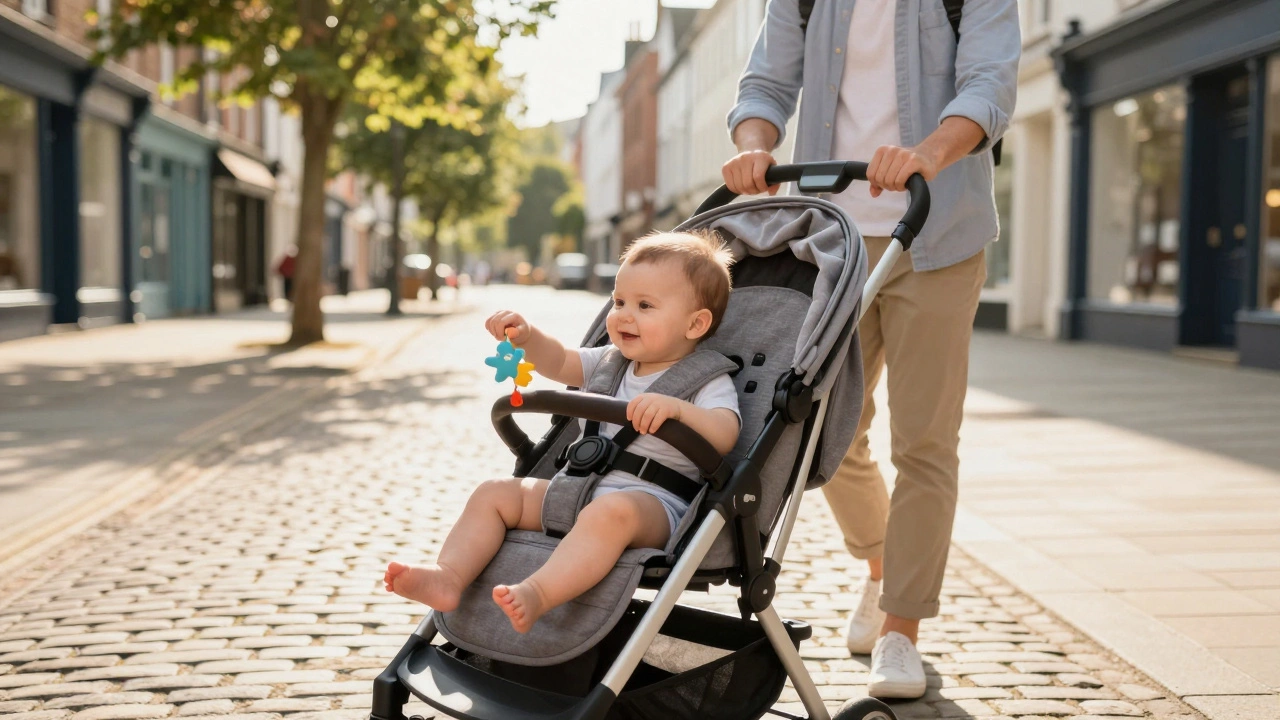
At 6 to 8 months, your baby is likely sitting up on their own, reaching for toys, and even trying to stand while holding on. That’s when a stroller with a semi-reclined or upright seat starts to make sense. You’re not just carrying them-you’re letting them explore the world from a new height. They can see streetlights, dogs, trees, and people. It’s a big sensory leap.
Signs your baby is ready for a stroller
Age is a guideline, but behavior is the real signal. Watch for these signs:
- Your baby cries or fusses when strapped into the carrier for more than 20 minutes
- They’re too heavy for you to carry comfortably for more than 10-15 minutes
- They’re trying to sit up or push themselves out of the carrier
- You’re avoiding outings because carrying them feels like a chore
- You’ve noticed they sleep better in a stroller than in a carrier
One parent in Bristol told me her daughter started refusing the carrier at 5 months-she’d arch her back and scream. The first time she sat in a stroller, she smiled and fell asleep. That’s when she knew it was time.
Not all strollers are created equal
Just because your baby is 6 months old doesn’t mean any stroller will do. You need one that supports their posture. Look for these features:
- A seat that reclines to at least 150 degrees for babies who still nap on the go
- Five-point harness for safety
- Good shock absorption-bumpy pavements in Bristol are no joke
- Adjustable footrest so their legs aren’t dangling
Some parents buy a full-sized stroller right away. Others start with a lightweight umbrella stroller. If your baby still naps often, a full-size stroller with a flat recline is worth the extra weight. If you’re mostly walking to the park or shops, a compact stroller with decent recline works fine.
What about newborns? Can you use a stroller at all?
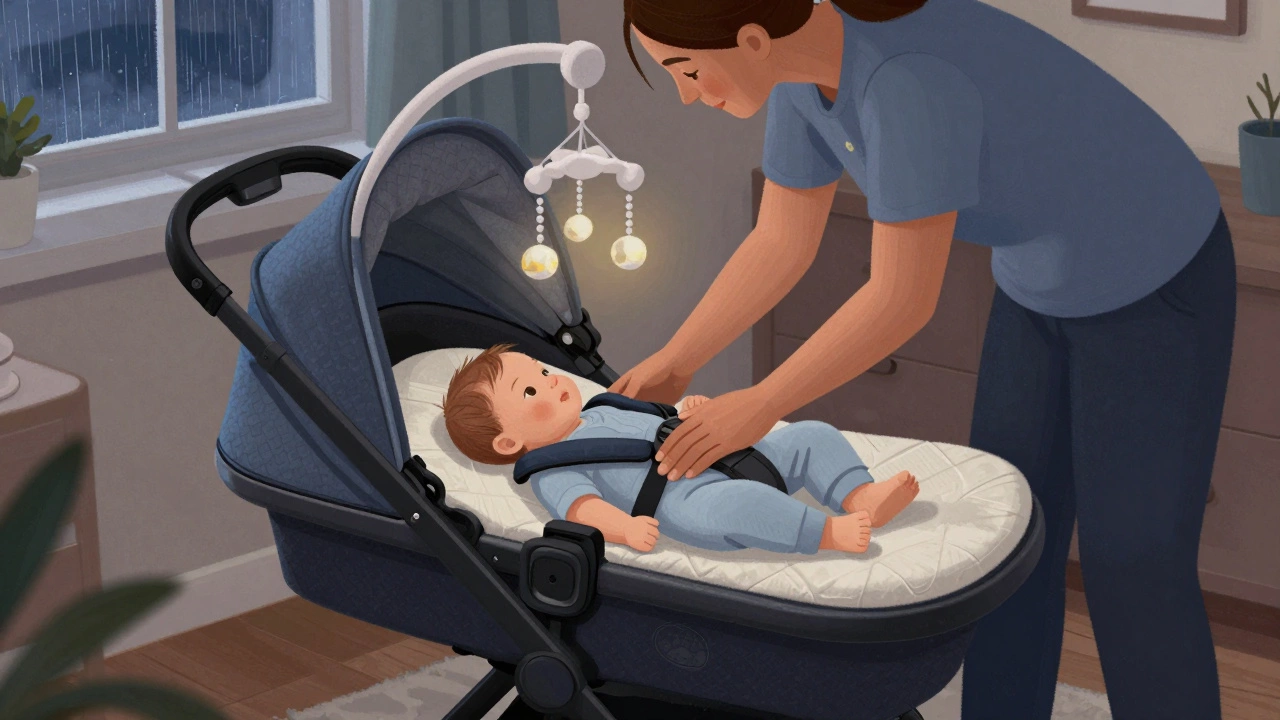
Yes-but only with the right setup. Many strollers come with bassinet attachments or carry cots that let newborns lie flat. These are perfect for the first few months. Brands like Bugaboo, UPPAbaby, and Babyzen Yoyo offer these as add-ons. If you’re using a stroller without a bassinet, wait until your baby can hold their head up on their own.
Some parents think they need to use a carrier for the first six months because strollers are unsafe for newborns. That’s not true. It’s about positioning. A flat, supported lie-flat position is just as safe as a carrier-if not safer-because it reduces pressure on the spine and lets the baby breathe easily.
Why not keep using a carrier forever?
Carriers are amazing. They’re portable, intimate, and great for quick trips. But they’re not designed for long hauls. After 8 months, your baby weighs 15-20 pounds. Carrying that for 30 minutes is exhausting. And it’s not just your back-it’s your wrists, shoulders, and hips. One study from the University of Bristol’s paediatric physiotherapy team found that parents who used carriers past 8 months reported 40% more lower back pain than those who switched to strollers.
Plus, your baby is changing. They’re curious. They want to see the world. A carrier limits their view. A stroller gives them space to look around, point at things, and even start to recognize familiar faces on the street.
What if your baby hates the stroller?
It happens. Some babies hate the feeling of being strapped in. Others don’t like the noise or the motion. Here’s how to make the transition smoother:
- Let them sit in the stroller at home first-no pressure, just playtime
- Put a favorite toy or blanket in the seat
- Start with short trips-just to the mailbox or the end of the street
- Keep the stroller in a familiar place, like the living room, so it doesn’t feel like a stranger
- Use the stroller during nap times first, when they’re more likely to accept it
Don’t force it. If they cry every time, go back to the carrier for a week, then try again. Patience matters more than timing.
When to stop using a carrier entirely
There’s no hard cutoff. Many parents keep a carrier for emergencies-airport runs, crowded buses, or when the stroller breaks. But by 12 to 18 months, most kids are walking. They want to move on their own. That’s when the carrier becomes more of a backup than a primary tool.
By two years old, most children are too big for carriers. Their legs dangle, their heads tip back, and they’re too heavy. At that point, you’re not carrying them-you’re wrestling them. A stroller with a high weight limit (up to 50 pounds) or a ride-on board becomes the better option.
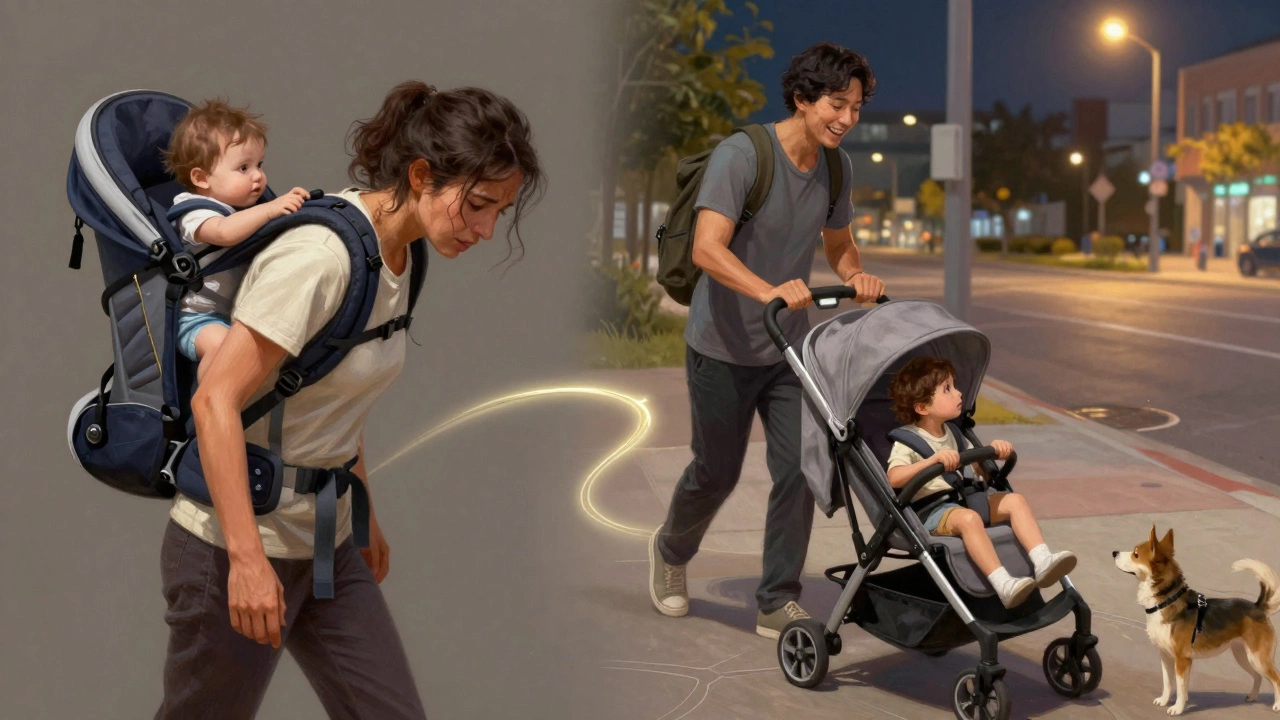
Real-life tip: Mix and match
The best approach? Use both. Keep your carrier for quick errands, public transport, or when you’re in a tight space. Use the stroller for walks, shopping trips, or when you’re out for more than 20 minutes. You don’t have to choose one forever. It’s about matching the tool to the moment.
One mum I know uses a baby wrap for morning walks and a stroller for afternoon shopping. She says it’s the secret to keeping her sanity-and her back intact.
Final thought: It’s not about age-it’s about readiness
Some babies are ready at 5 months. Others need 9. It depends on their strength, their sleep habits, their weight, and even their personality. Don’t rush it because you think you should. Don’t delay it because you’re attached to the carrier.
Watch your baby. Listen to your body. When the carrier starts to feel like a burden instead of a comfort-that’s your sign.
Can I use a stroller for my newborn?
Yes, but only if the stroller has a fully flat recline or comes with a bassinet attachment. Newborns need to lie flat to protect their spine and airway. Avoid strollers that only recline slightly until your baby is at least 4-6 months old and can hold their head up.
What if my baby is small for their age?
Size doesn’t always match developmental milestones. If your baby is small but can hold their head up, sit with support, and seems comfortable upright, they’re likely ready for a stroller. Focus on their physical development, not their weight or height percentile.
Is it bad to use a stroller too early?
Not if the stroller supports proper posture. Using a stroller with a reclined seat before your baby can hold their head up can strain their neck. But using a flat bassinet or full-recline stroller from birth is perfectly safe and often more comfortable than a carrier for long outings.
How do I know if my stroller is safe for my baby?
Check for a five-point harness, a recline that goes flat or close to flat, good side support, and a sturdy frame. Avoid strollers with shallow seats or no footrests. If your baby’s legs dangle or their head flops forward, it’s not the right fit.
Should I buy a new stroller or use an old one?
If your old stroller has a flat recline, a secure harness, and no broken parts, it’s fine to reuse. But if it’s a basic umbrella stroller that doesn’t recline past 150 degrees, it’s not safe for babies under 6 months. Safety standards change-make sure your stroller meets current UK safety regulations (BS EN 1888:2023).
Next steps: What to do now
If your baby is under 6 months and you’re thinking ahead: start testing stroller models now. Sit them in a few at the store. See how they react. Ask if the stroller has a bassinet option. Take notes.
If your baby is 6-8 months and you’re still using a carrier: try a short stroller trip this week. Pick a sunny afternoon. Bring a snack. Let them explore. You might be surprised how much they enjoy it.
If you’re past 12 months and still using a carrier daily: it’s time to rethink. Your child is growing fast. Your body is paying the price. A stroller isn’t a sign you’re giving up-it’s a sign you’re adapting.