
Baby Gate Safety & Risk Assessor
Configure Your Gate Setup
Assessment Result
Recommended Actions:
Immediate Fix
Long-term Strategy
We buy baby gates safety barriers designed to restrict access to dangerous areas like stairs or kitchens because we want peace of mind. We install them at the top of the stairs, in front of the fireplace, or blocking off the laundry room, trusting that they will keep our little ones safe. But here is the uncomfortable truth: a baby gate can actually become a hazard itself if it is the wrong type, installed incorrectly, or simply old. It is not just about keeping kids out; it is about making sure the barrier doesn’t hurt them when they inevitably climb on it.
You might assume that any gate sold in a store is safe. That is a risky assumption. The reality is that thousands of injuries occur every year related to these devices. From falls down staircases to strangulation from loose straps, the potential dangers are real and often preventable. Understanding these specific risks is the first step to truly securing your home.
The Silent Killer: Pressure-Mounted Gates on Stairs
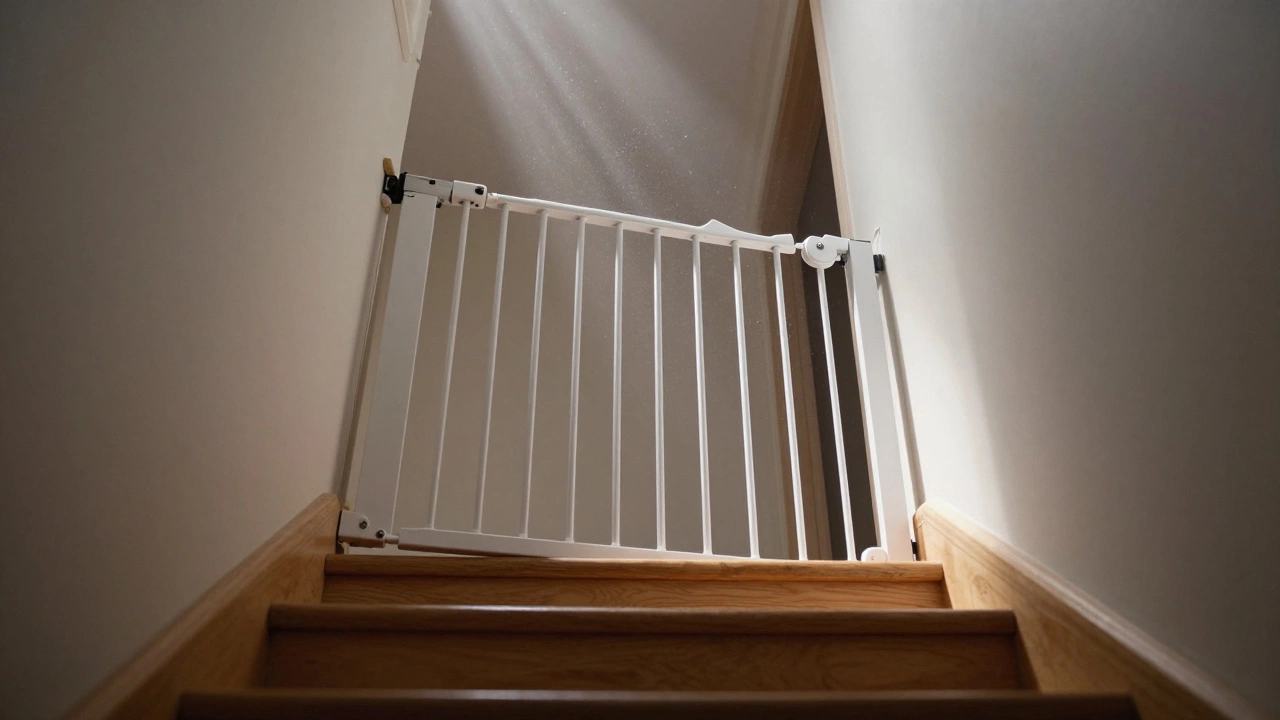
The most critical rule in baby gating is simple but often ignored: never use a pressure-mounted gate at the top of a staircase. These gates rely on tension against the wall to stay in place. They are convenient because you don’t need tools to install them, but they are not strong enough to withstand the weight of a determined toddler pushing against them.
If a child climbs onto a pressure-mounted gate at the top of the stairs, the entire unit can detach from the walls and tip forward. This results in a fall down the entire flight of stairs. This is one of the leading causes of serious injury associated with baby gates. Hardware-mounted gates, which are screwed directly into the wall or floor frame, are the only safe option for the top of stairs. They are rigid and cannot be pushed over by a climbing child.
Even on flat surfaces, pressure-mounted gates can fail. If the floor is uneven or the walls are slightly angled, the tension isn't uniform. A heavy push can cause the gate to slide sideways or pop out entirely. Always check the manufacturer’s instructions. If it says "not for use at the top of stairs," do not ignore it. The convenience of tool-free installation is not worth the risk of a broken neck or head trauma.
Climbing Hazards and Head Entrapment
Children are natural climbers. As soon as they can pull themselves up, they will test their environment. Baby gates with horizontal bars or wide vertical slats can act like ladders. If your child figures out how to climb the gate, they are now elevated and potentially unstable. If the gate fails-or if they simply lose their balance-they fall from a height.
Another major danger is head entrapment. Older models of baby gates, particularly those made before strict safety standards were enforced, often had U-shaped openings between the bottom rail and the mesh or bars. A child could slip their head through this opening and get stuck. While modern regulations have largely eliminated this design flaw, second-hand gates or imported products without proper certification might still have this issue. Always inspect the spacing. The gap should be small enough that a child’s head cannot pass through, but large enough that fingers cannot get trapped.
Mesh gates are generally safer than bar gates for climbing prevention because there are no footholds. However, even mesh gates can be climbed if they are too low or if the child is tall enough to reach the top edge. Watch your child’s behavior. If they are showing signs of climbing, it might be time to move the gate higher or switch to a different style.
Latching Mechanisms and Pinch Points
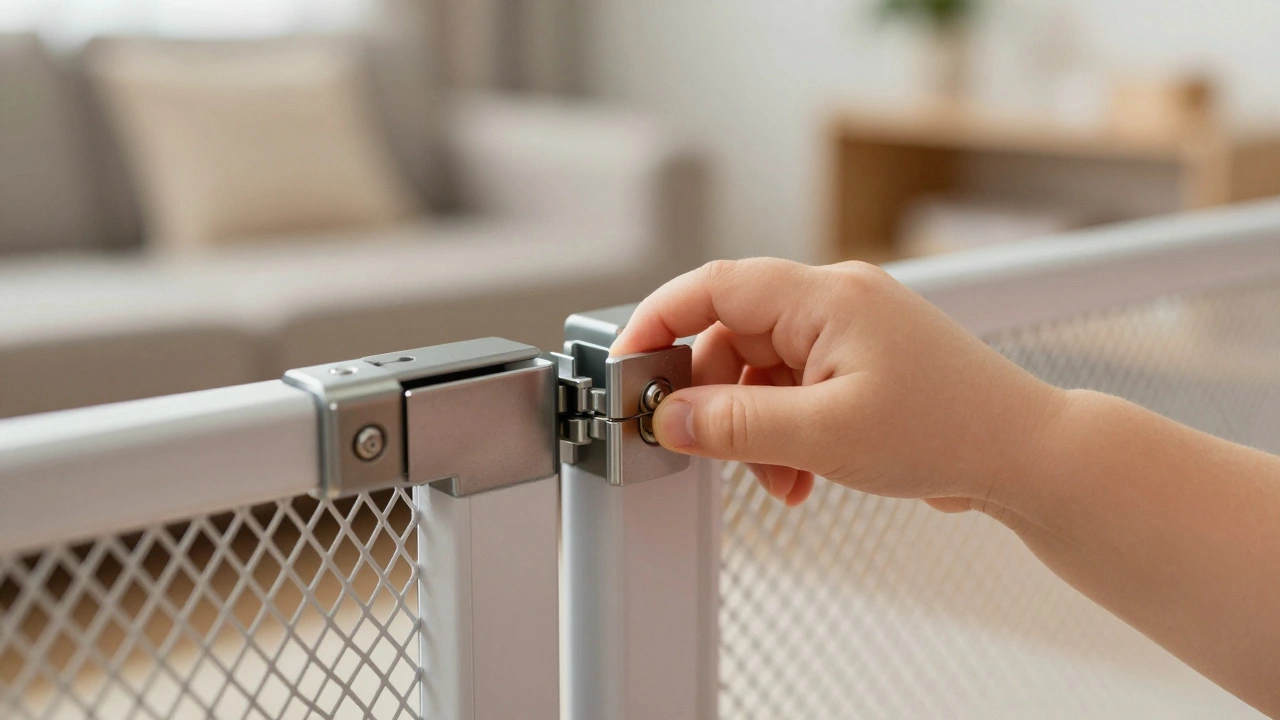
The latch is the most complex part of a baby gate, and also a common source of injury. Many gates have moving parts that can pinch small fingers. When closing the gate, children often try to help or play with the mechanism. If the latch requires significant force to engage, parents might rush, increasing the chance of pinching a child’s hand or finger in the hinge or lock area.
Some latches are also too easy for toddlers to open. A curious two-year-old can figure out many standard locks. If your child can open the gate, it is useless as a safety device. Look for gates with dual-action latches or those that require more dexterity to open. Test the latch yourself while holding your child nearby to see if they can mimic the motion. If they can, you need a more secure model.
Additionally, some older gates used long straps or cords to keep the gate closed. These pose a strangulation risk if a child wraps them around their neck. Modern gates rarely use external cords, but if you are buying used, check for any dangling strings or loops. Cut them off immediately if found.
Installation Errors and Structural Weaknesses
Even the best hardware-mounted gate can fail if installed poorly. Using drywall anchors instead of screwing into studs or solid wood framing is a recipe for disaster. Drywall anchors can rip out under pressure. Always locate the studs or solid backing before drilling. If you cannot find a stud, consider using a surface-mount bracket that distributes the load across a wider area, though this is less ideal than direct stud mounting.
Gaps are another hidden danger. If the gate does not fit snugly against the wall or doorframe, a child can squeeze through or get a limb trapped. Measure your opening carefully. Most gates come with extension kits, but if the gap is irregular, you might need a custom solution. Check for gaps regularly, especially after temperature changes that might cause wood frames to expand or contract.
Rust and wear are also concerns. Metal gates left in humid environments like bathrooms or near dishwashers can rust. Rust weakens the metal and can create sharp edges that cut skin. Inspect your gates periodically for corrosion, loose screws, or cracked plastic components. Replace any damaged parts immediately. Do not try to repair a structural component with tape or glue.
Choking Hazards and Small Parts
Baby gates are not toys, but children treat everything as a toy. Small screws, bolts, or decorative elements on the gate can come loose and become choking hazards. Ensure all hardware is tightened securely after installation and check it monthly. Some gates have removable panels or accessories that can be detached by a clever child. Make sure these parts are either too large to swallow or securely fastened.
If your gate has a kick plate or bottom rail, ensure it is smooth and free of splinters. Wood gates, while aesthetically pleasing, can splinter over time, especially if chewed on. Teething babies love to gnaw on anything within reach. A wooden gate might look nice in your living room, but it might not be the safest choice for a teether. Mesh or coated metal gates are better options for this age group.
Choosing the Right Gate for Your Home
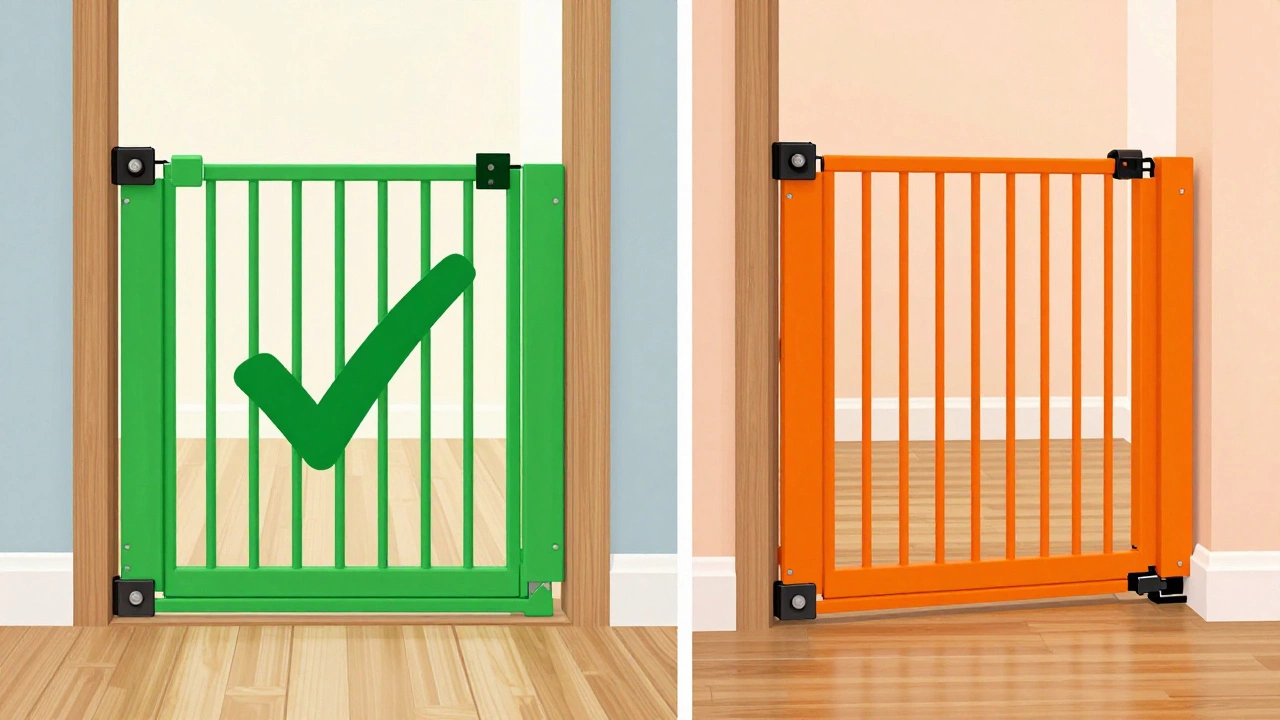
To minimize risks, choose a gate based on the specific location and your child’s age. For stair tops, always use hardware-mounted gates. For hallways or doorways, pressure-mounted gates are acceptable if the child is not yet climbing. Look for certifications from recognized safety organizations. In the UK, look for BS EN standards. In the US, look for JPMA (Juvenile Products Manufacturers Association) certification. These labels indicate the gate has passed rigorous testing for strength, latch security, and entrapment risks.
Consider the width of your opening. Narrow doors need different gates than wide archways. A gate that is too wide might sag in the middle, creating a tripping hazard or a weak point. A gate that is too narrow won’t fit, leaving dangerous gaps. Measure twice, buy once.
| Gate Type | Best Location | Primary Risk | Safety Tip |
|---|---|---|---|
| Pressure-Mounted | Hallways, Doorways (Flat) | Tipping over, Sliding | Never use at top of stairs |
| Hardware-Mounted | Top of Stairs, High Traffic | Pinch points, Installation error | Screw into studs, check latch |
| Mesh Gates | Wide Openings, Living Rooms | Climbing (if low), Tears | Choose high-tension mesh |
| Wooden Bar Gates | Aesthetic Areas, Low Climbers | Climbing, Splinters | Seal wood, monitor climbing |
Maintaining Safety Over Time
Safety is not a one-time setup. As your child grows, their abilities change. A gate that was safe for a six-month-old crawler might be a climbing challenge for an eighteen-month-old walker. Re-evaluate your gates every few months. Move them as needed. Remove them when they are no longer necessary to avoid clutter and tripping hazards for older siblings.
Educate your child about the gate. Teach them not to climb it. Use positive reinforcement when they respect the barrier. This behavioral training complements the physical safety measures. Remember, a gate is a tool, not a babysitter. Supervision is still essential.
Finally, dispose of old gates properly. If a gate is damaged, outdated, or lacks safety certifications, throw it away. Do not pass it on to friends or family. The risk of injury is too high. Investing in new, certified gates is cheaper than paying for medical bills.
Can a pressure-mounted gate be used at the top of the stairs?
No. Pressure-mounted gates are not secure enough for the top of stairs. They can detach and fall, causing the child to tumble down the stairs. Always use a hardware-mounted gate at the top of any staircase.
How do I know if my baby gate is safe?
Look for safety certifications like JPMA in the US or BS EN in the UK. Check for small gaps where heads or fingers can get trapped. Ensure the latch is secure and difficult for a toddler to open. Inspect for rust, loose screws, or sharp edges.
What is the biggest danger with baby gates?
The biggest danger is falls, particularly from using pressure-mounted gates at the top of stairs. Other significant risks include head entrapment in older designs, climbing hazards, and pinch points in the latch mechanism.
Should I buy used baby gates?
It is risky. Used gates may have missing parts, wear and tear, or outdated safety features. If you must buy used, inspect it thoroughly for damage and ensure it meets current safety standards. Avoid gates with U-shaped openings or loose hardware.
How often should I check my baby gate?
Check your baby gate monthly. Tighten any loose screws, inspect for rust or cracks, and test the latch to ensure it works smoothly. Also, re-evaluate the gate's suitability as your child grows and develops new skills like climbing.