

Imagine your toddler toddling toward the open edge of a staircase while you're busy in the kitchen. It's a nightmare scenario for any parent. That is exactly why we install mesh safety gates flexible barriers made of strong synthetic fabric stretched across a metal frame to block access to dangerous areas. They look discreet, fit through doorways, and seem easier to set up than heavy metal bars. But the big question lingers on every parent's mind: are they actually secure enough to protect a curious child?
The short answer is yes, provided you choose the right model and mount it correctly. However, there are specific historical issues and ongoing design flaws that can turn a safety feature into a hazard. We need to look past the marketing claims and understand the mechanics behind these gates to keep your little ones truly protected.
The Mechanics of Mesh Gates
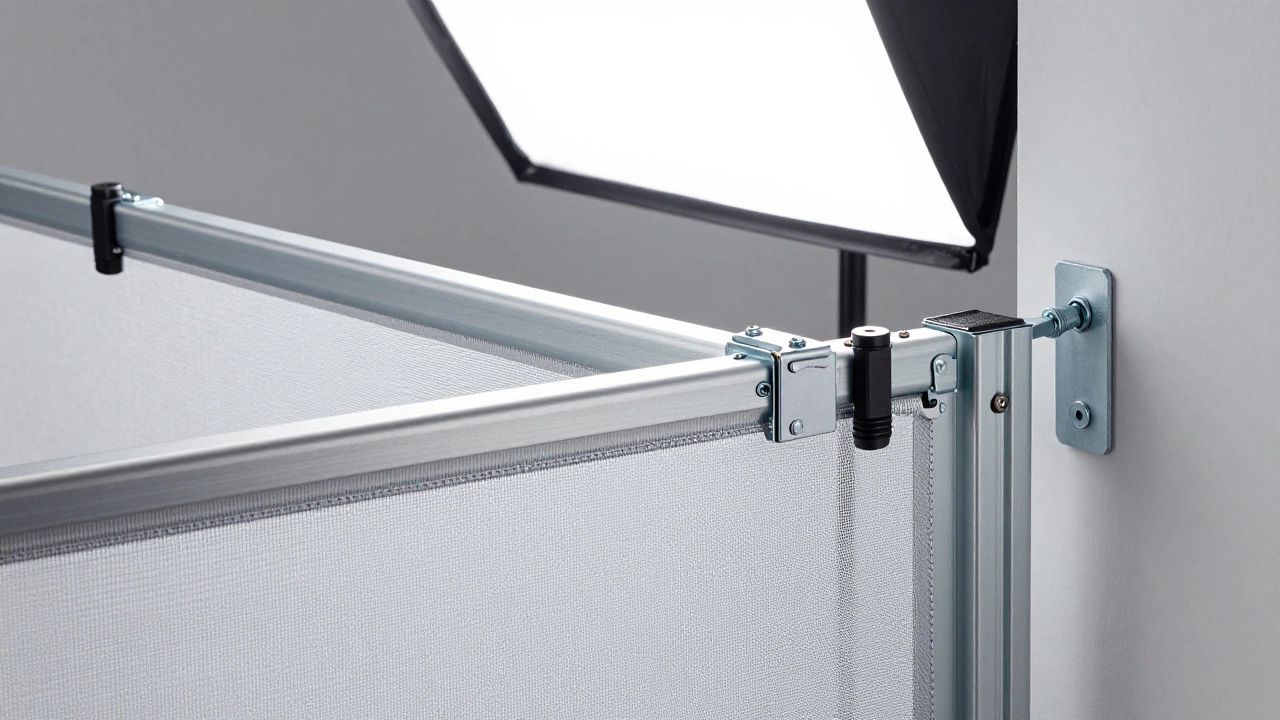
To understand the safety level, we have to look at how they function physically. Unlike rigid metal railings, mesh gates utilize a flexible netting material supported by an aluminum or steel frame rely on tension or screw-in anchors. The fabric is designed to withstand impact, but the structural integrity depends entirely on the locking mechanism. If the latch gives way under pressure, the whole system fails.
You might notice a tension rod running along the bottom or sides of the unit. In older models, this allowed for expansion to fit wider doorways. The problem arises when a child pushes against the mesh hard enough to compress the frame. If the friction isn't sufficient, the entire unit slides down or pops off the walls. This creates a gap large enough for a head to slip through, leading to potential entrapment.
Understanding Strangulation Hazards
This is the most critical safety point. Historically, some mesh designs had loops created by the elastic cords holding the fabric to the frame. A string or cord left loose can pose a strangulation risk if a child wraps it around their neck. Regulatory bodies have cracked down on this, but cheap imports sometimes bypass these rules.
Child Safety Regulations government standards that define acceptable risk levels for consumer products intended for minors now mandate that any opening smaller than four inches must not contain accessible loops. When buying, inspect the perimeter carefully. You shouldn't see loose threads or bungee-style cords hanging freely. The stitching should be internal or completely covered. Even with modern manufacturing, wear and tear over time can expose these elements, which means regular inspection is non-negotiable.
Pressure Mounts vs. Hardware Mounts
The method you use to attach the gate determines where it can go safely. Pressure-mounted gates use tension rods pushed against the wall trim. They are quick to move from room to room, making them great for hallways or the living room. However, they should never be used at the top of a flight of stairs. If a toddler leans heavily against the gate, the pressure mounts can dislodge, sending the child tumbling down the steps.
Hardware-mounted gates are screwed directly into the wall stud or floor joist. They are significantly more robust. For the top of the stairs, this is the only option that meets safety guidelines. Some mesh models offer hybrid systems, allowing you to switch between tension screws and a pressure fit depending on the location. Always prioritize hardware mounting for any vertical drop risk.
Safety Standards and Certification
How do you verify that a gate is compliant? You need to look for third-party testing labels. In the UK and Europe, look for the EN 1930 standard. This certification ensures the product has passed mechanical strength tests. In the US market, ASTM International sets the benchmark with ASTM F1004. These standards test for things like push-pull forces and latch strength.
If a product lacks these markings, it may not have undergone rigorous independent testing. Brands often self-certify, meaning they claim safety without external verification. Checking for the logo of a testing laboratory like BSI or UL adds a layer of trust. Do not compromise on this; a few extra pounds spent on a certified gate is worth avoiding a hospital visit later.Common Installation Pitfalls
Even a certified gate becomes unsafe if installed poorly. One common mistake is placing a gate across a doorway that has irregular framing. If the archway widens slightly in the middle, the pressure rods cannot achieve full compression. You need to measure the widest part of the opening and select a gate capable of stretching beyond that limit.
Carpeting also affects stability. On thick pile rugs, the rubber feet included with many gates can slide forward easily. To fix this, you can purchase additional anti-slip pads or anchor the bottom of the gate using small screws through the base bracket into the subfloor. Don't skimp on the tools required for hardware installation either; using the wrong drill bit size can strip the screw holes, leaving the gate insecure.Maintenance and Lifespan
Safety equipment degrades. Dust accumulation in the latch mechanism can prevent the lock from engaging fully. Wipe down the frame and fabric weekly with a damp cloth. Avoid harsh chemicals that might weaken the adhesive or coating on the mesh. Fabric stretches over years of use. If you notice the net feeling looser or sagging in the middle, it is time to replace the unit rather than trying to tighten it manually.
Recalls and DefectsIt is vital to check recall lists before purchasing. Occasionally, manufacturers issue voluntary recalls due to defective latch springs or fabric tears. Registering your product with the manufacturer helps them notify you of updates. You can search current databases regularly to ensure your specific model hasn't been flagged for safety violations. Ignoring a recall notice could invalidate insurance claims if an accident occurs.
Ultimately, the safety of a mesh gate comes down to informed choices. If you prioritize a hardware mount for stairs, check for proper certifications, and maintain the unit, these gates are excellent for managing household boundaries. They offer visibility so you can still see your child playing in the next room, providing peace of mind without completely isolating spaces.
Can I use a mesh gate at the top of the stairs?
Only if it is hardware-mounted and rated for that purpose. Never rely on pressure mounts for stair tops because they can dislodge under force.
What is the difference between ASTM and EN standards?
ASTM F1004 is the US standard, while EN 1930 is the European standard. Both cover similar safety criteria like opening forces and spacing, but testing methods vary by region.
How often should I inspect my gate?
Inspect the latch mechanism and fabric integrity monthly. Check for any loosening of screws or fraying cords immediately after high-impact incidents.
Are mesh gates suitable for cats or dogs?
They can be used for pets, but larger dogs may chew through the mesh or jump higher than a child would. Metal bar gates are generally better for medium to large pets.
What if the gate wobbles when I push it?
A slight flex is normal in mesh frames, but significant movement indicates poor compression. Adjust the tension rods or switch to a hardware mount for stability.