
The Sensory Calm Box Builder
Create a custom toolkit to replace abstract instructions with tangible "anchors," helping your child ground themselves during moments of dysregulation.
If you’ve ever found your toddler spiralling over a dropped ice cream cone or heard your school-age child struggle to calm down after a bad day at school, you know the physical weight of anxiety in a small body. In 2026, we’re seeing a massive shift in how parents handle big emotions. We aren’t just saying “calm down” anymore; we are using evidence-based tools. One of the most effective yet misunderstood methods is the 3-3-3 trick, a rapid grounding protocol originally designed for adults but now adapted brilliantly for children through play. It sounds simple-identify three things you see, hear, and move-but when you layer it with the right tactile engagement, it becomes a powerful reset button for young brains.
Living here in Bristol, I’ve noticed parents on Clifton Down struggling not because they lack love, but because they lack a script for emotional dysregulation. When anxiety hits, a child’s brain is flooded with cortisol. Their prefrontal cortex, the part responsible for reasoning and logic, essentially goes offline. This is why logic (“You know you have more food”) fails. You need a biological interrupter. The 3-3-3 trick provides exactly that by forcing the brain to switch from internal panic to external awareness.
The Science Behind the Numbers
To understand why this specific numerical sequence works, you have to look at how our nervous systems operate. This method falls under the umbrella of Grounding Techniques. Grounding is a core component of Trauma-Focused Cognitive Behavioral Therapy (TF-CBT). When a person is anxious, they are stuck in a state of hypervigilance-their senses are tuned to threat. By deliberately scanning the environment for neutral or positive stimuli, you physically break that feedback loop.
The first step involves vision. Identifying three objects shifts focus away from the distressing sensation. The second step uses hearing to engage the auditory processing centers, which are often overlooked during stress. The final step incorporates movement, bringing blood flow back to the muscles that may be frozen. While this technique was initially popularised for adult panic attacks, modern paediatric psychologists have found it incredibly transferable to childhood anxiety, especially when paired with tangible aids.
Why Standard Instructions Fail With Children
You might try asking a four-year-old to "name three things they see." Often, they freeze. Why? Because the concept is too abstract for a child living in a high-anxiety moment. They cannot parse the command. This is where Educational Toys become essential partners in the process. The object isn’t just the trick itself; the object is the anchor.
We’ve moved past the era of just handing out crayons. Today’s best practices involve sensory-specific toys that act as extensions of the 3-3-3 rule. Instead of searching the entire room for things to name-which adds cognitive load-you provide a curated set of three distinct items. These items serve as a visual checklist, lowering the barrier to entry for a stressed brain.
Integrating Educational Toys Into the Trick
When we adapt the 3-3-3 rule for younger minds, we turn it into a game of discovery rather than a drill. Here is how you can map the steps to specific types of educational gear available in 2026:
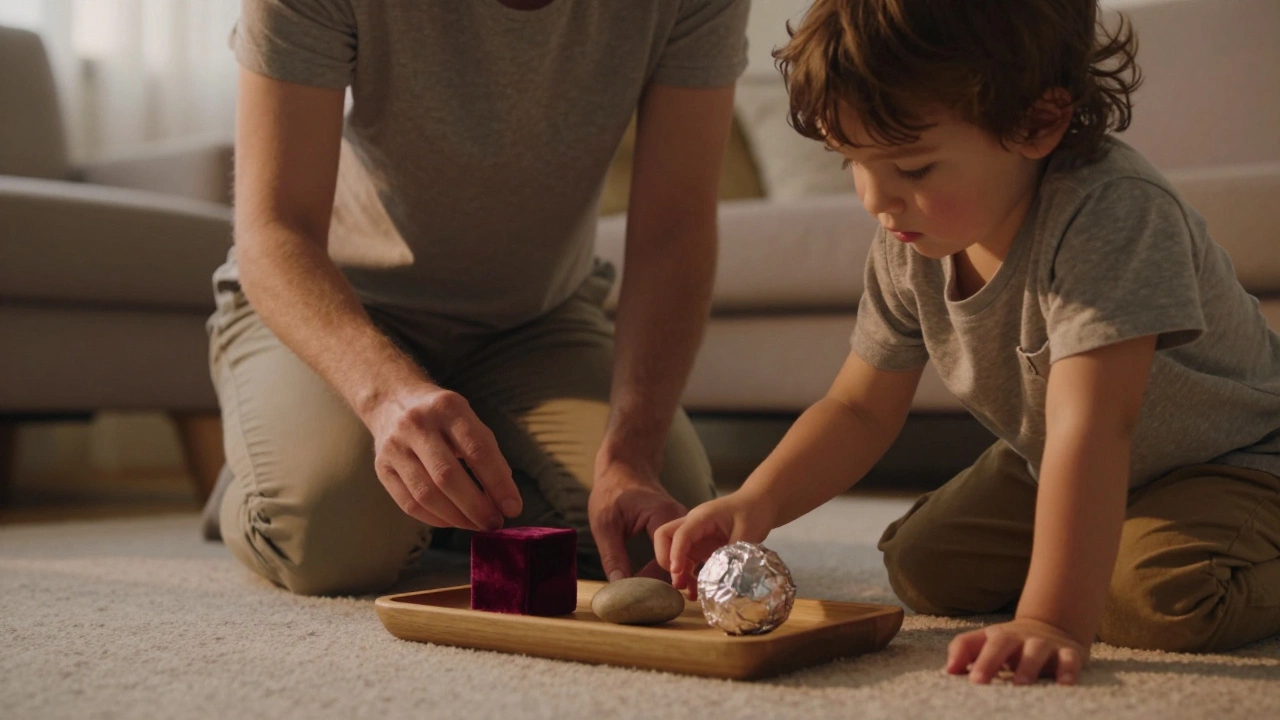
- Step 1 (Visual): The Object Sorter. Instead of scanning the room, give your child a tray with three distinct textures-a velvet cube, a smooth stone, and a crinkled foil ball. Ask them to touch each one and name its colour. This engages fine motor skills while anchoring their attention to the immediate present.
- Step 2 (Auditory): The Sound Spinner. Anxiety often masks true listening. Use a small instrument, like a xylophone or a wind-up rattle. Spin it once and have the child identify three sounds it makes (the wind-up click, the shake, the stop).
- Step 3 (Movement): Proprioceptive Blocks. Movement doesn't have to be running in circles. Hand them a weighted brick block. Have them push it against a wall, lift it, and roll it. These proprioceptive inputs tell the brain "we are safe, gravity is working," which lowers adrenaline levels significantly faster than sitting still.
This adaptation bridges the gap between clinical therapy and nursery activities. You aren't just teaching a coping mechanism; you are introducing structured play that reinforces neural pathways associated with safety and control.
| Feature | Traditional Method | Toy-Assisted Method |
|---|---|---|
| Cognitive Load | High (Searching environment) | Low (Using provided tools) |
| Sensory Input | Mental visualization only | Tactile + Visual + Auditory |
| Suitability for Age | Ages 8+ | Ages 3-10 |
| Transition Time | Sudden (Abrupt stop) | Gradual (Playful transition) |
Notice the difference in effort required. In the traditional method, the child has to generate ideas. In the toy-assisted version, they simply interact with the provided reality. For a child with ADHD or Autism Spectrum Disorder (ASD), this distinction is vital. We see that neurodivergent brains often struggle with divergent thinking during stress. Providing convergent options (three specific items) offers a path of least resistance toward calm.
The Neuroscience of Sensory Bins
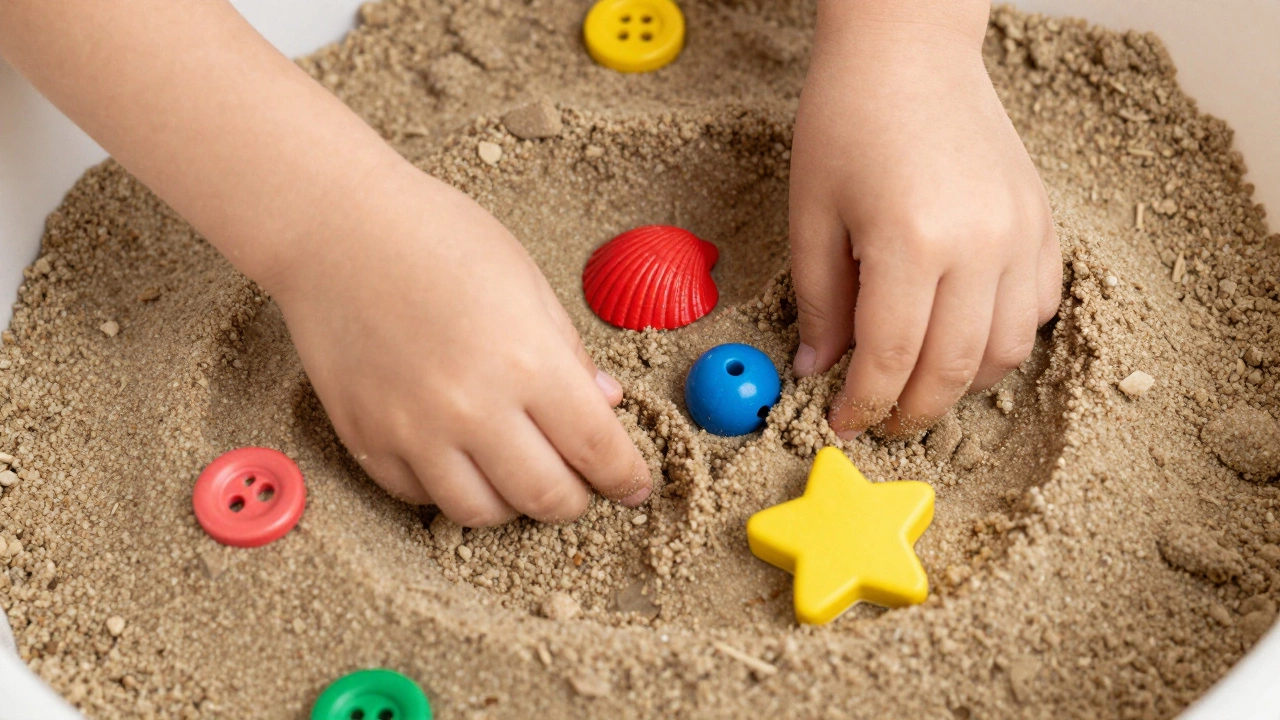
Many parents I speak to in the South West have started incorporating sensory bins into this routine, and the results are documented in developmental reports we review frequently. A sensory bin-filled with rice, kinetic sand, or water beads-is an excellent medium for the first "3" step. If a child asks you for help finding things, ask them to dig in the bin.
When they scoop up three shells, three buttons, or three pom-poms, they are regulating through haptic feedback. This is closely related to the work done in Occupational Therapy (OT) clinics. Therapies often recommend deep pressure stimulation (like a heavy blanket) alongside breathing exercises. The 3-3-3 trick with sensory toys mimics this effect. The weight of the materials in the bin grounds the body. The specific act of counting limits their cognitive field, preventing the mind from wandering back to the source of anxiety.
Establishing a Home Routine
You cannot just introduce these tools when the meltdown happens; the brain learns best during baseline functioning. Set aside five minutes after dinner, perhaps when the light starts fading in the sky outside our Bristol homes, to practice the 3-3-3 game proactively.
- The Preparation Phase. Create a dedicated "Calm Box." Inside, place exactly nine items grouped into threes. Examples: Three wooden rings, three plastic coins, three fabric swatches.
- The Narrative Phase. Tell the child, "We are going to play a game called Three-Square. We find three squares of texture." Consistency in language is key for building muscle memory.
- The Practice Phase. On days when everyone is happy, run through the motions. This creates a neural pathway so that when the stress hormones rise later, the brain recognizes the box as a familiar friend, not a strange intervention.
It is also helpful to keep the language consistent. Avoid switching terms. If you call it "The 3-3-3 Game" one day and "Counting Tricks" another, confusion sets in. Consistent terminology builds reliability. In 2026, digital apps exist that gamify this, but there is immense value in the non-digital tactile approach.

Common Mistakes to Avoid
Even with the best intentions, parents often stumble when trying to implement these strategies. The most common pitfall is rushing the steps. Do not demand speed. If it takes two minutes to find the first object, let them take two minutes. Speed defeats the purpose of regulation. Another frequent error is parental anxiety. If you are breathless or tense, they will mimic your physiology. Your tone should be flat, warm, and unpressured.
Finally, avoid over-complicating the toys. Do not give a complex construction set for a panic moment. The goal is simple recognition, not creative problem-solving. Stick to single-function items like stacking cups or simple sorting balls that offer immediate gratification and low cognitive friction.
Moving Forward From Stress
By integrating the 3-3-3 trick with targeted educational tools, you transform anxiety management from a lecture into an engaging activity. It empowers the child to take ownership of their nervous system. As we continue to see rising awareness around childhood mental health, having a practical toolkit like this is less of a luxury and more of a necessity for every family home.
Can the 3-3-3 rule help with school anxiety?
Yes, it is highly effective for anticipatory anxiety. Parents can practice the rule with a backpack full of small "lucky charms" (three specific trinkets) that the child holds before entering the classroom to ground themselves quickly.
What age is appropriate for this technique?
While the core concept requires language skills, it can start as early as 3 years old with simple pictures. Complex variations involving auditory and proprioceptive feedback are best suited for ages 5 and older.
How many times a day should we do this?
Daily practice is recommended to build the habit, even without stress. Aim for short sessions (3-5 minutes) twice a day. Overuse can cause boredom, so keep it sporadic but frequent enough to stay fresh.
Does this replace professional therapy?
No, this is a supplementary tool. If anxiety impacts sleep or daily function, consult a qualified therapist. Think of this as a first-aid kit, not a cure for chronic conditions.
What toys work best for this game?
Textured items are superior. Look for fidget spinners, sensory bottles, or wooden manipulatives that have distinct shapes and weights. Avoid electronic toys that might distract rather than ground.