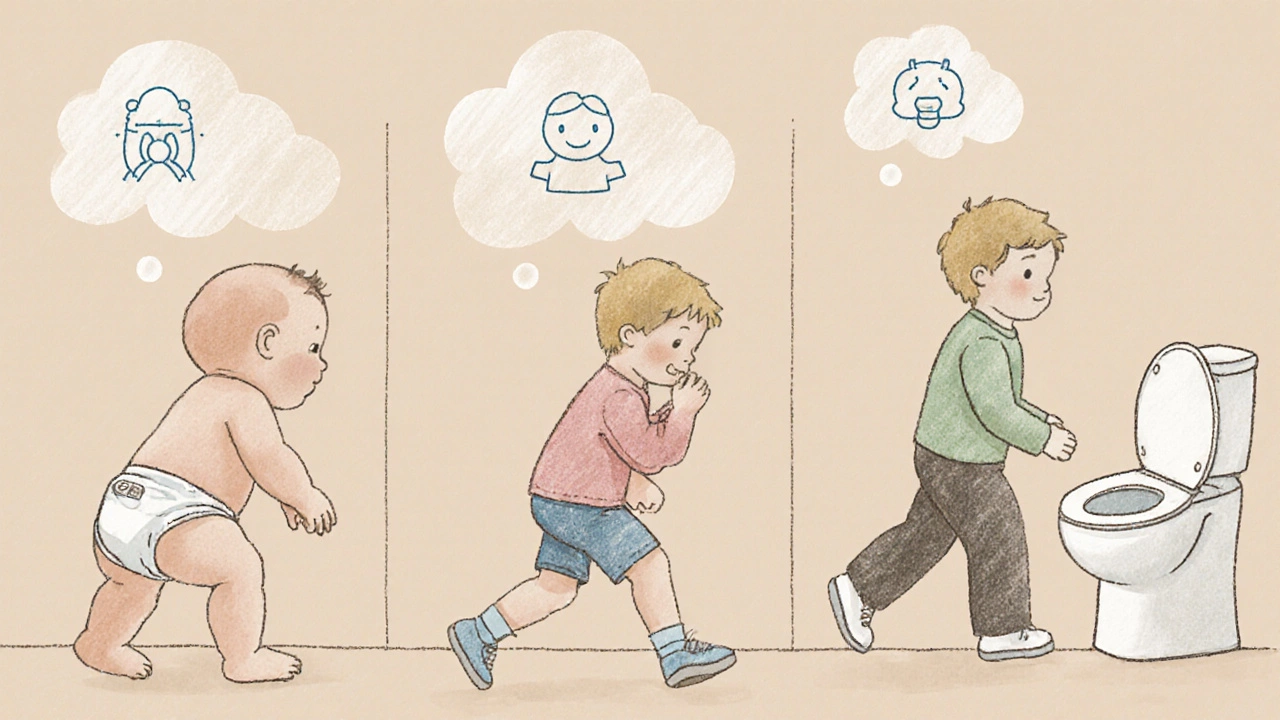
There’s no magic number when it comes to potty training. You’ve heard it from every parent: "My kid was trained by two!" Or, "We waited until three and it was so much easier." The truth? potty training age isn’t about hitting a calendar date-it’s about watching your child’s body and brain catch up. Most kids in the UK show clear signs of readiness between 22 and 30 months, but some aren’t ready until 3.5 or even 4. And that’s completely normal.
What Does "Ready" Actually Look Like?
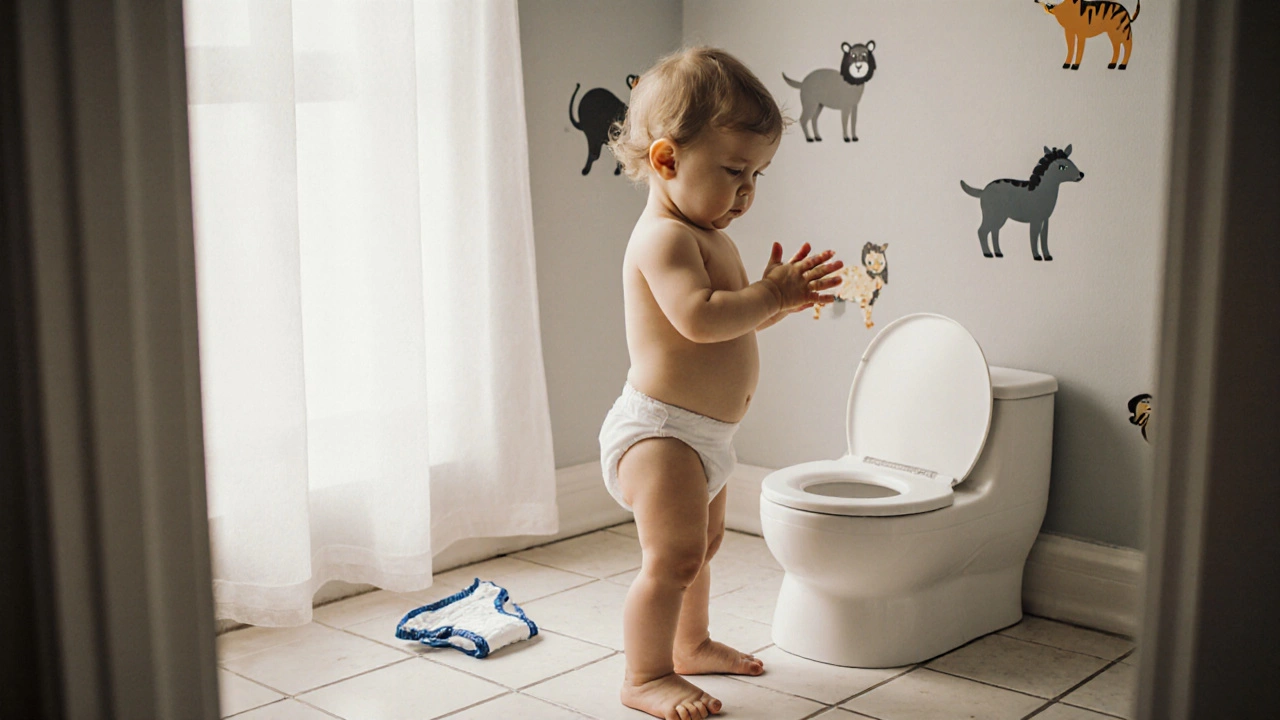
It’s not about how often they say "I need to go." Real readiness shows up in small, quiet ways. Does your toddler hide behind the sofa when they’re about to pee? Do they pause mid-play, stare at the floor, or make a weird face? That’s their body telling them something’s happening. These are early signals-more reliable than any age chart.Other signs? They can pull their pants up and down by themselves. They stay dry for at least two hours. They show disgust at dirty diapers. They copy you or siblings in the bathroom. And most importantly-they tell you, even if it’s after the fact. "I did it in my pants," they say, looking up with a mix of guilt and curiosity. That’s your green light.
Don’t force it if they’re not showing these signs. Pushing too early often leads to power struggles, accidents that feel like failures, and a child who starts resisting the whole idea. I’ve seen parents start at 18 months and still be in the thick of it at 3.5. Meanwhile, the kid who didn’t care until 28 months? Trained in three weeks.
Why 2 to 3 Years Is the Sweet Spot
Between 2 and 3, kids develop something called "bladder awareness." Their nervous system finally connects the feeling of a full bladder to the need to go. Before that, their brain doesn’t register the sensation until it’s too late. That’s not stubbornness-it’s biology.At this age, they also start understanding cause and effect. "If I sit on the potty, I don’t get a wet diaper." They begin to care about wearing "big kid" underwear. They can follow simple two-step instructions: "Go to the bathroom, sit down." That’s the cognitive toolkit you need for successful training.
Studies from the University of Bristol’s Child Development Lab show that kids who start potty training between 24 and 30 months have the lowest rates of prolonged accidents and nighttime wetting later on. Why? Because their bodies are physically ready, and their brains are just starting to care about independence.
What Doesn’t Work: Pressure, Rewards, and Charts
A lot of parents think stickers and candy will speed things up. They buy fancy potty chairs with lights and songs. They make big charts with stars. But here’s what happens: the novelty wears off. The child stops caring. And then you’re left with a child who associates the potty with pressure, not progress.One mum I spoke to in Bristol tried a reward system for six weeks. Her son got a lollipop every time he used the potty. He started holding it in just to earn more candy. He didn’t want to go unless there was a treat. That’s not training-that’s bribery.
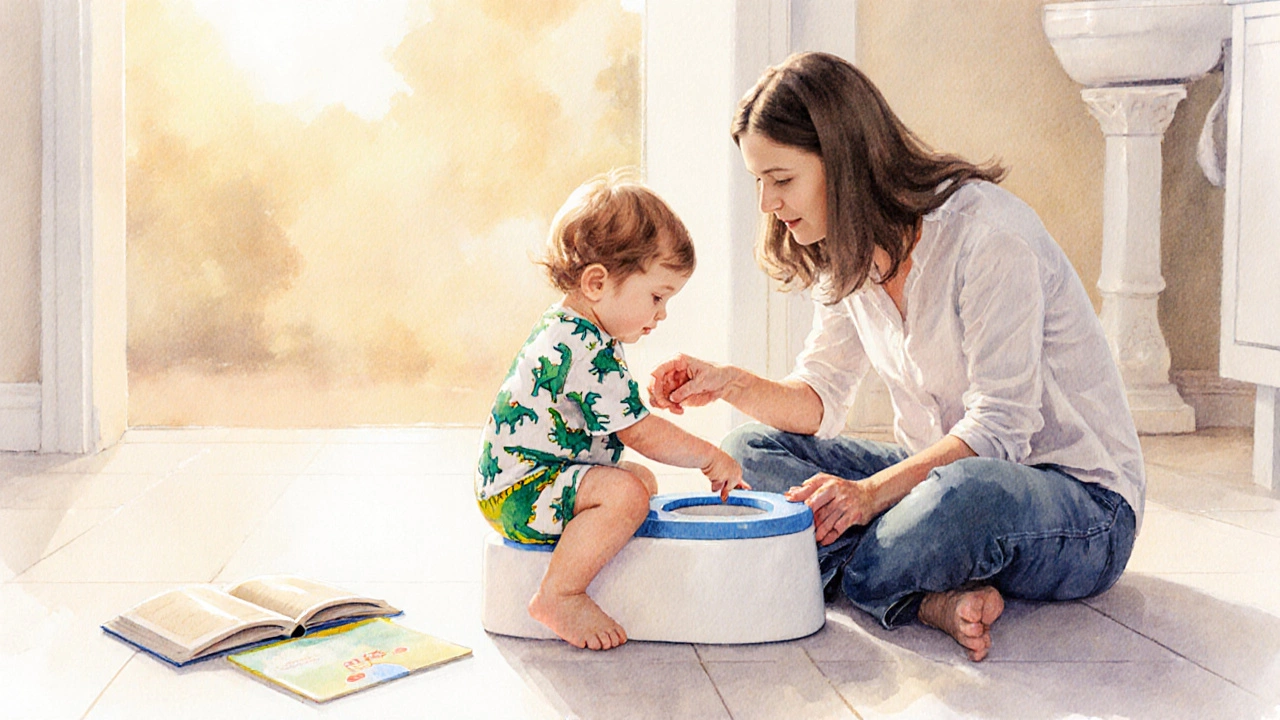
Instead, make it matter. Let them pick out their own underwear with dinosaurs or princesses. Let them help flush the toilet. Let them see you use the bathroom and say, "I’m going to the potty now." Normalise it. Keep the tone calm. Say, "It’s okay if you don’t go. We’ll try again later."
Boys vs Girls: Is One Easier?
There’s a myth that girls potty train faster. It’s not that simple. Girls tend to show readiness signs slightly earlier-maybe because they’re more likely to imitate caregivers. But boys often catch up fast once they’re motivated. One dad told me his son waited until 3.2 to start. Within a week, he was wearing big boy pants and refusing pull-ups. He just needed to see his older cousin do it.Boys may take longer with standing to pee. That’s fine. Start with sitting. Let them learn the sensation first. Standing can come later. Don’t rush it.
Nighttime Training Is a Different Story
Daytime control doesn’t mean nighttime control. Many kids stay dry during the day by 3 but still wet the bed at night until 5 or 6. That’s normal. Their bodies haven’t yet learned to hold urine all night or wake up when the bladder is full.Don’t treat nighttime accidents like failures. No punishment. No lectures. Just change the sheets, stay calm, and keep using pull-ups or night diapers until your child wakes up dry for a solid two weeks. Then try going without. If they wet the bed again? Go back to pull-ups. No shame. No rush.
The average child in the UK stops bedwetting between ages 4 and 6. If it’s still happening after 7, talk to your GP. But before then? It’s not a parenting problem. It’s a biological one.
What to Do When It’s Not Working
If you’ve tried for a month and your child is crying, hiding, or refusing to sit on the potty? Stop. Walk away. Wait a few weeks. Try again. There’s no penalty for pausing. In fact, many kids who take a break end up mastering it faster the second time.Common reasons training stalls:
- A new sibling has arrived
- They’re starting nursery or moving house
- They’re sick or teething
- They’re asserting control in other areas
These aren’t failures. They’re signals. Your child is overwhelmed. Potty training is a big emotional task. Give them space.
What You Need (And What You Don’t)
You don’t need a fancy potty chair. You don’t need a reward chart. You don’t need to buy 10 pairs of training pants.Here’s what you actually need:
- A child-sized potty or a seat adapter for the big toilet
- One or two pairs of easy-pull underwear
- Wipes and a small step stool (so they can reach the sink)
- Patience
- Consistency
- Zero pressure
Many parents buy expensive potties with music and lights. Then they sit there for hours waiting for their child to use it. The child feels watched. They shut down. Save your money. A simple plastic potty from the local supermarket works just fine.
When to Call the Doctor
Potty training isn’t medical. But there are red flags:- They haven’t shown any interest by age 3.5
- They’re constipated or in pain when they go
- They’re holding urine for more than 8 hours
- They’re wetting themselves constantly after age 4
If any of these are true, talk to your health visitor or GP. It could be a urinary tract infection, constipation, or a developmental delay. But 95% of the time? It’s just timing.
Final Thought: It’s Not a Race
You’re not competing with the mum whose kid was trained by 20 months. You’re not failing because your 3-year-old still needs pull-ups. Potty training isn’t a milestone you hit-it’s a skill you build, slowly, with trust.The easiest age to potty train? The one when your child is ready. Not when you think they should be. Not when your cousin’s kid did it. When they’re physically, emotionally, and cognitively ready. That’s the only age that matters.
And when they finally get it? You’ll know. They’ll run to the bathroom on their own. They’ll tell you before they even get there. And you’ll realise-this wasn’t about control. It was about them becoming a little more independent. And that’s worth waiting for.
Is 2 years old too early to start potty training?
Not necessarily. Some 2-year-olds are ready, especially if they show clear signs like staying dry for two hours, telling you when they need to go, or showing interest in the toilet. But if they’re resisting, crying, or hiding, they’re not ready yet. Forcing it at this age often leads to longer struggles. Wait for the signs, not the calendar.
My child was trained at 2 but is now wetting themselves again. What’s going on?
Regression is common and usually tied to stress-new sibling, moving house, starting nursery, illness, or even teething. It’s not a failure. Go back to pull-ups for a few weeks, keep the tone calm, and avoid punishment. Most kids regain control within a month once the stressor passes.
Should I use pull-ups or training pants?
Training pants are better for learning because they feel like real underwear. Pull-ups are useful for outings, bedtime, or if your child is still having frequent accidents. But don’t rely on them all day. The goal is for your child to feel wetness so they learn to connect the feeling with the need to go.
How long does potty training usually take?
It varies. Some kids get the hang of it in a week. Others take 3 to 6 months. The average is about 3 months from start to consistent daytime dryness. Nighttime control often takes much longer-sometimes years. Focus on daytime first. Don’t rush the rest.
My toddler won’t sit on the potty. What do I do?
Don’t force them. Try making it fun-read a book together while they sit, let them decorate the potty, or let them sit on it fully clothed first. Some kids just need to get used to the idea. Keep it low-pressure. If they refuse for more than a week, pause for a few weeks and try again. It’s not a race.