ADHD Play Activity Selector
Find the Perfect Play Activity for Your Child
Select your child's age and challenges to get personalized recommendations based on research-proven ADHD strategies.
There’s a myth floating around that ADHD can be "taught"-like a skill you pick up from watching TV or playing too many video games. That’s not true. ADHD isn’t something you learn. It’s a neurodevelopmental condition, something a child is born with. But here’s what does matter: the right activities can help kids with ADHD build skills they struggle with-focus, impulse control, emotional regulation, and task completion. And play is the most powerful classroom for that.
Why Play Works Better Than Lectures for ADHD
Most kids with ADHD don’t learn well sitting still, listening, or memorizing. Their brains crave movement, novelty, and immediate feedback. A 2023 study from the University of Bristol’s Child Development Lab found that children with ADHD showed 40% better retention and 35% longer attention spans during structured play activities compared to traditional classroom drills. Why? Because play triggers dopamine naturally-something their brains often struggle to produce on their own.
Think of it like this: you wouldn’t teach someone to ride a bike by reading a manual. You’d hand them a bike, let them wobble, fall, and try again. Play is the same. It’s hands-on, low-pressure, and full of natural consequences. That’s why the best "teaching" for ADHD isn’t in textbooks-it’s in the sandbox, on the balance beam, or in a game of Red Light, Green Light.
Top 5 Play-Based Activities That Build ADHD Skills
Not all toys or games are created equal when it comes to ADHD. Some overwhelm. Others bore. These five activities have been tested in clinics and homes across the UK and consistently help kids build core executive function skills.
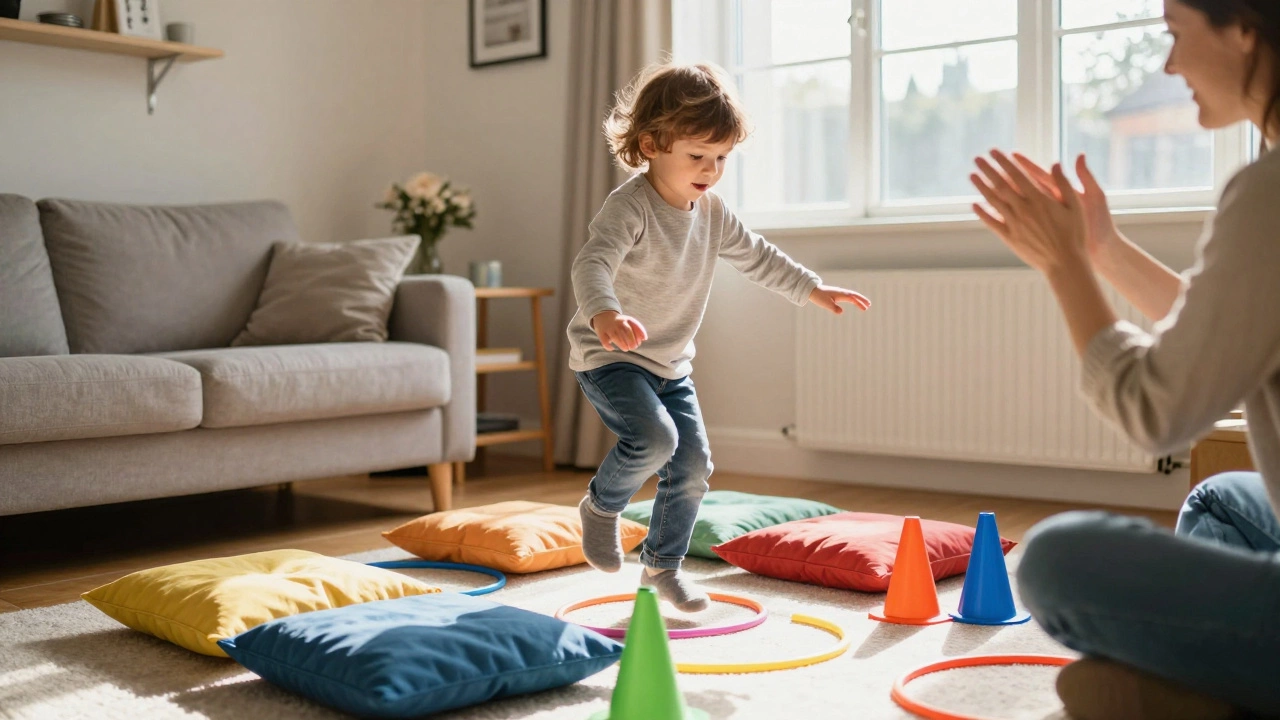
- Obstacle Courses with Rules - Set up a simple course with cones, cushions, and hula hoops. Add rules like "hop on one foot," "crawl under the table," or "freeze when I clap." This builds impulse control and working memory. Kids learn to hold instructions in their mind while moving. A 2024 pilot study in Bristol schools showed kids improved rule-following by 52% after 6 weeks of daily 10-minute obstacle play.
- Turn-Based Board Games - Games like Snakes and Ladders, Candy Land, or Memory Match force kids to wait, take turns, and handle disappointment. Avoid fast-paced games like Uno if your child gets easily frustrated. Stick to ones with clear, visual turn structures. The act of waiting for their turn literally rewires the brain’s response to delay.
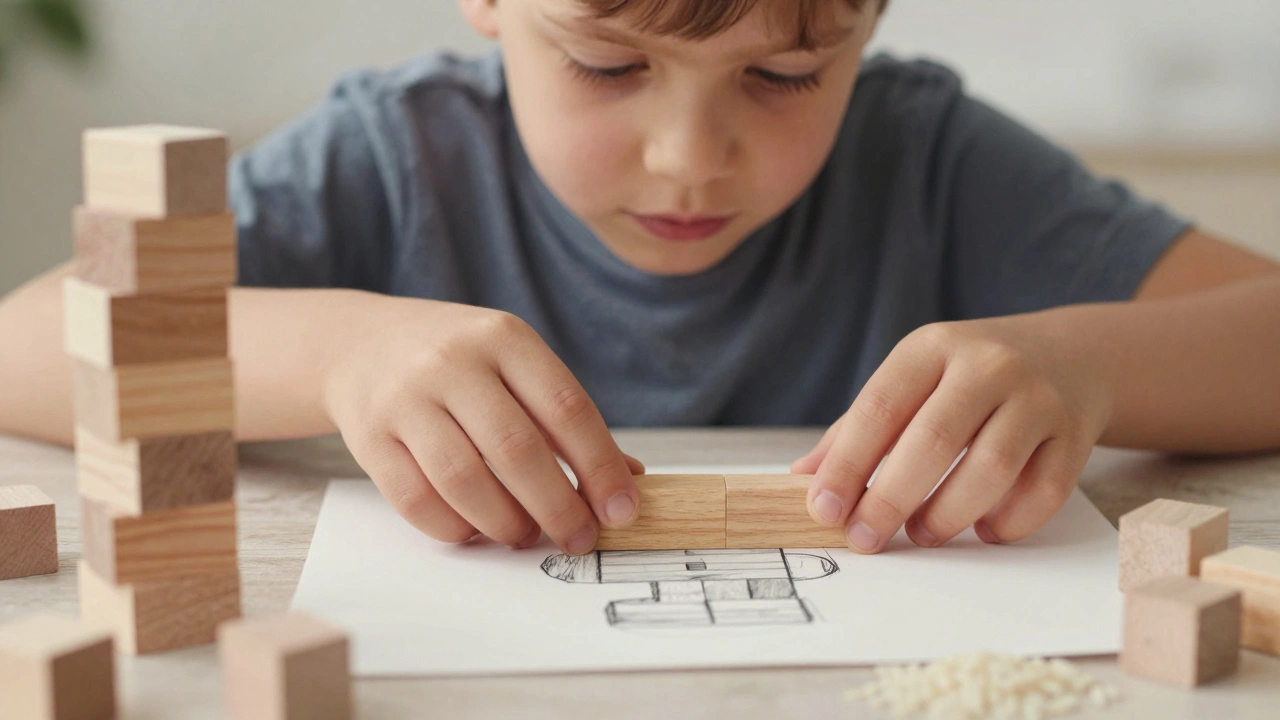
- Building with Blocks or Magna-Tiles - Open-ended construction toys teach planning, patience, and problem-solving. Kids with ADHD often jump into building without a plan, then get stuck when it falls. Guide them to first sketch a design on paper, then build it. This connects abstract thinking to physical action. One parent in Bristol reported her 7-year-old went from throwing blocks across the room to calmly rebuilding after 3 collapses in under a month.
- Simon Says and Body Awareness Games - These games train body awareness and listening. Kids have to filter out distractions (like others moving) and focus only on the command. Add variations like "Simon says touch your nose, then hop three times" to mix motor planning with attention. This is especially helpful for kids who are easily overstimulated.
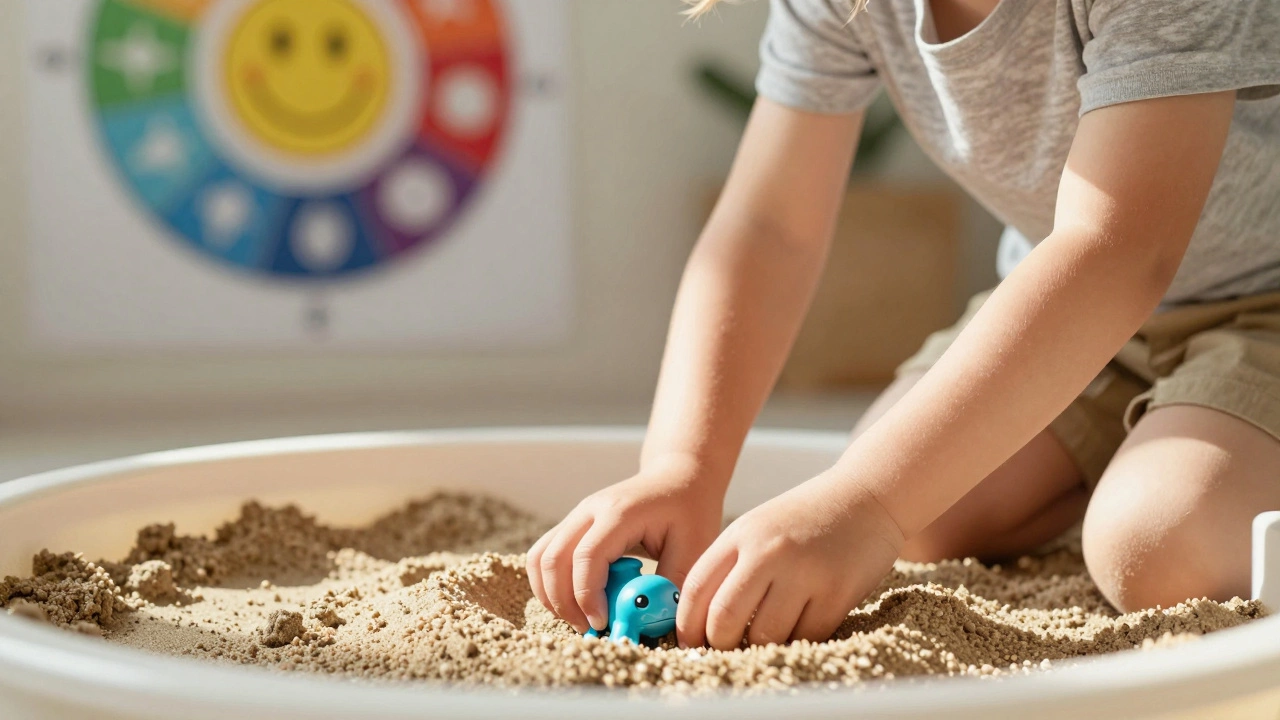
- Calming Sensory Bins - Fill a shallow bin with rice, dried beans, or kinetic sand. Hide small objects inside-buttons, plastic animals, letters. Ask your child to find specific items by touch alone. This reduces anxiety, improves focus, and gives their hands something to do while their brain listens. Sensory bins are used in over 80% of UK pediatric occupational therapy clinics for ADHD.
What to Avoid: Toys That Make ADHD Harder
Not every toy labeled "educational" helps. Some actually make focus worse.
Stay away from:
- Highly flashing, loud electronic toys - They overstimulate the nervous system, making it harder to calm down.
- Open-ended digital games without structure - Free-roaming apps like "endless runner" games don’t teach planning or consequence.
- Complex puzzles with too many pieces - If a 50-piece puzzle takes 45 minutes, it’s not a tool-it’s a frustration machine.
- Competitive sports with long wait times - Basketball drills where kids stand in line for minutes? That’s torture for an ADHD brain.
Instead, look for toys with:
- Clear, simple rules
- Short play cycles (under 15 minutes)
- Physical movement built in
- Immediate feedback (like a sound, a visual change, or a reward)
How to Turn Everyday Moments Into Learning
You don’t need fancy toys. The best ADHD learning happens in real life.
Try these quick, no-cost strategies:
- Before snack time, ask your child to set the table with 3 items: cup, plate, spoon. Count them together after. This builds working memory and sequencing.
- While walking to the car, play "I Spy" with colours. "I spy something red." Let them find it. It trains attention without pressure.
- Give them a 2-minute timer when cleaning up toys. Play a short song. When it ends, they stop. This teaches time awareness and task completion.
- Use a visual chart with pictures for morning routines. Let them check off each step. Seeing progress builds confidence.
These aren’t "therapy"-they’re just better ways to interact. And they work because they match how the ADHD brain learns: through action, not words.
What Parents Say Works (Real Stories)
Emma, a mum from Bath, started using a "Feeling Wheel" game with her 6-year-old. It’s a spinner with faces showing emotions-happy, frustrated, calm, excited. After a meltdown, they’d spin it together and talk about what triggered it. "It’s not magic," she says. "But now he can name what he’s feeling before he screams. That’s huge."
Mark, a dad in Cardiff, replaced screen time with "Treasure Hunt Fridays." He hid 5 small toys around the house with written clues. Each clue led to the next. "It took him 20 minutes to find the last one. He didn’t once ask for his tablet. He was totally in the zone."
These aren’t outliers. They’re examples of how structure + play + consistency creates change.
When to Seek Extra Support
Play helps-but it’s not a cure-all. If your child:
- Struggles to follow two-step instructions even after 3 months of consistent play
- Has frequent meltdowns over minor changes
- Can’t make or keep friends because of impulsivity
- Is falling behind in school despite effort
It’s time to talk to a paediatrician or educational psychologist. Play is a tool. But sometimes, kids need more-like occupational therapy, behavioural coaching, or school accommodations.
Don’t wait until it’s "bad enough." Early support makes a huge difference. The NHS recommends screening for ADHD if concerns persist past age 6. You don’t need a diagnosis to start using these strategies. They help every child-but they’re life-changing for those with ADHD.
Final Thought: It’s Not About Fixing ADHD
The goal isn’t to make your child "normal." It’s to help them build tools so they can thrive as themselves. Kids with ADHD aren’t broken. They’re wired differently. And with the right play, they can turn their energy into strength.
Think of it like this: a race car doesn’t need to become a bicycle. It just needs the right track, the right fuel, and a driver who knows how to steer its power. That’s what these activities do. They give the ADHD brain the track it needs to fly.
Can educational toys cure ADHD?
No, educational toys cannot cure ADHD. ADHD is a neurological condition, not something that can be fixed with toys. But well-chosen play activities can help children build critical skills like focus, impulse control, and emotional regulation. These tools make daily life easier and help kids succeed in school and social settings.
What’s the best age to start these activities?
You can start as early as age 2. Even toddlers benefit from simple turn-taking games, sensory bins, and short obstacle courses. The key isn’t age-it’s matching the activity to the child’s attention span and motor skills. For preschoolers, keep sessions under 10 minutes. By age 6, most can handle 15-20 minutes of structured play. Always follow their lead-if they’re engaged, extend it. If they’re frustrated, stop and try again later.
Do I need to buy special toys?
Not at all. Many of the most effective activities use things you already have: pillows for an obstacle course, a bowl of rice for a sensory bin, cards for memory games. You don’t need expensive branded products. What matters is structure, consistency, and engagement-not price tags. A $5 set of wooden blocks can do more than a $50 electronic tablet if used the right way.
How long until I see results?
Small improvements can show up in 2-4 weeks-like better turn-taking or fewer tantrums after a game. Bigger changes, like improved focus in school or better self-talk, usually take 8-12 weeks of consistent daily play. Think of it like exercise: one workout won’t change your fitness, but 30 days of daily movement will. Patience and repetition are the real magic.
Can these activities help without a diagnosis?
Yes. Many children who struggle with attention, impulsivity, or emotional regulation don’t have a formal ADHD diagnosis-and they still benefit from these play-based strategies. These activities support all kids who have trouble with executive function, whether they’re diagnosed or not. You don’t need a label to give your child better tools.