
Replace Baby Bottles: When, Why, and How to Switch for Your Little One
When you replace baby bottles, the process isn’t just about swapping out worn-out plastic—it’s about keeping your baby safe, healthy, and fed properly. Also known as baby bottle transition, this step matters more than most parents realize. A cracked nipple, cloudy plastic, or warped shape can harbor bacteria, leak milk, or even change how your baby feeds—leading to fussiness, gas, or worse. The truth? Most bottles don’t last forever. Even if they look fine, materials break down over time, especially with constant washing, sterilizing, and boiling.
Every time you replace baby bottles, you’re also making a choice about feeding safety, comfort, and hygiene. Parents often overlook how nipple flow rates change as babies grow. A newborn needs a slow-flow nipple, but by four months, that same bottle might leave your baby frustrated and swallowing air. And let’s not forget the material: BPA-free silicone and glass are common now, but even those degrade with heat and time. Some bottles show cracks after just six months of heavy use. Others warp in the dishwasher. If your bottle looks strange when you hold it up to the light, or if the nipple feels sticky or thin, it’s time to swap. You don’t need to buy a whole new set every few months—but you do need to check them regularly. Look for discoloration, warping, or tears in the nipple. If milk drips out faster than it should when you turn the bottle upside down, the nipple’s flow is too fast. Too slow? Your baby might be working too hard.
It’s not just about the bottle itself. baby bottle replacement often ties into bigger feeding changes, like switching from formula to cow’s milk, moving from bottle to cup, or introducing solids. Many UK parents start phasing out bottles around 12 months, but some hold on longer. The NHS recommends dropping bottles by age two to protect teeth and encourage healthy drinking habits. But if your toddler still relies on a bottle at night, replacing it with a sippy cup or straw cup isn’t just about age—it’s about breaking a habit that could lead to tooth decay or ear infections.
What you’ll find in the posts below are real, practical guides from parents who’ve been there. From checking which bottles last longest in the dishwasher, to knowing when a cracked nipple is a health risk, to how to transition a stubborn toddler off nighttime bottles—these aren’t theoretical tips. They’re the kind of advice you get from someone who’s changed a leaking bottle at 3 a.m. and still had to get up for work. You’ll learn what to throw away, what to keep, and how to spot the hidden signs your baby’s bottle needs replacing—before it causes a problem.
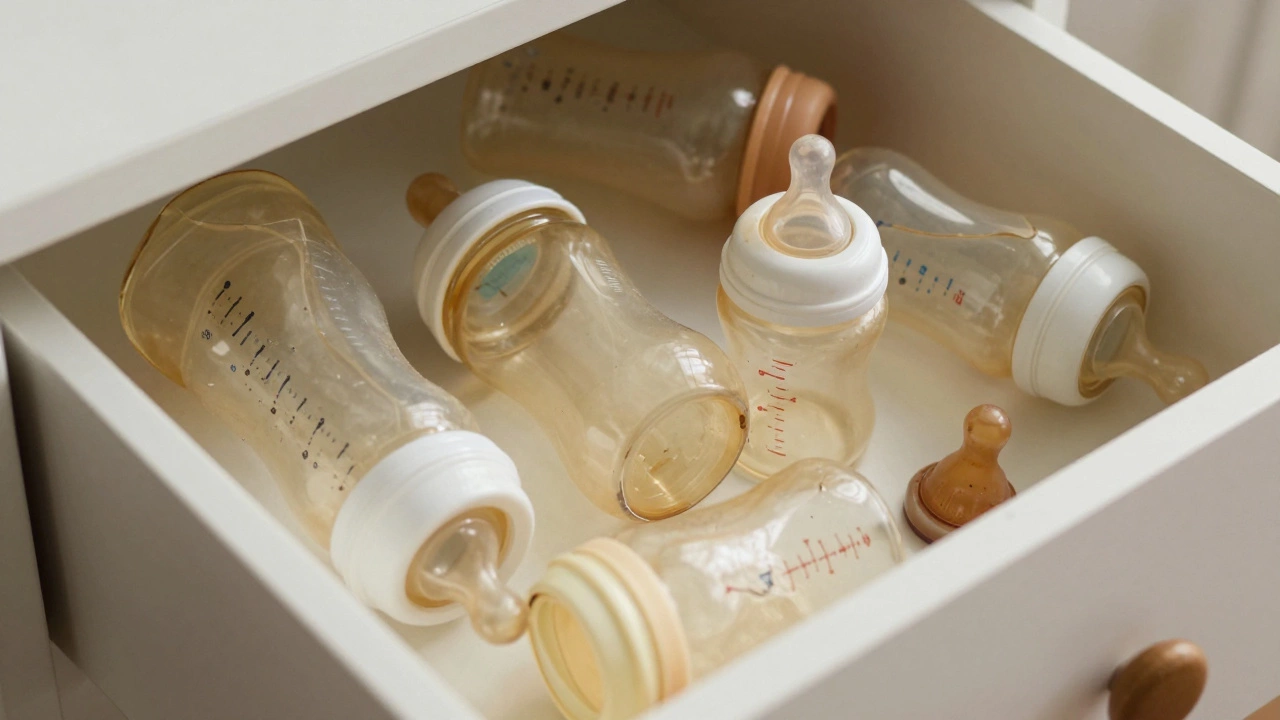
Are You Supposed to Throw Away Baby Bottles? When to Replace and Why
Learn when and why to replace baby bottles for safety and hygiene. Signs of wear, material differences, and smart replacement habits to protect your baby’s health.
view more