
Car seat placement: How to keep kids safe on the road
When talking about Car seat placement, the practice of positioning a child’s car seat correctly in a vehicle to maximise safety. Also known as child seat positioning, it child car seat and booster seat are the two main equipment types you’ll deal with. Proper placement encompasses the right angle, the correct anchor system, and the appropriate seating position in the car. It requires secure installation according to the manufacturer’s guide, and it influences overall child safety during every trip.
In the UK, the law sets clear age, weight, and height limits that dictate where and how a seat can be used. UK car seat regulations state that children must stay rear‑facing until at least 15 kg, and that a booster is only allowed once a child has outgrown a forward‑facing seat. Knowing these thresholds helps you decide whether the seat belongs in the back seat’s middle position or on the side‑aisle, and whether you should switch to a booster today or wait a few months. The guidelines also stress that the middle of the rear bench is the safest spot for any child seat because it offers the most distance from side‑impact forces.
Safety standards are the backbone of any good installation. Safety standards like ISOFIX, ECE R44/04, and the newer i‑Size (UN R129) define how anchors, belt paths, and recline angles must work together. An ISOFIX‑compatible seat, for example, clicks into the vehicle’s built‑in anchor points, reducing the chance of a mis‑fit that can happen with seat‑belt‑only systems. When you install a forward‑facing seat, the harness slots should be at or above the child’s shoulders, and the seat’s angle should be between 45° and 60° to keep the head from flopping forward. Double‑check that the harness straps are snug – you should not be able to pinch any slack between your fingers.
Key checks before you hit the road
Here’s a quick run‑through to make sure everything is ship‑shape:
- Confirm the seat’s weight and height limits match your child’s current measurements.
- Install the seat in the rear centre whenever possible; if that’s not an option, choose the side with the better anchor system.
- Set the recline angle according to the manufacturer’s diagram – many seats have a built‑in bubble level.
- Secure the harness so that the chest clip sits at armpit level and the straps are snug.
- After each trip, wiggle the seat gently. It should not move more than an inch in any direction.
Now that you’ve got the fundamentals down, the articles below dive deeper into specific scenarios – from choosing the right booster, to understanding UK weight guidelines, and even troubleshooting common installation hiccups. Browse through the collection to find the detailed advice that matches your situation.
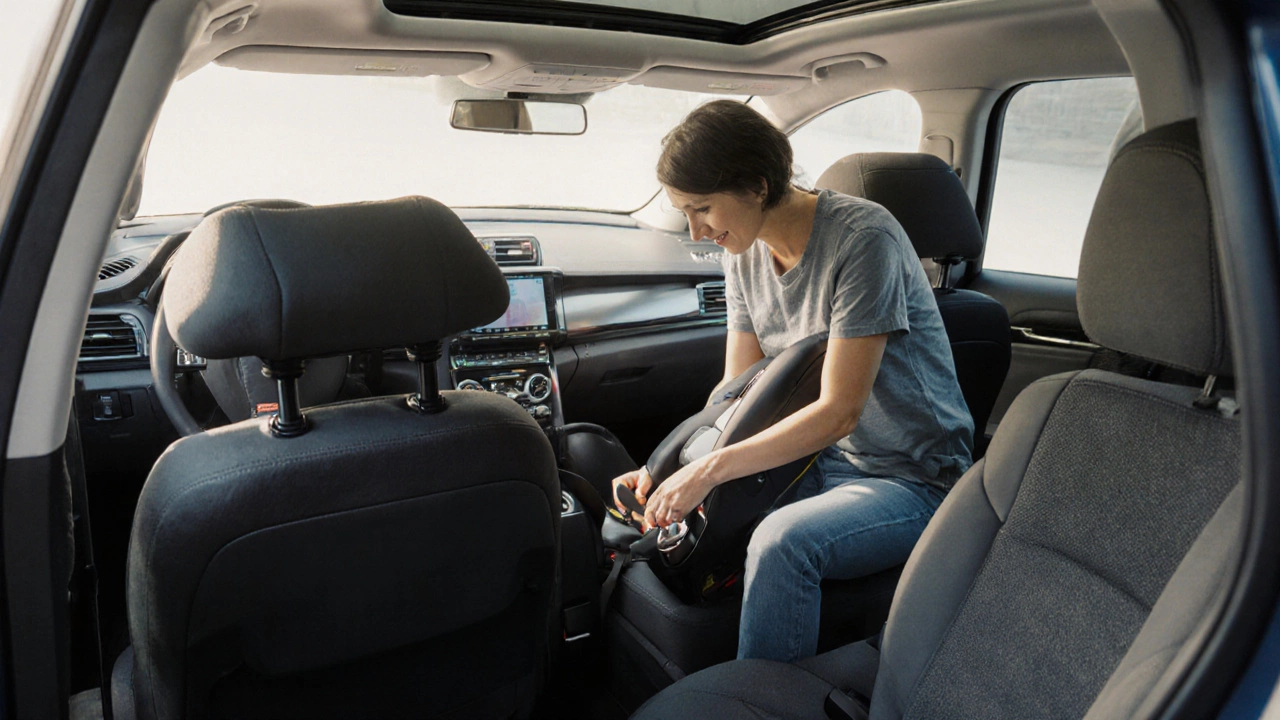
Driver vs Passenger Side Car Seat Placement: Which Is Safer?
Learn which side-driver or passenger-is safest for car seat placement in the UK, with legal rules, crash data, pros and cons, and a practical checklist.
view more