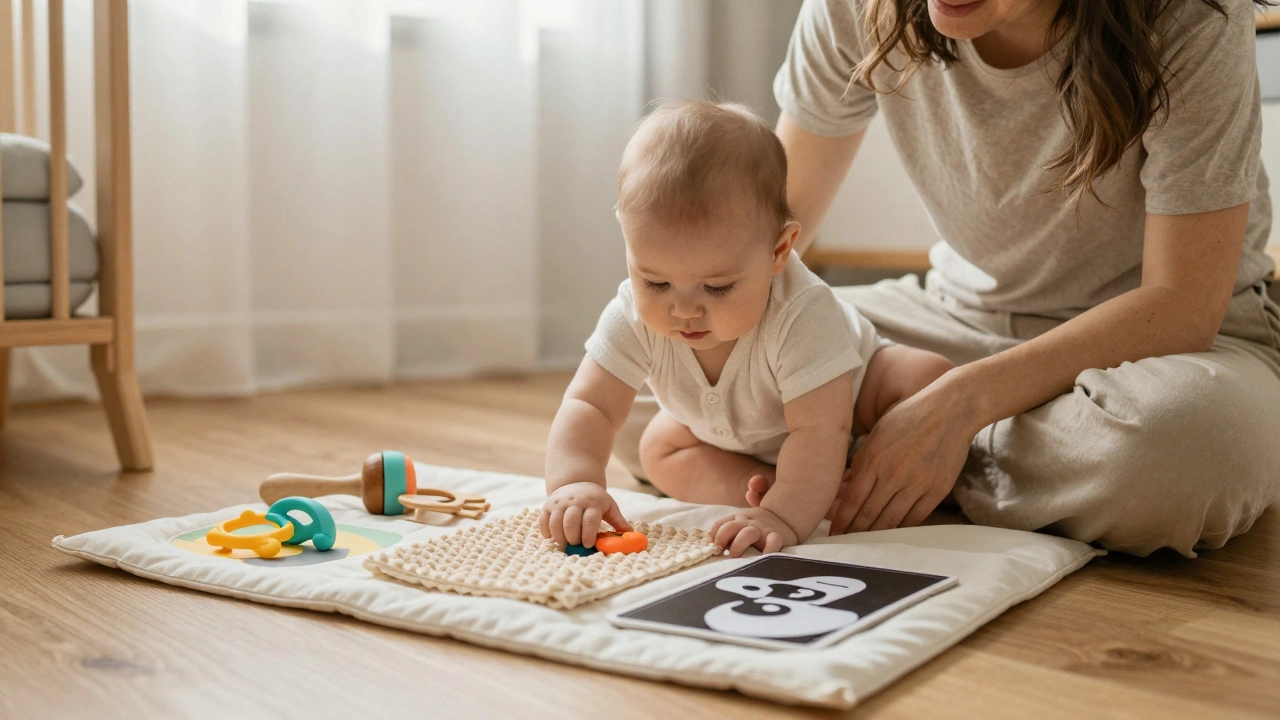
A sensory learning kit isn’t just another toy box. It’s a carefully designed set of tools that helps babies and toddlers make sense of the world through touch, sight, sound, smell, and movement. If you’ve ever watched your baby stare at a crinkly cloth, chew on a silicone teether, or giggle as a rattle shakes, you’ve seen sensory learning in action. These kits turn everyday exploration into building blocks for brain development.
What’s Inside a Sensory Learning Kit?
There’s no single formula, but most sensory learning kits include items that target specific senses. You’ll typically find:
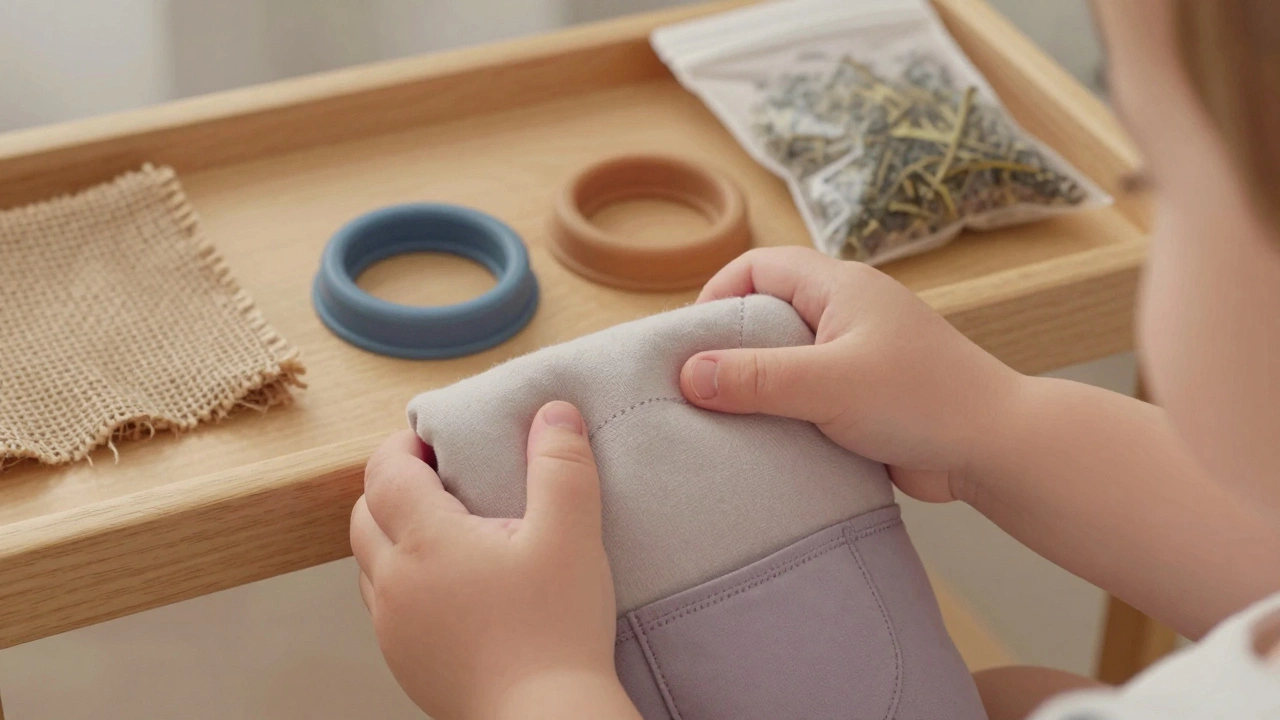
- Textured fabrics - soft velvet, bumpy silicone, rough burlap - to help little fingers learn differences in surface.
- Safe, chewable objects - made from food-grade silicone or natural rubber - for teething babies who explore with their mouths.
- Visual contrast cards - black-and-white or high-contrast patterns - designed for newborns whose eyes are still developing.
- Sound-making elements - jingles, rattles, or gentle bells - that respond to movement and encourage cause-and-effect understanding.
- Weighted or balance items - like soft balls or textured cylinders - that help toddlers build motor control and spatial awareness.
- Scents - subtle, natural aromas like lavender or vanilla in sealed fabric pockets - to introduce smell without risk.
These aren’t random trinkets. Each item is chosen based on developmental milestones. For example, a baby under three months sees best in high contrast and at 8-12 inches from their face. That’s why many kits start with simple black-and-white cards. By six months, babies are reaching, grasping, and mouthing objects - so the kit evolves with textured rings and easy-to-hold shapes.
Why Sensory Learning Matters
Your baby’s brain is forming over 1 million new neural connections every second in the first few years of life. That’s not a metaphor - it’s science from the Harvard Center on the Developing Child. Sensory learning kits don’t just keep babies busy. They give their brains the raw material to build skills like attention, memory, language, and problem-solving.
Think about it: when a toddler shakes a rattle and hears a sound, they’re learning that they caused it. That’s the start of agency. When they squeeze a squishy ball and feel it change shape, they’re building body awareness. These aren’t just play moments - they’re foundational learning experiences.
Research from the University of Cambridge shows that infants who regularly engage in structured sensory play develop fine motor skills up to 40% faster than those who don’t. That doesn’t mean you need to buy a fancy kit. But having a consistent, intentional set of sensory tools makes a real difference.
How to Use a Sensory Learning Kit
There’s no right way to use it - only natural ways. Here’s how most parents find success:
- Start small - introduce one or two items at a time. Too many stimuli overwhelm babies.
- Follow their lead - if they stare at a fabric square, let them. Don’t force interaction.
- Use it during calm moments - after a feed, before a nap, or during quiet awake time.
- Talk through it - say things like, “Feel how bumpy this is,” or “Listen to the soft jingle.” This builds language alongside sensory input.
- Rotate items - swap out pieces every few days to keep interest fresh without overwhelming.
Don’t treat it like a lesson. Treat it like a conversation. Babies don’t need to “get it right.” They just need to explore.
What to Avoid
Not all sensory toys are created equal. Some kits include things that look cute but are unsafe or ineffective:
- Small parts - anything that can fit through a toilet paper tube is a choking hazard for kids under three.
- Artificial scents or dyes - babies can have allergic reactions. Stick to natural, non-toxic materials.
- Overstimulating lights or sounds - flashing LEDs or loud electronic noises can overload developing nervous systems.
- Plastic-only designs - babies need to feel natural textures like wood, cotton, and rubber. Plastic feels the same everywhere.
Look for certifications: ASTM F963 (U.S.) or EN71 (Europe). These mean the toy has been tested for safety. If a kit says “non-toxic” but doesn’t list certifications, dig deeper.
DIY vs. Store-Bought Kits
You don’t need to spend £50 on a branded sensory kit. Many parents create their own using household items:
- Fill a clean sock with dried rice or lentils to make a DIY rattle.
- Use a silicone baking mat as a textured surface.
- Attach strips of different fabrics to a wooden ring.
- Freeze water with edible herbs (like mint or basil) in an ice cube tray - let baby hold the ice cube (in a mesh feeder) to explore temperature and taste.
Store-bought kits have advantages: they’re curated, age-appropriate, and often come with a guide. But DIY options are just as effective - and cheaper. The key isn’t the price tag. It’s consistency and safety.
When to Start and How Long to Use
You can begin sensory play as early as birth. Newborns benefit from high-contrast visuals and gentle touch. By three months, they’ll start reaching. By six months, they’ll be grabbing, mouthing, and shaking. Most families use sensory kits until age two or three, when kids naturally shift toward more complex play like puzzles, pretend play, or building blocks.
That doesn’t mean you stop. It means you evolve. A sensory learning kit at six months looks different than one at 18 months. The same principles apply - exploring textures, sounds, and movement - but the tools get more complex. A soft puzzle with knobs becomes a shape sorter. A textured ball becomes a balance disc.
Real-Life Example: The Rainy Day Rescue
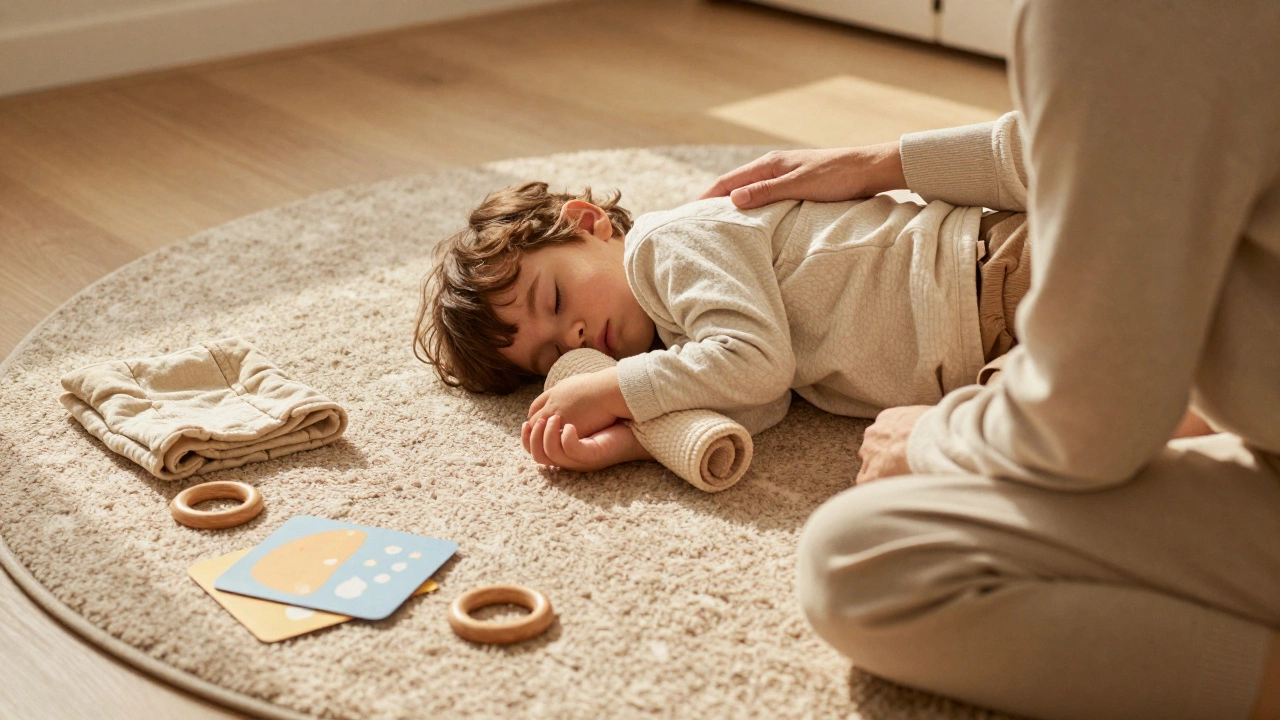
Last winter, a parent in Bristol told me her 10-month-old was refusing to nap. She’d tried everything - white noise, rocking, dim lights. Nothing worked. Then she dug out her sensory kit, pulled out a soft, weighted fabric cylinder, and sat quietly with her baby on the floor. She didn’t try to entertain. She just let her baby hold, squeeze, and roll it. Within five minutes, the baby’s breathing slowed. By ten minutes, they were asleep. The weight, texture, and rhythm of the object calmed their nervous system. No screens. No music. Just sensory input.
This isn’t magic. It’s neuroscience.
What to Look for When Buying
If you’re buying a kit, here’s what to check:
- Age range - make sure it matches your child’s stage (e.g., 0-6 months, 6-18 months).
- Materials - food-grade silicone, organic cotton, untreated wood, natural rubber.
- Washability - can you throw it in the machine or wipe it down?
- Portability - does it come in a storage bag? Can you take it to the park or grandparents’ house?
- Guides or cards - some kits include tips on how to use each item. These help parents who feel unsure.
Brands like Lovevery, Monti Kids, and Hape offer well-researched options. But don’t overlook local makers on Etsy or small UK-based brands like Baby Sensory Bristol - they often use safer, more natural materials than mass-market brands.
Final Thought: It’s Not About the Kit. It’s About the Connection.
A sensory learning kit is just a tool. The real magic happens when you’re there - watching, listening, responding. Your presence turns a textured square into a shared discovery. A rattle becomes a conversation. A quiet moment of exploration becomes a memory.
You don’t need to be an expert. You just need to show up. Let your child lead. And remember: every squish, shake, and stare is building a brain that will learn, think, and feel for the rest of their life.
Can a sensory learning kit help with speech development?
Yes. Sensory play builds the foundation for language by strengthening the brain’s ability to process sounds, rhythms, and cause-and-effect. When babies shake a rattle and hear a sound, they begin to understand that their actions create responses - the same principle behind early babbling and word learning. Pairing sensory play with simple words like "crinkle," "bumpy," or "listen" helps connect sensation with language.
Are sensory kits only for babies with developmental delays?
No. Sensory kits benefit all children. They’re not therapeutic tools reserved for special needs - they’re universal early learning aids. Every baby learns through their senses. Whether your child is developing typically or needs extra support, sensory play helps build neural pathways for attention, coordination, and emotional regulation. It’s like vitamins for brain development.
How often should I use a sensory learning kit?
Short, frequent sessions work best. Aim for 10-15 minutes, two to three times a day. Babies have short attention spans. It’s better to have three quick sessions than one long, forced one. Look for natural moments - after a feed, during diaper changes, or before naps. Let your child’s cues guide you.
Can I use household items instead of buying a kit?
Absolutely. Many of the most effective sensory tools are things you already have: a clean sock with rice, a silicone spoon, a piece of velvet fabric, a wooden spoon to tap gently. The goal isn’t to buy products - it’s to offer varied, safe sensory experiences. DIY options are often safer, cheaper, and just as effective.
When should I stop using a sensory learning kit?
You don’t really stop - you evolve. Most families phase out dedicated sensory kits around age two or three, as children naturally shift to more complex play like pretend kitchens, building blocks, or art activities. But sensory experiences never stop being important. A toddler exploring mud, a child feeling different fabrics during dressing, or a preschooler listening to rain - these are all sensory learning, just in new forms.