Nursery Furnishing Cost Calculator
Estimate your nursery costs based on article recommendations. Select options to see realistic price ranges.
Estimated Nursery Cost
Based on article recommendations: Focus on essentials. Used items can save 50%+ and reduce waste.
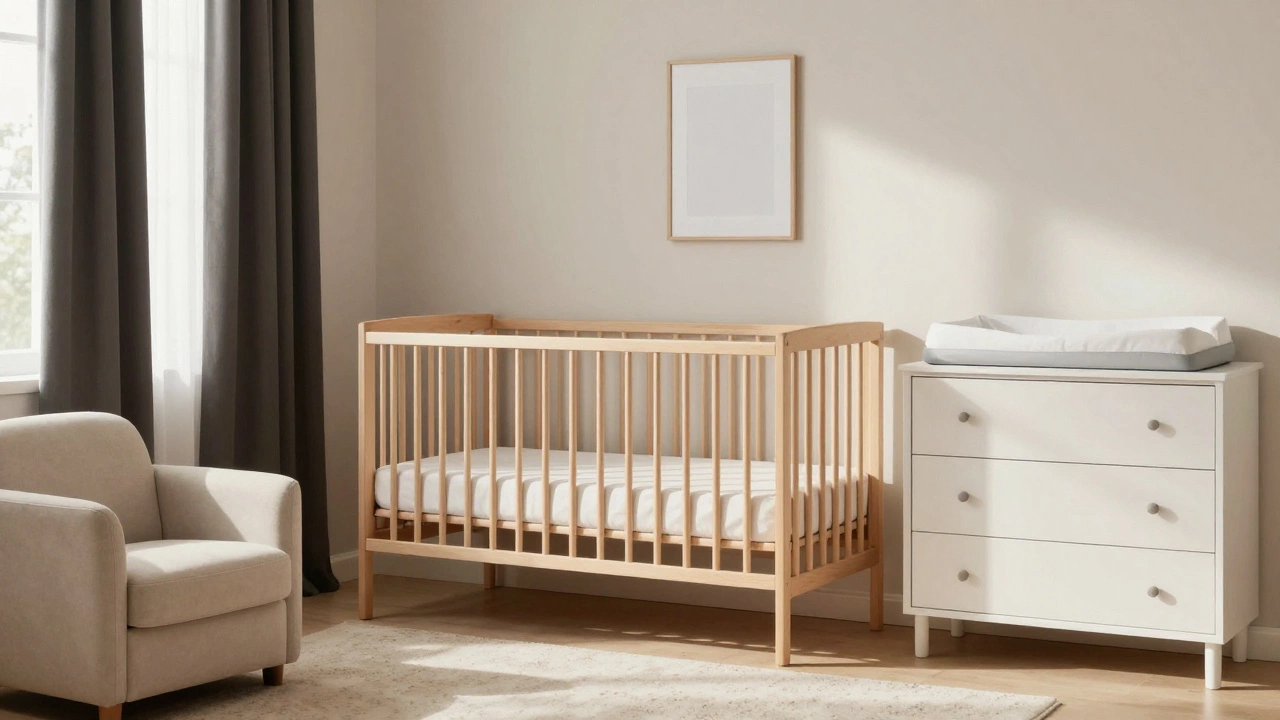
Setting up a nursery doesn’t have to break the bank-but it’s easy to overspend if you don’t know what you’re really paying for. The average cost to furnish a nursery in 2025 ranges from $1,200 to $4,500, depending on whether you buy new, used, or high-end items. Most parents spend around $2,800 for a complete, safe, and functional setup. That includes the big-ticket items like a crib, dresser, glider, and changing table, plus lighting, storage, and decor. It’s not about how much you spend-it’s about what you actually need.
What You Actually Need in a Nursery
There’s a lot of pressure to buy everything in sight: mobiles, wall decals, matching rugs, organic cotton sheets, and designer name brands. But the truth? Your baby doesn’t care if the crib is from Pottery Barn or Target. What they need is a safe, quiet, and clean space to sleep and grow. Stick to the essentials: a crib, mattress, changing station, one or two storage pieces, and a comfortable chair for feeding.
Here’s the real list of must-haves:
- Crib with a firm, snug-fitting mattress
- Diaper changer (or a dresser with a changing pad)
- Storage for clothes, diapers, and wipes
- Gliding chair or rocking chair
- Soft rug or mat
- Nightlight or dimmable lamp
- Window shades or blackout curtains
Everything else-wall art, themed bedding, plush toys, musical mobiles-is optional. Skip the trend-driven stuff. Babies outgrow nursery decor in under two years. Focus on function, not Instagram aesthetics.
Cost Breakdown: Crib, Mattress, and Dresser
The three biggest expenses in a nursery are the crib, mattress, and dresser. Together, they make up about 60% of your total budget.
Crib: A basic, non-toxic, JPMA-certified crib costs between $200 and $500. Brands like DaVinci, Graco, and Delta Children offer solid options in this range. High-end cribs with convertible features (that turn into toddler beds) can hit $800-$1,200. But unless you plan to use it for years, you’re paying for features you won’t need. A standard crib is enough.
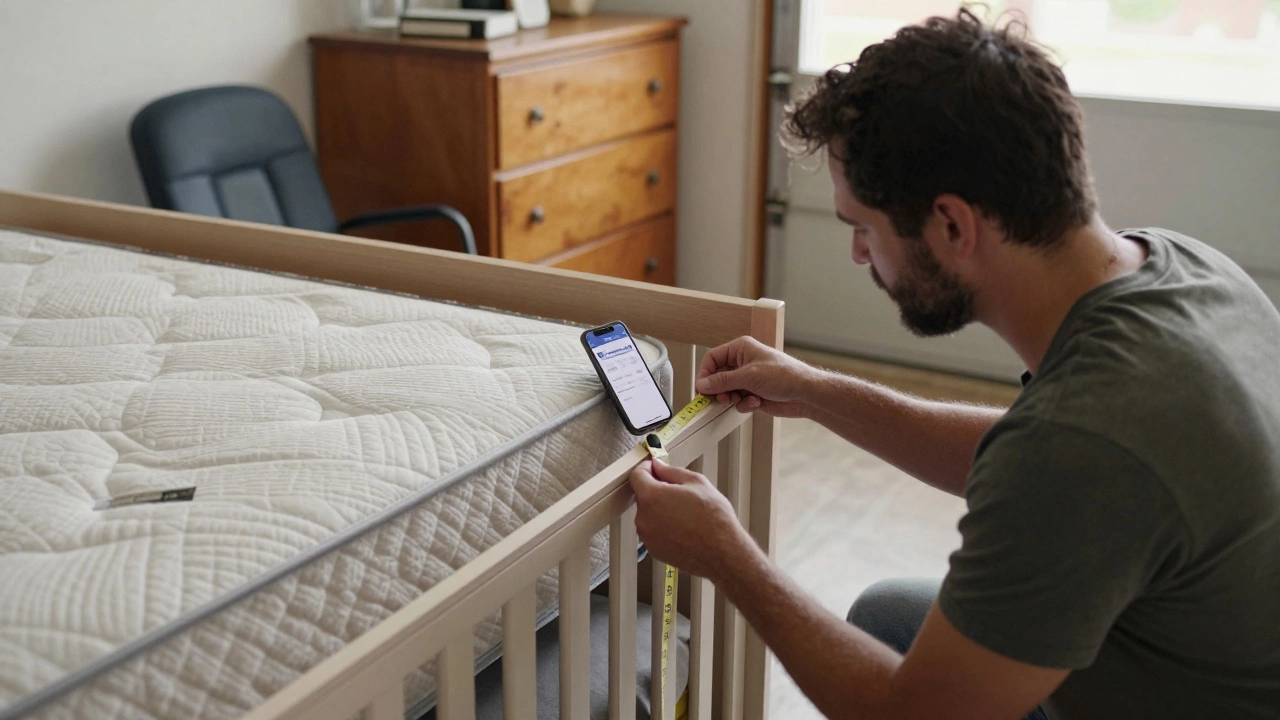
Mattress: Don’t cheap out here. A firm, waterproof, non-toxic mattress costs $150-$300. Memory foam or overly soft mattresses are dangerous for babies. Look for ones that meet ASTM safety standards. You can find good ones at Walmart, Target, or Amazon for under $250.
Dresser: A 6-drawer dresser with a changing pad attachment runs $150-$400. Many parents save money by using a regular dresser and adding a changing pad on top. You don’t need a matching set. A white or gray dresser from IKEA or Wayfair works just fine.
Changing Table vs. Dresser with Changing Pad
Do you need a dedicated changing table? Not really. Most parents switch to a dresser with a changing pad within 6-9 months. A changing table costs $100-$300, but it takes up space and becomes useless once your baby rolls over or outgrows diapers.
Instead, buy a sturdy dresser ($150-$300) and add a changing pad ($30-$60). You get storage, functionality, and longevity. You can even use the same dresser in your child’s room later. It’s smarter, cheaper, and less wasteful.
Gliding Chair: Worth the Investment?
Yes-if you plan to breastfeed or rock your baby to sleep regularly. A good glider costs $200-$600. Brands like Babyletto, Pottery Barn Kids, and IKEA’s FÄRGRIK have decent options. You don’t need leather or velvet. A fabric-covered chair with good lumbar support is enough.
Some parents skip the glider and use a regular rocking chair or even a recliner. But if you’re feeding at night, you’ll thank yourself later. A comfy chair reduces back pain and helps you relax during those long, sleepy nights.
Storage: Beyond the Dresser
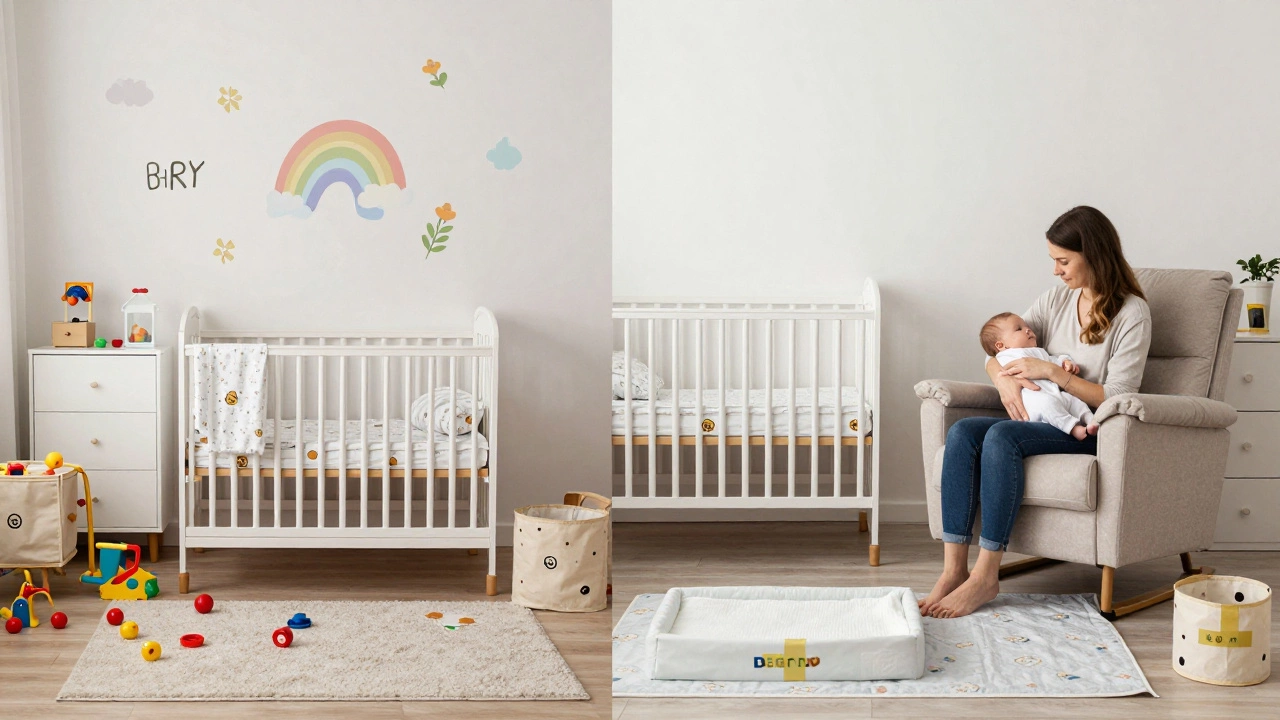
Diapers, wipes, onesies, burp cloths, toys, and books pile up fast. You’ll need extra storage.
- Bins or baskets on shelves: $15-$40 each
- Over-the-door organizers for diapers and wipes: $20-$35
- Under-bed storage bins: $25-$50
Don’t buy fancy labeled storage systems. Use plain fabric bins from Target or IKEA. Label them with masking tape and a marker. It’s just as effective and saves you hundreds.
Lighting, Rugs, and Decor
Lighting should be soft and adjustable. A plug-in nightlight with a dimmer ($15-$30) is enough. Avoid bright overhead lights. Use a floor lamp or wall sconce with warm bulbs.
A rug adds warmth and safety. A low-pile, non-slip rug costs $50-$120. Avoid shag rugs-they trap dust and are hard to clean. Look for machine-washable options.
Decor? Skip the expensive wall decals. Use printable art from Etsy ($5-$15 for a set) and frame it yourself. Hang it with removable adhesive strips. You can change it as your child grows without repainting.
Where to Save: Used, Secondhand, and Hand-Me-Downs
One of the smartest ways to cut nursery costs is buying used. Cribs, dressers, gliders, and storage bins often look brand new if they’ve barely been used.
Check Facebook Marketplace, Buy Nothing groups, or local consignment shops. You can find a like-new crib for $80-$150, a dresser for $60-$120, and a glider for $75-$200. Just make sure:
- The crib meets current safety standards (no drop sides, no gaps larger than 2 3/8 inches)
- The mattress is new or in excellent condition (never use an old, worn mattress)
- There are no recalls on the item (check the CPSC website)
Hand-me-downs from friends or family are even better. Many parents give away perfectly good nursery furniture after one child. Don’t feel guilty about accepting them.
What to Avoid Spending On
There are plenty of nursery products that are overpriced and unnecessary:
- Specialty monitors with video, breathing sensors, or temperature alerts-most babies don’t need them
- Matching bedding sets with 15+ pieces-just buy 2-3 fitted sheets
- Expensive sound machines-your phone with a free white noise app works fine
- Designer name-brand cribs-no difference in safety or quality
- Decorative wall hangings and mobiles-babies lose interest after a few weeks
These items add up fast. Skip them. Focus on what keeps your baby safe and comfortable.
Real Budget Examples
Here are three real nursery setups from 2025:
Low-Budget Setup ($1,100)
Crib (used, $120) + Mattress (new, $180) + Dresser (used, $90) + Changing pad ($40) + Glider (used, $150) + Bins and storage ($100) + Rug ($70) + Nightlight ($20) + Sheets and towels ($130) + Printable art ($10)
Mid-Range Setup ($2,800)
Crib (new, $350) + Mattress (new, $250) + Dresser (new, $300) + Changing pad ($50) + Glider (new, $400) + Storage bins ($150) + Rug ($100) + Nightlight ($25) + Sheets and towels ($150) + Decor ($100) + Baby monitor ($300) + Rocking chair ($250) + Additional storage ($275)
High-End Setup ($5,000+)
Convertible crib ($1,100) + Organic mattress ($400) + Custom dresser ($800) + Designer glider ($800) + Luxury rug ($400) + High-end monitor ($500) + Custom curtains ($300) + Decorative lighting ($300) + Matching bedding sets ($500) + Personalized name sign ($100) + Other extras
Most families land in the middle. You don’t need luxury to raise a healthy baby.
How to Stick to Your Budget
Set a limit before you start shopping. Decide on a total amount-say $2,500-and divide it among categories:
- Crib and mattress: $500
- Dresser and changing pad: $400
- Chair: $300
- Storage: $300
- Rug and lighting: $200
- Decor and extras: $200
- Buffer for surprises: $600
Use a spreadsheet or a simple app to track spending. Wait 24 hours before buying anything over $100. Ask yourself: Will I still use this in six months?
Shop sales. Black Friday, Amazon Prime Day, and end-of-season clearance sales offer big discounts on nursery items. Sign up for email alerts from Target, Walmart, and IKEA.
Final Thought: It’s Not About Perfection
Your baby won’t remember the color of the walls or the brand of the crib. They’ll remember the way you held them at 3 a.m., the sound of your voice singing softly, and the safety of your arms.
A nursery doesn’t need to be Pinterest-perfect. It just needs to be safe, simple, and full of love. Spend your money where it matters-on rest, support, and peace of mind. The rest? It’s just stuff.
Is it cheaper to buy nursery furniture used?
Yes, buying used nursery furniture can save you 50% or more. Cribs, dressers, gliders, and storage bins often sell for a fraction of their original price. Just make sure the crib meets current safety standards, the mattress is new or in excellent condition, and there are no recalls. Check the CPSC website before buying.
Do I need a changing table?
No, you don’t need a dedicated changing table. Most parents use a dresser with a changing pad instead. It’s cheaper, saves space, and doubles as storage. You’ll likely stop using a changing table after 6-9 months anyway.
What’s the most expensive part of a nursery?
The most expensive parts are usually the crib, mattress, and glider. A high-end convertible crib can cost over $1,000, and a luxury glider can run $600+. But you can get everything you need for under $1,000 by choosing basic, safe, and functional items.
How much should I spend on a mattress?
Spend between $150 and $300 on a firm, waterproof, non-toxic mattress. Avoid memory foam or overly soft mattresses-they’re unsafe for babies. Look for ones that meet ASTM safety standards. This is one area where you shouldn’t cut corners.
Can I use a regular dresser as a changing table?
Absolutely. Many parents do. Just add a changing pad that fits securely and has safety straps. Make sure the dresser is stable and anchored to the wall. It’s more practical, lasts longer, and costs less than a dedicated changing table.