
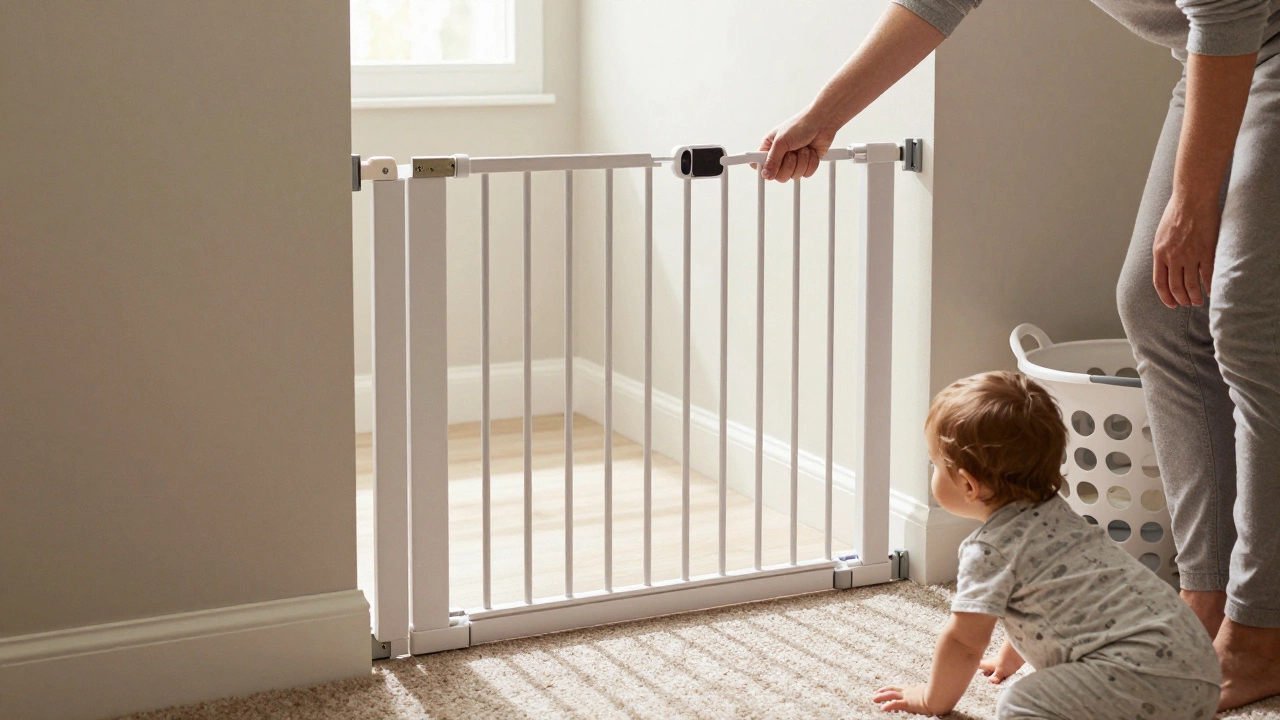
Snap Gate Installation Calculator
Calculate Snap Gate Compatibility
Enter your doorway measurements and wall type to see if a snap gate is suitable for your home.
Installation Results
Your snap gate is suitable!
Based on your measurements, a snap gate will work for your space. Remember to:
- Install brackets on solid wall with proper screws
- Check for wall studs when using drywall
- Test the gate after installation
- Replace if child can press the release button
Important Safety Considerations
Not Recommended for This Space
For your current setup, a snap gate is not ideal. Consider:
- Pressure gates for temporary use only
- Hardware-mounted gates for stairways
- Door locks for children over 24 months
If you’ve ever tried to baby-proof your home, you’ve probably seen a snap gate. It’s that lightweight, no-tools-needed gate that clicks into place between doorways or at the top of stairs. But what exactly is a snap gate, and is it actually safe for your child?
What Is a Snap Gate?
A snap gate is a type of child safety gate that uses a spring-loaded, push-button mechanism to lock securely into place. Unlike pressure-mounted gates that rely on tension against walls, or hardware-mounted gates that require drilling, snap gates snap into pre-installed plastic or metal brackets. These brackets are typically screwed into the wall or door frame, and the gate itself clicks into them with a firm, audible snap.
You’ll find snap gates most often in homes with toddlers or crawling babies. They’re popular because they’re quick to open and close - one hand can operate them, which is a huge plus when you’re juggling a baby and a laundry basket. The gate swings open in one direction, usually outward, and locks automatically when closed.
Brands like BabyDan, Regalo, and Evenflo make popular snap gate models. They’re often made from lightweight but durable plastic or metal, with vertical slats spaced less than 2.5 inches apart to meet UK safety standards for child gates.
How a Snap Gate Works
The mechanism is simple: two wall-mounted brackets sit on either side of the opening. Each bracket has a small, recessed slot. The gate has matching pins on each end. When you line up the gate with the brackets and push it down and forward, the pins slide into the slots and lock with a click.
To open it, you press a small button on the top or side of the gate - sometimes it’s a lever, sometimes a thumb tab. This releases the pins, letting you lift the gate out of the brackets. No twisting, no turning, no force needed. It’s designed to be easy for adults but hard for little hands to figure out.
That’s the key difference between snap gates and pressure gates. Pressure gates can be pushed open by a determined toddler. Snap gates? Unless your child can press a button while lifting - which most can’t until they’re at least 2 or 3 - they stay put.
When to Use a Snap Gate
Snap gates aren’t for every doorway. They’re best for:
- Top and bottom of stairs - where a pressure gate could slip and cause a fall
- Doorways with solid, flat walls (not drywall over studs without backing)
- Areas where you need a gate that stays closed even if a child leans on it
- Homes with multiple children - because one parent can open it quickly while holding a baby
They’re not ideal for wide openings (over 40 inches), curved walls, or areas with uneven surfaces. If your doorway has a baseboard that sticks out, or your walls are made of plaster over lath, you’ll need to check if the brackets can be securely screwed in.
Many UK parents use snap gates at the top of their staircase - and for good reason. The Royal Society for the Prevention of Accidents (RoSPA) recommends hardware-mounted gates for stairs, and snap gates fall into that category because they’re fixed to the wall, not just squeezed between it.
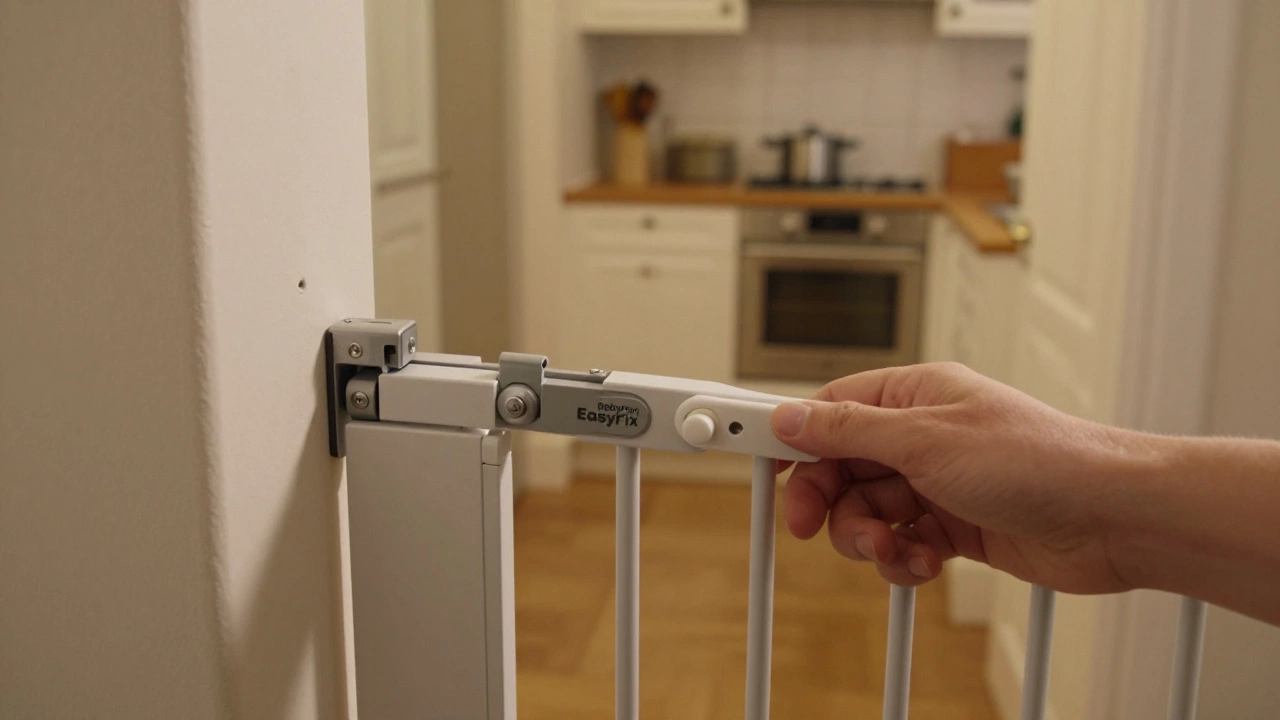
Snap Gate vs Pressure Gate vs Hardware Gate
It’s easy to get confused between the three main types of child gates. Here’s how they stack up:
| Feature | Snap Gate | Pressure Gate | Hardware Gate |
|---|---|---|---|
| Installation | Requires wall brackets (screwed in) | Uses tension against walls | Directly screwed into wall or frame |
| Sturdiness | High - fixed to wall | Low to medium - can be pushed open | Very high - most secure |
| Best for stairs? | Yes | No - unsafe | Yes |
| Child-proof? | Yes - hard for toddlers to open | No - many can climb or push through | Yes - if properly installed |
| Removal | Easy - gate lifts out | Easy - just loosen tension | Hard - requires unscrewing |
| Wall damage | Minor - small screw holes | None | Significant - multiple screw holes |
As you can see, snap gates strike a balance. They’re not as permanent as full hardware gates, but they’re far safer than pressure gates - especially on stairs. They’re the middle ground that most UK parents end up choosing after trying pressure gates and realizing they’re not enough.
Things to Watch Out For
Snap gates aren’t foolproof. Here are common mistakes parents make:
- Installing brackets on drywall without finding a stud - the screws can pull out under pressure
- Using a gate that’s too wide for the space - gaps can trap fingers or let a child squeeze through
- Forgetting to check the latch regularly - over time, the spring mechanism can wear or get clogged with dust
- Leaving toys or furniture near the gate - a child might use them to climb over
Always test the gate after installation. Push on it from both sides. Try to open it without pressing the release button. If it budges or pops open easily, it’s not installed right.
Also, check the manufacturer’s weight and height limits. Most snap gates are rated for children under 24 months or 30 pounds. Once your child can climb or pull themselves up, it’s time to consider a different solution - even if the gate still seems sturdy.
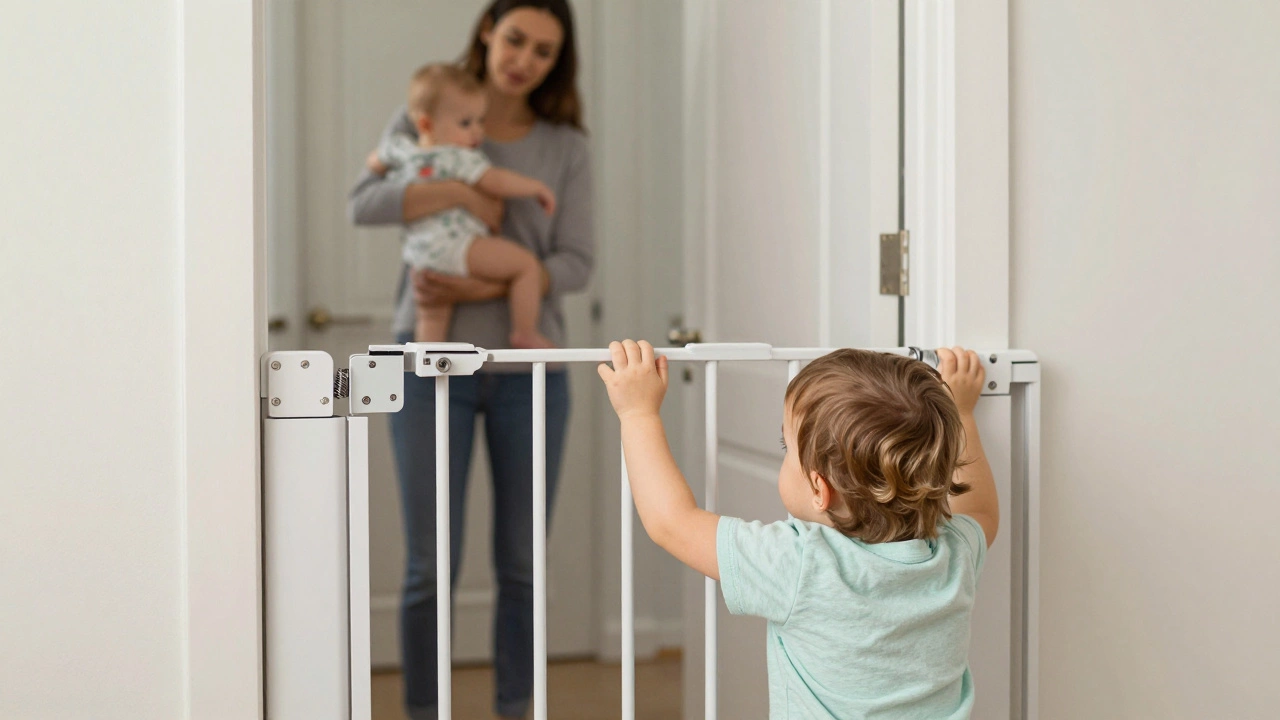
Top Snap Gates in the UK (2026)
Based on safety ratings from the British Standards Institution (BS EN 1930:2011) and parent reviews from Which? and Mumsnet, here are three top models:
- BabyDan EasyFix - Lightweight, one-hand operation, fits openings from 24 to 36 inches. Comes with a night-light option.
- Regalo Easy Step - Extra-wide version (up to 42 inches), metal frame, meets UK safety standards. Good for wider hallways.
- Evenflo Walk-Thru - Has a built-in door that swings open for adults, so you don’t have to lift the gate every time. Ideal for busy households.
All three are available at major UK retailers like John Lewis, Boots Baby, and Amazon UK. Look for the CE mark and the BS EN 1930 certification on the packaging.
When to Stop Using a Snap Gate
Snap gates are temporary. Most children figure out how to open them between 18 and 24 months. Signs your child is ready to move on:
- They’re climbing over the gate
- They’ve learned how to press the release button
- They’re standing or walking confidently
- They’re showing interest in opening doors on their own
When that happens, it’s not time to panic. It’s time to transition. Replace the gate with a door lock, a safety latch on the doorknob, or simply start teaching them about boundaries. Many parents find that once a child understands the word "no" and can follow simple instructions, gates become more of a hassle than a help.
Final Thoughts
A snap gate isn’t magic. It won’t replace supervision. But done right, it’s one of the most effective tools for keeping a crawling or early-walking child safe - especially near stairs, kitchens, or rooms with hazards. It’s not the cheapest option, but it’s one of the most reliable. If you’re choosing between a pressure gate and a snap gate, go with the snap. Your peace of mind is worth the extra few screws.
Can a snap gate be used on stairs?
Yes, snap gates are specifically designed for stairs and are recommended by UK safety organizations like RoSPA. Unlike pressure gates, they’re fixed to the wall and won’t shift under pressure. Always install them at the top of stairs using wall brackets and screws - never use a pressure gate on stairs.
Are snap gates safe for toddlers?
Snap gates are safe for toddlers under 24 months, as long as they’re properly installed and the child hasn’t learned how to operate the release mechanism. Once your child can press the button or climb over, it’s time to remove the gate or switch to another safety method.
Do snap gates damage walls?
They leave small screw holes, but no more than a standard picture hook. The holes are easy to fill and paint over later. If you’re renting, check with your landlord first - some snap gates come with removable adhesive brackets, but these aren’t recommended for stairs or high-traffic areas.
Can I install a snap gate myself?
Yes, most snap gates are designed for DIY installation. You’ll need a drill, a screwdriver, and a stud finder (to ensure the screws anchor into solid wood or masonry). The instructions usually take less than 15 minutes to follow. If you’re unsure about wall type, consult a hardware store or ask a professional.
How long do snap gates last?
The gate itself can last years if not abused. The mechanism (spring and latch) may wear out after 2-3 years of daily use. Check the latch every few months. If it feels loose or doesn’t click firmly, replace the gate. Never use a damaged safety gate.
If you’re still unsure whether a snap gate is right for your home, test one at a local baby store. Try opening and closing it with one hand. See how your child reacts to it. Safety isn’t about buying the most expensive gate - it’s about finding the one that works for your space, your child, and your routine.