Montessori Toy Finder
Select your child's age range to discover recommended materials, key developmental focuses, and tips for effective play.
You’re standing in the toy aisle, holding a bright plastic gadget that lights up and makes noise. It looks fun, but does it actually help your child learn? This is the dilemma many parents face when trying to align with Montessori principles. The core question isn't just "what toy?" but "what age is right?" Getting this wrong can lead to frustration for the child and wasted money for you. Montessori education relies on sensitive periods-windows of time when a child is biologically primed to learn specific skills. If you introduce a puzzle too early, they’ll ignore it. Too late, and they’ve already mastered the concept elsewhere.
The truth is, there is no single magic number. Instead, Montessori materials are designed for specific developmental stages. Understanding these stages helps you choose tools that match your child’s current abilities, not where you hope they will be in six months. Let’s break down exactly what works for each age group, from newborns to preschoolers, so you can build a play environment that actually supports their growth.
Why Age Matters More Than Brand
Most commercial toys are marketed broadly, often labeled "3+" or "6 months+." These labels usually refer to safety standards (like choking hazards) rather than educational value. Maria Montessori observed that children develop through distinct phases. Each phase has specific needs. For instance, an infant needs sensory input, while a toddler needs order and motor control. Giving a sensory ball to a two-year-old who is ready for sorting tasks is like giving a calculus textbook to a baby-it misses the mark entirely.
When you match the toy to the stage, you enter the "zone of proximal development." This is the sweet spot where a task is challenging enough to require effort but easy enough to be achievable without constant adult intervention. If a toy is too hard, the child gives up. If it’s too easy, they get bored. The goal is engagement. You want your child to focus deeply, repeating an action because it feels satisfying, not because they were told to do it.
0 to 12 Months: Sensory Exploration
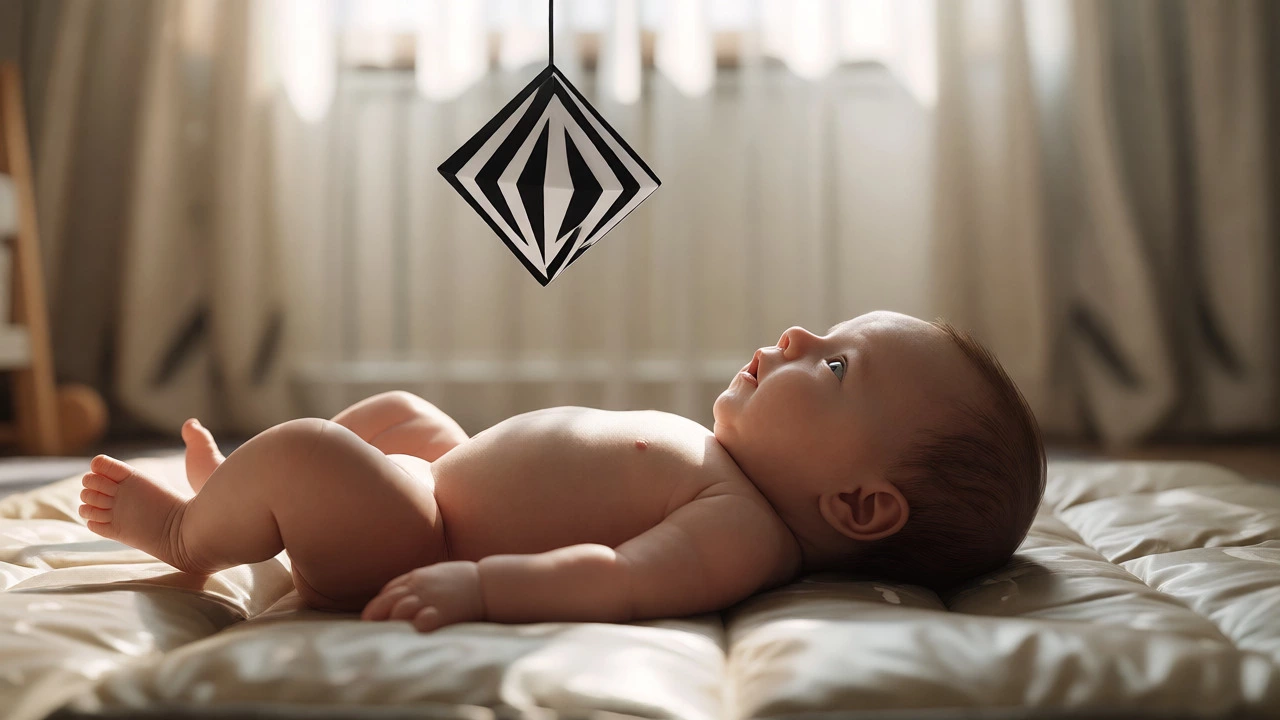
In the first year, babies are learning about their bodies and the physical world. They don’t need complex puzzles; they need to touch, see, hear, and mouth objects. At this stage, sensory integration is key. Their vision is developing, moving from high-contrast black and white patterns to full color. Their hands are learning to grasp, release, and manipulate.
For newborns (0-3 months), simple visual stimuli work best. High-contrast cards or mobiles with geometric shapes help them track movement. As they grow into the 4-6 month range, they begin reaching. Rattles made of natural wood or fabric, which are light enough to hold, encourage grasping. By 7-9 months, they understand object permanence-the idea that things exist even when hidden. Peek-a-boo cloths or boxes with balls inside become fascinating. Finally, at 10-12 months, they are pulling up and cruising. Push carts or sturdy stacking rings support this gross motor development.
- Key Focus: Visual tracking, grasping, cause-and-effect.
- Material Types: Natural wood, soft fabrics, non-toxic paints.
- Avoid: Battery-operated toys with flashing lights that overwhelm their senses.
12 to 24 Months: Order and Movement
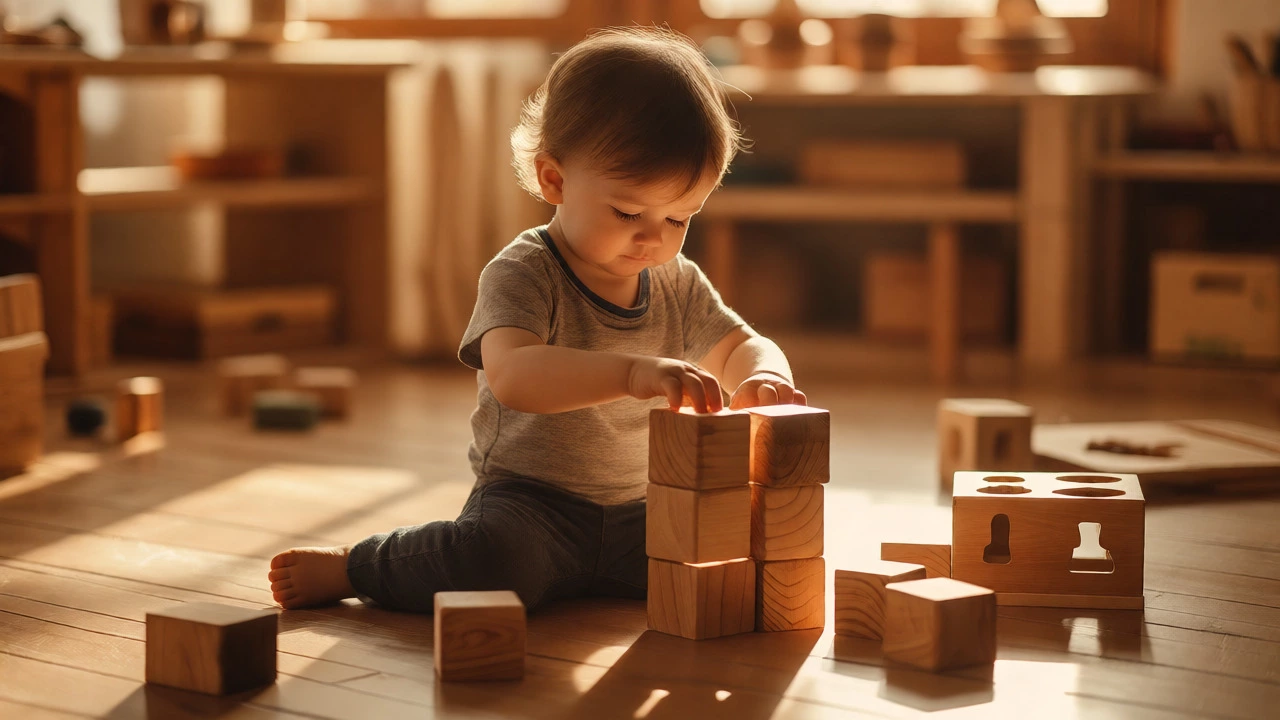
Toddlers are obsessed with order. They notice if a shoe is misplaced or if a routine changes. This is the perfect time to introduce toys that promote organization and fine motor skills. Your one-year-old isn’t just playing; they are constructing their understanding of how the world fits together. They love putting things in and taking them out. This repetitive action builds neural pathways related to logic and spatial awareness.
Simple wooden blocks are excellent here. Not elaborate structures, but basic cubes they can stack. When the tower falls, they learn gravity. Shape sorters, where circles go in round holes and squares in square ones, teach problem-solving. But keep it simple. A sorter with three shapes is better than one with twelve. Overwhelming choices lead to decision fatigue. Another great option is lacing beads. Large, chunky wooden beads on a thick cord help refine the pincer grasp, preparing their hands for writing later on.
Practical life activities also fit here. Small brooms, sponges, or pouring jugs allow toddlers to mimic adults. These aren’t "toys" in the traditional sense, but they provide immense satisfaction. Completing a task, like wiping a spill, gives a sense of competence that flashy electronic toys rarely achieve.
2 to 3 Years: Language and Precision
Between ages two and three, language explodes. Children move from two-word phrases to full sentences. They are also refining their fine motor skills, gaining control over small muscle movements. This is the era of precision. Toys that require careful manipulation are ideal. Think tweezers picking up pom-poms, or threading small beads onto a string.
Language-rich toys are crucial now. Picture books with realistic images (not cartoons) help expand vocabulary. Naming objects accurately matters. If you show a picture of a dog, call it a dog, not a "doggie," unless you are being intentionally affectionate in speech. Realistic animal figurines allow for storytelling and categorization. Puzzles with knobs (peg puzzles) challenge their hand-eye coordination. Start with four pieces and gradually increase the count as they master the skill.
At this stage, imagination begins to bloom, but it is grounded in reality. They prefer realistic dolls or kitchen sets over fantasy characters. They want to cook food, feed dolls, and clean up. Provide props that mirror real life. A small apron or a set of wooden vegetables allows them to process their daily experiences through play.
3 to 6 Years: Abstract Thinking and Social Play
Preschoolers are entering the second plane of development. They are curious about how things work and why. They ask endless questions. Their attention spans lengthen, allowing for more complex projects. This is where traditional Montessori materials shine, such as the Golden Beads for math or the Moveable Alphabet for writing.
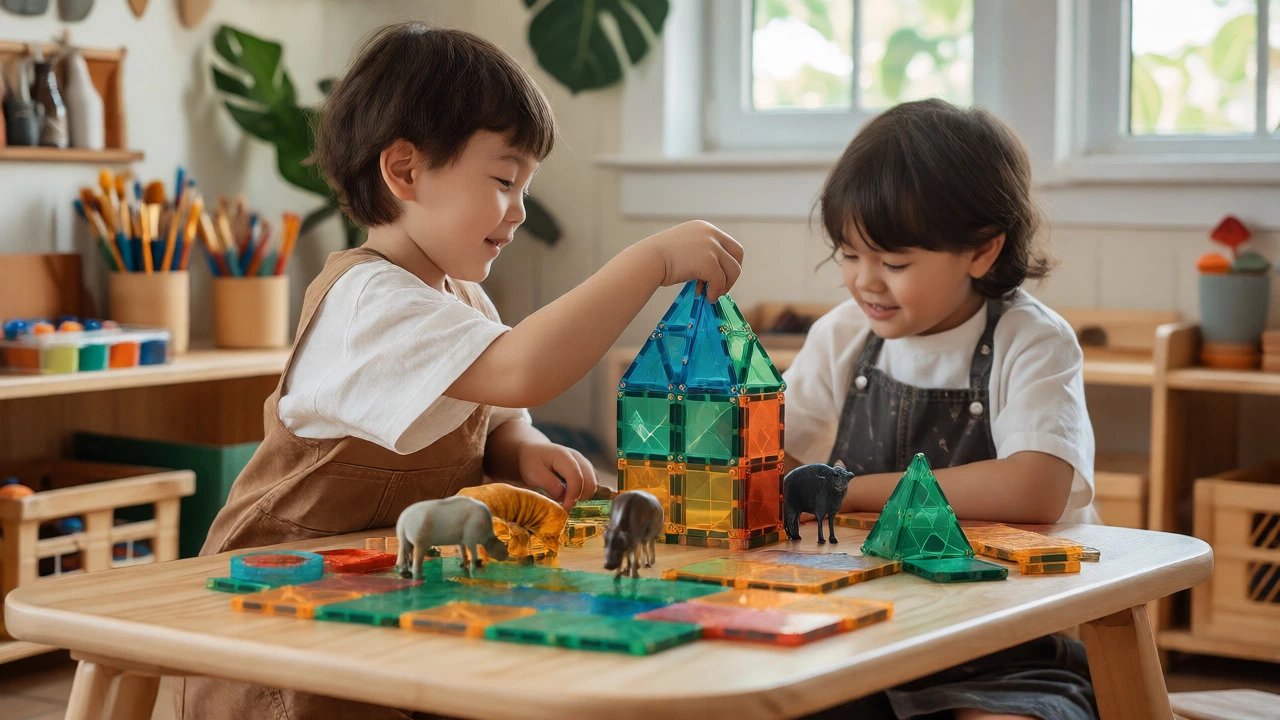
However, you don’t need a classroom to benefit from these principles. Board games with simple rules teach turn-taking and patience. Strategy games like checkers or chess (with simplified versions) introduce planning ahead. Construction toys, like magnetic tiles or detailed block sets, allow for creative engineering. They can build castles, bridges, or cities, engaging in collaborative play with siblings or friends.
Art supplies also become important. Watercolors, clay, and drawing tools let them express ideas they can’t yet articulate verbally. Note that Montessori art focuses on process, not product. Don’t correct their drawings. Let them explore texture and color freely. This fosters creativity and confidence.
| Age Range | Developmental Focus | Recommended Materials | Skill Developed |
|---|---|---|---|
| 0-6 Months | Sensory & Vision | High-contrast cards, mobile, soft rattle | Visual tracking, calming |
| 6-12 Months | Motor Skills & Causality | Baby gym, peek-a-boo cloth, stacking cups | Grasping, object permanence |
| 12-24 Months | Order & Coordination | Shape sorter, push cart, large blocks | Pincer grasp, balance |
| 2-3 Years | Language & Precision | Peg puzzles, lacing beads, realistic animals | Vocabulary, fine motor control |
| 3-6 Years | Logic & Social Skills | Board games, magnetic tiles, art supplies | Strategy, cooperation, creativity |
How to Rotate Toys Effectively
Having the right toy is only half the battle. How you present it matters. A common mistake is dumping all toys into a bin. This creates visual clutter, which distracts young children. Montessori environments use minimalism. Keep only a few toys out at a time. Place them on low shelves within reach. When a child loses interest in a toy, swap it for another one. This rotation keeps the play area fresh and exciting without overwhelming the child.
Observe your child. If they ignore a new toy for several days, remove it. If they return to an old favorite repeatedly, keep it available. There is no strict schedule. Some parents rotate weekly; others do it monthly. Trust your intuition. The goal is to maintain engagement. Also, ensure everything has a designated place. Teaching children to put toys away after play reinforces the sense of order and responsibility.
Common Pitfalls to Avoid
One major pitfall is buying based on hype rather than observation. Just because a toy is popular on social media doesn’t mean it fits your child’s current developmental stage. Another issue is interference. Adults often jump in to "help" when a child struggles with a puzzle. Resist the urge. Let them struggle slightly. That struggle is where learning happens. Only intervene if they are clearly frustrated to the point of tears.
Also, beware of passive entertainment. Screen time is a significant competitor to active play. While educational apps have their place, they lack the tactile feedback of physical objects. Montessori emphasizes doing, not watching. Prioritize hands-on activities. If you must use screens, co-view and discuss what you see, turning it into an interactive experience rather than a babysitter.
Can I give Montessori toys to my older child?
Yes, but you must adapt the complexity. An older child might find basic shape sorters boring. Look for advanced versions, such as multi-layered puzzles, complex building kits, or strategy-based board games. The principle remains the same: the toy should offer a challenge that matches their current skill level, encouraging further mastery.
Are expensive wooden toys necessary?
No, expensive brands are not required. You can make effective Montessori toys from household items. Cardboard boxes, wooden spoons, jars with lids, and fabric scraps can serve as excellent sensory and practical life tools. What matters most is simplicity, durability, and natural materials, not the price tag. Many DIY options are just as effective as purchased ones.
What if my child ignores the Montessori toys?
This usually means the toy is either too difficult or too easy. Observe how they interact with other objects. If they throw the toy, it might be too heavy or abstract. If they glance at it and walk away, they may have already mastered the concept. Try rotating it out for a few weeks and reintroducing it later, or simplify the activity by demonstrating one step at a time.
Is screen time compatible with Montessori methods?
Strictly speaking, Montessori prefers real-world interaction over virtual. However, moderate, high-quality screen time can be part of a balanced lifestyle. Choose apps that are interactive rather than passive. Limit usage to short periods and always pair it with discussion. For children under two, the World Health Organization recommends avoiding sedentary screen time altogether, favoring active play instead.
How many toys should I have out at once?
A good rule of thumb is 5 to 8 toys per shelf. This number prevents overwhelm and encourages deep engagement. If you have multiple children, consider separate zones or shelves to avoid conflict. Regularly assess the collection; if a toy hasn’t been touched in two weeks, store it away. Quality and accessibility matter far more than quantity.