Baby Proofing Stairs: Safety Tips and Must-Know Solutions for UK Parents
When you’re baby proofing stairs, the process of making stairways safe for crawling and walking infants, you’re not just installing a gate—you’re building a barrier between your child and one of the most common household hazards. In the UK, over 1,500 children under five are taken to A&E each year because of stair-related falls, according to NHS data. That’s not a statistic you want to ignore. The goal isn’t perfection—it’s prevention. And the best way to do that is by combining the right tools with smart habits.
Stair safety for babies, the practice of reducing fall risks on stairs through physical barriers and environmental adjustments starts long before your child takes their first step. It begins when you bring your baby home. That means securing the top and bottom of every staircase with a baby gate, a fixed or pressure-mounted barrier designed to block access to stairs that meets British safety standards (BS EN 1930:2011). Not all gates are equal. Pressure-mounted ones are fine for the bottom of stairs, but the top? You need a hardware-mounted gate—no exceptions. A wobbly gate is a waiting accident. And don’t forget: if your home has multiple levels, every landing and staircase needs its own protection. Even if you think your baby can’t reach it yet, they’ll surprise you.
Toddler stairs, the stage when children begin climbing stairs independently but lack coordination and judgment changes the game. Once your child starts climbing, gates alone aren’t enough. You need to teach them how to go up and down safely—using the handrail, taking one step at a time, never running. Many UK parents start this training between 12 and 18 months, often using soft-tread stair mats or non-slip strips to give little feet better grip. It’s also a good time to remove clutter from stairs—toys, shoes, loose rugs—anything that could cause a trip. And while it’s tempting to let your toddler practice on their own, always stay within arm’s reach. Falls from stairs can cause serious head injuries, even from just a few steps.
What about childproofing home beyond the stairs? The same logic applies. If you’ve got a banister with wide gaps, install netting or vertical slats to stop little heads from getting stuck. Keep doors to unused rooms closed. Use door stoppers to prevent fingers from getting pinched. And never leave your baby unattended near stairs—even for a minute. Babies crawl faster than you think. Toddlers climb without warning. Your job isn’t to create a sterile environment—it’s to create a smart one. One where safety is built in, not just added on.
You’ll find plenty of advice online about the best baby gates, the most stylish stair mats, or the latest smart monitors that track movement near stairs. But the truth? The most effective tool is still your eyes, your presence, and your consistency. The posts below bring together real-life tips from UK parents who’ve been through it—the mistakes they made, the products that actually worked, and the small changes that made all the difference. Whether you’re just starting out or your toddler’s already testing the limits, you’ll find practical, no-nonsense guidance here.
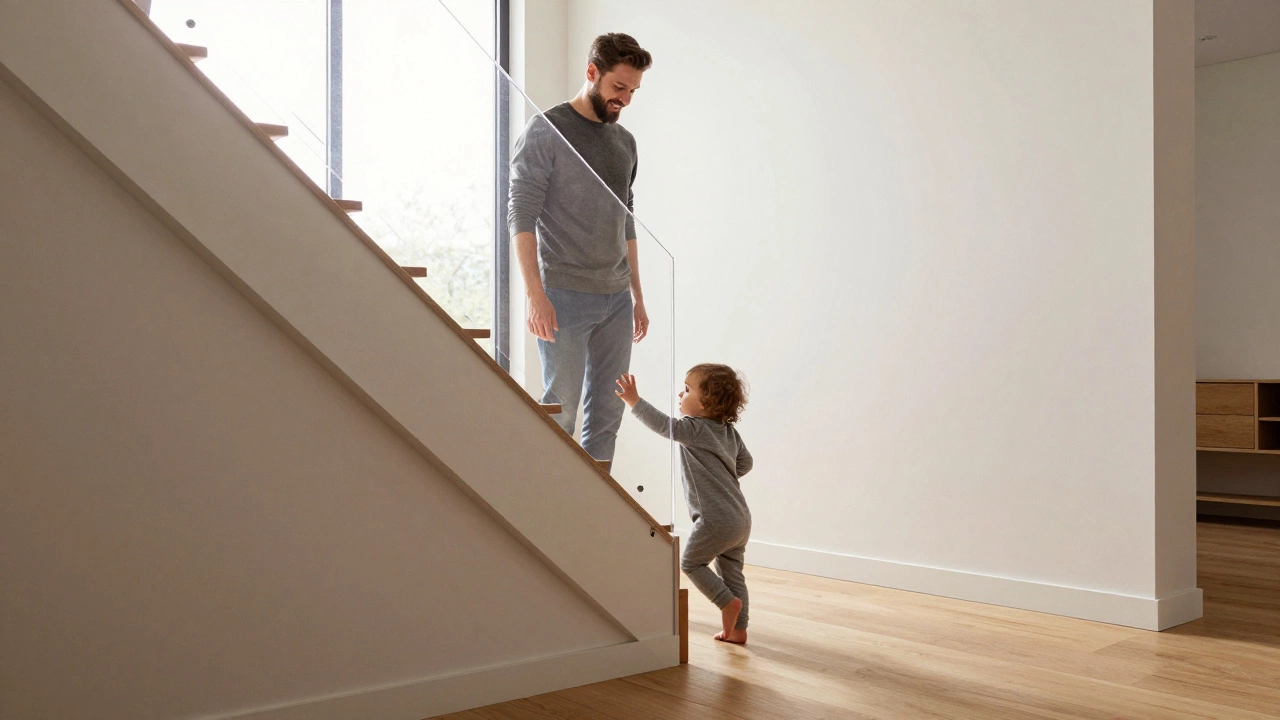
What is an alternative to stair gates for kids?
Stair gates aren't always the best solution for toddler safety. Discover five proven alternatives - from glass railings to door alarms - that work better on curved stairs, rentals, or for active climbers.
view more