
Baby Bottles: What You Need to Know for New Parents in the UK
When you’re preparing for your baby’s arrival, baby bottles, containers designed to feed infants formula or expressed breast milk. Also known as feeding bottles, they’re one of the most-used items in the first few weeks—and yet, most parents buy way too many. You don’t need ten different brands or sizes. You need two or three that are easy to clean, leak-proof, and comfortable for your baby’s mouth.
Not all baby bottles are made the same. Some have wide necks for easier filling and cleaning, others have anti-colic vents to reduce gas. The nipple flow matters too—newborns need slow-flow nipples, while older babies switch to medium or fast. And don’t forget the material: BPA-free plastic is common, but glass is still a favorite for parents who want to avoid any chemicals, even if it’s heavier and breaks more easily.
What you pack for the hospital isn’t the same as what you’ll use at home. Most UK hospitals give you disposable bottles or loan you basic ones, so you don’t need to bring a full set. Just one or two clean, sterilized bottles with a few spare nipples is enough for the first 24 hours. The real question isn’t how many you need—it’s which ones your baby actually likes. Some fuss with certain shapes, others hate the feel of silicone versus latex. The only way to know? Try a couple of types and see what sticks.
You’ll also see ads for bottles with built-in thermometers, self-sterilizing features, or fancy labeling systems. Most of these are nice-to-haves, not must-haves. What you really need is something that works, cleans easily, and doesn’t leak when you’re rushing out the door. Look for bottles with fewer parts—fewer pieces mean less to wash, less to lose, and less stress.
And if you’re breastfeeding, you might think you won’t need bottles right away. But many parents use them for expressed milk, or to let partners help with night feeds. Having a few on hand gives you flexibility. It’s not about replacing breastfeeding—it’s about making feeding easier for everyone.
What you’ll find in the posts below are real, no-nonsense guides from UK parents who’ve been there. From the exact baby bottles to pack for the hospital, to which types get the least spit-up, to how to clean them without harsh chemicals—you’ll see what actually works. No marketing fluff. Just what families are using, why, and what they wish they’d known sooner.
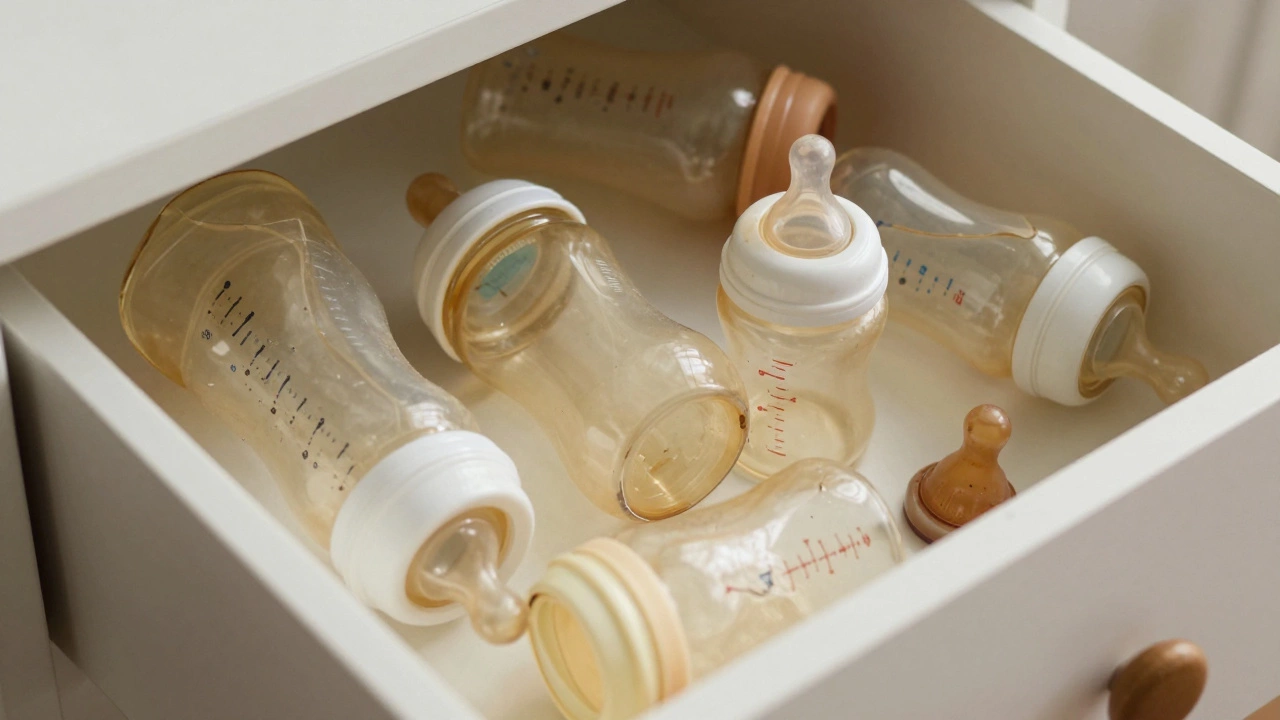
Are You Supposed to Throw Away Baby Bottles? When to Replace and Why
Learn when and why to replace baby bottles for safety and hygiene. Signs of wear, material differences, and smart replacement habits to protect your baby’s health.
view more