
Newborn Stroller Finder
Answer a few questions about your lifestyle and baby to find the safest and most practical stroller type for your needs.
Our Recommendation:
Key Takeaways:
- Newborns require a completely flat surface (lie-flat) to protect their developing spine and airways.
- Travel systems are the gold standard for convenience, linking the car seat and stroller.
- Bassinet prams are best for long naps and maximum comfort.
- Lightweight strollers usually require extra attachments (like a carrycot) to be newborn-safe.
The Golden Rule: The Lie-Flat Position
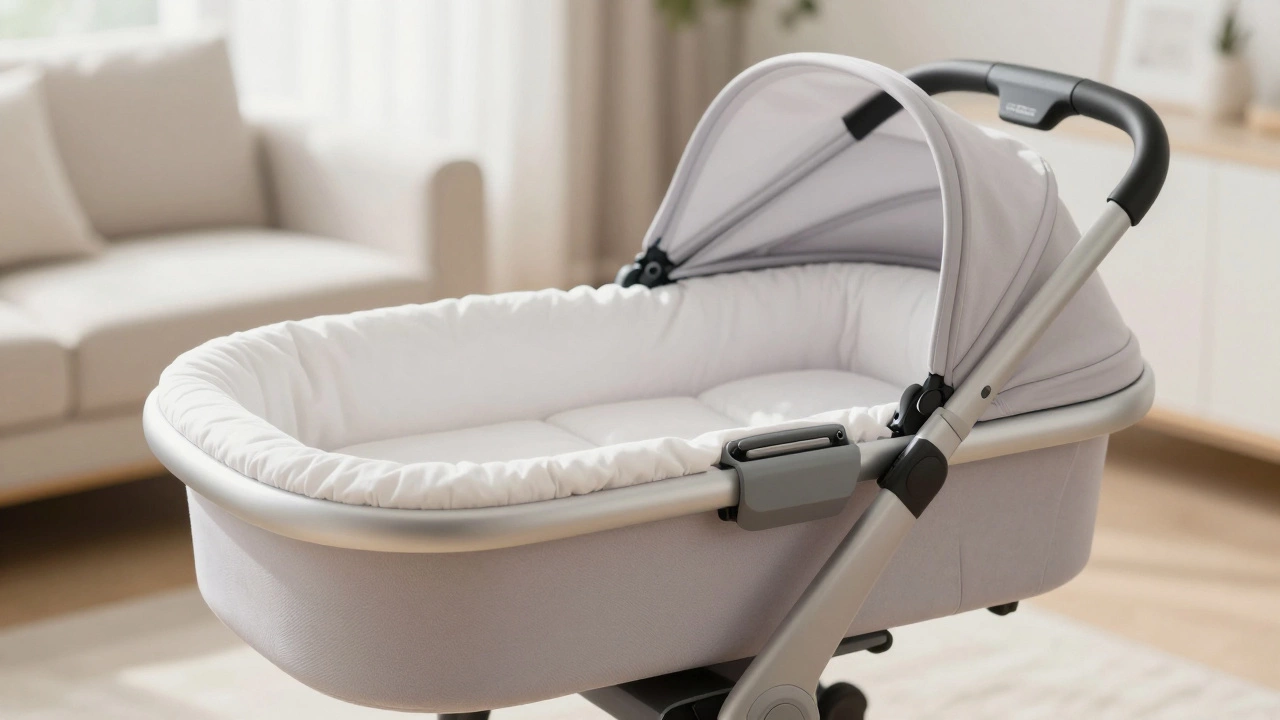
Before you look at brands, understand that newborns have zero trunk control. Their muscles aren't developed enough to hold their head up, and their ribs are more flexible than an adult's. This is why a bassinet is a flat, rectangular sleeping carriage that allows a baby to lie completely horizontal is so critical. When a baby is in a semi-upright position, their heavy head can slump forward, which can restrict their breathing-a risk known as positional asphyxia.
If you're looking at a stroller and the seat doesn't go completely flat (180 degrees), it's not for a newborn. Period. You want a surface that supports the entire back and keeps the head aligned. Whether you choose a dedicated pram or a modular system, the goal is to mimic the comfort of a crib while you're on the move.
The Travel System: The Ultimate Convenience
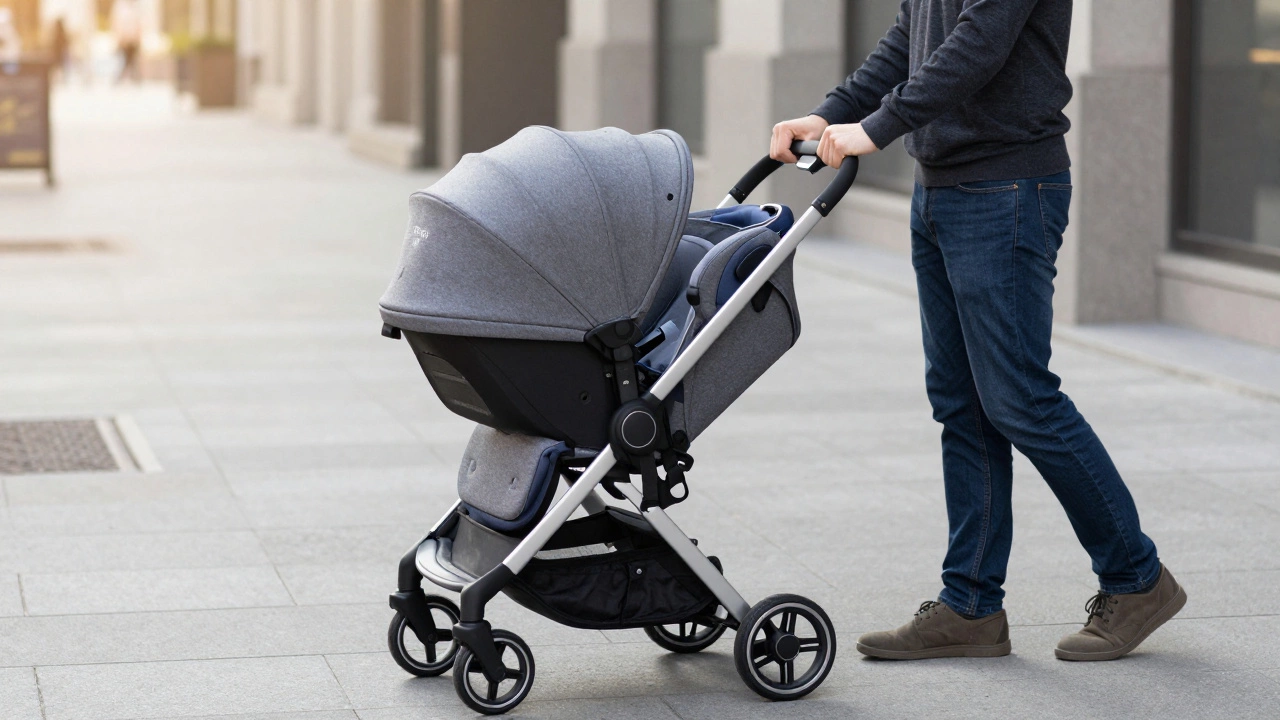
If you're planning on doing a lot of errands or frequent trips to the doctor, a travel system is likely your best bet. A travel system is a coordinated set that includes a stroller and a matching infant car seat that clicks directly into the frame. The beauty of this setup is the 'zero-wake' transfer. You can move a sleeping baby from the car to the sidewalk without ever taking them out of their seat.
However, there's a catch. Infant car seats are designed for safety during crashes, not for long-term lounging. Pediatricians usually suggest limiting time in the car seat to 2 hours a day because the angled position can put pressure on the baby's soft skull. To balance this, many modern travel systems now come with a separate bassinet attachment, giving you the best of both worlds: a car seat for quick trips and a flat bed for long walks.
The Classic Pram: Comfort for Long Hauls
For parents who love long walks in the park or live in areas with a lot of sidewalks, a traditional pram (short for perambulator) is the way to go. These are typically larger, have a high-quality carrycot, and offer a much smoother ride. Because they often feature larger, air-filled tires, they handle bumps and cracks in the pavement much better than small plastic wheels.
The downside? They are bulky. If you live in a third-floor apartment with a tiny elevator or drive a compact car, a full-sized pram might feel like trying to steer a boat through a bathtub. But if space isn't an issue, the sheer comfort for the baby is unmatched. They provide a cozy, enclosed environment that shields the newborn from wind and noise, helping them sleep deeper while you're out.
Choosing Based on Your Lifestyle
You shouldn't buy a stroller based on a review alone; you need to map it to your actual daily routine. A parent living in a rural area with gravel paths needs something very different from a city dweller relying on the subway. Consider where you'll actually be pushing this thing.
| Stroller Type | Best For... | Newborn Safe? | Portability | Main Trade-off |
|---|---|---|---|---|
| Travel System | Shopping & Errands | Yes (with seat/cot) | Medium | Less breathable than bassinet |
| Full-Sized Pram | Long Walks/Parks | Yes (Ideal) | Low | Heavy and bulky |
| Lightweight/Umbrella | Quick Trips/Travel | No (unless modular) | High | Lacks necessary support |
| Jogging Stroller | Active Lifestyles | No (Wait until 6mo) | Medium | Too much vibration for newborns |
The Pitfalls of 'Newborn' Marketing
Be careful with the term 'newborn ready.' Many brands claim their strollers are ready for newborns simply because the seat reclines a lot. But there's a difference between a 'deep recline' and a 'flat surface.' If the seat is fabric-only and sags, it can create a 'C' shape with the baby's spine, which isn't ideal for growth.
Another trap is the jogging stroller. You'll see a lot of them marketed as all-terrain. While they're great for later, you should never use a jogging stroller for a newborn. These strollers have larger wheels and different suspension systems that can transmit too much vibration to a fragile infant's head. Wait until your baby has full neck control-usually around six months-before switching to a jogger.
Essential Features to Look For
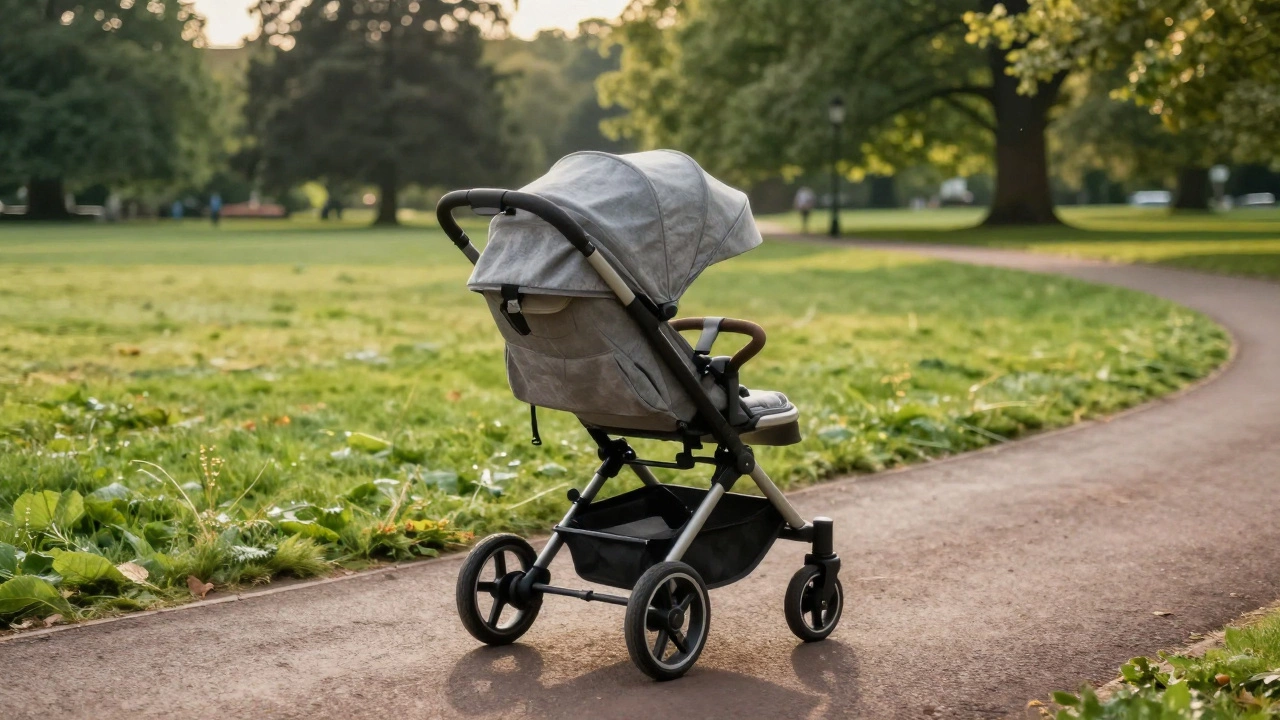
When you're in the store or browsing online, stop looking at the colors and start looking at the specs. A good newborn ride needs a few non-negotiables:
- Suspension: Look for springs or shock absorbers. A bumpy ride can wake a sleeping baby and is simply uncomfortable.
- Adjustable Canopy: Newborns have sensitive skin and eyes. You need a large, UV-protected canopy that can pull down low to block the sun.
- Easy Fold: If you have to fold the stroller every time you get into your car, a one-handed fold mechanism will save your sanity.
- Brake System: Ensure the brake is easy to engage with your foot, especially if you're often balancing a baby in one arm.
- Storage: You'll be carrying diapers, wipes, bottles, and probably a heavy diaper bag. A large under-seat basket is a must.
What Happens After the First Six Months?
The biggest mistake parents make is buying a stroller that only works for the first three months. A bassinet is great now, but by six months, your baby will want to sit up and see the world. This is where modular strollers shine. A modular system allows you to swap the bassinet for a toddler seat without buying a whole new frame.
If you buy a dedicated pram, you'll eventually need to buy a separate seat or a new stroller entirely. If you go with a travel system, you'll transition from the infant car seat to the toddler seat. Plan for the long haul. It's better to spend a bit more on a convertible system now than to buy two different strollers in one year.
Can I use a lightweight umbrella stroller for a newborn?
Generally, no. Most umbrella strollers do not recline far enough to provide the flat surface a newborn needs for safe breathing and spinal development. Unless the stroller specifically comes with a certified newborn attachment or a fully flat, supportive seat, avoid them until your baby can sit up independently.
How long can my baby stay in the infant car seat part of a travel system?
While convenient, car seats are designed for safety, not comfort. Experts suggest limiting use to 2 hours per day. For longer outings, it's better to use a bassinet or a lie-flat stroller seat to prevent the baby's head from slumping forward.
What is the difference between a pram and a stroller?
A pram is typically a carriage with a fixed, flat bed (bassinet) where the baby lies down; it's designed for newborns. A stroller usually has a seat with a harness where the baby sits up; it's designed for older infants and toddlers. Many modern strollers are 'convertible' and can do both.
Do I really need a bassinet if I have a travel system?
If you only do short trips (like a 15-minute run to the store), the car seat is enough. But if you enjoy long walks or want your baby to nap comfortably while you're out, a bassinet is highly recommended. It's much better for the baby's posture and breathing during extended periods.
When can I start using a jogging stroller?
You should wait until your baby has full head and neck control, which usually happens around 6 months. Newborns are too fragile for the vibrations and jolts that occur during jogging or high-speed walking on uneven terrain.
Next Steps for New Parents
If you're still undecided, try this: list your three most common destinations. If it's 'Work, Grocery Store, and Home,' a travel system is your winner. If it's 'Park, Coffee Shop, and Zoo,' go for the full-sized pram. If you're traveling between cities or living in a tiny flat, look for a modular, lightweight system that includes a compatible bassinet.
Once you've picked your model, do a 'trunk test.' There is nothing more frustrating than buying a beautiful pram only to realize it doesn't fit in your car without removing three wheels and the entire canopy. Check the folded dimensions against your vehicle's cargo space before you swipe your card.