Baby Bottle Replacement Calculator
Bottle Information
Usage Patterns
Special Circumstances
Every parent knows the routine: wake up, warm the bottle, feed, burp, clean, repeat. But have you ever stopped to wonder how often those bottles actually need replacing? It’s not just about cracks or stains - it’s about safety, hygiene, and your baby’s health.
Signs Your Baby Bottle Needs Replacing
Not all worn-out bottles look broken. Some changes are subtle, but they matter. Check for these red flags:
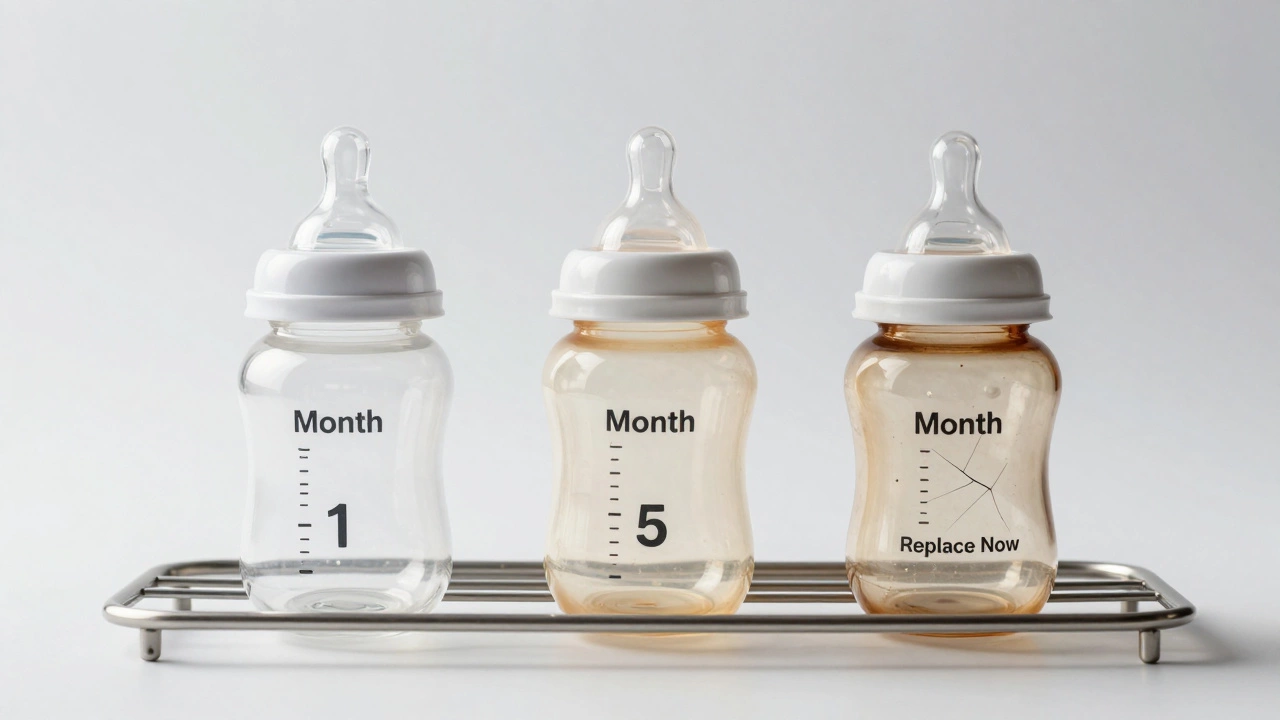
- Cloudy or yellowed plastic: Over time, heat from dishwashers and boiling water breaks down plastic polymers. Bottles that used to be clear now look foggy or tinted - that’s degradation. It can leach chemicals and harbor bacteria in microscopic scratches.
- Cracks, chips, or splits: Even a tiny crack near the nipple base can trap milk and become a breeding ground for mold or bacteria. You won’t always see it until you scrub hard and notice gunk that won’t wash out.
- Loose or warped nipples: If the nipple feels stiff, sticky, or doesn’t snap back when stretched, it’s lost its elasticity. That means it won’t flow properly, forcing your baby to work harder to feed - or worse, leak while they’re sucking.
- Strange smells or tastes: If your bottle starts smelling like soap, plastic, or sour milk even after a deep clean, it’s absorbed odors. That’s a sign the material is breaking down.
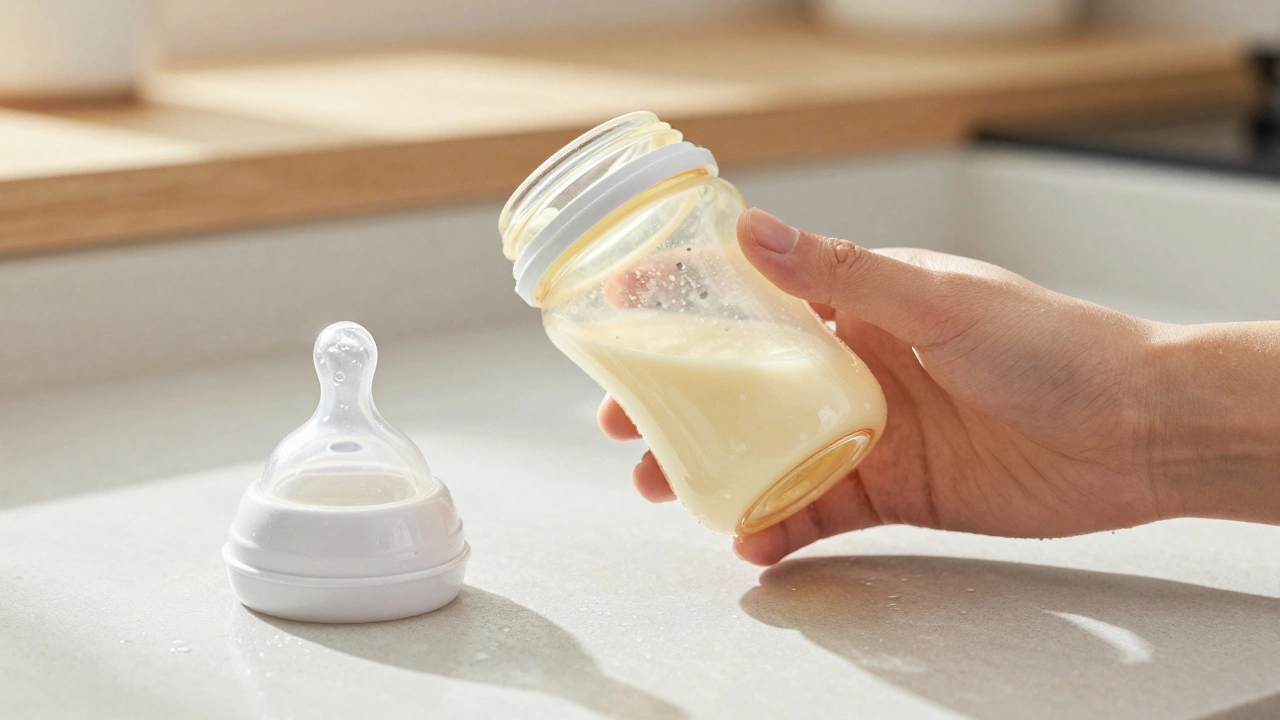
- Hard-to-clean residue: Milk fat and proteins cling to degraded plastic. If you’re scrubbing harder and longer just to get rid of film, it’s time for a new one.
How Often Do Baby Bottles Actually Last?
There’s no one-size-fits-all answer, but most experts agree: replace bottles every 3 to 6 months under normal use. That’s the sweet spot between practicality and safety.
Why not longer? Plastic bottles, even BPA-free ones, degrade with repeated heat cycles. A 2023 study from the University of Bristol’s Child Health Lab found that after 5 months of daily sterilization and washing, 68% of plastic bottles showed measurable surface degradation - enough to increase bacterial adhesion by up to 40% compared to new bottles.
Glass bottles last longer - often over a year - if they don’t get dropped. But they’re heavier, breakable, and not ideal for on-the-go feeding. Silicone bottles are newer and more durable, but they’re pricier and not always compatible with all nipple types.
If you’re using bottles for multiple children, don’t assume they’re still safe. Even if they look fine, each baby’s feeding habits, cleaning routine, and immune system are different. What worked for your first child doesn’t guarantee safety for your second.
What About Nipples? Don’t Forget Them
Nipples wear out faster than bottles. Replace them every 1 to 2 months, even if they don’t look damaged. Here’s why:
- They stretch with use. A stretched nipple flows too fast, which can cause choking or gas.
- They crack internally. You might not see it, but milk can pool in tiny fissures and grow mold.
- They lose their shape. Babies rely on the nipple’s contour to latch properly. A misshapen nipple leads to fussiness, poor feeding, and nipple confusion.
Check nipples weekly. Pull them gently - if they stretch too far or feel thin, toss them. If milk flows out in a stream instead of a drip when you turn the bottle upside down, it’s too worn.

When to Replace Sooner
Some situations demand faster replacement:
- Your baby had a fungal infection (thrush): Yeast clings to plastic. Even after sterilizing, spores can survive. Replace both bottle and nipple after treatment.
- You dropped the bottle on hard ground: A crack you can’t see might be there. Plastic can fracture internally. Play it safe - replace it.
- Your baby is sick: When their immune system is down, bacteria in old bottles become riskier. Swap bottles during illness.
- You switched from formula to breastmilk (or vice versa): Different milk compositions leave different residues. Cleaning isn’t always enough. Start fresh to avoid cross-contamination.
How to Make Bottles Last Longer
You don’t need to buy new ones every month. Extend their life with smart habits:
- Hand wash with warm soapy water: Dishwashers use harsh detergents and high heat that accelerate plastic breakdown. Hand washing is gentler.
- Avoid boiling: Sterilizing by boiling is fine once a week, but daily boiling? That’s overkill. Use steam sterilizers or cold water sterilizing tablets instead.
- Store properly: Don’t stack bottles tightly. Keep nipples in a clean, dry container away from direct sunlight. UV light fades plastic and weakens it.
- Label your bottles: Write the date you started using each one with a permanent marker. That way, you’ll know when it’s been in use for 5 months.
What About BPA and Chemicals?
All baby bottles sold in the UK and EU since 2011 are BPA-free by law. But BPA isn’t the only concern. Other chemicals like phthalates and bisphenol S (BPS) can still be present in cheaper plastics. Glass and silicone are the safest bets if you’re worried about chemical exposure.
Look for bottles labeled “food-grade” or “medical-grade.” These are tested for safety under repeated heat and cleaning. Avoid bottles with recycled plastic - they’re cheaper but less predictable in quality.
Cost vs. Safety: Is It Worth It?
Replacing bottles every few months sounds expensive. But think about it this way:
- A pack of 4 high-quality silicone bottles costs around £20.
- A single hospital visit for a gastrointestinal infection caused by a dirty or degraded bottle? That can cost hundreds - not to mention the stress and missed work.
It’s not about being obsessive. It’s about being smart. You wouldn’t drive a car with cracked tires just because it still rolls. Your baby’s bottle is just as critical.
What to Do With Old Bottles
Don’t just toss them. If they’re still in decent shape:
- Use them for storing homemade baby food (after deep cleaning).
- Turn them into DIY toys - fill with rice or beans for sensory play.
- Donate them to animal shelters (some use them to feed orphaned kittens or puppies).
- Recycle them if your local council accepts #5 plastic (polypropylene).
Just never reuse old bottles for another baby unless you’re certain they’re less than 3 months old and haven’t been through heavy use.
How often should I replace baby bottles if I sterilize them daily?
Even with daily sterilization, replace plastic bottles every 3 to 6 months. Sterilizing kills germs but doesn’t stop plastic from breaking down. Heat and scrubbing wear the material over time, creating tiny cracks where bacteria hide.
Can I reuse baby bottles for my second child?
Yes - but only if they’re in excellent condition and less than 6 months old. Check for cloudiness, cracks, or warped nipples. If they’ve been used for over a year or show any signs of wear, replace them. Babies have different immune systems, and old bottles can carry hidden bacteria.
Are glass baby bottles safer than plastic?
Glass bottles don’t degrade or leach chemicals, making them the safest option long-term. But they’re heavier and breakable. If you use them, always use a silicone sleeve for protection. They last over a year with care, but replace them if they chip or crack.
Do I need to replace bottles if my baby only uses them occasionally?
Yes. Time, not just use, degrades plastic. Even if you only use a bottle once a week, the material still breaks down from cleaning, temperature changes, and exposure to air. Replace every 6 months regardless of frequency.
What’s the best way to clean baby bottles to extend their life?
Hand wash with mild soap and warm water. Avoid harsh scrubbers or abrasive sponges - they scratch the surface. Rinse thoroughly and air-dry upside down on a clean rack. Skip the dishwasher if you want bottles to last longer.
Final Thought: It’s Not About Perfection - It’s About Prevention
You don’t need to panic every time a bottle looks a little worn. But you do need to be consistent. Set a reminder every 3 months to check your bottles. Keep a spare set on hand. Replace nipples every 6 weeks, no exceptions.
Baby bottles are simple tools. But when they fail, they don’t just inconvenience you - they can make your baby sick. A little attention now saves a lot of worry later.